A coating is only as good as the surface under it. Mill scale, rust, weld spatter and oil all look harmless under fresh paint, and they are the reason coatings blister and peel years before they should. Abrasive blasting removes them and roughens the steel so the coating can grip — and the standards that define how clean and how rough are some of the most-cited, least-understood lines in a fabrication spec. Here is what they mean.
Need parts cut, formed, welded or finished? Call 601.892.5017 or email collin.t@fabtekindustries.com — send the drawing and we’ll quote it.
- SSPC/NACE standards grade blast cleanliness: SP 7 brush-off, SP 6 commercial (at least 2/3 of each area free of visible residue), SP 10 near-white (at least 95%), SP 5 white metal (100%).
- Cleanliness and profile are separate specs. Profile (anchor pattern) is typically 1.5–4 mils, measured with replica tape (ASTM D4417), and matched to the coating manufacturer’s data sheet.
- Blasting is preceded by SP 1 solvent cleaning and followed quickly by coating, before flash rust and contamination return.
- Laser vs. Plasma vs. Waterjet Cutting
- Fiber Laser Cutting: Thickness, Tolerance & Edge Quality
- Structural Steel Processing: Coping, Drilling & Sawing
- Press Brake vs. Panel Bender
- Plate Rolling: Cylinders, Cones & Tank Shells
- When a Fabricated Part Needs Machining
- MIG vs. TIG vs. Laser Welding
- How Powder Coating Works
- Abrasive Blasting & SSPC Surface Prep (you are here)
Why blast at all
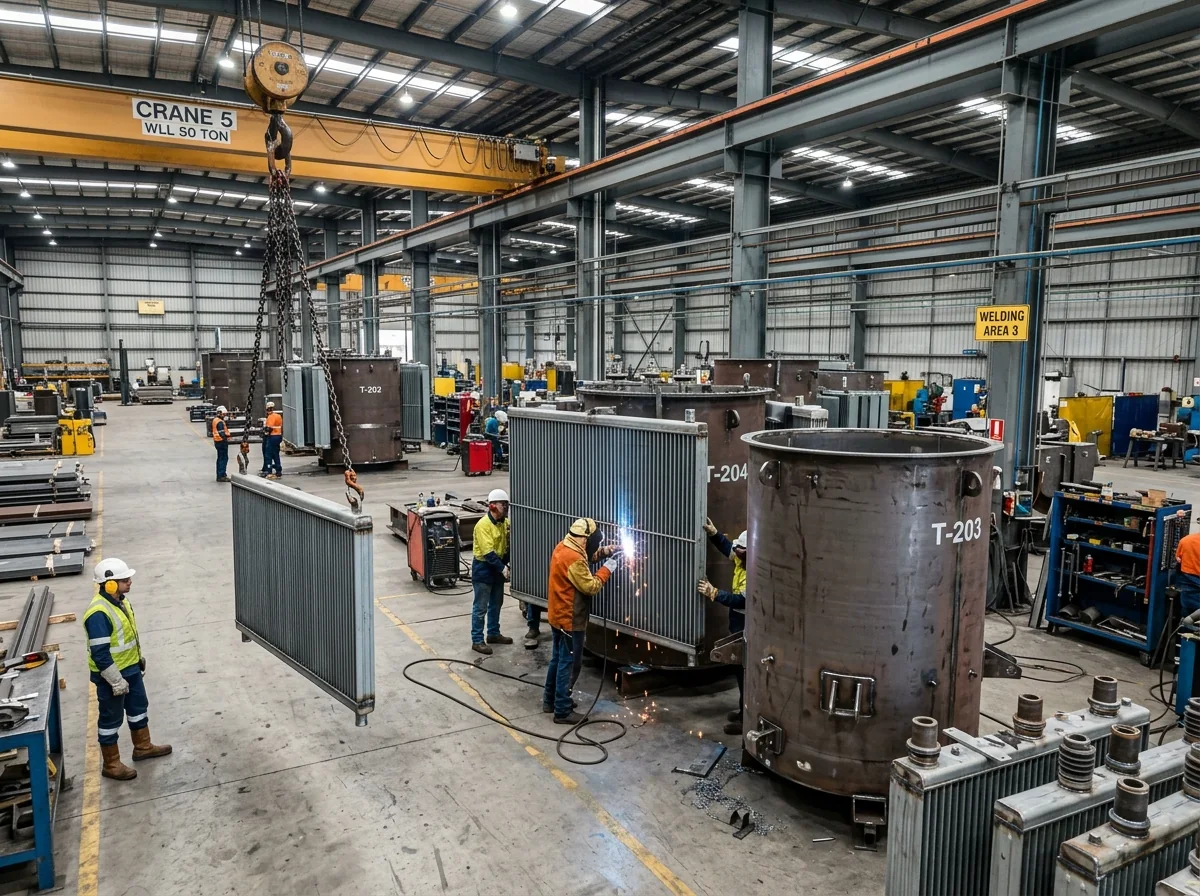
Hot-rolled steel leaves the mill covered in mill scale, a thin, hard layer of iron oxide. It looks like a sound surface, but it is brittle and it is cathodic to the steel beneath, so when the coating over it is breached, corrosion undercuts the scale and the coating comes off with it. Rust, weld spatter and slag, marking paint, and oil and drawing compounds cause similar failures. Abrasive blasting — propelling grit or shot at high velocity — removes all of them and leaves a clean surface with a controlled roughness, the anchor profile, that gives the coating mechanical grip. For heavy plate, weldments, tanks and structural parts, blasting is the surface preparation; for cold-rolled and coated sheet, chemical pre-treatment usually takes its place (see Part 8).
The cleanliness grades
| Standard | Name | What it requires | Typical use |
|---|---|---|---|
| SSPC-SP 1 | Solvent cleaning | Remove oil, grease and soluble contaminants | Required before any blast |
| SSPC-SP 2 / SP 3 | Hand / power tool cleaning | Remove loose rust, scale and paint | Touch-up and field repair |
| SSPC-SP 7 / NACE 4 | Brush-off blast | Loose material removed; tight scale and rust may remain | Light prep, some galvanized sweep blasting |
| SSPC-SP 6 / NACE 3 | Commercial blast | At least 2/3 of each unit area free of visible residue; staining allowed on the rest | Moderate-service coatings |
| SSPC-SP 14 / NACE 8 | Industrial blast | Traces of tight residue allowed on up to 10% of each unit area | Maintenance and industrial work |
| SSPC-SP 10 / NACE 2 | Near-white metal blast | At least 95% of each unit area free of visible residue | High-performance coatings, outdoor equipment, tanks |
| SSPC-SP 5 / NACE 1 | White metal blast | 100% free of visible residue | Immersion and severe service |
Summarized from the joint SSPC (now AMPP) / NACE standards; the standard documents and SSPC-VIS 1 photographic guide govern. ISO 8501-1 grades Sa 2, Sa 2½ and Sa 3 correspond approximately to SP 6, SP 10 and SP 5.
Anchor profile
Cleanliness says what has been removed; profile says how rough the surface is — the average peak-to-valley depth of the blasted surface, in mils (thousandths of an inch). Too little profile and the coating has nothing to grip; too much and the peaks poke through a thin film and rust. Most industrial coatings call for about 1.5 to 4 mils, and the coating manufacturer’s product data sheet gives the range for that product, which is why the profile belongs in the spec next to the cleanliness grade. Profile is measured with replica tape (ASTM D4417 Method C) or a depth micrometer (Method B), and recorded.
Blast media
Steel grit is angular and cuts a sharp, deep profile; it is recyclable in a blast room and is the common choice for coating prep on steel. Steel shot is round and peens the surface, leaving a shallower, rounded profile — good for cleaning and for removing scale, less aggressive as an anchor for thick coatings. Blast rooms often run a mix of the two to get both cleaning speed and profile. Garnet and other mineral abrasives are used where steel media can’t be recovered or where stainless or aluminum must not be contaminated with carbon steel particles. Media size, hardness and the blast pressure together set the profile.
The flash-rust window
Freshly blasted steel is chemically active and begins to rust as soon as humidity allows — within hours in a humid climate. The usual rules: coat as soon as practical, before visible rust bloom; keep the steel surface at least 5°F above the dew point; and re-blast any surface that has rusted or been contaminated before coating. That is why blasting and coating in the same building, in one sequence, produces more reliable results than blasting at one vendor and coating at another.
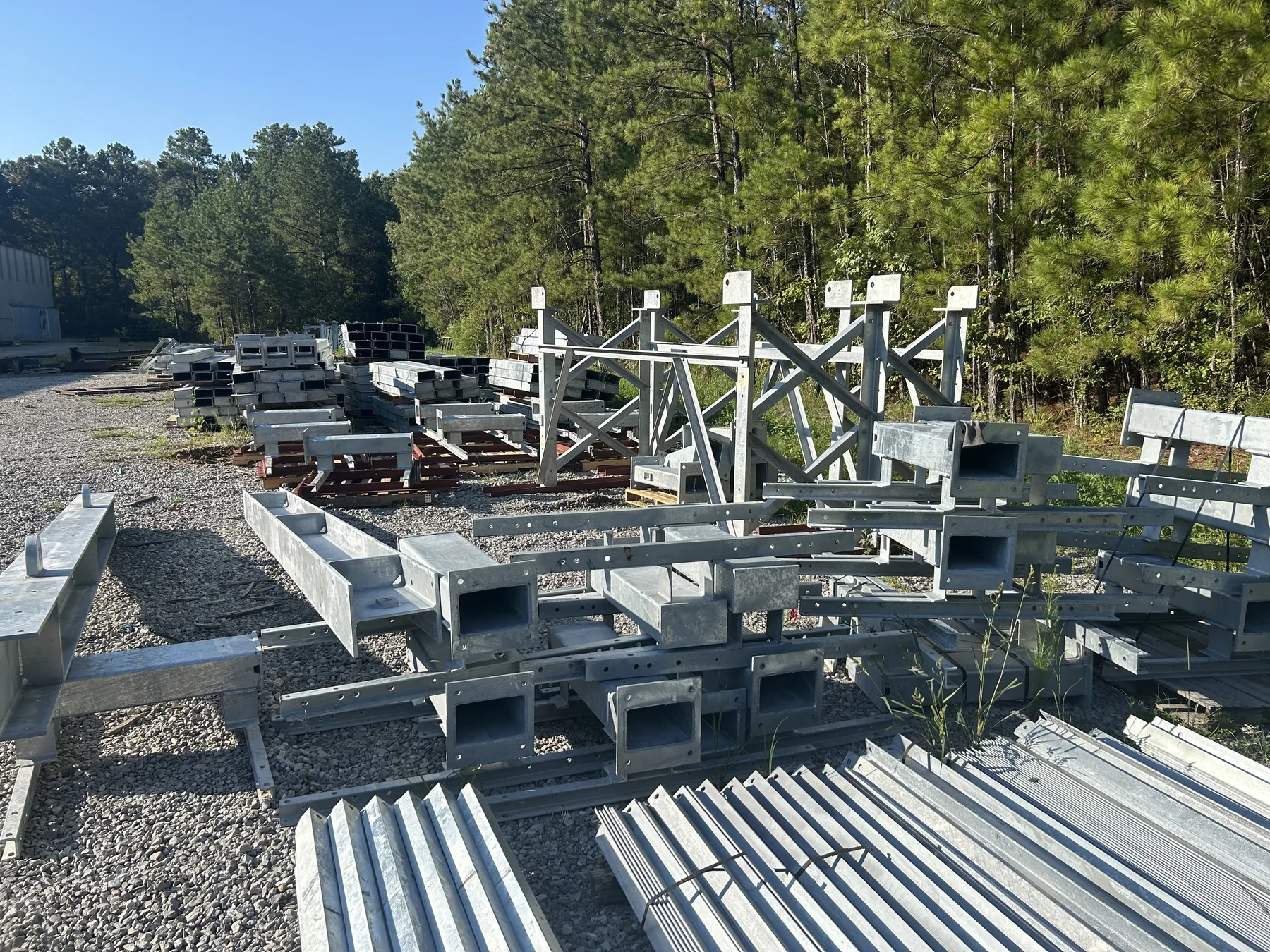
For galvanized work the order is different: the galvanizer’s caustic, pickle and flux steps clean the steel, but they won’t remove weld slag, marking paint or heavy scale, so fabricators blast or clean those areas before the steel ships to the kettle (see Substation Fabrication & Galvanizing).
How to write it
“All steel surfaces to be coated shall be solvent cleaned per SSPC-SP 1 to remove oil and grease, then abrasive blast cleaned to SSPC-SP 10/NACE No. 2 Near-White Metal with an angular anchor profile of 2.0–3.5 mils, measured per ASTM D4417 and recorded. Blasted surfaces shall be coated before visible flash rust forms and while the steel temperature is at least 5°F above the dew point. Weld spatter, slag and sharp edges shall be removed before blasting.” Adjust the grade and profile to the coating system and service — the coating’s data sheet should always agree with the numbers in the spec.
How FabTek runs it
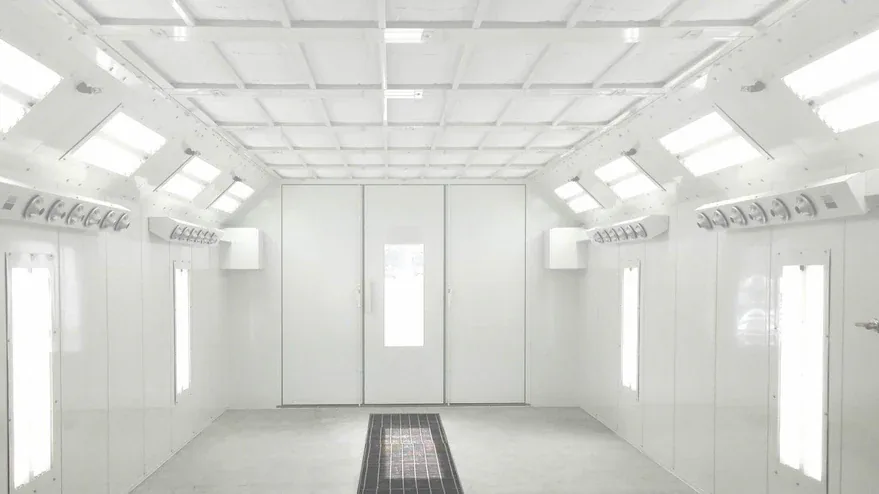
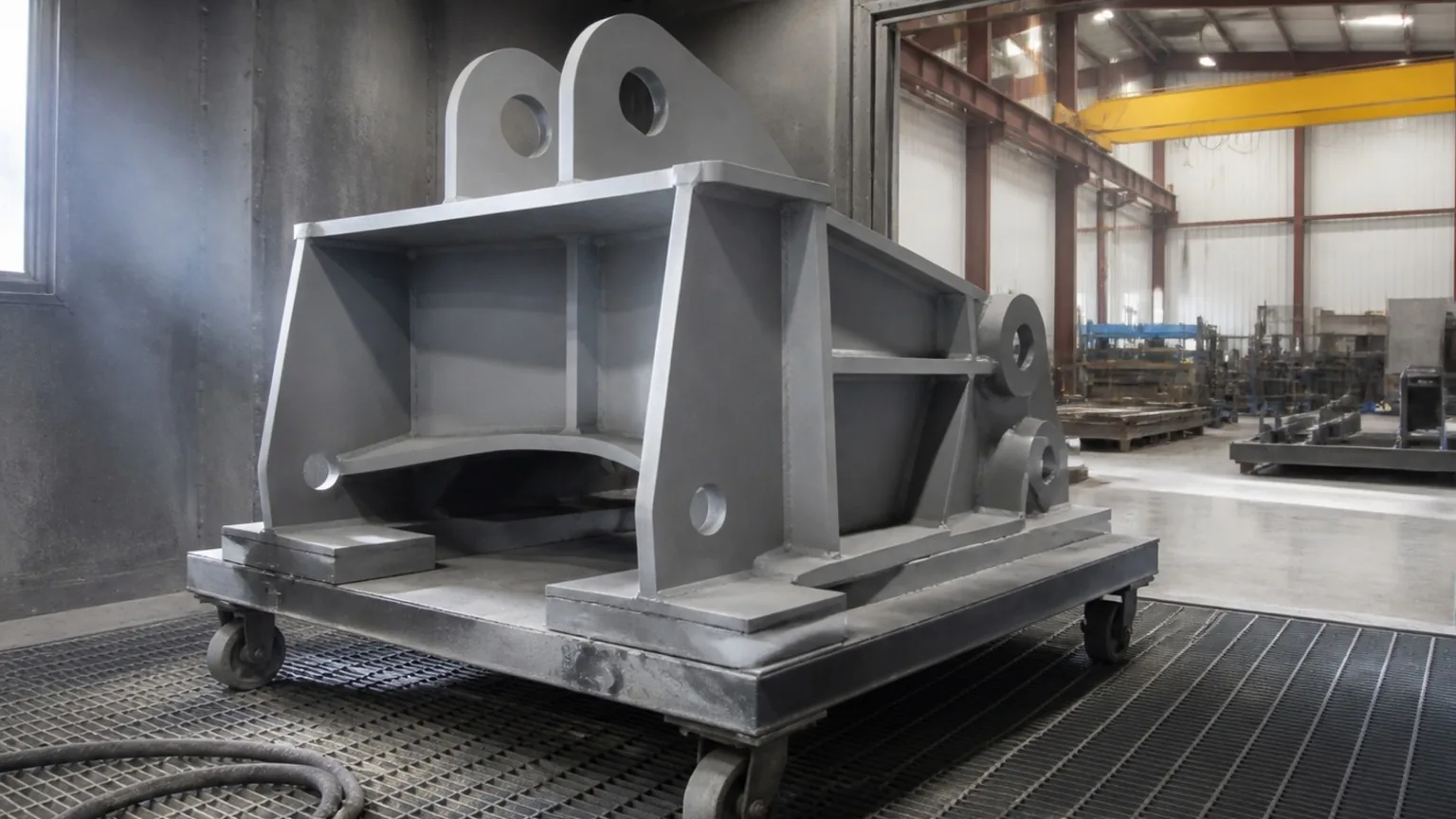
FabTek blasts in a Titan abrasive blast room with its own compressor and media recovery, sized for transformer tank bodies, structural weldments, frames, cabinets, plate and structural members. The room runs steel grit and shot, with garnet and specialty media where specified, to SSPC-SP 6, SP 7 or SP 10 as the drawing or coating system requires, with profile and cleanliness measured and recorded per part under ISO 9001:2015. Blasting is scheduled directly ahead of the powder coat line or ahead of dispatch to hot-dip galvanizing, so the flash-rust window is controlled. Chemical pre-treatment, passivation and finish grinding for stainless round out the Finish group.
Frequently asked questions
What is the difference between SSPC-SP 6 and SP 10?
SP 6 commercial blast requires at least two-thirds of each unit area to be free of all visible residue, with staining allowed on the rest. SP 10 near-white blast requires at least 95 percent of each unit area to be free of visible residue. SP 10 is the common grade for high-performance coatings on outdoor equipment and tanks.
What is anchor profile in blasting?
Anchor profile is the roughness of a blasted steel surface, measured as the average peak-to-valley depth in mils. Most industrial coatings call for about 1.5 to 4 mils, as stated on the coating's data sheet. It is measured with replica tape or a depth micrometer per ASTM D4417.
What does SSPC-SP 1 mean?
SSPC-SP 1 is solvent cleaning: removing oil, grease and other soluble contaminants before any mechanical cleaning or blasting. Blasting does not remove oil and can spread it, so SP 1 is a prerequisite for every blast grade.
How long can blasted steel sit before coating?
As briefly as practical. Blasted steel begins to flash rust within hours in humid conditions. Common practice is to coat before visible rust forms, keep the steel at least 5 degrees Fahrenheit above the dew point, and re-blast any surface that has rusted or been contaminated.