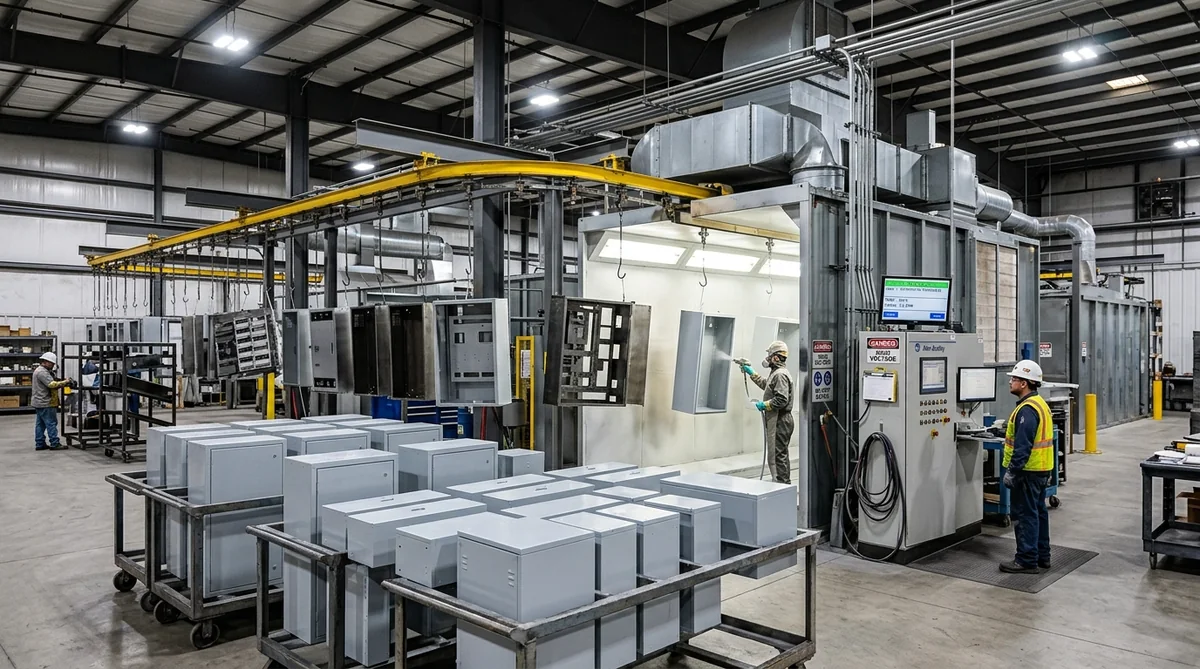
The enclosed bus that ties a transformer to its switchgear, or a generator to its breaker — housings, sections, terminations and supports fabricated to the electrical designer's drawings, finished in-house and shipped ready to set.
An enclosed bus assembly carries high-amperage power over a short, fixed path — transformer secondary to switchgear main, generator terminals to the paralleling gear, one lineup to the next — inside a grounded metal housing instead of cable. Non-segregated phase bus duct is the most common form: all three phases run in a single enclosure with insulated bar on standoffs. The electrical design belongs to the OEM or engineer. The housing, the sections, the terminations, the supports and the finish are fabrication, and that is what FabTek builds.
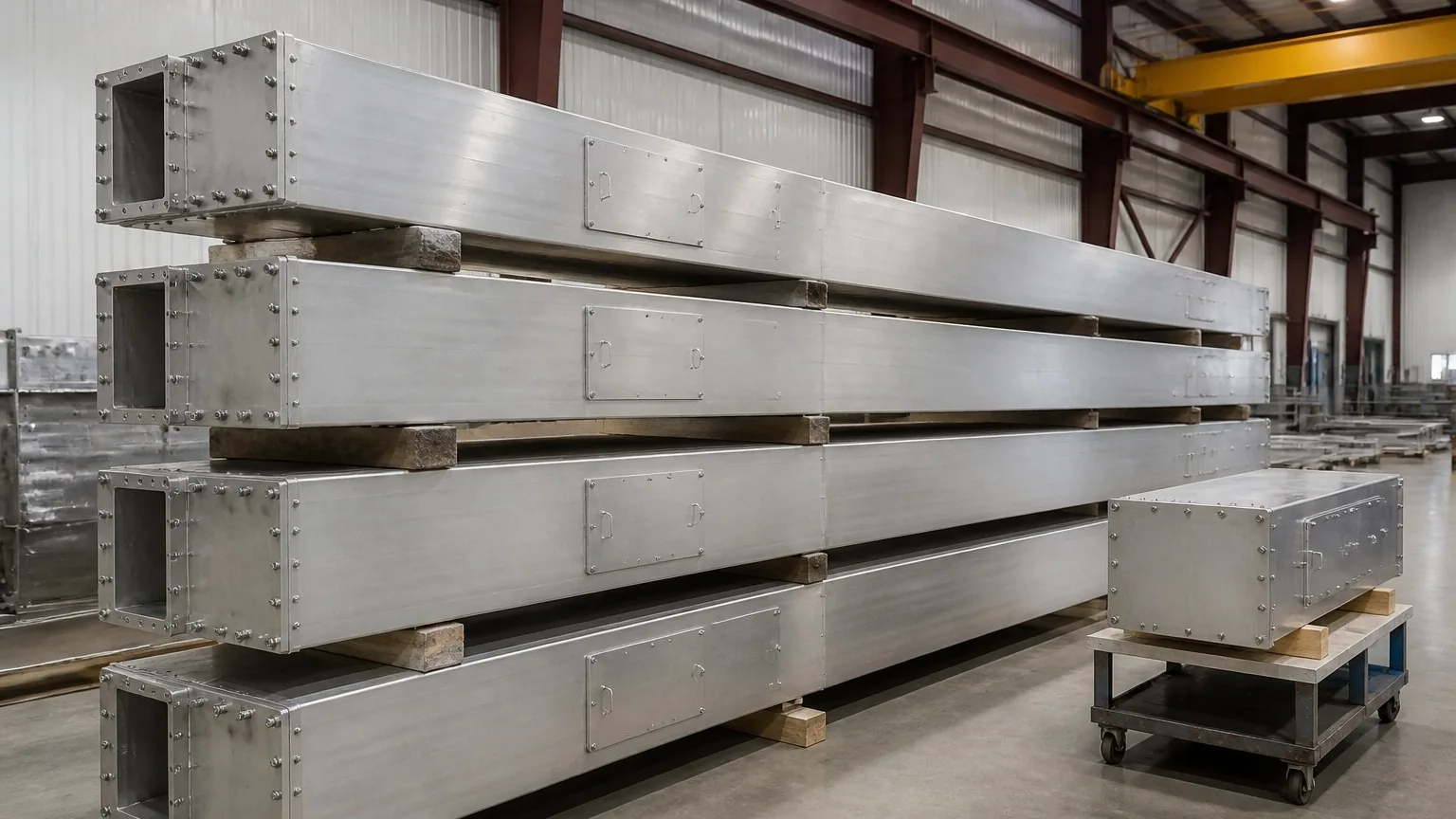
We fabricate enclosed bus housings and sections to print at our Hazlehurst, Mississippi plants: formed and welded aluminum or steel enclosures, bolted section flanges with gasketing, removable covers, inspection and drain provisions, transformer and switchgear flange adapters, wall and floor penetration frames, and the hangers and stands that carry the run. Where the customer wants it, we install customer-supplied or specified bar and insulator hardware so the assembly ships complete. Everything is finished on our powder-coat line and shipped with the documentation an OEM or EPC expects.
Straight sections, elbows, offsets and tees in aluminum or steel, with bolted flanged joints and removable covers.
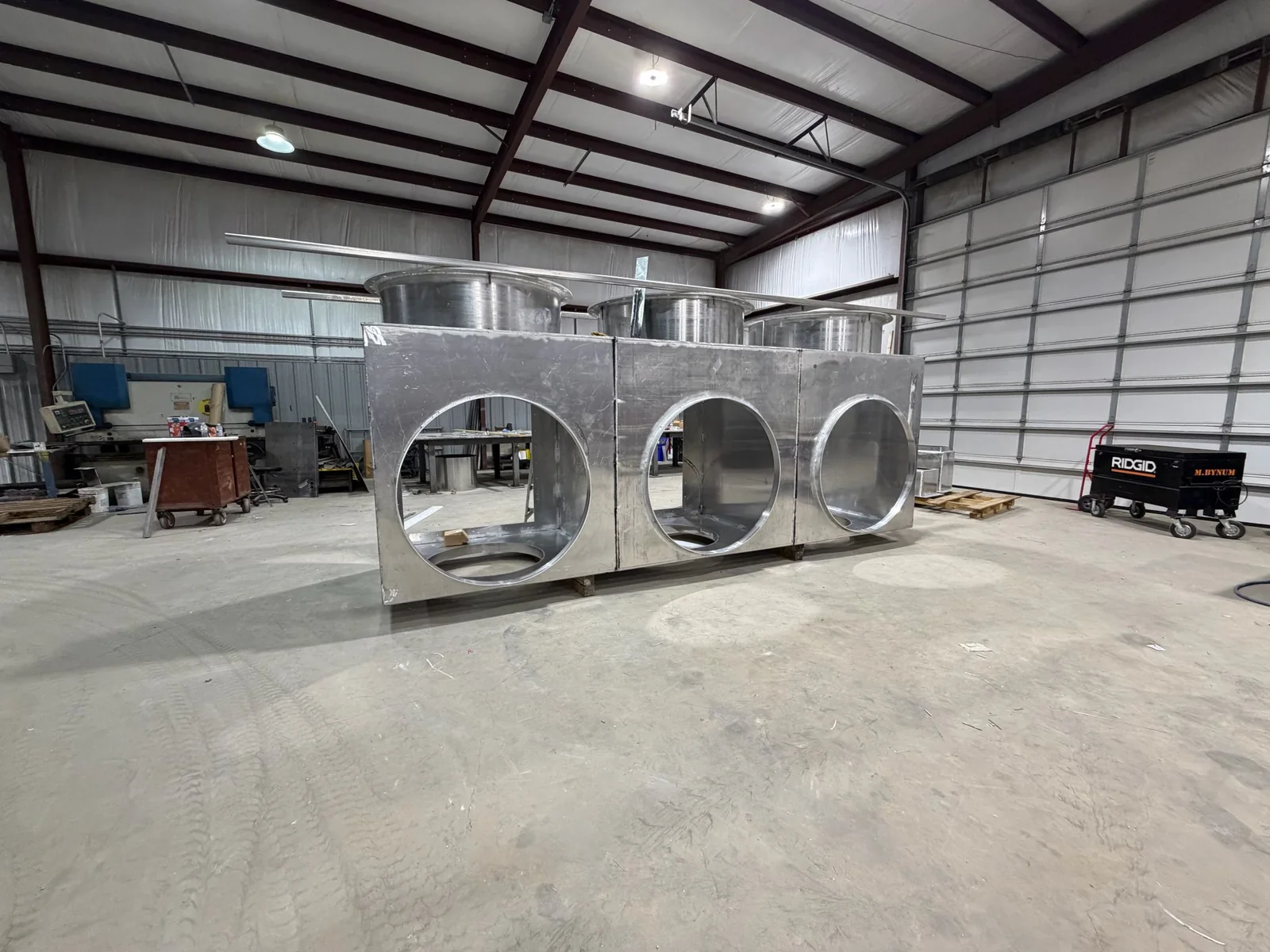
Flange adapters, throat sections and flexible-connection housings matched to the equipment drawings.
Housings and sections between generator terminals and the breaker or paralleling gear, including expansion provisions.
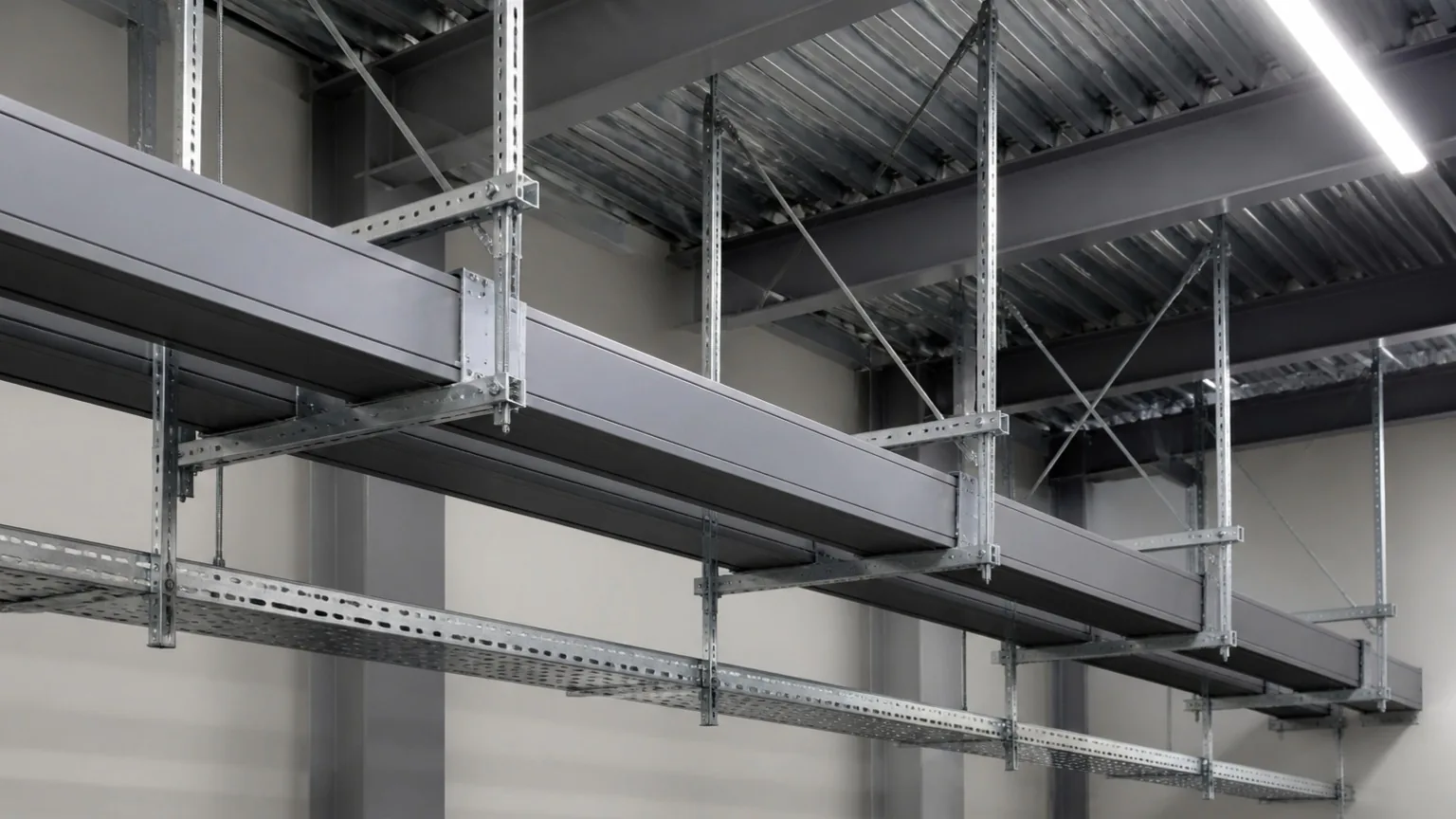
Trapeze hangers, floor stands, wall sleeves and fire-stop frames sized to the run.
Where specified, bar, insulators and hardware installed to the customer's design so the section arrives ready to set.
Send the bus layout and equipment drawings; we detail the housings around them.


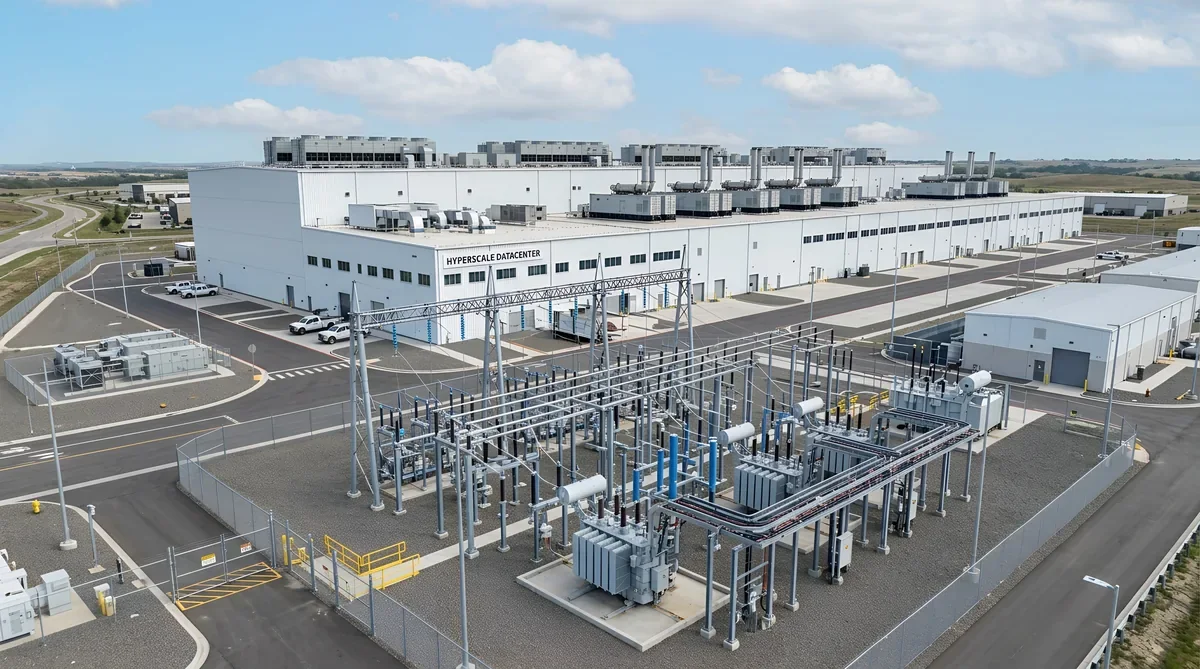
Enclosed bus assemblies sit between the largest pieces of equipment in a power system: unit substations, transformer-to-switchgear connections, generator paralleling rooms, and the main electrical rooms of data centers, hospitals and industrial plants where cable would be too bulky or too slow to install.
Switchgear and transformer OEMs buy housings and sections to complete their equipment scope; EPC contractors and electrical contractors buy runs detailed to the room; data center developers buy them as part of the medium- and low-voltage power chain from the substation fence to the PDU. In every case the housing has to fit equipment that was built somewhere else, which is why we detail against the equipment drawings rather than nominal dimensions.
| Housing materials | Aluminum (5052, 6061) or carbon steel; stainless on request |
|---|---|
| Configurations | Straight, elbow, offset, tee, transition, termination and expansion sections |
| Joints | Bolted flanged joints with gasket; removable bolted covers |
| Provisions | Inspection covers, drains, breathers, ventilation and heater mounting per design |
| Terminations | Transformer throat and switchgear flange adapters detailed to the equipment drawings |
| Supports | Trapeze hangers, floor stands, wall sleeves and penetration frames |
| Finish | Powder coat in-house (ANSI 61 and custom colors); mill-finish aluminum on request |
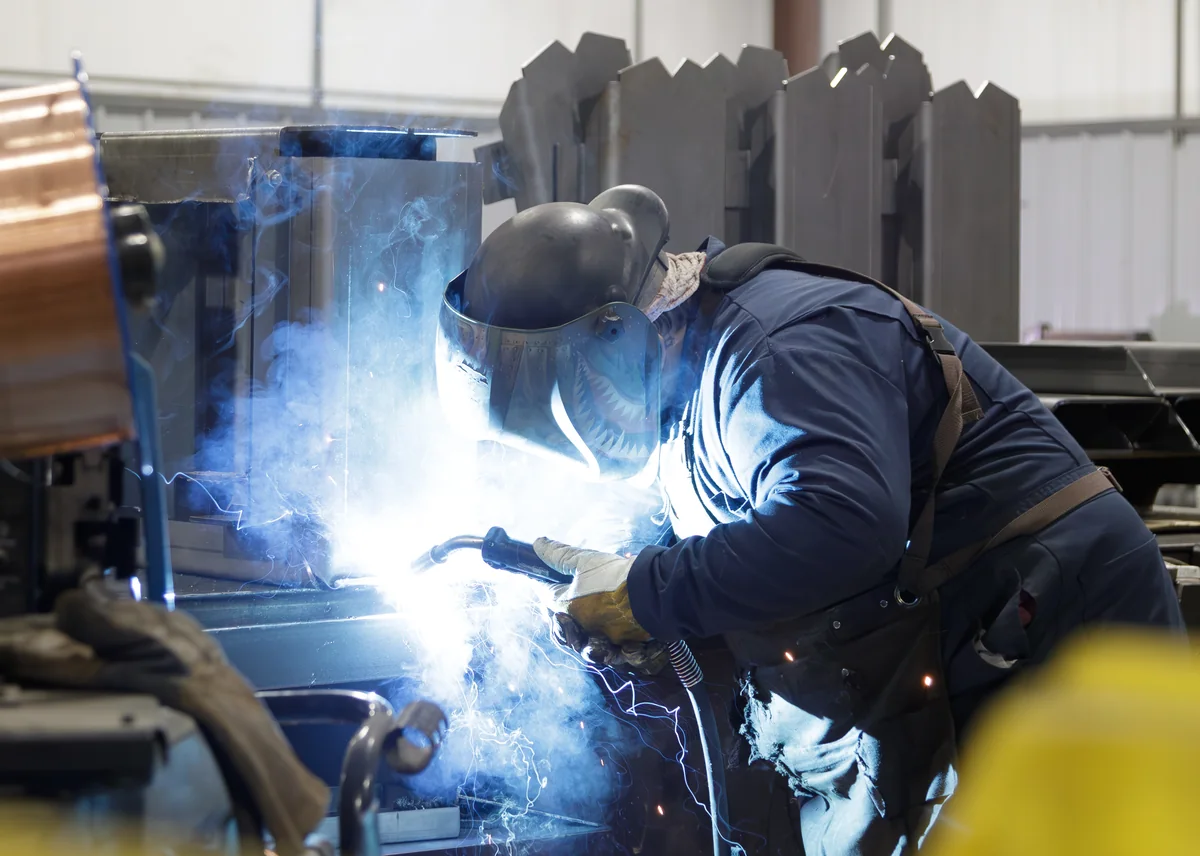
| Fabrication | CNC laser cutting, press-brake forming, certified welding (aluminum and steel) |
| Documentation | Material certs, dimensional inspection, finish records; ISO 9001:2015 |
| Also specified as | Non-seg bus duct, non-segregated phase bus, enclosed bus duct, bus duct housing, transformer-to-switchgear bus, generator bus duct |
Representative capabilities — exact ranges, ratings, and finishes are confirmed per project. Send drawings for a firm quote.
Enclosed bus fails at the interfaces. The transformer throat is an inch off the drawing, the switchgear lands on a housekeeping pad the bus layout didn't show, the wall penetration is framed for a different section size. FabTek's engineering group reviews the bus layout against the transformer and switchgear submittals before we cut, and flags conflicts while they are still a drawing change. Sections are trial-fit in the shop where the run has more than two joints, so the pieces that ship bolt together on site the way they bolted together here. Our guide to non-segregated bus duct ampacity, bar size and housing explains how the electrical design drives the housing.
Built at four production sites in Hazlehurst, Mississippi.
ISO 9001:2015 quality management, AWS-certified welding, OSHA-compliant facilities.
In-house powder coat backed by an IEEE 2000-hour salt-spray certification.
Reserved-line capacity and the automation to grow with your volume.
Both. We fabricate the housings, sections, terminations and supports to print, and where the customer specifies it we install the bar, insulators and hardware so the assembly ships complete.
A bus duct in which all three phase conductors run inside one grounded metal enclosure, insulated and supported on standoffs, with no metal barriers between phases. It is the most common enclosed bus for connections between transformers, generators and switchgear at low and medium voltage.
FabTek Industries fabricates enclosed bus housings and complete assemblies to OEM drawings at its Mississippi plants, with in-house powder coat and nationwide shipment. Send the bus layout and equipment drawings for a quote.
Yes. We detail termination sections to the equipment manufacturer's drawings and can trial-fit against supplied templates before shipment.
Explore related lines: Bus ducts & busways · Data center busway · Switchgear enclosures · Transformer tanks
Further reading: Non-segregated bus duct: ampacity, bar size and housing · Bus duct and busway for data centers · The data center electrical room power chain


Have a bus layout to quote? Send the drawings and the equipment submittals — we'll come back with a fabrication plan and a firm price, typically within one business day.