Welding is where separate cut and formed parts become one assembly, and the process chosen decides how fast the part is built, how much it distorts, how much grinding it needs and how it looks under paint. Most fab shops run several processes side by side. Here is how MIG, TIG, laser and stud welding compare, and how a fabricator picks the right one for cabinets, tanks and structural steel.
Need parts cut, formed, welded or finished? Call 601.892.5017 or email collin.t@fabtekindustries.com — send the drawing and we’ll quote it.
- MIG (GMAW) is the production workhorse: fast deposition on carbon steel sheet, plate and structural shapes. Pulsed MIG extends it to thinner material, stainless and aluminum with less spatter and heat.
- TIG (GTAW) is slower but precise and clean — the default for thin stainless, aluminum, cosmetic seams and critical root passes.
- Laser welding puts a narrow, low-heat seam on thin sheet with minimal distortion and little grinding, ideal for long enclosure seams before powder coat. Stud welding attaches threaded studs and pins without drilling a hole.
- Laser vs. Plasma vs. Waterjet Cutting
- Fiber Laser Cutting: Thickness, Tolerance & Edge Quality
- Structural Steel Processing: Coping, Drilling & Sawing
- Press Brake vs. Panel Bender
- Plate Rolling: Cylinders, Cones & Tank Shells
- When a Fabricated Part Needs Machining
- MIG vs. TIG vs. Laser Welding (you are here)
- How Powder Coating Works
- Abrasive Blasting & SSPC Surface Prep
How each process works
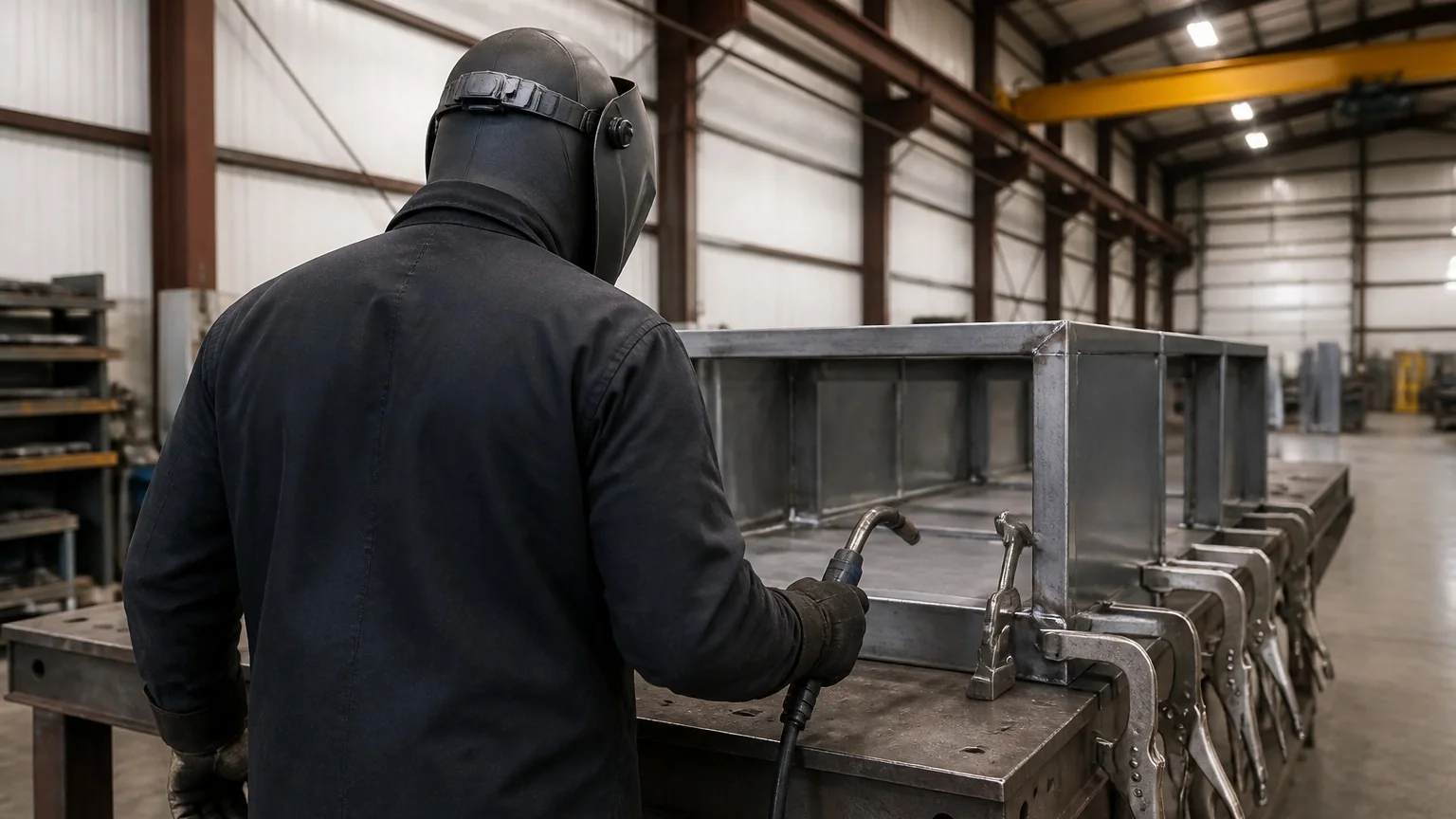
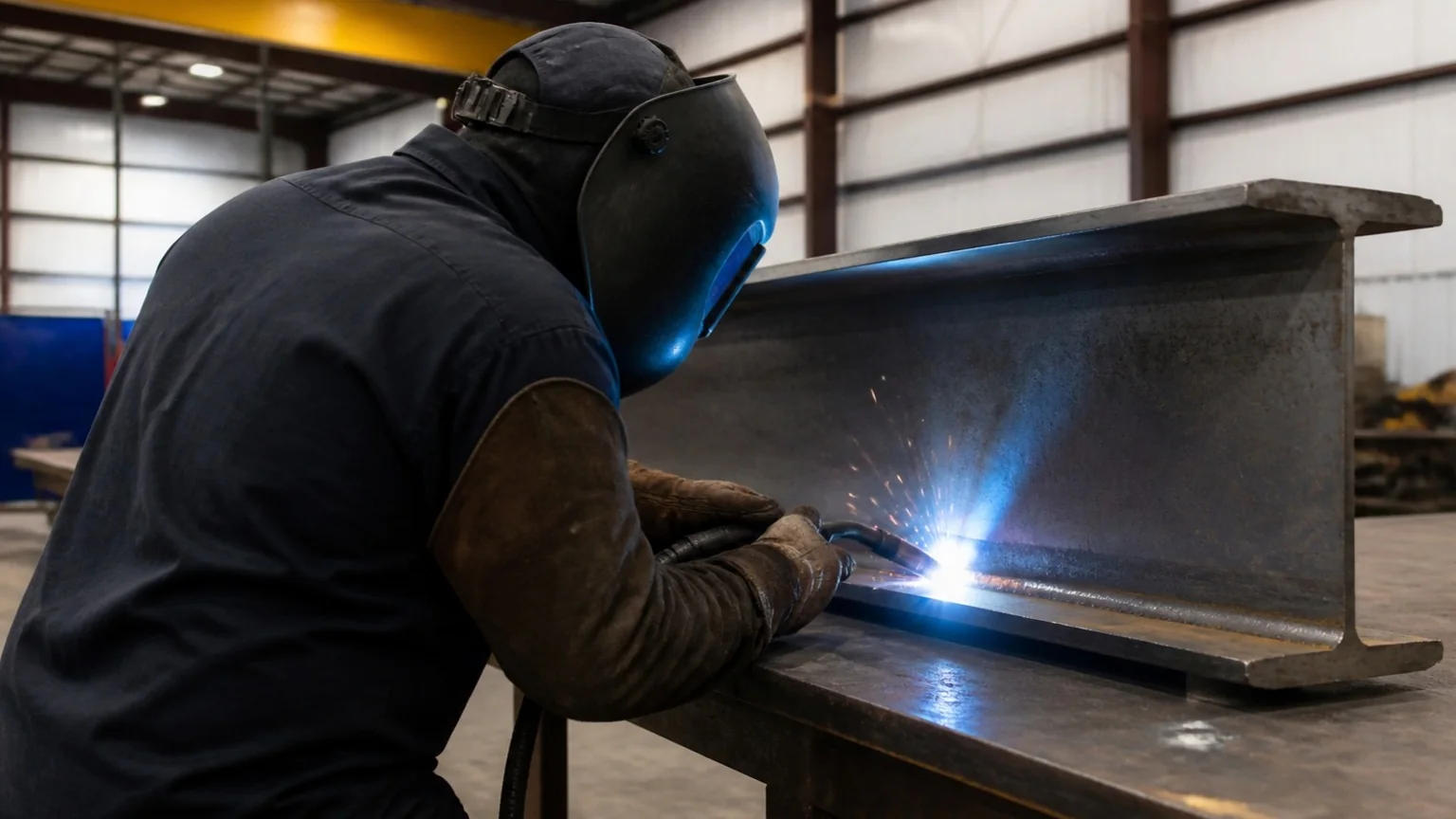
MIG — gas metal arc welding (GMAW). A wire electrode feeds continuously through the gun, an arc melts the wire and the base metal, and a shielding gas protects the pool. It is fast, easy to automate and forgiving, which is why it builds most carbon-steel frames, cabinets, tanks and structures. In short-circuit transfer it welds thin sheet; in spray transfer it lays heavy welds on plate; in pulsed mode the machine pulses the current so the arc runs cooler and cleaner, extending MIG to thinner gauges, stainless and aluminum and to out-of-position work.
TIG — gas tungsten arc welding (GTAW). A non-consumable tungsten electrode holds the arc and the welder adds filler rod by hand. Heat is controlled precisely with a foot pedal or program. TIG is slower than MIG, but the welds are clean, spatter-free and exact, so it is used for thin stainless and aluminum, visible seams, small parts and root passes on critical joints.
Flux-cored (FCAW) and stick (SMAW). Higher-deposition and more wind-tolerant processes used on heavy structural joints and in the field.
Laser welding. A focused laser beam melts a very narrow zone at the joint, often with little or no filler. Because heat input is a fraction of an arc weld’s, the part barely moves, the heat-affected zone is narrow, and the seam needs little grinding before coating. Handheld and cell-based fiber laser welders have made the process practical for sheet-metal fabricators, especially on long seams in thin carbon steel, stainless and aluminum.
Side-by-side comparison
| MIG / pulsed MIG | TIG | Laser | |
|---|---|---|---|
| Heat input | Medium to high (pulsed lower) | Low to medium, precisely controlled | Very low |
| Speed | Fast | Slow | Very fast on long seams |
| Thickness | Thin sheet to heavy plate | Thin to medium | Thin sheet to light plate |
| Distortion | Moderate; managed by sequence | Low to moderate | Minimal |
| Cleanup | Some spatter and grinding | Little | Little or none |
| Joint fit-up | Tolerant of gaps | Needs good fit-up | Needs tight fit-up |
| Typical use | Frames, tanks, structures, cabinets | Stainless, aluminum, cosmetic and root welds | Enclosure seams, thin stainless and aluminum |
Choosing by material and part
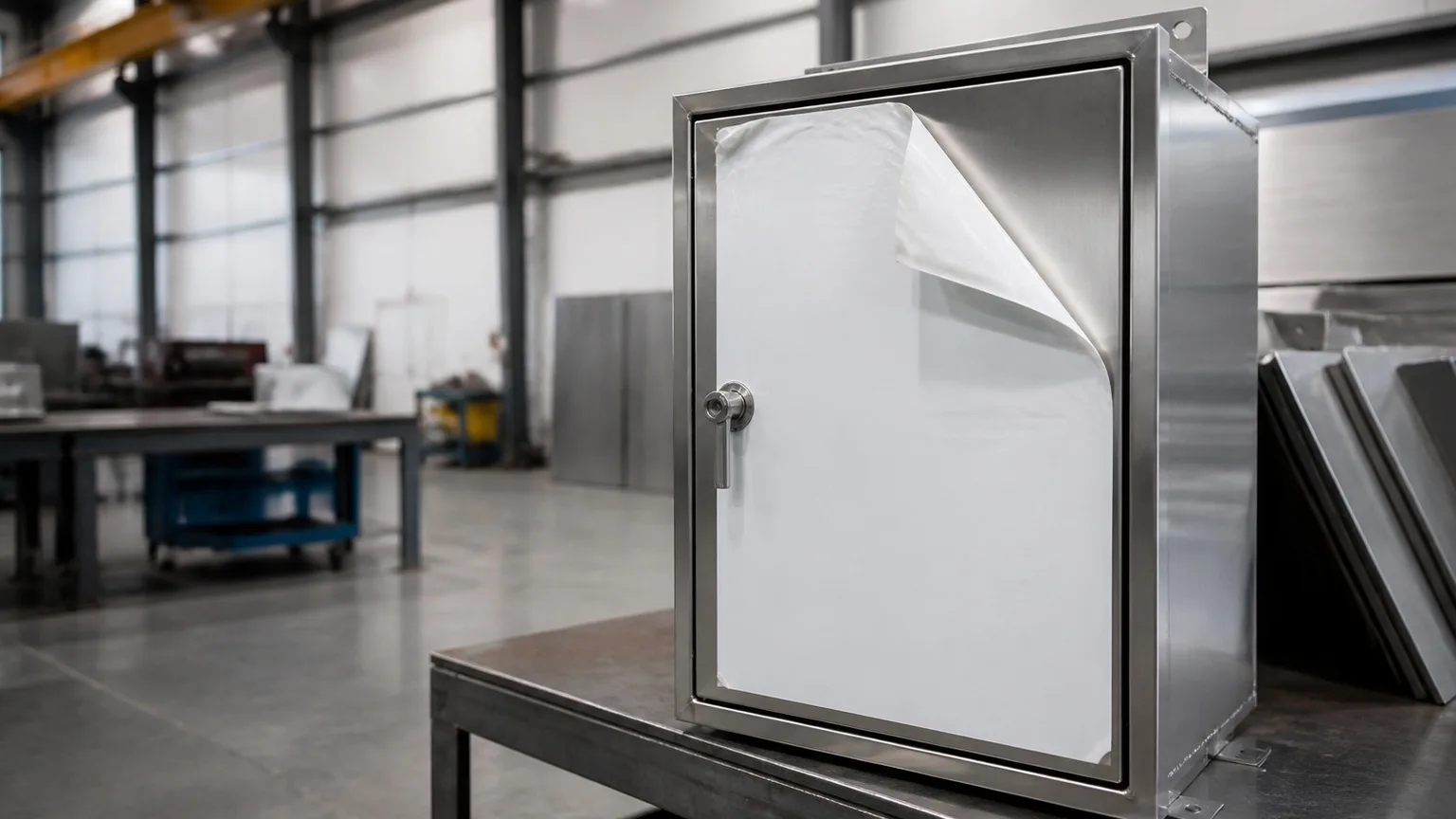
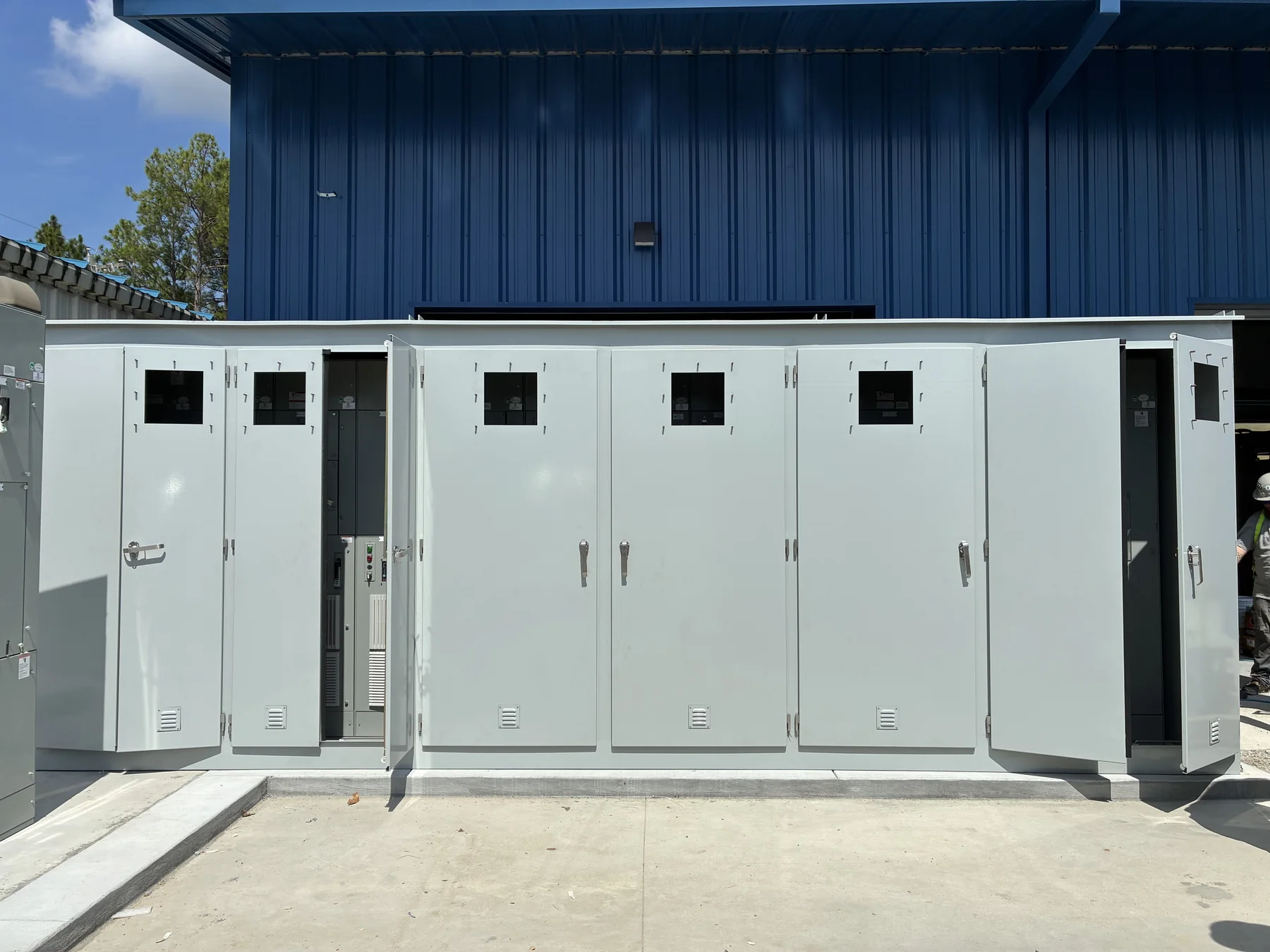
Structural steel and heavy weldments — substation members, platforms, skids, tank bases — are MIG, spray or flux-cored, with positioners to bring joints into the flat position. Transformer tanks are MIG on walls, bases and radiator headers, and every seam is leak-tested because the tank must hold oil under vacuum. Carbon-steel cabinets and enclosures are MIG or pulsed MIG on frames and laser on long seams where appearance and flatness matter. Stainless enclosures — NEMA 4X, washdown — are TIG, pulsed MIG or laser in a cell separated from carbon steel so the stainless isn’t contaminated, then passivated. Aluminum housings and bus enclosures are TIG or pulsed MIG. Galvanized sheet welds with MIG or laser, with fume extraction and touch-up of the zinc afterward.
Distortion and heat input
Every weld shrinks as it cools and pulls the metal around it. On heavy plate that shows up as angular distortion or a bowed member; on thin sheet it shows up as oil-canning and wavy panels that are obvious under a gloss powder coat. Fabricators control it with fixtures, balanced weld sequences, stitch welding instead of continuous welds where the design allows, and the right process: pulsed MIG and laser welding put less heat into thin parts. The designer can help too — specify only the weld size and length the joint actually needs, since oversized welds are the most common cause of avoidable distortion.
Codes and qualification
The process is only as good as the procedure and the welder. In the U.S., the AWS D1 structural welding codes govern most fabricated steel: D1.1 for structural steel, D1.3 for sheet steel up to 3/16″, D1.6 for stainless and D1.2 for aluminum. Each requires a written welding procedure specification (WPS), qualified by test (PQR), and welders qualified to that procedure. Which code applies to which part is covered in AWS D1.1 vs. D1.3 vs. D1.6, and what the certifications actually guarantee in ISO 9001 and AWS-Certified Welds.
Where stud welding fits
Stud welding attaches a threaded stud, pin or boss to a panel in a fraction of a second with a special gun. Drawn-arc stud welding lifts the stud, draws an arc, and plunges it into a molten pool, making a full-strength weld suitable for plate and heavier sheet. Capacitor-discharge (CD) stud welding uses a very short, high-current discharge that can weld small studs to thin sheet without marking the far side. Both put a fastener where it is needed without drilling a hole, so there is no leak path through a tank wall or enclosure panel and the show face stays clean — an alternative to press-in hardware and tapped holes.
How FabTek runs it
FabTek’s MIG and TIG cells run GMAW including pulsed MIG, GTAW, and FCAW or SMAW where specified, on Miller and Airgas Deltaweld 450/500-class power sources, with positioners and manipulators for structural and tank weldments and product fixtures for cabinet families. Stainless runs in a separate cell. A dedicated laser welding cell (HK and Airgas systems) handles thin sheet and long seams in carbon, galvanized, stainless and aluminum. An Arc 1200 drawn-arc stud welder, with capacitor-discharge for thin sheet, attaches studs, pins and insulation studs. Welders are AWS certified to D1.1, D1.3 and D1.6, and welder IDs, WPS/PQR records and inspection records are kept under ISO 9001:2015. More on the Welding page.
Frequently asked questions
What is the difference between MIG and TIG welding?
MIG feeds a wire electrode continuously and is fast and forgiving, making it the production process for carbon steel frames, tanks and structures. TIG uses a non-consumable tungsten electrode with hand-fed filler; it is slower but cleaner and more precise, and is preferred for thin stainless, aluminum and cosmetic or critical welds.
Is laser welding better than MIG or TIG?
For thin sheet and long seams, often yes: laser welding has very low heat input, minimal distortion and little cleanup, which suits enclosure seams before powder coat. It needs tight fit-up and is not the right process for heavy structural welds, where MIG or flux-cored welding is used.
Which welding process is used for stainless steel enclosures?
TIG, pulsed MIG or laser welding, in a cell kept separate from carbon steel to avoid contamination, followed by passivation. NEMA 4X and washdown enclosures are commonly built this way.
What is stud welding used for?
Stud welding attaches threaded studs, pins and insulation studs to panels, tanks and cabinets without drilling a hole, so there is no leak path and the far side stays clean. Drawn-arc stud welding suits plate and heavier sheet; capacitor-discharge stud welding suits thin sheet.