Cutting, forming and welding build the shape of a part; machining makes the features that have to be exact. A gasket face that must seal, a bore that carries a bearing, a tapped pattern that must line up with a customer’s equipment, a shaft that runs true — these are machining jobs, even on a part that is otherwise pure fabrication. Here is where the line falls, and how a fab shop with its own machining handles it.
Need parts cut, formed, welded or finished? Call 601.892.5017 or email collin.t@fabtekindustries.com — send the drawing and we’ll quote it.
- Machine a fabricated part when a feature needs tolerance, flatness or finish that cutting, forming and welding can’t hold — gasket faces, bored holes, tapped patterns, bearing seats, shafts.
- Typical fabrication tolerances are ±1/32″ to ±1/16″ on welded assemblies; CNC machining holds ±0.001–0.005″ and controlled flatness across a face.
- Machine after welding (a machined weldment) when the feature must be true to the finished part, because weld heat moves steel; leave stock allowance for it.
- Laser vs. Plasma vs. Waterjet Cutting
- Fiber Laser Cutting: Thickness, Tolerance & Edge Quality
- Structural Steel Processing: Coping, Drilling & Sawing
- Press Brake vs. Panel Bender
- Plate Rolling: Cylinders, Cones & Tank Shells
- When a Fabricated Part Needs Machining (you are here)
- MIG vs. TIG vs. Laser Welding
- How Powder Coating Works
- Abrasive Blasting & SSPC Surface Prep
What fabrication holds versus what machining holds
| Process | Typical tolerance | Notes |
|---|---|---|
| Fiber laser cutting | ±0.005–0.010″ | Feature size and position on sheet and light plate |
| Plasma cutting | ±0.015–0.030″ | Plate profiles and holes |
| Press brake forming | ±0.5–1° angle; ±0.010–0.030″ per bend | Tolerance stacks with each bend |
| Welded assembly | ±1/32–1/16″ overall | Weld shrinkage and distortion drive it |
| CNC milling | ±0.001–0.005″; flatness to a few thousandths | Faces, pockets, bores, tapped holes |
| CNC turning | ±0.001–0.002″ on diameters | Shafts, bushings, rollers, fittings |
Typical shop ranges; what a given part can hold depends on size, material and fixturing. Put tight tolerances only on the features that need them.
The gap between those rows is the whole point. A cabinet door does not care about a few thousandths; a transformer cover flange that has to seal against a gasket over its whole perimeter does. Welding pulls a flange out of flat, and no amount of care at the welding table puts it back to machining tolerance.
Features that call for machining
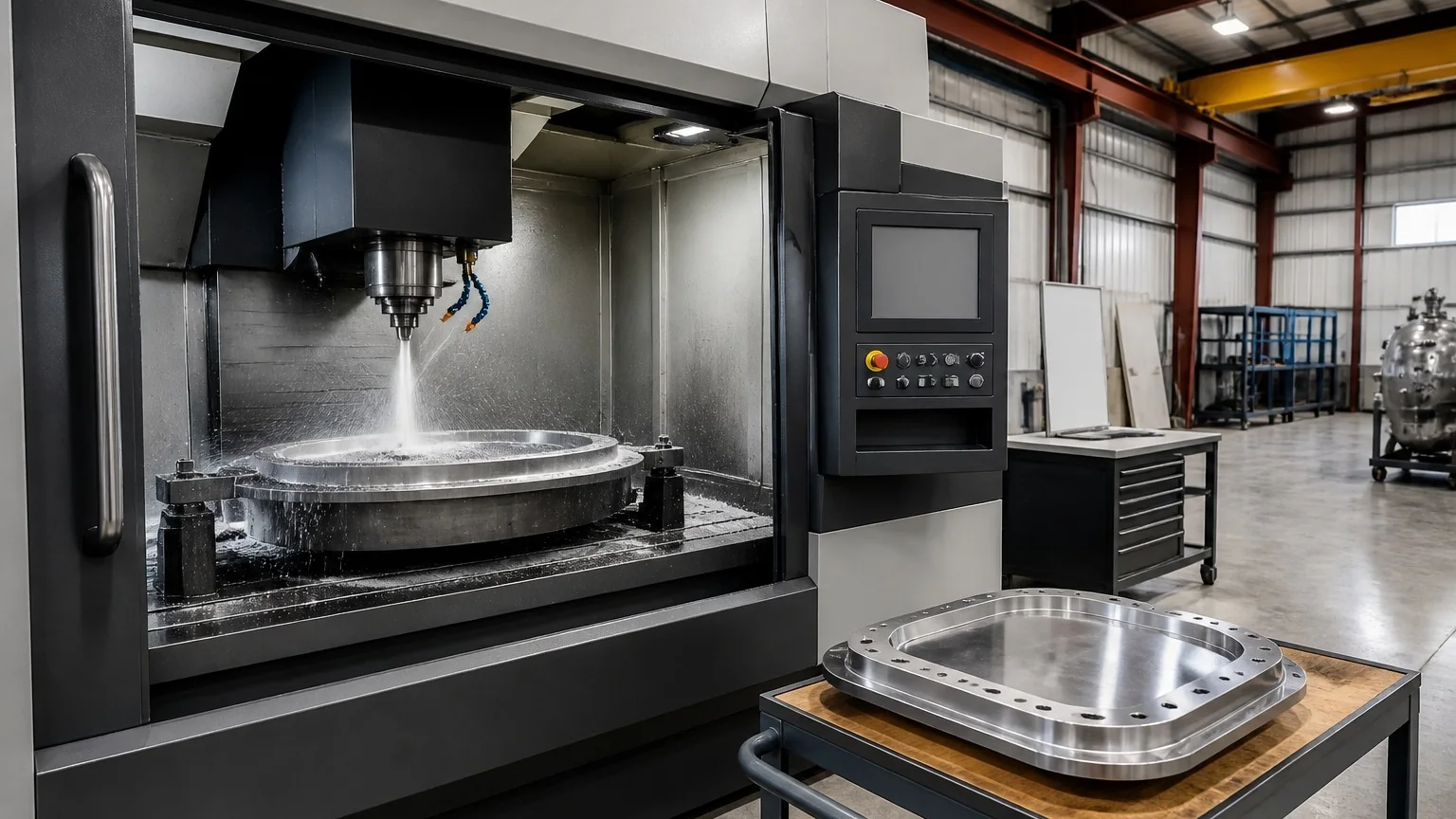
Sealing faces — flange and gasket faces on tanks, covers, conservators and manholes, where flatness and surface finish make the seal. Bored holes — bearing bores, pivot and hinge bores, dowel and locating holes. Tapped patterns — threaded holes that must line up with a customer’s equipment, especially in thick material where a thermally cut hole would harden. Mounting pads — bushing pads, ground pads and equipment pads that must be flat and coplanar. Round parts — shafts, rollers, bushings, spacers, pins and fittings for conveyors, tanks and machinery. Precision base plates — machined flat where equipment must sit level.
Machine before welding, or after?
If a feature must be accurate relative to the finished part, machine it after welding. Weld heat shrinks and pulls steel, so a flange face milled flat before it is welded to a tank will not be flat afterward, and holes drilled in two plates before welding may not line up once the assembly is complete. A machined weldment is welded first, sometimes stress-relieved if it is heavy, then fixtured on the machine and machined to the drawing. If a feature only needs to be accurate within its own piece — a bushing, a turned shaft, a small bracket — machine it first and weld or assemble it afterward. The drawing should make the sequence clear: machining allowance shown on the weldment, and critical dimensions referenced to machined datums rather than to fabricated edges.
Milling versus turning
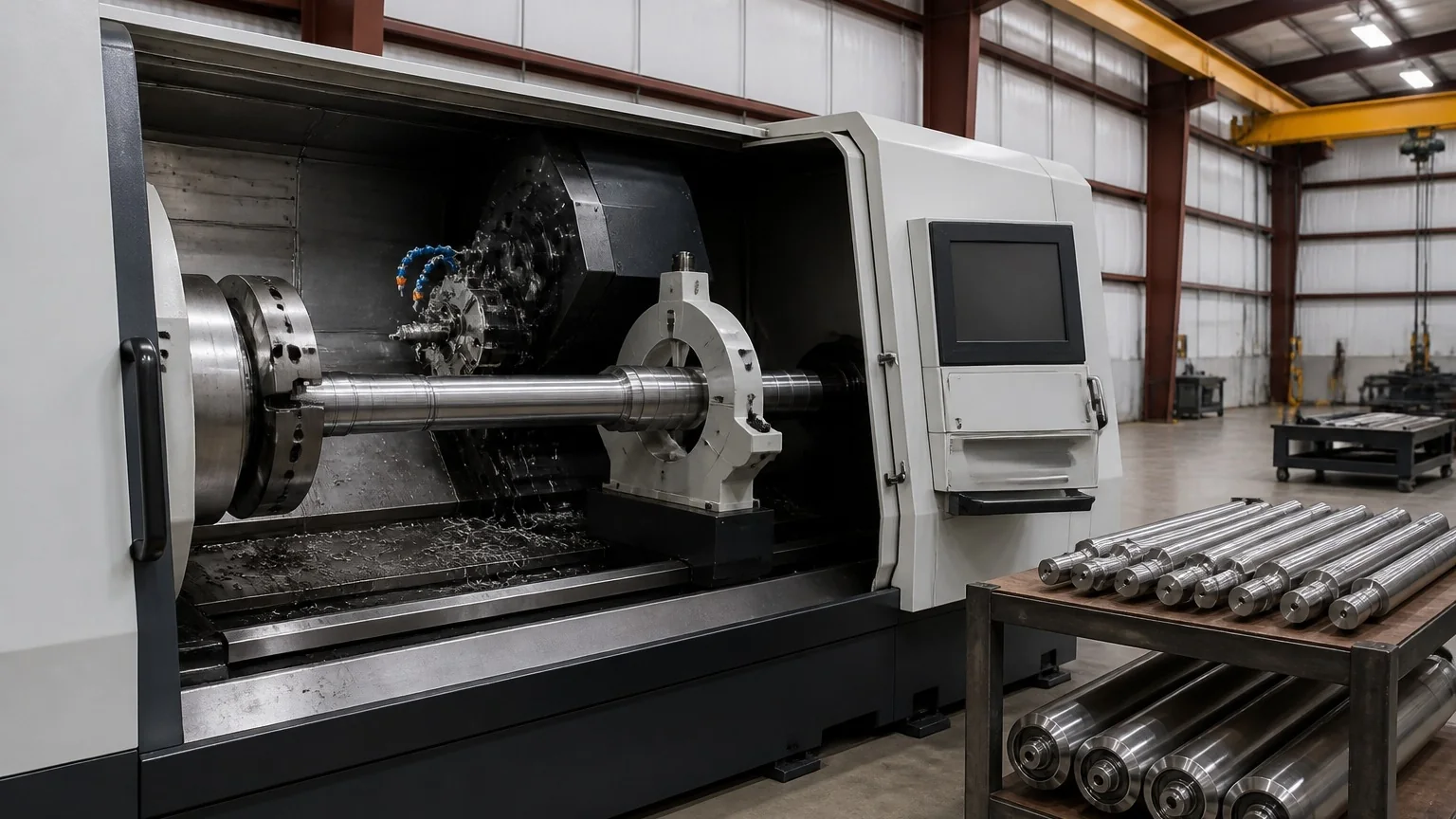
Milling removes metal with a rotating cutter while the part is held still; a CNC vertical machining center faces, pockets, slots, drills, bores, taps and counterbores from a program. Most machining on fabricated parts is milling, because most fabricated parts are prismatic: plates, flanges, frames and weldments. Turning spins the part against a stationary tool; a CNC lathe faces, turns diameters, bores, threads and grooves round parts. Shafts, rollers and bushings are turning jobs. Many parts need both — a roller turned on a lathe, then its keyway milled.
Designing for machining
Leave stock allowance — commonly 1/16″ to 1/8″ — on any fabricated surface that will be machined, so the cutter cleans up the whole face after welding distortion. Give the part a clear datum scheme so the machinist knows what to locate from. Keep machined features reachable on a vertical machining center without deep, narrow access. Specify surface finish only where it matters (a gasket face) rather than across the part. And tell the fabricator which dimensions are critical: it changes how the weldment is fixtured and in what order it is built.
How FabTek runs it
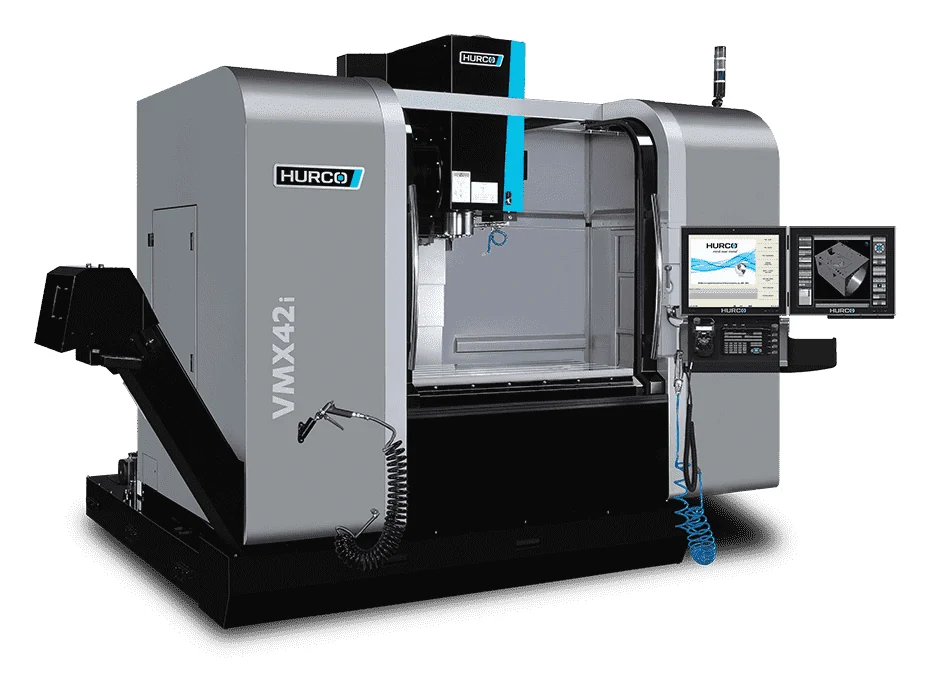
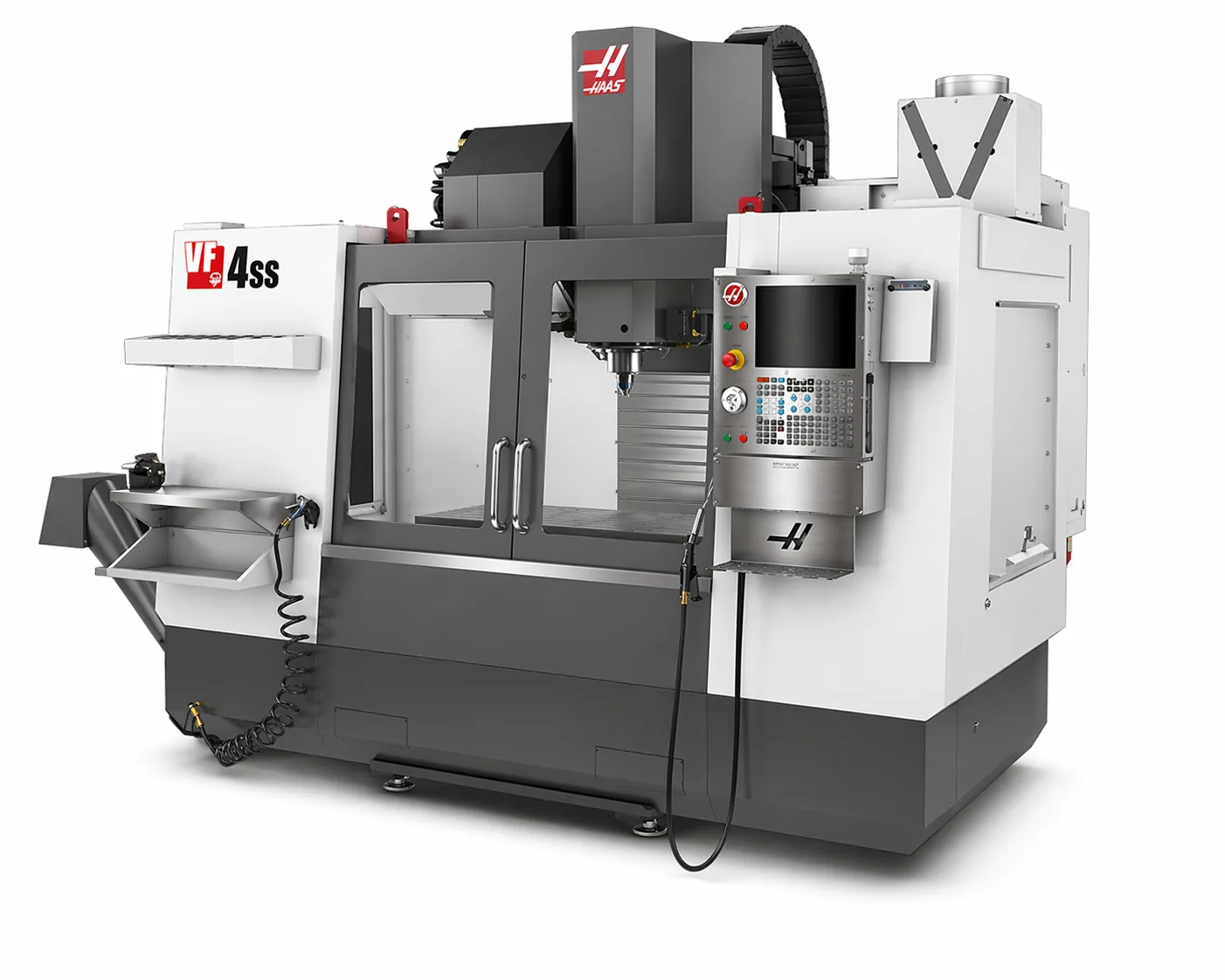
FabTek machines in house, so a weldment goes from the welding cell to the mill without a second vendor or an outside schedule. Milling runs on Haas VF-series and a Hurco VMX42i vertical machining center, with Jet and Bridgeport manual mills for secondary work: flange and gasket faces, bushing pads, base plates, hole patterns and machined weldments. Turning runs on Hurco TM10, Daewoo 230B and Sharp 1800LV CNC lathes, with Monarch, LeBlond and other engine lathes for one-offs: shafts, bushings, rollers, spacers, fittings and threaded parts for conveyors and tanks. Programs come from FabTek engineering’s models or customer STEP, SolidWorks and Inventor files, and parts are inspected to the drawing under ISO 9001:2015. More on the CNC & Machining page.
Frequently asked questions
When does a fabricated part need machining?
When a feature needs tolerance, flatness or surface finish that cutting, forming and welding cannot hold: gasket and flange faces that must seal, bored holes for bearings or pins, tapped patterns that must align with equipment, flat mounting pads, and round parts such as shafts and bushings.
What tolerance does CNC machining hold compared with fabrication?
Welded fabricated assemblies typically hold about plus or minus 1/32 to 1/16 inch overall. CNC milling typically holds plus or minus 0.001 to 0.005 inch and controlled flatness, and CNC turning about plus or minus 0.001 to 0.002 inch on diameters.
Should a weldment be machined before or after welding?
After, if the machined feature must be accurate relative to the finished assembly, because welding heat distorts the steel. Leave stock allowance on the surfaces to be machined. Features that only need to be accurate within a single piece can be machined first.
What is the difference between CNC milling and CNC turning?
Milling uses a rotating cutter on a stationary part and suits flat and prismatic parts such as plates, flanges and weldments. Turning spins the part against a stationary tool and suits round parts such as shafts, rollers and bushings. Many parts need both.