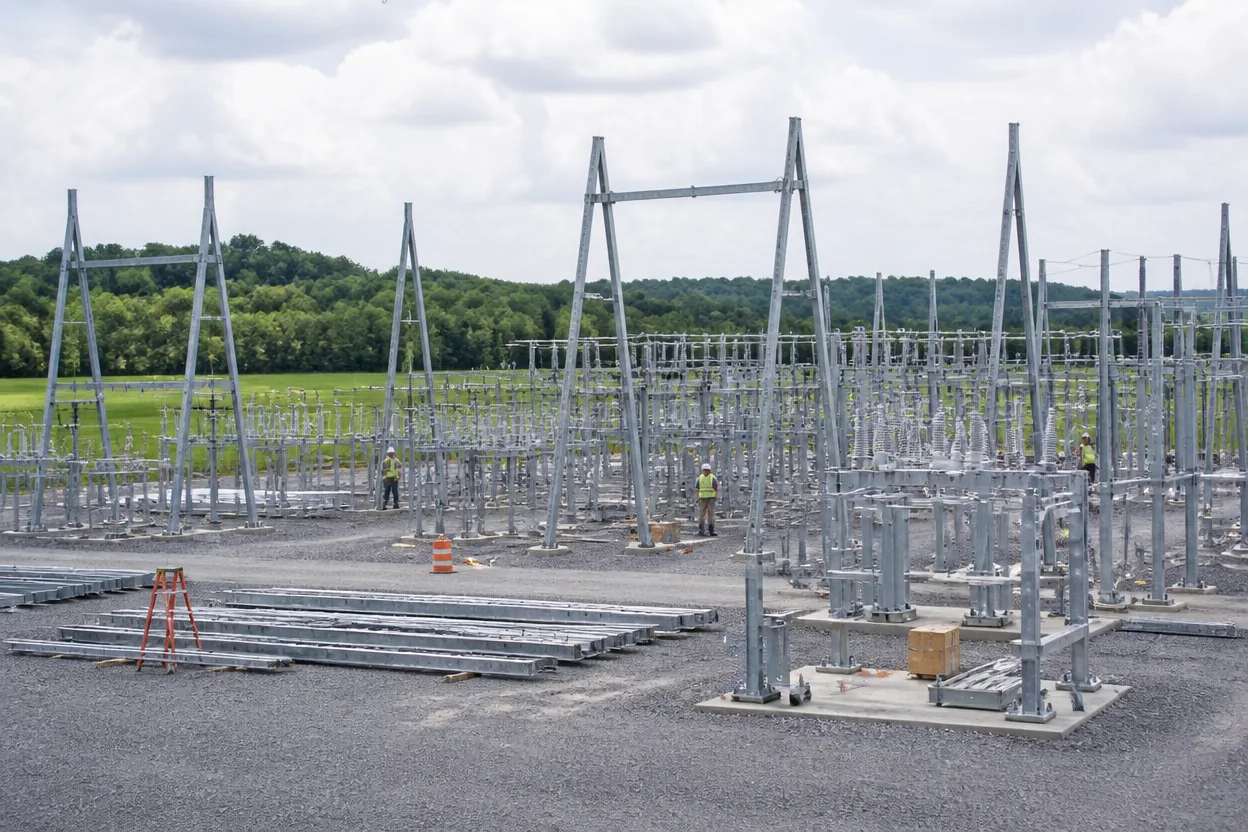
A crane crew on a substation site costs a great deal per hour whether it is setting steel or waiting for it. The difference is logistics: whether the structures arrived bundled in the order the erector needs them, marked so anyone can find piece 14-B, with the bolts to put it up, staged where the crane can reach it. Part 5 of this series is about that work — the least visible part of a steel package and the one erectors remember.
Have a substation steel package to quote? Call 601.892.5017 or email collin.t@fabtekindustries.com — send the layout and equipment list and we’ll turn it around fast.
- The delivery plan is written from the erection sequence backward — what goes up first ships first and lands closest to the crane.
- Every piece carries a match-mark to the erection drawing; every structure ships with its hardware kit; every truck carries a packing list by piece mark.
- Galvanized steel is durable but not indestructible: dunnage, separation and drainage on site prevent the scrapes and wet-storage stain that turn into A780 repairs.
- Steel deliveries are coordinated with foundation cure and equipment heavy-haul dates so the yard is never blocked and never waiting.
- From Load Request to Layout: How a Substation Project Starts
- The Long-Lead Equipment Order
- The Structures Package: Detailing Steel to Equipment
- Fabrication and Galvanizing: How Substation Steel Is Made
- Delivery Sequencing and Site Logistics (you are here)
- Field Erection: How Substation Steel Goes Up
- Energization and Commissioning
- The Change Order: Managing Late Design Changes
Why logistics decides erection
Substation erection is a crane-paced activity: one or two cranes, a small crew, and a sequence dictated by access and by which structures must exist before others can be set (dead-ends before bus, stands before equipment, structures before bus and insulators). If the steel for the next lift is on the truck at the back of the yard, under three other bundles, the crane idles. If a bundle arrives without its hardware, the crew hand-carries bolts from a distant kit or waits for a delivery. Every one of these delays is a fabricator’s logistics decision made weeks earlier. We flagged the pattern in the Substation Steel Procurement Checklist: schedules slip in the handoffs, and delivery is the biggest handoff there is.
Building the delivery plan
Before the first release ships, fabricator and erector agree a delivery plan derived from the erection drawing and sequence: which structures go up in which order, how many per day the crane can set, where the laydown area is and how trucks access it, and when foundations will have cured to take steel. From that, the fabricator schedules truckloads — each carrying the structures for a defined span of erection days, loaded so the first-needed steel comes off first — and dates them against the erection calendar with a buffer that matches the site’s laydown capacity. On a large yard this plan is a spreadsheet the two parties maintain together; on a small one it is a single page. Either way it exists before the truck does.
Bundling, marking and kits
- Bundle by structure. All members of one dead-end or one stand banded together, with the structure number on the bundle tag, so the crew picks up a structure rather than sorting a pile.
- Match-mark every piece. The piece mark from the erection drawing, applied with a method that survives galvanizing (stamped or welded-bead tags, or durable stencil applied after) and is legible from the ground and in rain. A mark that washed off in the first storm has made every piece anonymous.
- Kit the hardware. Galvanized bolts, nuts and washers per structure, counted with a small overage, bagged, tagged to the structure, and shipped on the same truck as the steel it fits — not in a single crate for the whole yard.
- Separate the small stuff. Insulator attachment plates, grounding pads, shims and anchor-bolt templates in labeled containers, because loose small parts in a steel bundle disappear.
- Packing list by piece mark. Each truck carries a list the receiver can check off, referencing the erection drawing.
Trucks and loading
Substation steel travels on flatbeds and step-decks; tall dead-end columns and gantry sections may require permits and escorts, and splice locations are chosen at detailing so nothing exceeds legal length. Loads are built last-on, first-off in erection order, with dunnage between layers and bundles so galvanized surfaces do not grind against each other on the highway, and strapped over protective padding at edges. The fabricator confirms site access — turning radius, bearing on unpaved yards, overhead lines at the gate — before dispatch, and gives the site a delivery window. From Hazlehurst, most Southeastern and Gulf sites are a single day’s haul, which keeps loads flexible when the erection schedule moves.
Laydown and storage
Hot-dip galvanizing is tough, but steel dropped on gravel, dragged across another bundle or left in standing water is damaged steel. Site practice: unload with padded slings or forks with protection; set bundles on dunnage off the ground, separated so air circulates between pieces, and sloped so water drains — tightly stacked, wet galvanized steel develops white “wet-storage stain,” usually cosmetic but alarming to an owner’s inspector; keep bundles in erection order and near the structures they become, within crane reach; and keep hardware kits dry and with their steel. Damage that does occur is repaired to ASTM A780, as Part 4 described — but the better outcome is not needing to.
An erector can tell in the first ten minutes whether a fabricator has been to a job site. It shows in which bundle comes off the truck first.
Receiving inspection
The receiver checks each truck against the packing list: piece count by mark, hardware kits present, visible coating damage noted with photos, and any discrepancy reported the same day so a replacement piece can ship while erection continues on what did arrive. A good fabricator makes this easy — legible marks, a clear list — and responds to a shortage as a rush, because it knows what a missing gusset does to a crane schedule.
Coordinating with equipment
Steel deliveries have to thread between two other logistics streams. Foundations: steel cannot be set until concrete has cured and anchor bolts have been surveyed, so early steel deliveries are staged, not set, and the laydown area must hold them. Equipment heavy-haul: a transformer delivery closes the yard’s access road and needs a clear path to its pad, so steel trucks are scheduled around it, and the structures that surround the transformer pad are typically erected before the transformer arrives so the crane does not have to work over it. The delivery plan carries all three calendars, and the weekly site call updates it. Then the crane goes to work — Part 6.
FabTek Industries fabricates substation structures for utilities, EPCs and data center developers — bundled by structure, match-marked, kitted with galvanized hardware, loaded in erection order and delivered against a plan built with the erector — under an ISO 9001:2015 quality system with AWS D1.1-certified welding, from four production sites in Hazlehurst, Mississippi, and our own crews handle field erection. See how we work with EPCs, with utilities, or send us the layout.
Frequently asked questions
How should substation steel be delivered to the site?
Bundled by structure and loaded last-on, first-off in erection order; every piece match-marked to the erection drawing; galvanized hardware kitted per structure on the same truck; small parts in labeled containers; and a packing list by piece mark for receiving inspection — all against a delivery plan agreed with the erector.
What is match-marking?
Applying each member's piece mark from the erection drawing in a durable, legible form — stamped or welded tags, or stencil applied after galvanizing — so the crew can identify pieces on the ground and assemble structures without sorting or guessing.
How should galvanized steel be stored on a substation site?
Off the ground on dunnage, separated so air circulates, sloped to drain, within crane reach in erection order, unloaded with padded rigging. Tightly stacked wet galvanized steel develops white wet-storage stain; dragging or dropping damages the coating and requires ASTM A780 repair.
How are steel deliveries coordinated with equipment deliveries?
Steel is staged after foundations cure and anchor bolts are surveyed, and scheduled around transformer heavy-haul dates that close site access. Structures around the transformer pad are usually erected before the transformer arrives so the crane does not work over it.