A microgrid — a campus, a military installation, a hospital, a water utility, an industrial site with its own generation and storage — needs a handful of enclosures that do not exist on an ordinary site: a cabinet for the microgrid controller, enclosures for the transfer switches that island and reconnect, and a protection cabinet at the point of common coupling. Integrators design the system; the enclosures are fabricated to their prints. This spec sheet covers each one.
Microgrid integrator sourcing controller, transfer switch or interconnection enclosures? Call 601.892.5017 or email collin.t@fabtekindustries.com — send a print and a quantity and we’ll quote it.
- A microgrid adds three enclosure types to a site: controller cabinet, transfer switch enclosures and the interconnection protection cabinet.
- The controller cabinet is an electronics enclosure: climate, clean power and communications matter most.
- Transfer switch enclosures follow the switch OEM’s listed design; the fabricator builds the outdoor housing around it.
- Integrators source them per project from a standard family, with the interconnection cabinet to the utility’s standard.
The microgrid controller cabinet
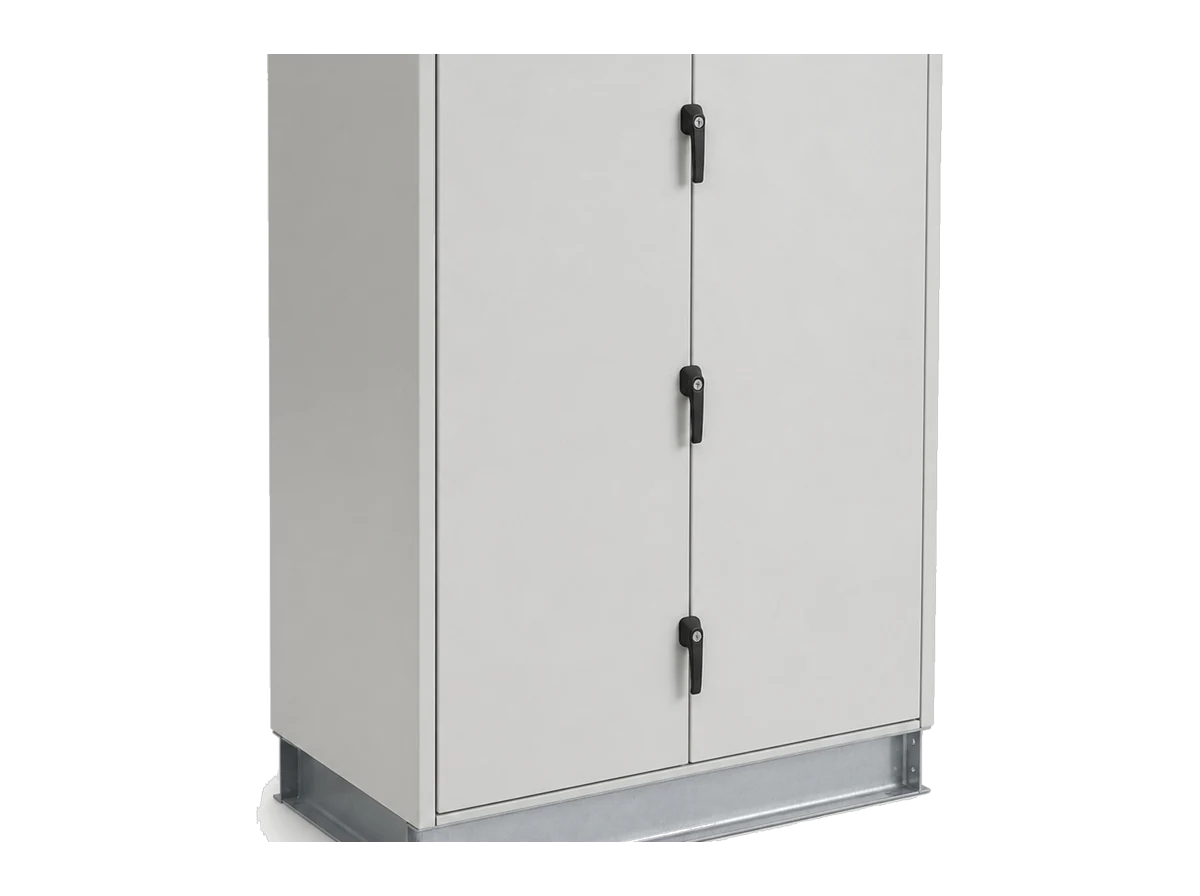
The controller is a PLC- or server-class device with a network switch, protocol gateways, radios or fiber, an HMI and a UPS, so its cabinet is specified like an RTU or communications cabinet: 19-inch rack rails or a sub-panel, a UPS or battery shelf, a thermostat-controlled heater and filtered ventilation or a cabinet cooler, surge protection at every entry, fiber management, a single-point ground bus and security hardware. Outdoors it is NEMA 3R or 4X; in an electrical room it is NEMA 12. Door-mounted HMI and status indicators are common. FabTek builds these as control cabinets.
Transfer switch enclosures
Automatic transfer switches and bypass-isolation switches are listed assemblies from the switch OEM, usually supplied in the OEM’s own enclosure for indoor use. Outdoor and specialty installations need a housing around that: a NEMA 3R or 4X enclosure or a small walk-in housing with the switch inside, cable entries for normal, emergency and load conductors, a viewing window or door cutout for the controller display, and clearances for the switch’s operating handle and service access. For large switches the housing is a walk-in switchgear enclosure with the switch as a section.
Point-of-common-coupling and islanding protection
Where the microgrid meets the utility, a protection cabinet carries the islanding and interconnection relays, the utility’s required test switches and metering, and sometimes the breaker control for the interconnection breaker. It is specified by the utility’s interconnection standard like any relay panel enclosure — swing rack, gland plate, ground bus, heater, NEMA 3R or 4X — with a sealable metering compartment where revenue metering is included, per metering cabinets. The utility reviews the drawing; getting that review started early is the main schedule risk on a microgrid interconnection, as it is on solar interconnections.
Combined outdoor housings
- Multi-bay cabinets — controller, communications and protection in a two- or three-bay lineup on a common base with interbay barriers and separate doors.
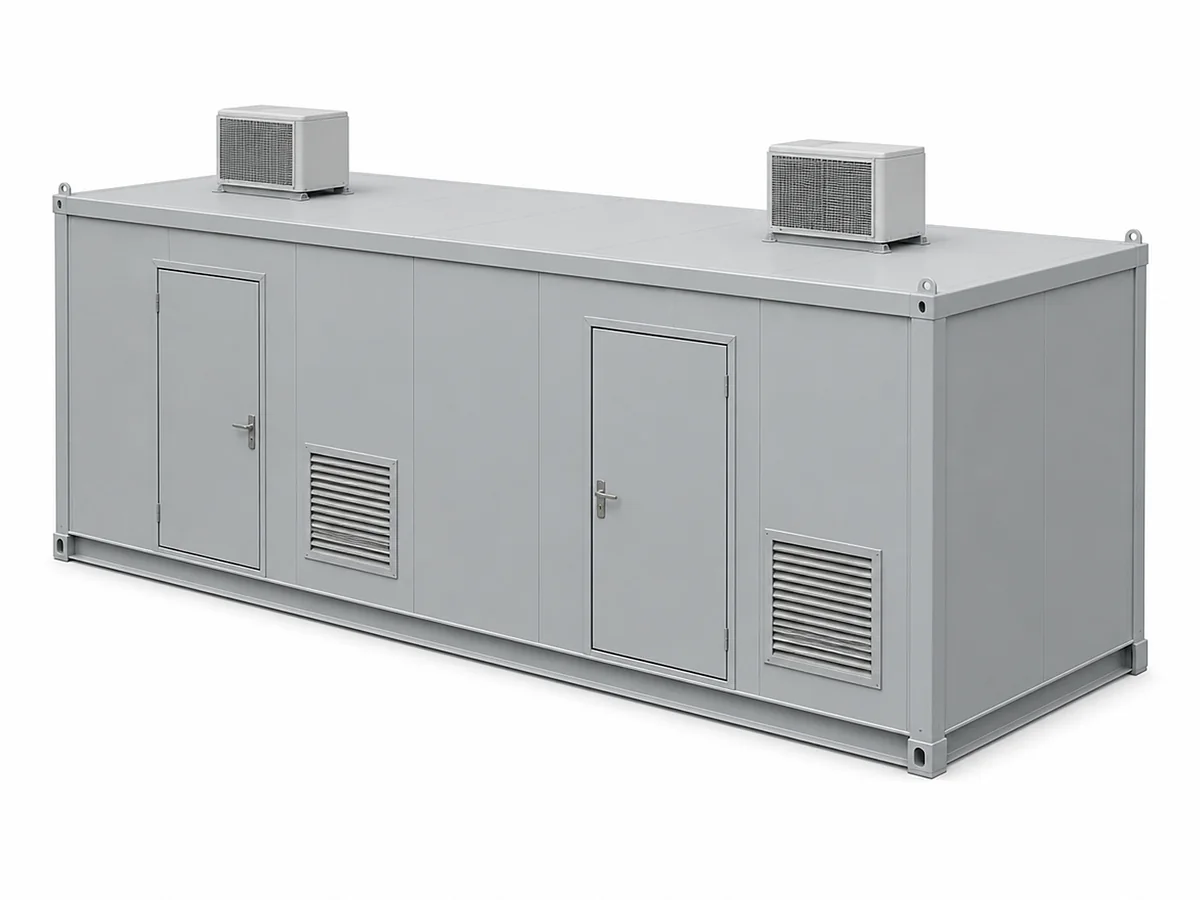
- Walk-in housings — switchgear, transfer switches and the controller in one aisle-type enclosure where the microgrid’s distribution is centralized.
- Skid-mounted — controller cabinet and switchgear on a skid with the generator or storage for a relocatable or temporary microgrid; see mobile power enclosures.
- E-Room — a full electrical house where transformers, storage PCS and paralleling gear are included; see E-Rooms.
Sourcing
Microgrid integrators standardize a controller cabinet and buy it per project, with the transfer switch housings and the interconnection cabinet built to each project’s switch sizes and utility standard. A fabricator that holds the cabinet family and builds the project-specific housings in the same order gives the integrator one delivery and one finish lot per site. The enclosure RFQ structure is in what a fabricator needs to quote; the generation side is in paralleling switchgear enclosures and BESS enclosures.
A microgrid is a normal site with three extra cabinets and one more drawing for the utility to review. The cabinets are easy; start the drawing early.
FabTek Industries fabricates microgrid controller cabinets, transfer switch housings, interconnection protection cabinets and the combined outdoor housings, skids and E-Rooms that carry them — to integrator prints and utility standards, NEMA 3R, 4X or 12, powder-coated or stainless — under an ISO 9001:2015 quality system with AWS-certified welding, from four production sites in Hazlehurst, Mississippi. See control cabinets, renewables and energy storage, or send us a print.
Working on something like this? Send a print or a scope — pricing and lead time within one business day, from four Mississippi plants.
Frequently asked questions
What enclosures does a microgrid need beyond a normal site?
A cabinet for the microgrid controller and its communications, enclosures or outdoor housings for the automatic and bypass-isolation transfer switches that island and reconnect the site, and a protection cabinet at the point of common coupling with the islanding and interconnection relays and any utility metering.
How is a microgrid controller cabinet specified?
Like an RTU or communications cabinet: rack rails or a sub-panel, a UPS or battery shelf, a heater and filtered ventilation or a cooler, surge protection at each entry, fiber management, a single-point ground bus, security hardware, and NEMA 3R or 4X outdoors or NEMA 12 in an electrical room.
Does the fabricator build the transfer switch enclosure?
The transfer switch is a listed assembly supplied in the switch OEM’s own enclosure. The fabricator builds the outdoor or specialty housing around it, with cable entries sized to the switch lugs and clearances for the handle, display and service.
Who sets the requirements for the interconnection protection cabinet?
The interconnecting utility, through its interconnection standard: relay functions, test switches, metering, cabinet construction and nameplates. The utility reviews the drawing before fabrication, so that review should start early.