Rental fleets, utilities and contractors keep power on wheels: generator trailers, mobile distribution switchgear, mobile substations and transformer trailers, and increasingly mobile battery storage. The enclosures on them are built for a harder life than a stationary unit — road vibration, repeated lifting and setup, quick connection by crews who are in a hurry — and fleets buy them in standardized batches. This guide covers what makes a mobile enclosure different and how fleets source them.
Fleet, utility or contractor standardizing mobile power enclosures? Call 601.892.5017 or email collin.t@fabtekindustries.com — send a print and a quantity and we’ll quote it.
- Mobile enclosures are designed for transport loads, repeated handling and fast connection, not just weather.
- The trailer or skid interface, tie-downs and lifting are structural items on the print.
- Quick-connect entries — camlock panels, plug-in distribution, pre-wired controls — are what make the unit fast to deploy.
- Fleets buy standard units in batches and value a fabricator that holds the design and can repair or refurbish.
The mobile enclosure types
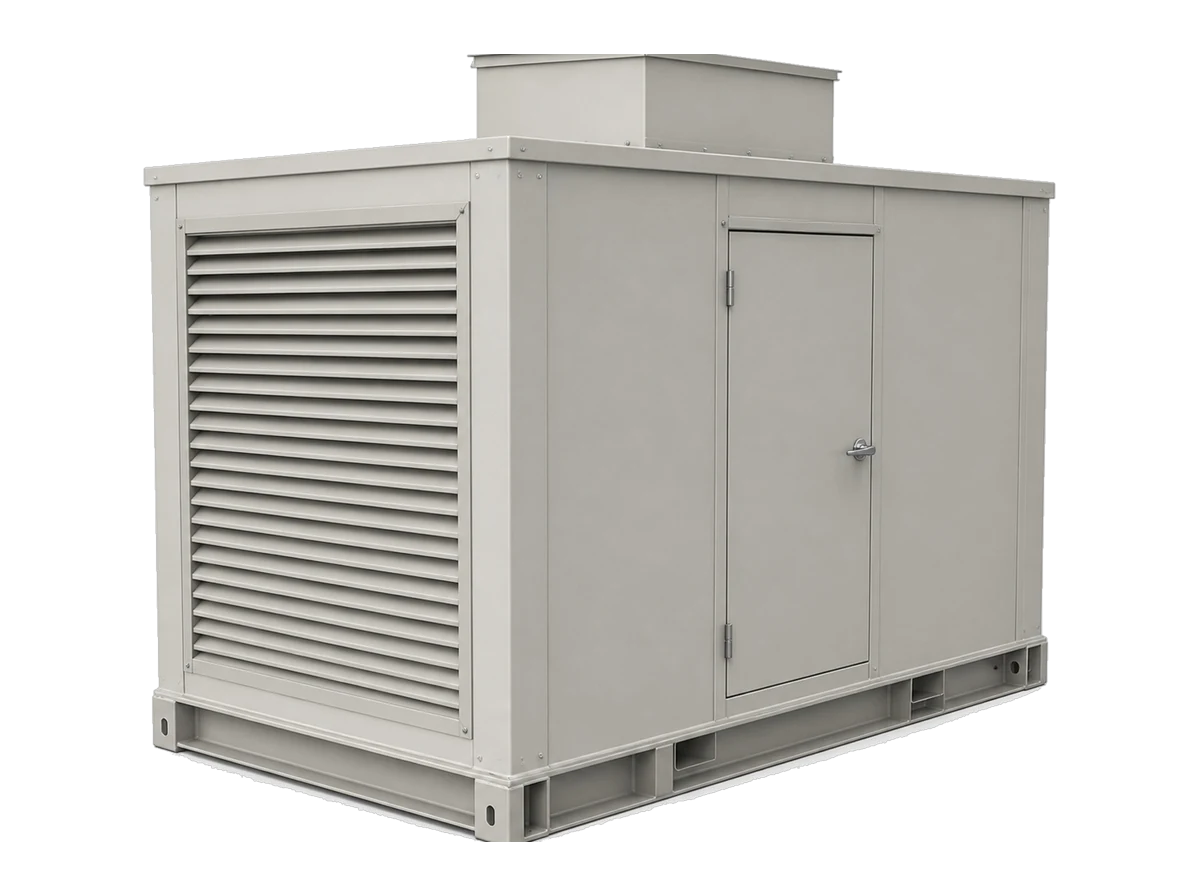
| Generator trailers | Sound-attenuated genset enclosures on a tandem- or tri-axle trailer with fuel tank, distribution panel and camlock connections; the rental fleet staple |
|---|---|
| Mobile distribution | Trailer- or skid-mounted switchgear and distribution with camlock inputs and outputs, breakers and metering, for events, outages and construction |
| Mobile substations and transformers | Utility trailers carrying a transformer, switchgear and controls in weatherproof housings, deployed to restore service during outages and maintenance |
| Mobile storage | Battery and PCS enclosures on trailers or skids for temporary power, peak support and emergency response; see BESS enclosures |
| Mobile E-Rooms | Skid-mounted electrical rooms relocated between sites or used during construction; see E-Rooms |
Built for transport
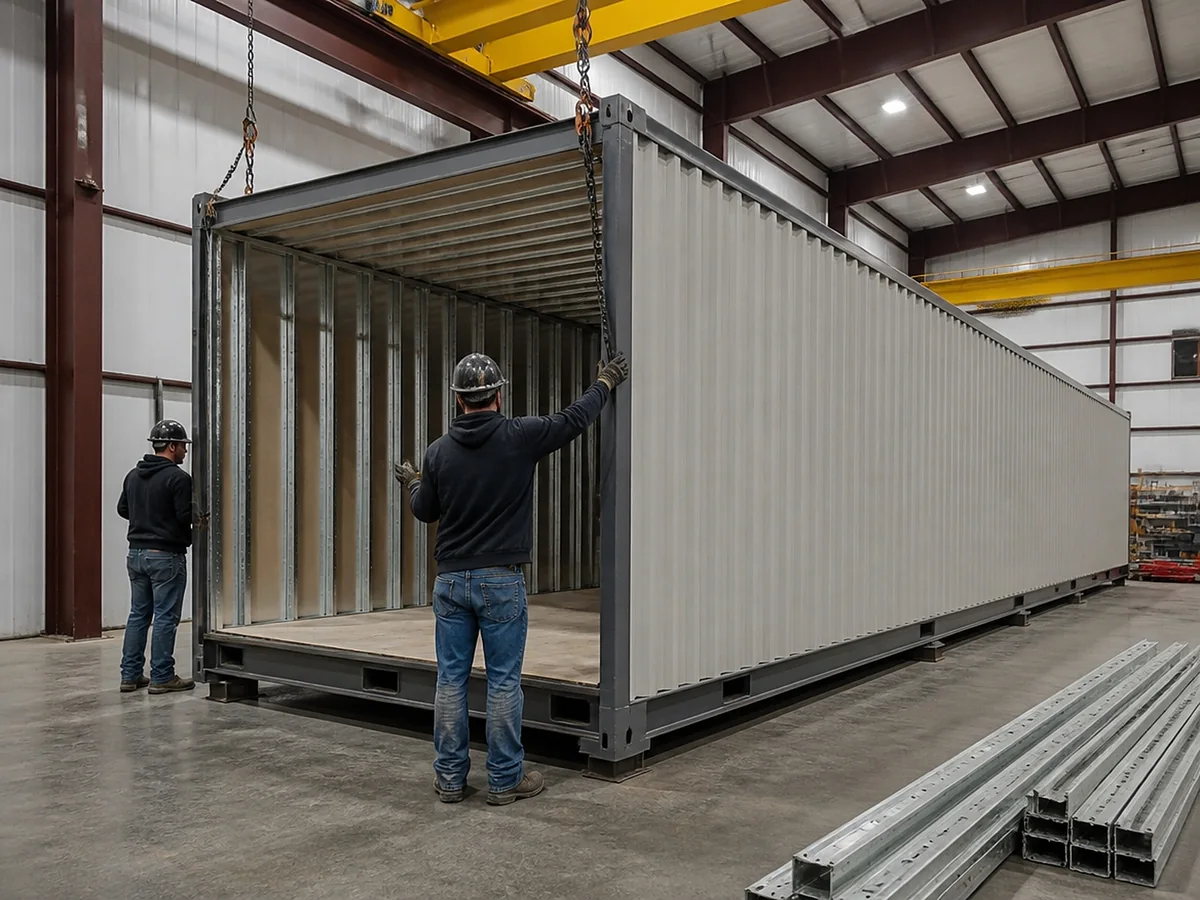
- Structure — frames and skins designed for road vibration and shock, with welded rather than bolted joints where fatigue is a concern, and panel stiffening to prevent oil-canning at highway speed.
- Trailer or skid interface — enclosure sill bolted or welded to the trailer frame or skid at the trailer manufacturer’s pattern, with the enclosure weight and center of gravity on the print for axle loading.
- Lifting and tie-down — rated lifting lugs or spreader points for crane handling, forklift pockets on skids, and tie-down points for flatbed transport.
- Doors and hardware — latches that stay latched on the road, hold-opens that survive wind, and hinges that take repeated use.
- Finish — powder coat that resists chipping and road salt, often in the fleet’s brand color.
Quick connection
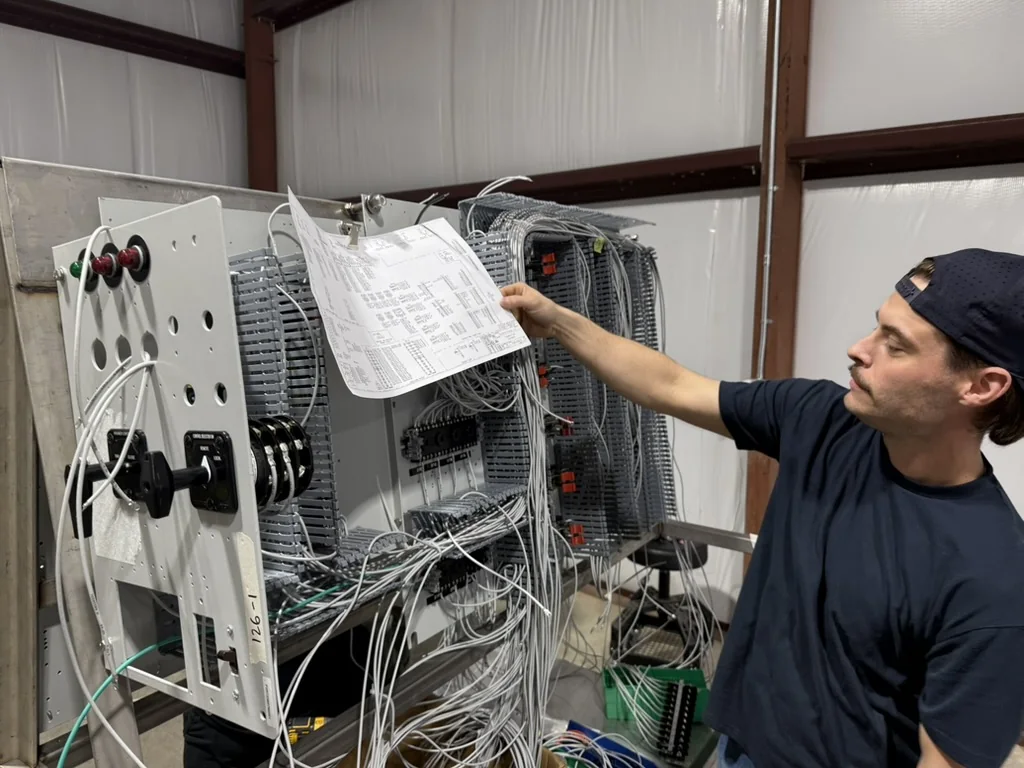
A mobile unit earns its keep by how fast it goes to work. The enclosure carries the connection features: a camlock panel with color-coded, sequential-interlock receptacles sized to the unit’s rating; a distribution panel with breakers accessible from outside; metering and controls on an exterior-facing door; pre-wired control and communications connectors; and a grounding point crews can find. These are fabricated as compartments and cutouts to the fleet’s standard, with the electrical work done by the fleet, a panel shop or FabTek’s electrical assembly group as the program requires.
Fleet programs and refurbishment
Fleets standardize: a rental company runs the same 500 kW trailer by the hundred, and a utility keeps a small number of identical mobile substations. The program is a frozen design, batch builds against a fleet plan, and a fabricator that holds the drawings so a unit built in year six matches year one. Fleets also refurbish — units come back from the field with damaged doors, corroded panels and bent hoods — and a fabricator that built the unit can rebuild the enclosure on a known drawing faster than anyone else. Program mechanics follow running an OEM–fabricator program; the enclosure construction follows the generator enclosure guide and sound-attenuated construction.
A stationary enclosure is installed once. A rental enclosure is installed a hundred times by a hundred different crews. It has to be built for the hundredth one.
What to send
The trailer or skid drawing with the mounting pattern and axle limits, the equipment layout with weights, the connection panel and distribution requirements, the acoustic and airflow design where a generator is involved, the fleet’s hardware and finish standard, and the batch quantity and delivery plan. If units are coming back for refurbishment, photographs and the original drawing number are enough to quote the rebuild. The general structure is in what a fabricator needs to quote.
FabTek Industries fabricates mobile and trailer-mounted power enclosures — sound-attenuated generator housings, mobile distribution and switchgear enclosures, mobile transformer and storage housings, skid-mounted E-Rooms — built for transport and repeated setup to the fleet’s standard drawing, powder-coated in-house, in batches and for refurbishment, under an ISO 9001:2015 quality system with AWS-certified welding, from four production sites in Hazlehurst, Mississippi. See generator enclosures, or send us a fleet standard.
Working on something like this? Send a print or a scope — pricing and lead time within one business day, from four Mississippi plants.
Frequently asked questions
What makes a mobile power enclosure different from a stationary one?
It is designed for road vibration and shock, repeated lifting and tie-down, a trailer or skid interface with known weight and center of gravity, hardware that survives repeated use, a chip- and salt-resistant finish, and quick-connect features so crews can put it to work fast.
What connection features do mobile units carry?
A camlock panel with interlocked, color-coded receptacles sized to the rating, an exterior-facing distribution panel with breakers and metering, pre-wired control and communications connectors, and an accessible grounding point.
How do rental fleets buy mobile enclosures?
As standardized designs built in batches against a fleet plan from a fabricator that holds the drawings, so every unit over the life of the program matches and damaged units can be refurbished on a known drawing.
What mobile units do utilities keep?
Mobile substations and transformer trailers with switchgear and controls in weatherproof housings to restore service during outages and maintenance, and increasingly mobile battery storage units for temporary support and emergency response.