Grid automation runs on cabinets. Every substation RTU, every distribution automation site, every fiber hut and radio point needs an enclosure that keeps network electronics within their temperature range, powered through outages and physically secure in the field. Utilities buy these by the hundred as they extend monitoring to more of the system, and the cabinets they buy tend to be standardized designs built repeatedly for years. This guide covers what goes into one and how the program is sourced.
Utility or integrator standardizing an RTU or communications cabinet? Call 601.892.5017 or email collin.t@fabtekindustries.com — send a print and a quantity and we’ll quote it.
- RTU and communications cabinets are electronics enclosures: thermal management and clean power matter more than in any other substation cabinet.
- The format is usually 19-inch rack rails or shelves plus a battery and power-supply compartment.
- Grounding, surge entry and fiber management are specified in detail because they protect the equipment.
- Utilities standardize one or two cabinet designs and buy them repeatedly; the fabricator holds the drawing and the stock.
What lives inside
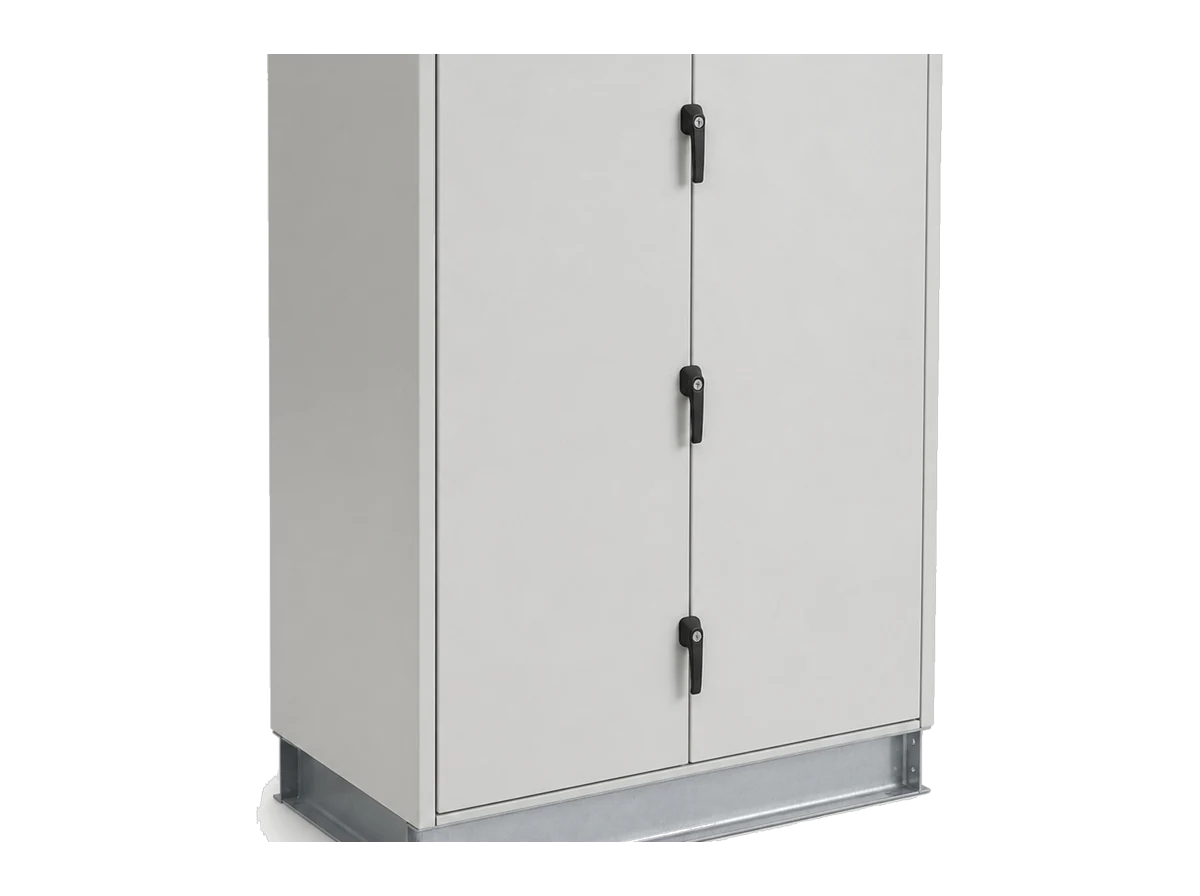
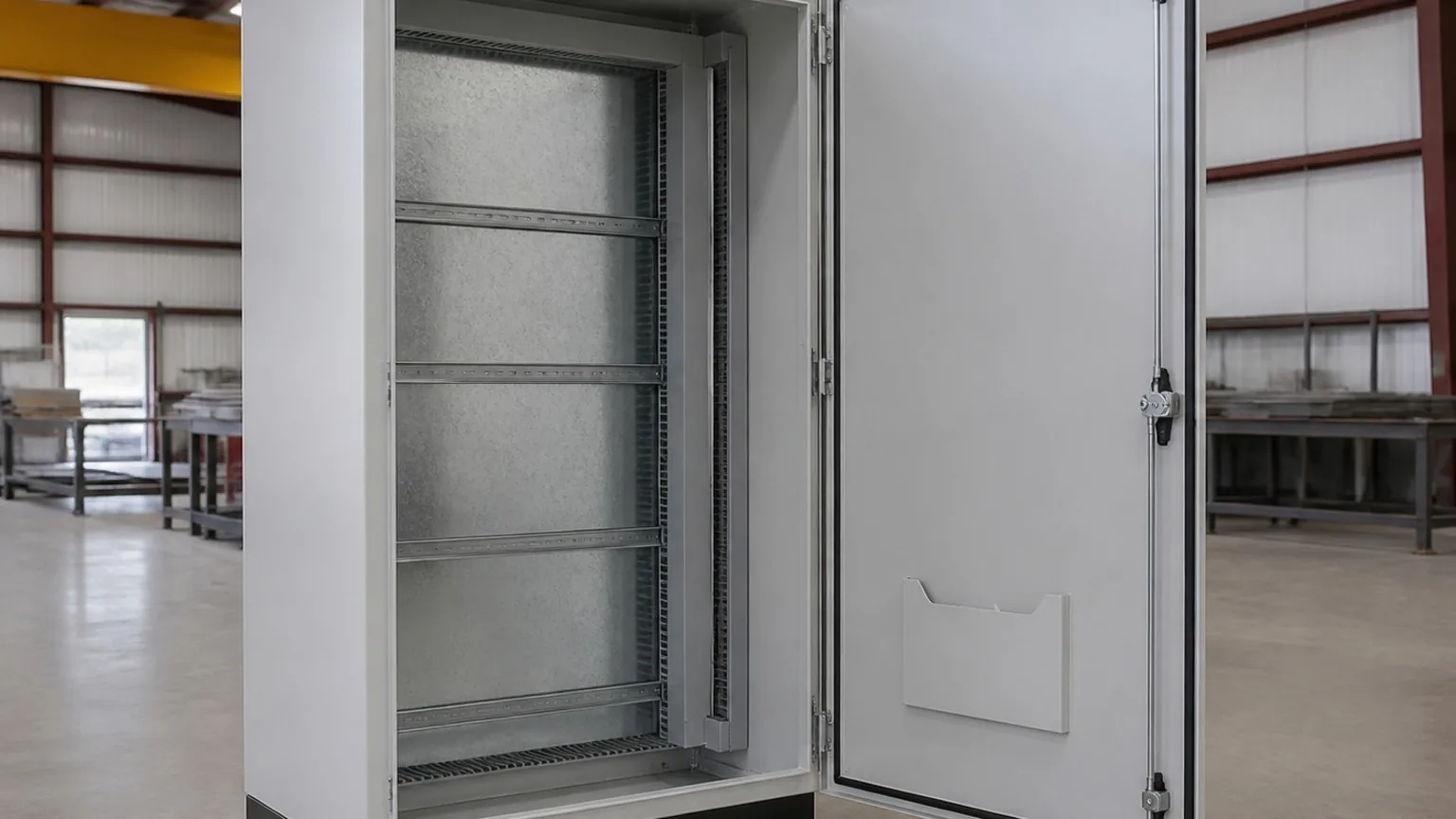
An RTU cabinet holds the remote terminal unit or substation gateway, I/O modules, a protocol converter, an Ethernet switch, a radio or cellular modem, a fiber patch panel, a DC power supply with battery backup, and terminal blocks for the field wiring. A communications-only cabinet drops the RTU and adds more network gear. Both are populated by the utility’s telecom group or a systems integrator; the fabricator supplies the enclosure with the rack, shelves, panels and provisions. FabTek builds these as RTU, SCADA and communications cabinets.
Provisions to specify
- Rack rails or shelves — EIA 19-inch rails front and rear, adjustable in depth, or fixed shelves; rack unit count with spare capacity.
- Battery compartment — a separate shelf or lower compartment for sealed batteries, with venting and a restraint bar; sized to the battery string.
- Power — DC power supply mounting, AC service entrance with breaker, surge protection mounting at the entry.
- Fiber management — patch panel space, slack storage spools, bend-radius-safe routing, and a sealed fiber entry.
- Antenna and radio — a sealed roof or side entry for coax, a mast mounting bracket where the antenna is cabinet-mounted.
- Terminal strips — DIN rail for field terminals, separated from the electronics by a barrier or by position.
Thermal management
Electronics ratings — commonly −40 to +70 °C for substation-grade gear, narrower for commercial network equipment — set the cabinet’s climate requirement. In most of the country a thermostatically controlled heater handles cold and condensation, and filtered forced ventilation or a sunshield handles heat. Where commercial-grade equipment is used or ambient temperatures are extreme, a cabinet air conditioner or heat exchanger mounts on a cutout to the manufacturer’s template. Specify the heat load and the equipment ratings, and the fabricator sizes and locates the provisions; the thermal provisions post covers the fabricated side in more detail.
Grounding, surge and security
Communications gear is the most lightning-sensitive equipment in the yard. Utilities specify a single-point ground bus with every rail, shelf and door bonded to it, surge protective devices at the AC entry and on each copper circuit entering the cabinet, and fiber in place of copper wherever possible. Physical security follows the utility’s critical-infrastructure standards: three-point latching, padlock or electronic lock provisions, door-open alarm contacts, no exposed hinge pins, and for some sites a tamper-evident seal provision. The hardware is on the utility’s standard drawing and goes on the print.
Standardizing across sites
A utility deploying automation to hundreds of distribution sites wants one cabinet, or a small family, that its crews know. The program that results looks like an OEM program: the utility or integrator freezes a drawing, the fabricator builds a first article for approval, then builds in batches against a forecast with material staged, and holds the drawing so that a cabinet ordered in year five matches year one. Changes go through a revision process on both sides. The mechanics are the same as in running an OEM–fabricator program, and the benefit is the same: short lead time on every batch. See also lead times and capacity.
The telecom group does not want to design a cabinet twice. Once the drawing is right, the fabricator’s job is to make every one identical and keep them on the shelf.
Who buys and how
Three channels: the utility’s telecom or protection group buys cabinets directly and populates them; a systems integrator buys the cabinet, populates and tests it, and delivers an integrated unit; or an EPC buys them inside a substation package. In each case the fabricator needs the standard drawing, the equipment list with dimensions and heat load, the climate and security requirements, and the batch forecast. Related guidance for the yard’s other cabinets is in relay panel enclosures and metering cabinets.
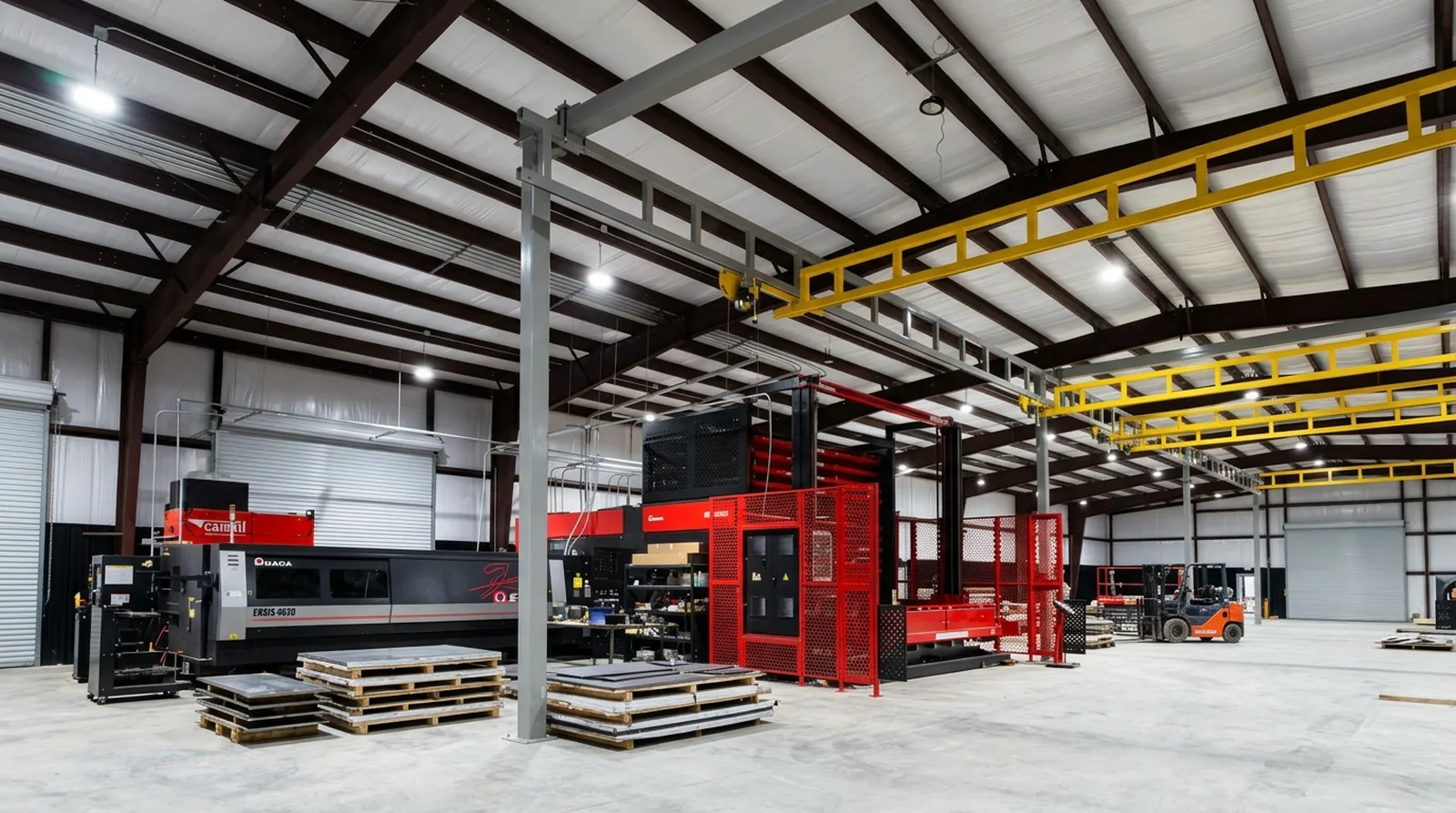
FabTek Industries fabricates RTU, SCADA and communications cabinets to utility and integrator standards — rack rails, shelves, battery compartments, gland plates, ground bus, heater, vent and cooler provisions, security hardware, powder-coated or stainless — in batches against a forecast, under an ISO 9001:2015 quality system, from four production sites in Hazlehurst, Mississippi. See control cabinets, or send us a standard drawing.
Working on something like this? Send a print or a scope — pricing and lead time within one business day, from four Mississippi plants.
Frequently asked questions
What is an RTU cabinet?
An outdoor or control-house enclosure that houses a substation’s remote terminal unit or gateway, I/O, network switch, radio or cellular modem, fiber patch panel, DC power supply and battery backup, with rack rails, shelves, terminal strips and the climate, grounding and security provisions the electronics require.
How are RTU and communications cabinets kept within temperature?
With a thermostatically controlled heater for cold and condensation, filtered forced ventilation or a sunshield for heat, and a cabinet air conditioner or heat exchanger where commercial-grade equipment or extreme ambient temperatures require it. Temperature and door contacts are usually wired to the RTU as alarms.
What grounding and surge provisions do utilities specify?
A single-point ground bus with rails, shelves and door bonded to it, surge protective devices at the AC entry and on copper circuits entering the cabinet, and fiber in place of copper wherever practical.
How do utilities buy RTU cabinets in volume?
By standardizing a drawing, approving a first article, and ordering in batches against a forecast from a fabricator that holds the drawing and stages material, so every cabinet over the life of the program matches and lead time per batch stays short.