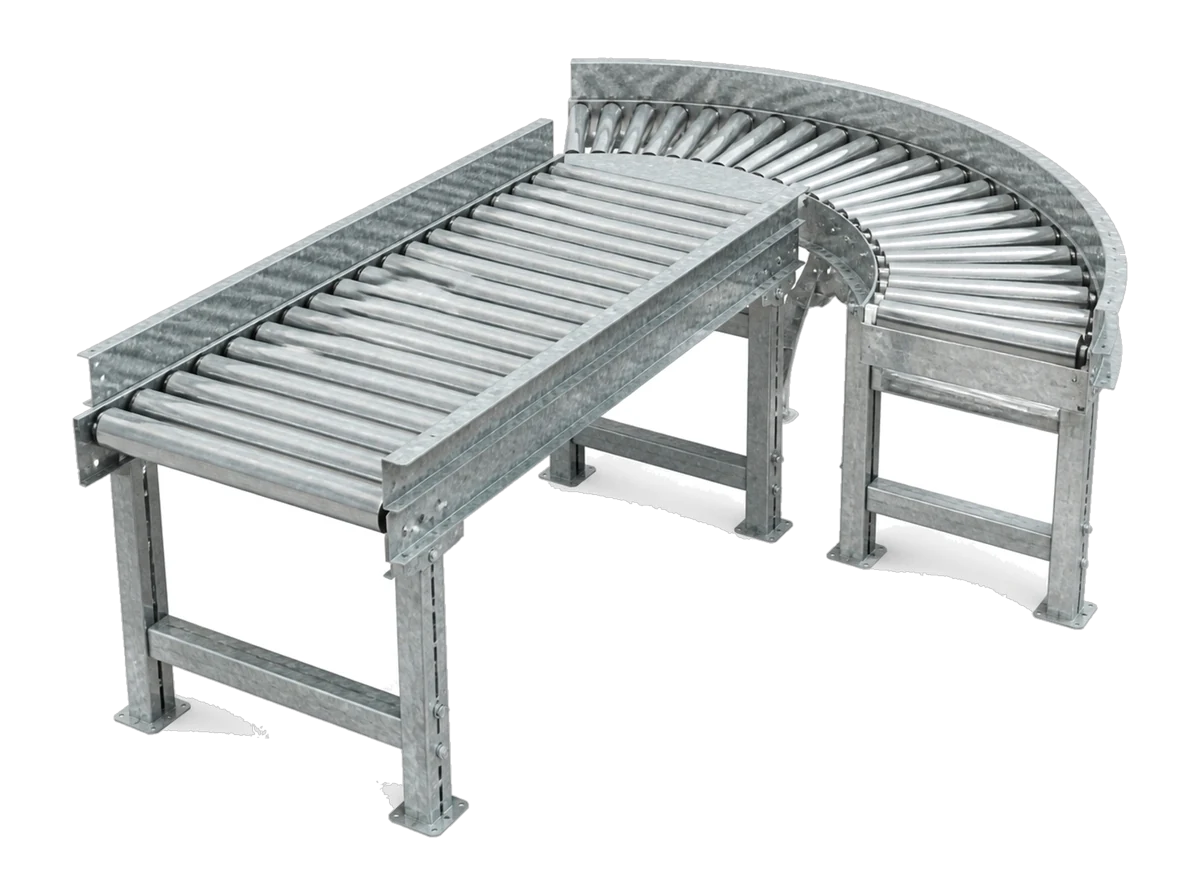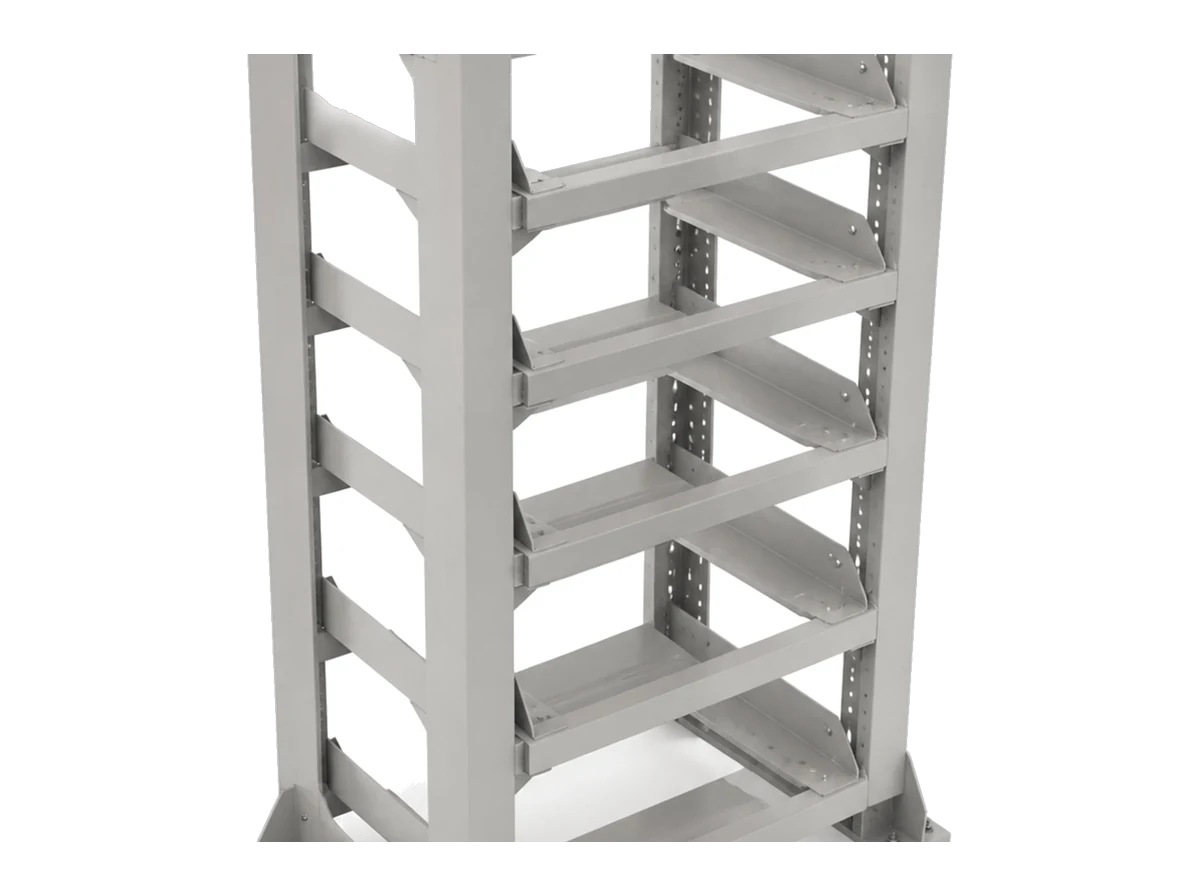
Military depots, shipyards, research labs, supply centers and civilian agencies are steady buyers of ordinary material handling: gravity and skate wheel conveyor for shops and shipping, track for carton-flow and pallet-flow shelving, workstations, racks, platforms and the stands that hold them. The equipment is simple. The buying process is not, and it quietly favors a particular kind of supplier: a U.S. manufacturer that can build exactly what the specification describes, document where it was made, and deliver on a fixed date. Here is how that process works and how FabTek responds to it.
Working on a federal or defense material-handling requirement? Call 601.892.5017 or email sales@fabtekindustries.com with the specification and due date.
- Federal material handling usually arrives through GSA resellers, prime contractors or a contracting office, with a government specification attached and a short response window.
- Domestic-preference rules (Buy American Act, Trade Agreements Act) often decide who is eligible before price is ever compared.
- Under Lowest Price Technically Acceptable evaluation, exact compliance comes first and price second — a fabricator building to the drawing avoids the exceptions a catalog product carries.
- A good quote answers every item the solicitation asks for, in its words and its order, with origin, schedule, warranty and validity stated plainly.
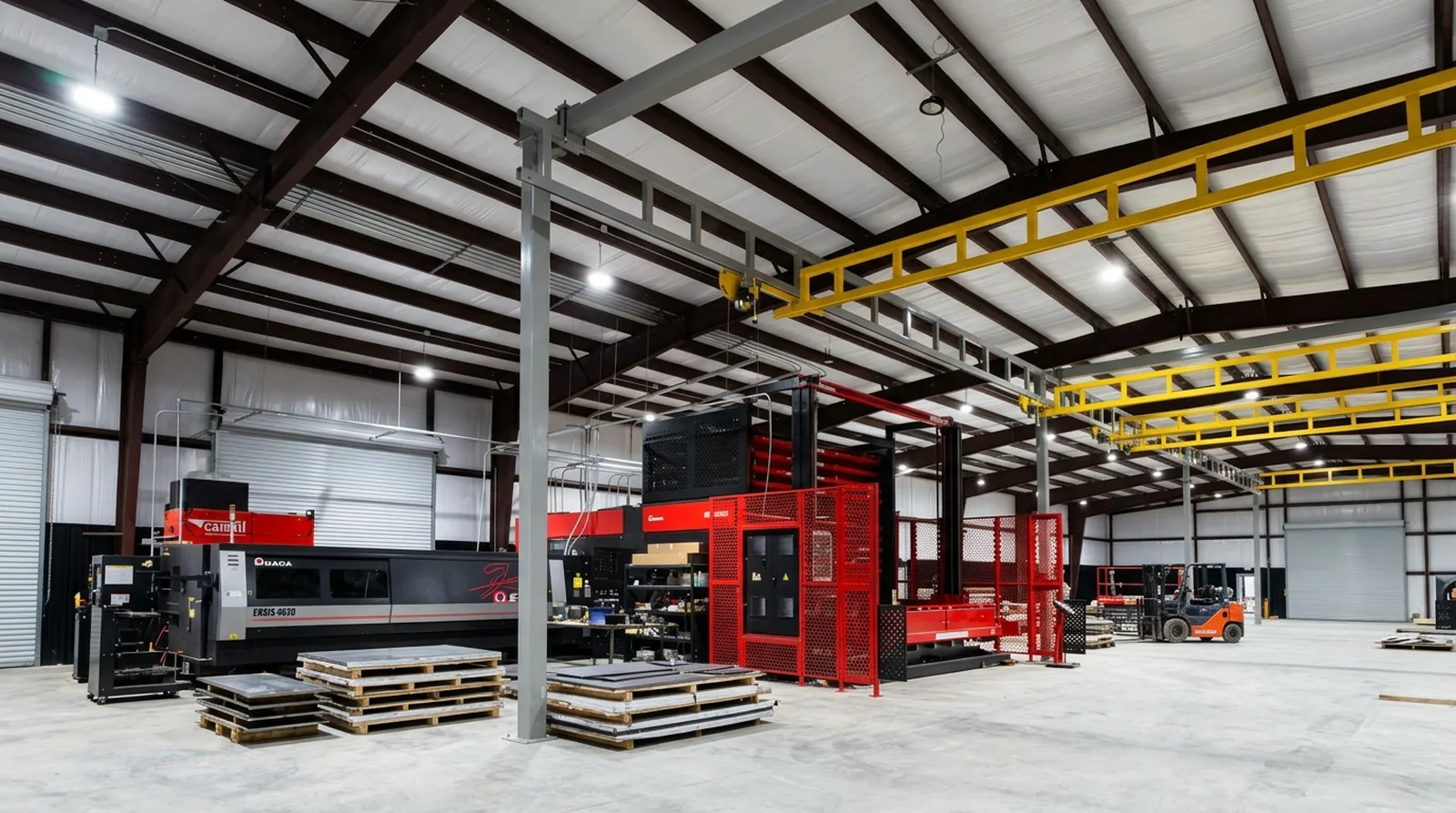
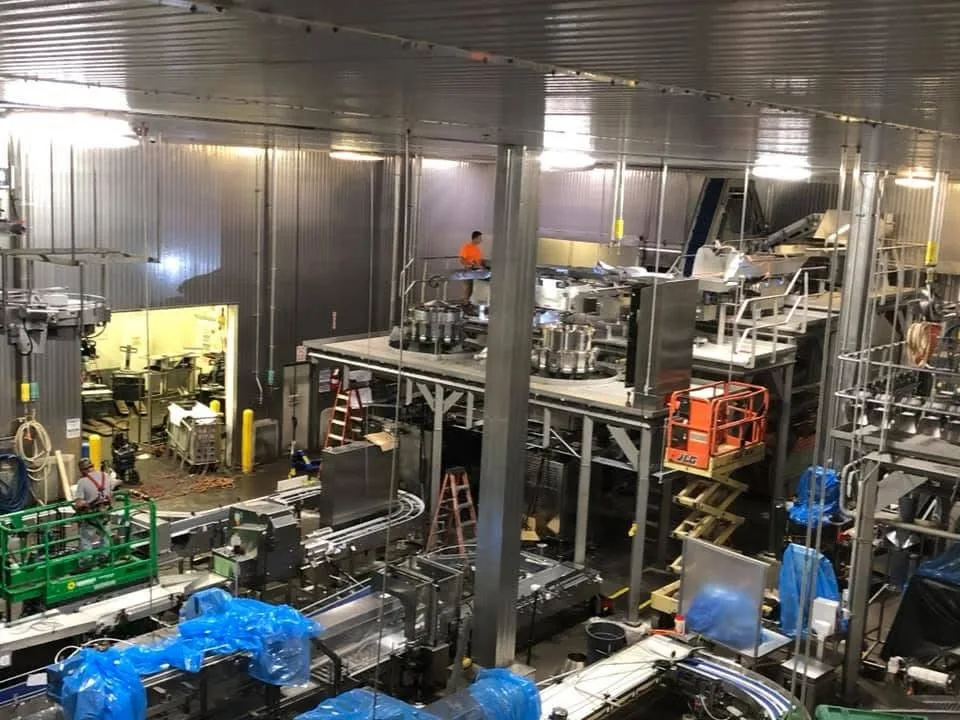
- Delivery windows are short; in-house cutting, forming and finishing across four production sites is how FabTek keeps the schedule under its own control.
- Conveying Hard, Heavy Powders
- Bulk Conveying Over Distance & Height
- Material Handling for Federal & Defense Facilities (you are here)
- Custom vs. Catalog Conveyors
- Reshoring: The Factory Comes to Life at Fit-Out
- Section 232 Tariffs & Built in the U.S.A. Conveyors
- Conveyor Installation: Drawing to First Run
- Retrofit, Rebuild or Replace
- Sanitary & Washdown Conveyors for Poultry, Meat & Food
- How to Get a Conveyor Quote From FabTek
What these facilities buy
The material handling inside a federal installation looks like the material handling inside any busy industrial site. Receiving and shipping run on gravity roller and skate wheel conveyor. Stores and parts rooms use carton-flow and pallet-flow shelving, which rides on roller or wheel track built in standard section lengths and spliced into continuous lanes. Maintenance shops need workbenches, equipment racks and frames, and the platforms, stairs and crossovers that go with them. Most of it is formed and welded steel with rollers, wheels or shelves attached, powder-coated or galvanized, in quantities from a single bay to a whole warehouse.
How the buying works
Requirements rarely come to a manufacturer directly. They are typically issued by a base, depot or agency contracting office and passed through a GSA Schedule reseller, a prime contractor or a small-business set-aside holder, who then collects quotes from manufacturers. The request carries a government specification or statement of work, asks for a quote broken out by configuration or option, and closes on a date that may be only days away. Evaluation is most often Lowest Price Technically Acceptable, sometimes best value. Delivery is to the installation's receiving address, freight included, within a stated number of weeks.
| Who asks | Contracting offices, GSA Schedule resellers, prime contractors, set-aside holders |
|---|---|
| What they attach | A government specification or statement of work, quantities by configuration, destination and required delivery window |
| How they evaluate | Lowest Price Technically Acceptable (full compliance first, then price) or best value |
| What they need stated | Who makes it and what it is, dimensions and materials, how sections join, quantities, delivered price, schedule, where it was made, warranty, how long the quote stands, and any deviations |
General pattern across federal material-handling solicitations; each solicitation's own terms govern.
Domestic preference
Most federal purchases of manufactured goods fall under a domestic-preference rule, usually the Buy American Act or the Trade Agreements Act depending on contract size and type. Imported equipment can meet every dimension in the specification and still be ineligible, and the burden of proving origin falls on the supplier. A U.S. manufacturer that states on the quote where the product is fabricated removes that risk for the contracting officer and for the reseller carrying the bid. FabTek fabricates its conveyor, track, racks and structures in Mississippi, and says so on every federal quote.
Compliance first, then price
Under LPTA, nothing a supplier offers beyond the specification earns credit. The evaluator checks each technical requirement, sets aside any offer with an exception, and then compares price among the rest. That changes what wins. A catalog product that is close to the spec but needs an adapter, a different section length or a substitute splice carries an exception and a distributor markup. A fabricator can build to the drawing, in the quantity and lengths called for, with the connection detail the spec describes, and price it as one delivered line. Part 4 looks at that trade-off more broadly.
What FabTek puts in a quote
A FabTek federal quote is written to be checked off. It identifies the product and who makes it, gives the dimensions, materials, finish and how sections join, states quantity and delivered price to the destination, gives lead time, country of origin, warranty and validity, and lists any deviation from the specification rather than leaving it to be discovered. Where a solicitation asks for options, each option is priced separately. Because cutting, forming, welding and powder coat are in-house across four production sites, delivery windows measured in weeks are a scheduling decision rather than a supplier dependency. Everything we build for these customers is Built in the U.S.A., under ISO 9001:2015 with AWS-certified welding.
Frequently asked questions
Does FabTek quote through GSA resellers and prime contractors?
Yes. We quote resellers, primes and contracting offices directly, and we answer each item the solicitation requires, including origin, lead time, warranty and validity.
Where is FabTek's conveyor and flow-rack track made?
In our Mississippi facilities. Country of origin is stated on every quote so domestic-preference eligibility is clear.
Can you build track or conveyor to match what a facility already has?
Usually. Send the specification, a drawing or a sample section and we will confirm width, profile, roller or wheel spacing and splice compatibility before quoting.