Relay and protection panels are where a substation’s intelligence lives, and the enclosure around them has a specific job: keep microprocessor relays, test switches and terminal blocks dry, cool, accessible and grounded for thirty years. Utilities specify them in detail, and the details are what separate a cabinet that works from one that corrodes, condenses or cannot be worked on. This spec guide covers what to put on the print.
Utility or integrator sourcing relay panel enclosures? Call 601.892.5017 or email collin.t@fabtekindustries.com — send a print and a quantity and we’ll quote it.
- Relay enclosures are built around the panel format — 19-inch swing racks, fixed sub-panels or dual-access — and everything else follows from it.
- Outdoor relay cabinets are NEMA 3R with heaters and thermostats as a minimum; coastal sites go to 4X stainless.
- Gland plates, ground bus and test-switch access are the details utilities check first on a first article.
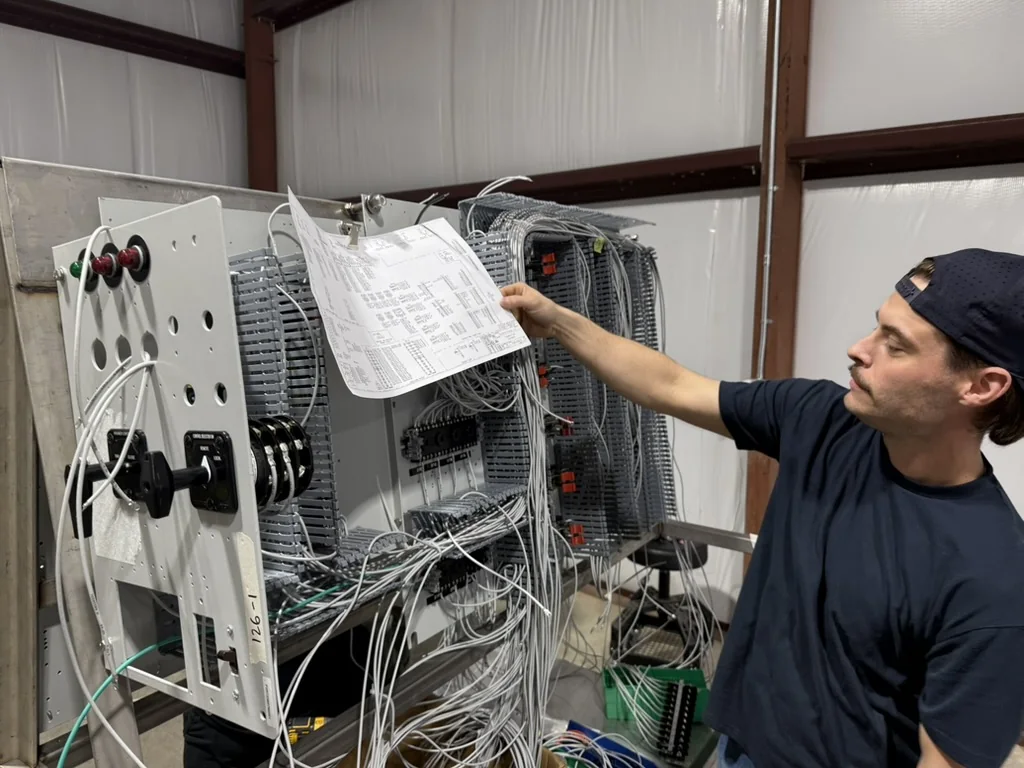
- The enclosure is the fabricator’s product; the panel wiring is the integrator’s or utility’s.
Panel formats
| 19-inch swing rack | Hinged rack frame carrying rack-mount relays and test switches, swinging out for rear access; the most common outdoor and control-house format |
|---|---|
| Fixed sub-panel | Flat mounting plate for surface-mount relays, terminal blocks and wiring duct; front access only; used where rear access is not needed |
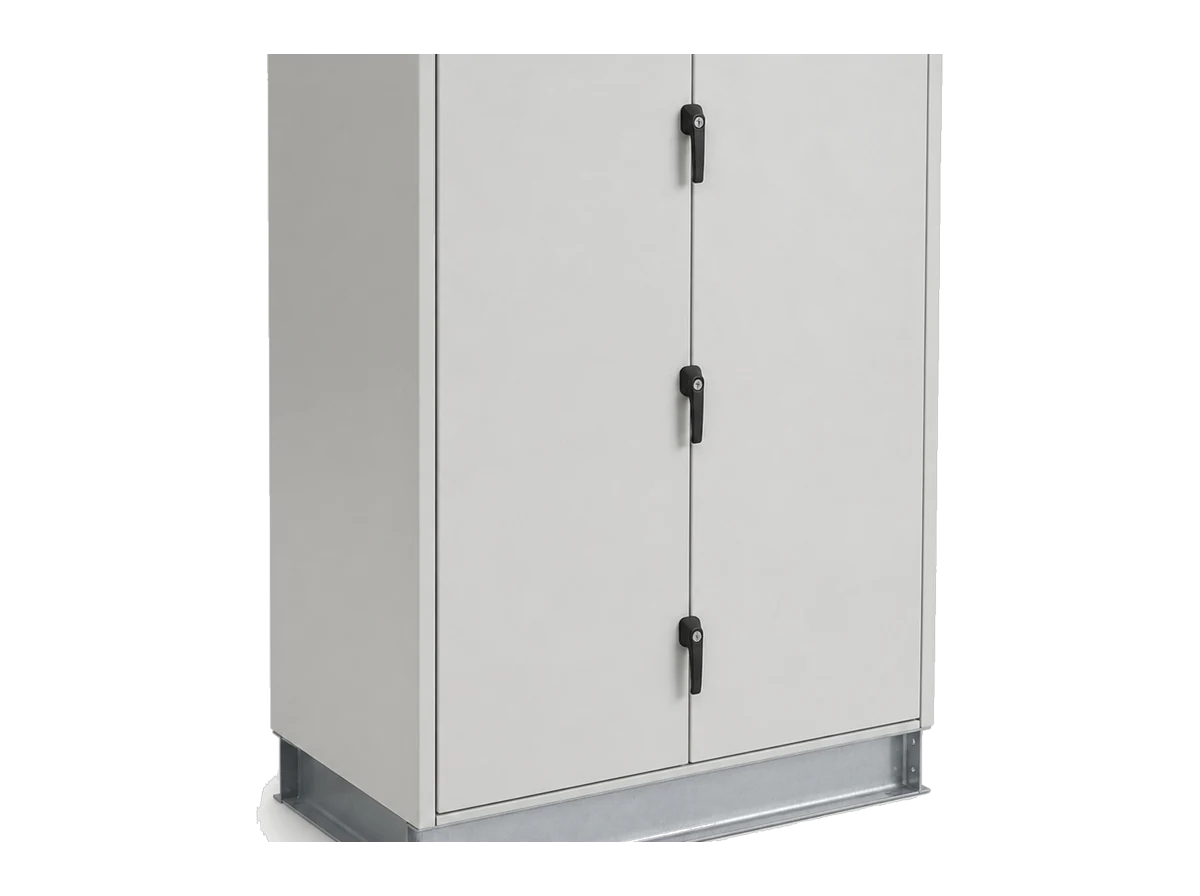
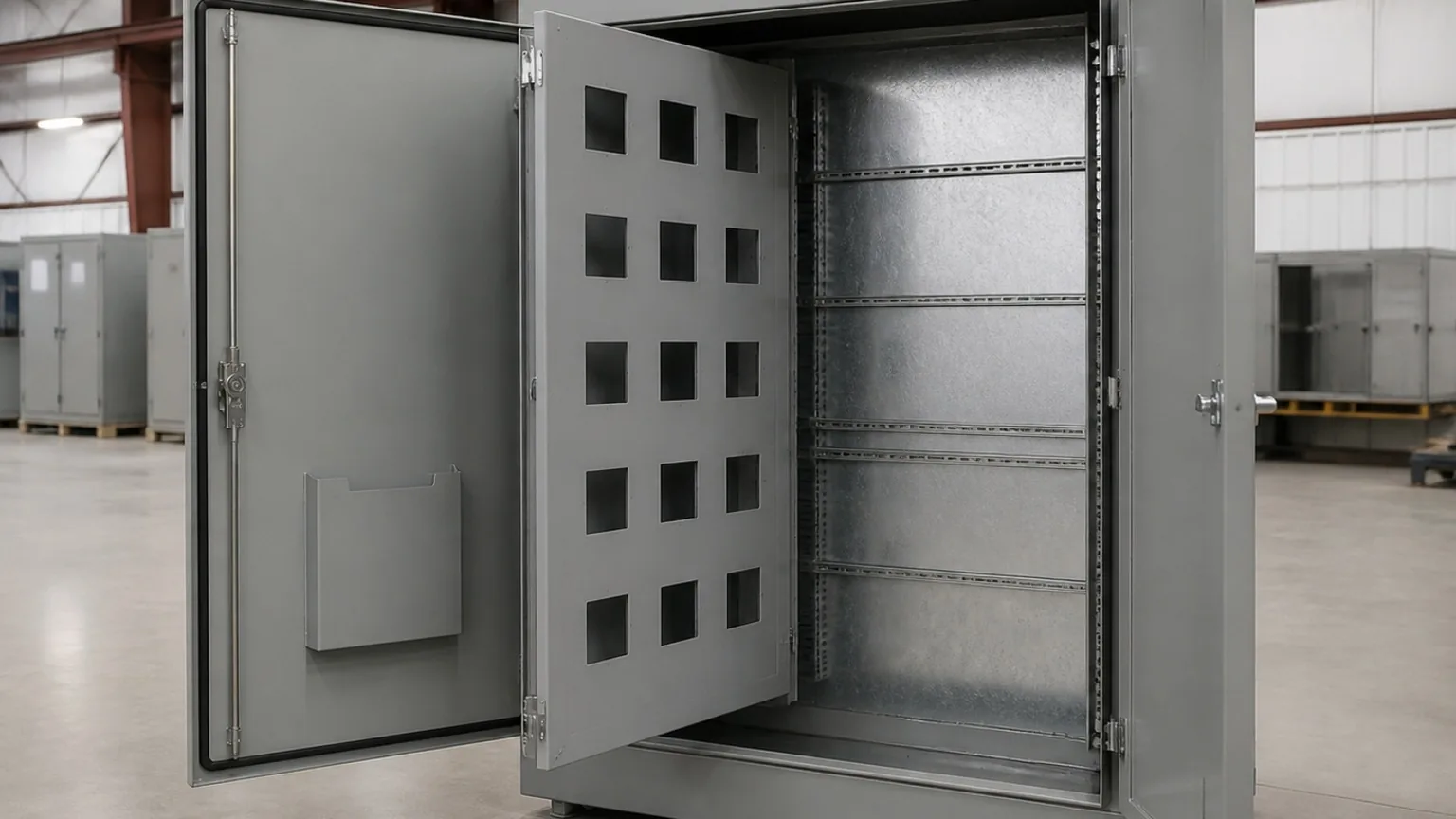
| Dual-access cabinet | Front and rear doors with a fixed rack between them; technicians work both sides; used in yards without a control house |
| Multi-bay lineup | Two or more bays on a common base with interbay barriers and separate doors; relay, communications and metering in one footprint |
FabTek builds all four as control cabinets and relay panel enclosures; the rack, rails and sub-panel are installed to the utility’s layout before shipment.
Enclosure type and material
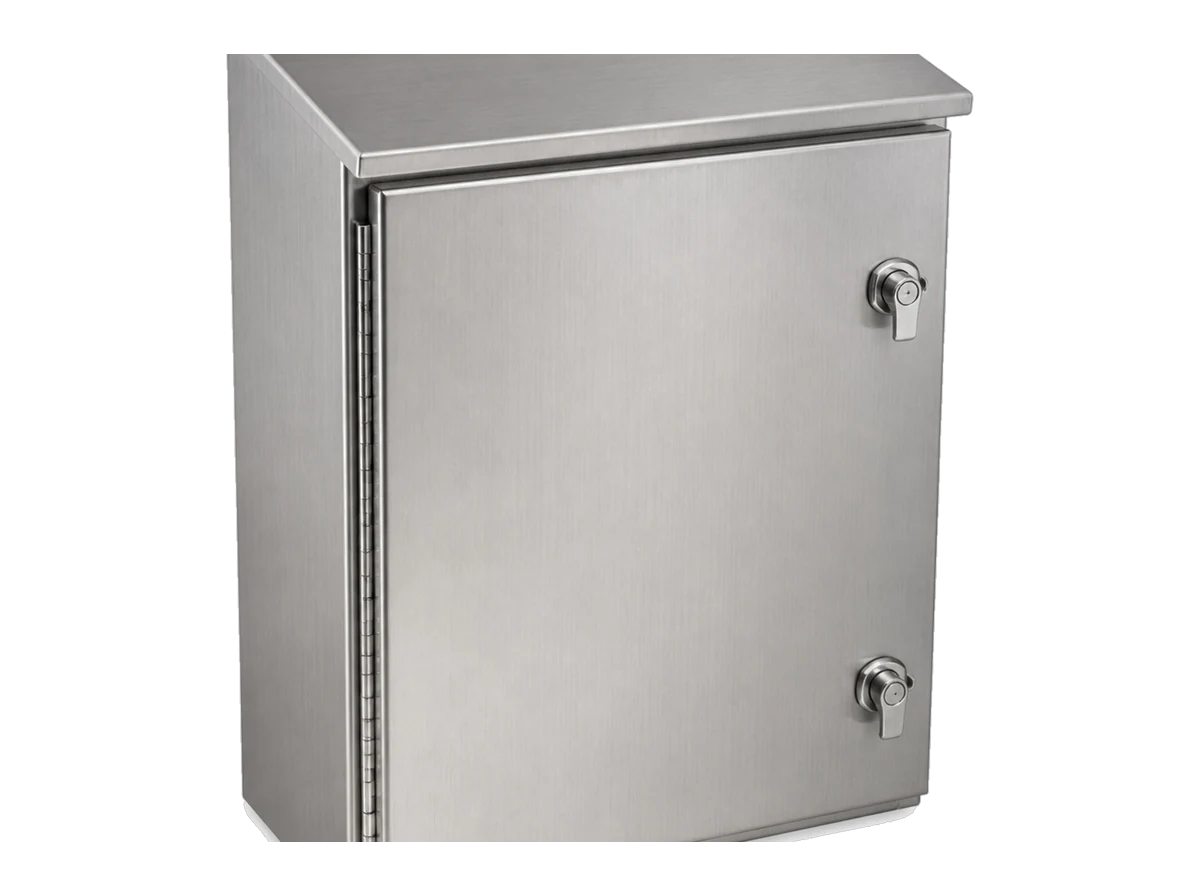
Inside a control house, relay enclosures are typically NEMA 1 or 12 open-frame or sheet-metal cabinets. Outdoors they are NEMA 3R as a floor, with drip shields, sloped roofs and screened, hooded vents, and NEMA 4 or 4X where washdown or corrosion is a factor — see the rating comparison. Material follows the site: powder-coated 11- or 12-gauge steel for most of the country, 304 or 316 stainless on the coast and at industrial sites, and 5052 aluminum where weight on a structure matters. Utilities that have lost cabinets to coastal corrosion often standardize on stainless for every outdoor relay enclosure; 304 vs. 316 covers the alloy question.
Ventilation, heat and condensation
Relays generate little heat but suffer badly from condensation, so outdoor relay cabinets carry a thermostatically controlled strip or fan heater as standard, often a second for redundancy, and filtered vents or louvers sized so the cabinet breathes without admitting rain. In hot regions, sun shields over the roof and the sun-facing side reduce internal temperature; some utilities specify a cabinet-mounted air conditioner for electronics with tight ratings. The fabricator installs the heater brackets, thermostat mounting, vent kits and sunshield standoffs to the print; the heaters and thermostats are usually utility-standard items.
Cable entry, gland plates and grounding
A relay cabinet takes dozens of control cables from CTs, PTs, breakers and the RTU, so the bottom of the cabinet is the busiest surface on it. Specify a removable gland plate — aluminum or steel, blank or pre-drilled — sized to the cable schedule with room for growth, a conduit entry pattern if conduit is used, and a cable support bar above the plate. Grounding is a copper ground bus the width of the cabinet, bonded to the enclosure and to the rack, with a NEMA two-hole ground pad outside; many utilities require the door bonded with a braided strap. Hardware and gasketing covers the door side.
Access and work practices
- Door stops and hold-opens — technicians work with the door open in the wind; specify 120-degree stops and hold-open arms.
- Three-point latching with padlock provision — the utility’s lock dimension on the print.
- Drawing pocket, light and receptacle — a door-mounted pocket for prints, an interior light with door switch, and a GFCI receptacle for test equipment.
- Test-switch access — rack position set so test switches are reachable without a step; swing racks that clear the door frame fully.
- Nameplates — engraved phenolic nameplates per the utility’s standard, mounted with screws not adhesive.
A relay technician will open this cabinet in the rain at two in the morning. Every detail on the print should assume that.
The drawing package
Send the panel layout and rack elevation, the cabinet outline and mounting pattern, enclosure type and material, heater and vent requirements, the gland plate and cable schedule, grounding details, hardware part numbers, nameplate schedule, finish and color. If the utility has a standard drawing, send that: FabTek builds to utility standards directly and keeps the revision on file for repeat orders, as described in switchgear enclosures for utility substations.
FabTek Industries fabricates relay and protection panel enclosures, control cabinets and multi-bay lineups to utility standards — swing racks and sub-panels installed, gland plates, ground bus, heater and vent provisions, powder-coated or stainless — under an ISO 9001:2015 quality system with AWS-certified welding, from four production sites in Hazlehurst, Mississippi. See how we work with utilities, or send us a standard drawing.
Working on something like this? Send a print or a scope — pricing and lead time within one business day, from four Mississippi plants.
Frequently asked questions
What NEMA rating should an outdoor relay panel enclosure have?
NEMA 3R is the minimum for outdoor relay cabinets, with thermostatically controlled heaters to prevent condensation. Coastal, industrial and washdown sites use NEMA 4X, usually in 304 or 316 stainless steel.
What is a swing-rack relay cabinet?
An enclosure with a hinged 19-inch rack frame that carries rack-mount relays and test switches and swings out to give access to rear wiring. It is the most common format for outdoor relay cabinets and control-house relay panels.
How are control cables brought into a relay enclosure?
Through a removable gland plate in the bottom of the cabinet, sized to the cable schedule with room for growth, or through a conduit entry pattern. A cable support bar above the plate and a ground bus the width of the cabinet are standard.
Does the enclosure fabricator wire the relay panel?
Typically no. The fabricator builds the enclosure and installs the rack, sub-panel, gland plate, ground bus, heater and vent provisions; the utility or a systems integrator installs and wires the relays and test switches.