Battery energy storage is deployed at substations, solar sites, industrial plants, commercial buildings and microgrids, and every installation needs housings: a cabinet for the modules, an enclosure for the power conversion system, racks inside, auxiliaries alongside. Integrators design the system and own its listing; the metal is bought from contract fabricators, increasingly in multi-site programs. This guide covers the enclosure types, the division of responsibility and how to source the metal at volume.
BESS integrator or OEM sourcing enclosures, cabinets or racks? Call 601.892.5017 or email collin.t@fabtekindustries.com — send a print and a quantity and we’ll quote it.
- BESS metal is four products: module cabinets, walk-in or container-style enclosures, PCS and auxiliary enclosures, and battery racks.
- The integrator holds UL 9540/9540A and NFPA 855 compliance; the fabricator builds the housing to the design that was tested.
- Thermal, venting, deflagration and fire-suppression provisions are fabrication items that have to be on the print.
- Multi-site storage programs run best as reserved-capacity programs with a frozen print per enclosure type.
The enclosure types
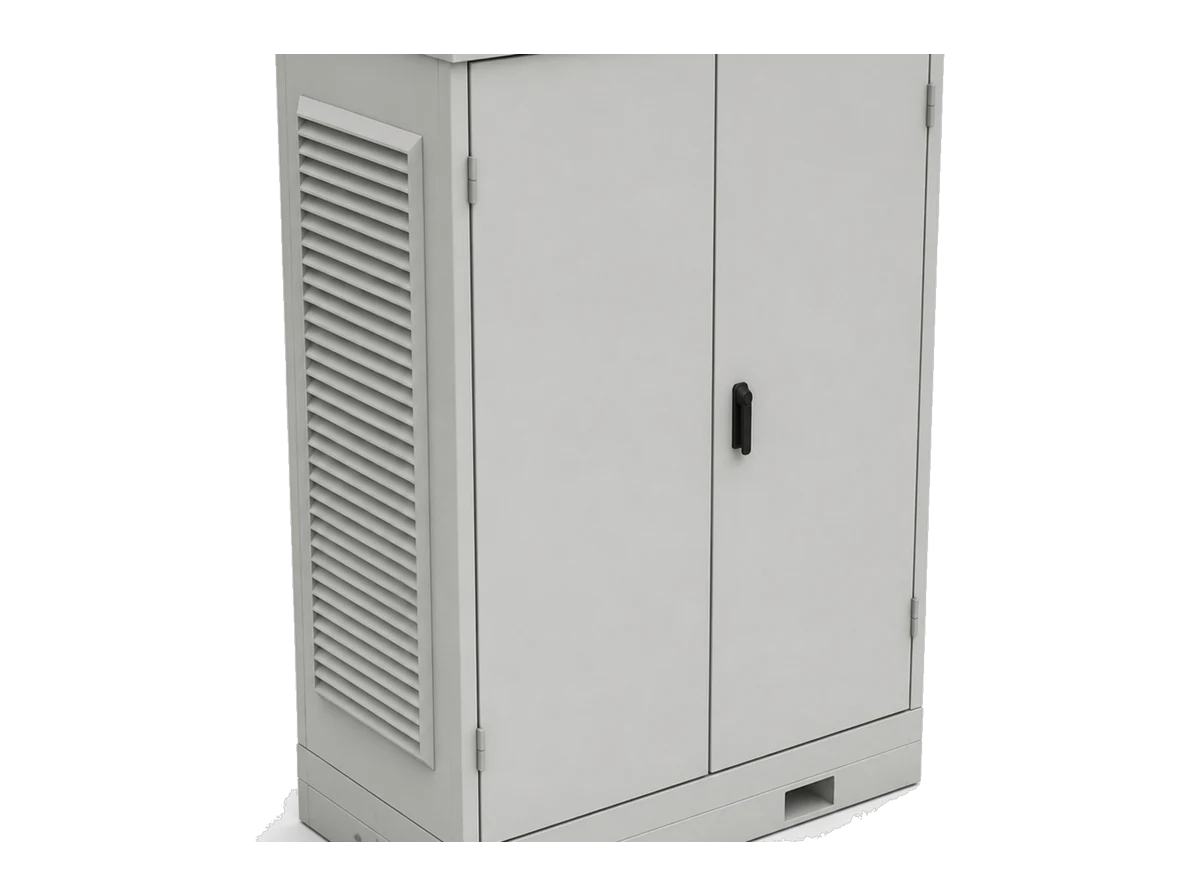
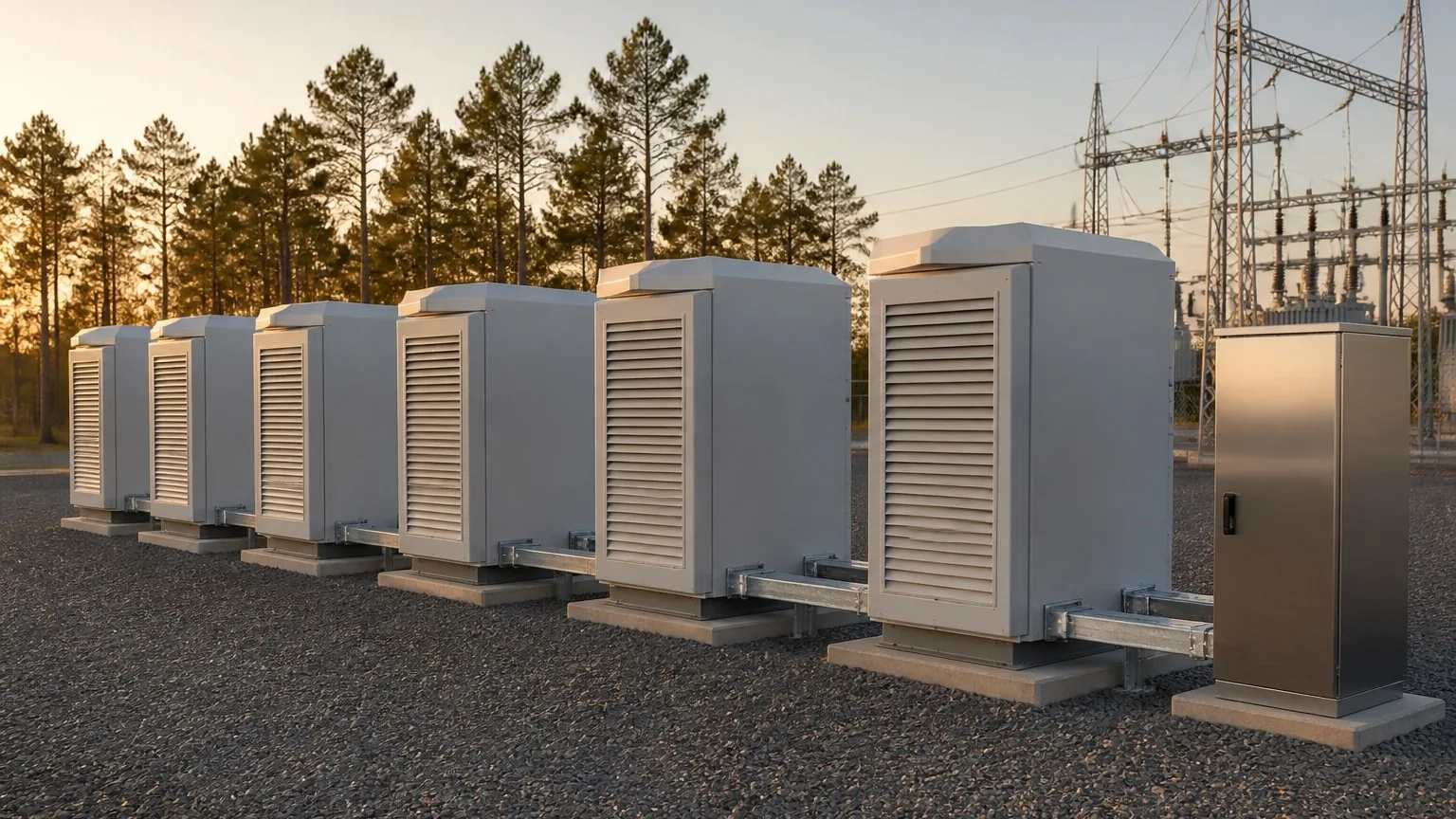
| Outdoor module cabinets | NEMA 3R/4 rack-style cabinets holding battery modules, single- or multi-door, with HVAC mounting, rack provisions, cable and bus entries; built in quantity per site |
|---|---|
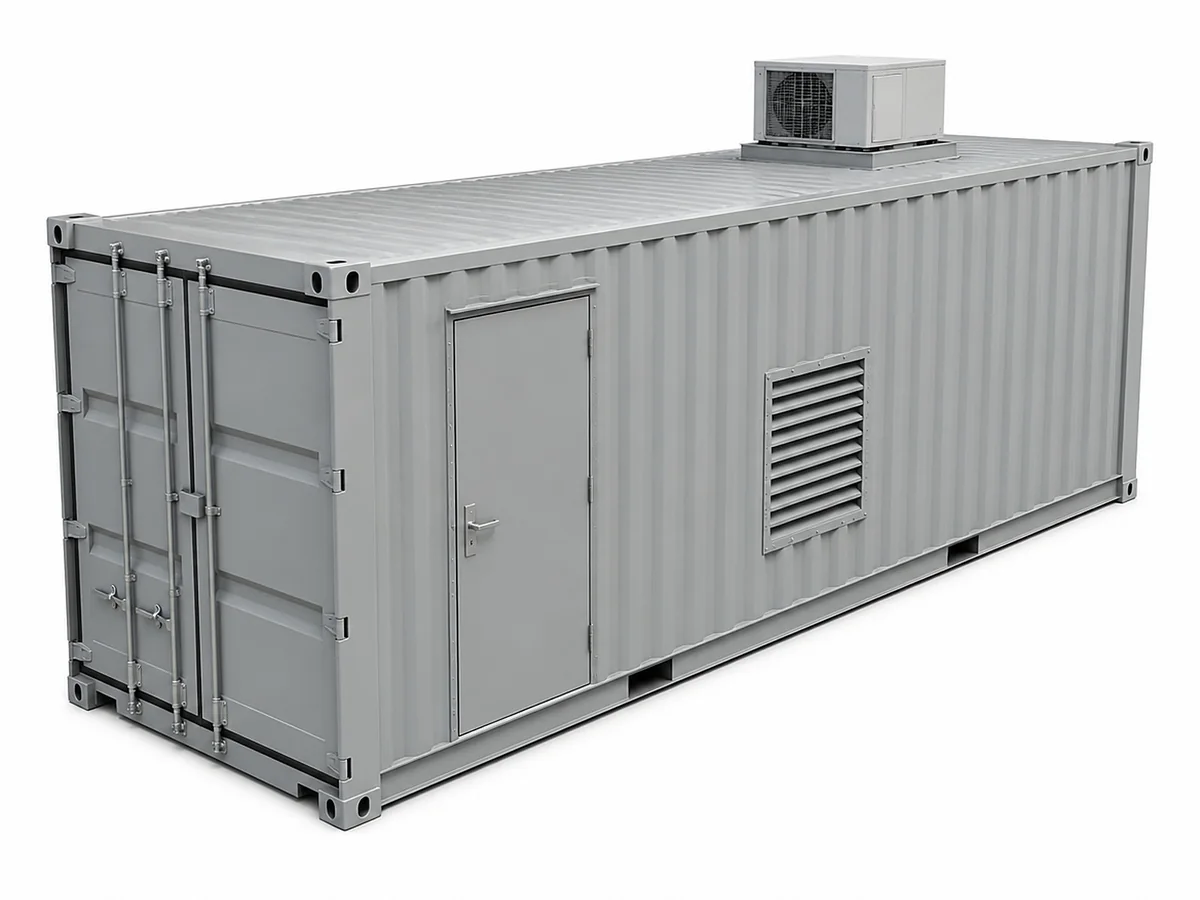
| Walk-in and container-style | Larger enclosures with interior racking supports, floor systems, partitions, personnel doors and HVAC; ISO-dimension or custom frames; see containerized and modular units |
| PCS, inverter and auxiliary | Enclosures for power conversion systems, DC combiners, auxiliary power and controls; see PCS and inverter enclosures |
| Racks and mounting steel | Module racks, rack bases, seismic bracing and equipment stands; see battery rack frames |
FabTek builds all four as described under BESS enclosures.
Who is responsible for what
The integrator designs the system, selects the modules and BMS, designs thermal management and fire protection, and holds the listings and code compliance — UL 9540 for the system, UL 9540A test data for thermal runaway behavior, NFPA 855 for installation. The fabricator builds the enclosure and metalwork to the integrator’s print: structure, panels, doors, cutouts for HVAC and vents, deflagration-vent and suppression provisions where the drawing calls for them, cable and busbar entries, and finish. The print is derived from the design that was tested, so the fabricator’s discipline is building it exactly, the same discipline described for arc-resistant switchgear.
Thermal, venting and fire provisions
- HVAC mounting — cutouts, stiffened mounting frames and condensate provisions for wall-mount air conditioners or liquid-cooling connections, to the unit’s template.
- Ventilation and exhaust — louvers, dampers and exhaust-fan mounting for designs that ventilate; gasketed sealed construction for designs that do not.
- Deflagration venting — vent panel frames and retention hardware where the design uses deflagration vents per NFPA 68; the panel itself is usually a listed component the integrator specifies.
- Fire suppression — mounting for detectors, agent cylinders and nozzles, and door seals that hold agent concentration.
- Fire-resistive construction — insulated panel construction or barriers where the design calls for them.
The fabricated side of each provision is covered in thermal and venting provisions in BESS enclosures.
Materials, finish and the site
Outdoor battery cabinets are carbon steel powder-coated to a salt-spray requirement, or aluminum or stainless at coastal sites, with gasketed doors and NEMA 3R or 4 construction. The enclosure spends twenty years outdoors with a thermal cycle every day, so the finish spec — pretreatment, film thickness, salt-spray hours — is as important as it is on utility gear; FabTek’s lines carry an IEEE 2000-hour rating, explained in the salt-spray post. Bases are usually galvanized or heavily coated, and seismic anchorage is designed to the site; see seismic and wind requirements.
Running a multi-site program
A storage integrator with a pipeline of sites buys the same cabinet hundreds of times across a year. The program that works is the OEM model: frozen prints per enclosure type, a first article approved by the integrator’s engineering, a forecast by quarter, material and powder staged, and releases per site in the quantity and sequence the site needs, delivered on returnable racks or crated for the site. Capacity is reserved for the program so a surge from another customer does not take the line. The mechanics are in running an OEM–fabricator program and lead times and capacity; the data-center-specific version is in generator and BESS enclosures for data centers.
A storage site is forty identical cabinets and one that is different. The program is built around the forty; the fabricator earns its place on the one.
What to send
Fabrication drawings or a model per enclosure type, material and gauge, enclosure rating, the HVAC and vent templates, the deflagration and suppression provisions, cable and bus entry details, finish spec and color, the forecast and per-site quantities, and the documentation required. The general enclosure RFQ structure is in what a fabricator needs to quote.
FabTek Industries fabricates BESS enclosures — outdoor battery cabinets, walk-in and container-style units, PCS and auxiliary enclosures and battery racks — to the integrator’s print, with thermal, venting and suppression provisions, powder-coated in-house to an IEEE 2000-hour salt-spray rating, in multi-site programs with reserved capacity, under an ISO 9001:2015 quality system with AWS-certified welding, from four production sites in Hazlehurst, Mississippi. See renewables and energy storage, or send us a print.
Working on something like this? Send a print or a scope — pricing and lead time within one business day, from four Mississippi plants.
Frequently asked questions
What enclosures does a BESS installation need?
Outdoor cabinets for the battery modules, larger walk-in or container-style enclosures where the design uses them, enclosures for the power conversion system and auxiliaries, and the racks and mounting steel inside. All are fabricated to the integrator’s print.
Who holds the UL 9540 listing — the integrator or the enclosure fabricator?
The integrator. UL 9540 covers the energy storage system, UL 9540A provides thermal runaway test data, and NFPA 855 governs installation. The fabricator builds the enclosure to the design that was tested and does not hold the listing.
What fire and venting provisions does the fabricator build into a BESS enclosure?
Mounting and cutouts for HVAC, louvers, dampers and exhaust fans, vent panel frames and retention hardware for deflagration vents, mounting for detectors, agent cylinders and nozzles, door seals that hold agent concentration, and insulated or barriered construction where the design specifies it.
How do storage integrators buy enclosures at volume?
Through a reserved-capacity program with frozen prints per enclosure type, an approved first article, a quarterly forecast, staged material and per-site releases, so each site’s cabinets ship on the site schedule.