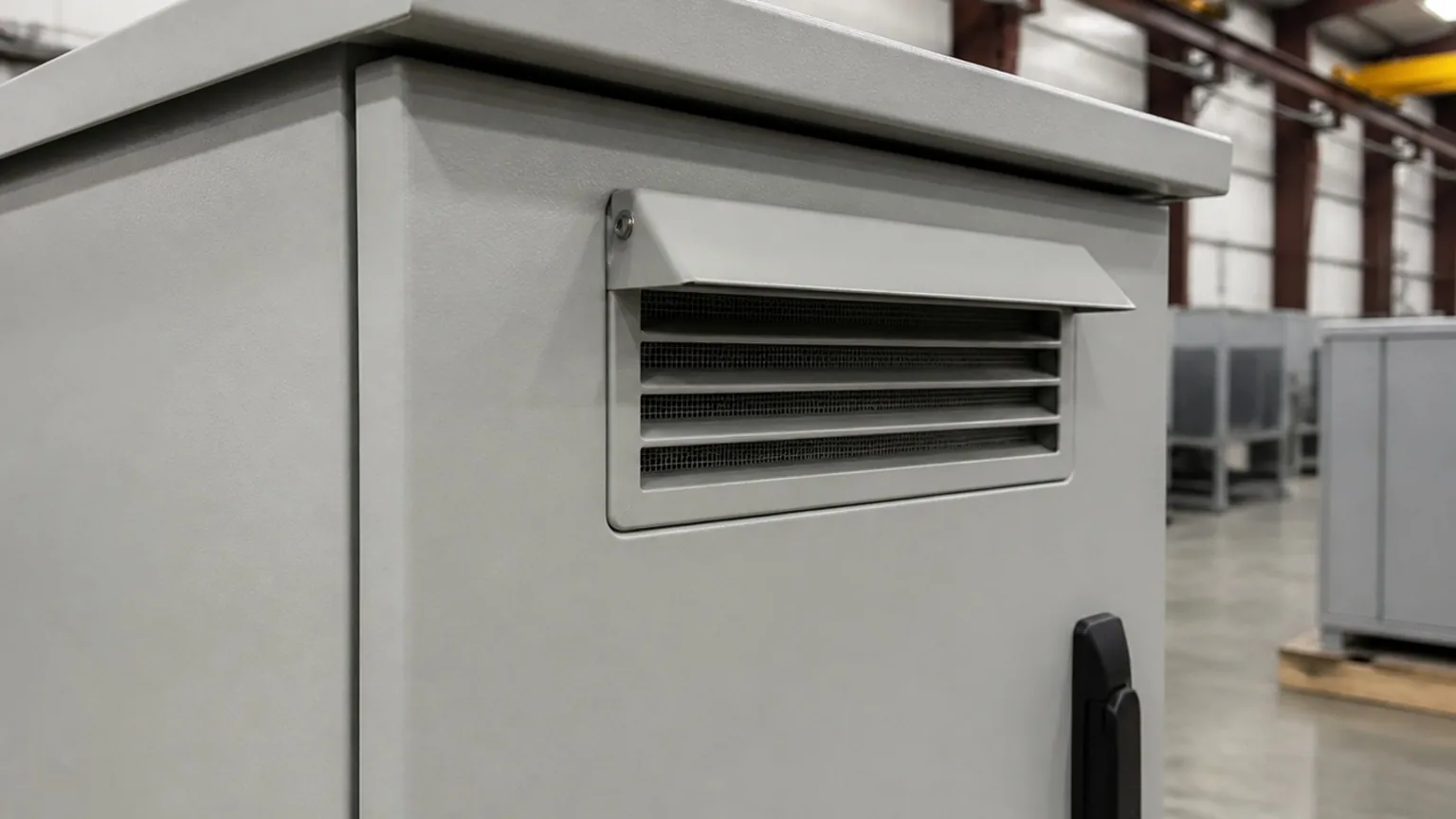
Two materials cover most outdoor enclosures that are not stainless: powder-coated carbon steel and 5052 aluminum. Utilities, telecom builders, transportation agencies, solar OEMs and genset packagers each have a default, and the defaults differ because the trade-offs differ by application. This spec sheet compares the two on the properties that matter for an outdoor enclosure and lists where each one wins.
Deciding between aluminum and steel for an outdoor enclosure program? Call 601.892.5017 or email collin.t@fabtekindustries.com — send a print and a quantity and we’ll quote it.
- Aluminum is a third the weight, corrosion-resistant without a coating, and rejects heat better; steel is stiffer, cheaper per pound and easier to weld.
- Aluminum wins on poles, trailers, roofs, coasts and roadsides; steel wins on pad-mounted gear, switchgear, large walk-ins and anything that needs mass.
- Steel’s corrosion resistance is entirely the coating’s; aluminum’s is the metal’s — a scratch means different things.
- Both need galvanic isolation from dissimilar metals and the right hardware.
Side by side
| Weight | Aluminum roughly one-third the density of steel; a 0.125" aluminum cabinet weighs less than a 14-gauge steel one |
|---|---|
| Corrosion | Aluminum forms its own oxide and needs no coating (except in strong alkali or with dissimilar metals); steel depends entirely on the coating system and its salt-spray performance |
| Heat | Aluminum conducts heat several times better and, bare or light-colored, reflects solar gain; a real advantage for electronics cabinets in the sun |
| Stiffness | Steel is about three times stiffer; aluminum panels need heavier gauge or more stiffening to match deflection |
| Cost | Aluminum sheet costs more per pound and per part at equal stiffness; steel plus powder coat is usually cheaper on large enclosures |
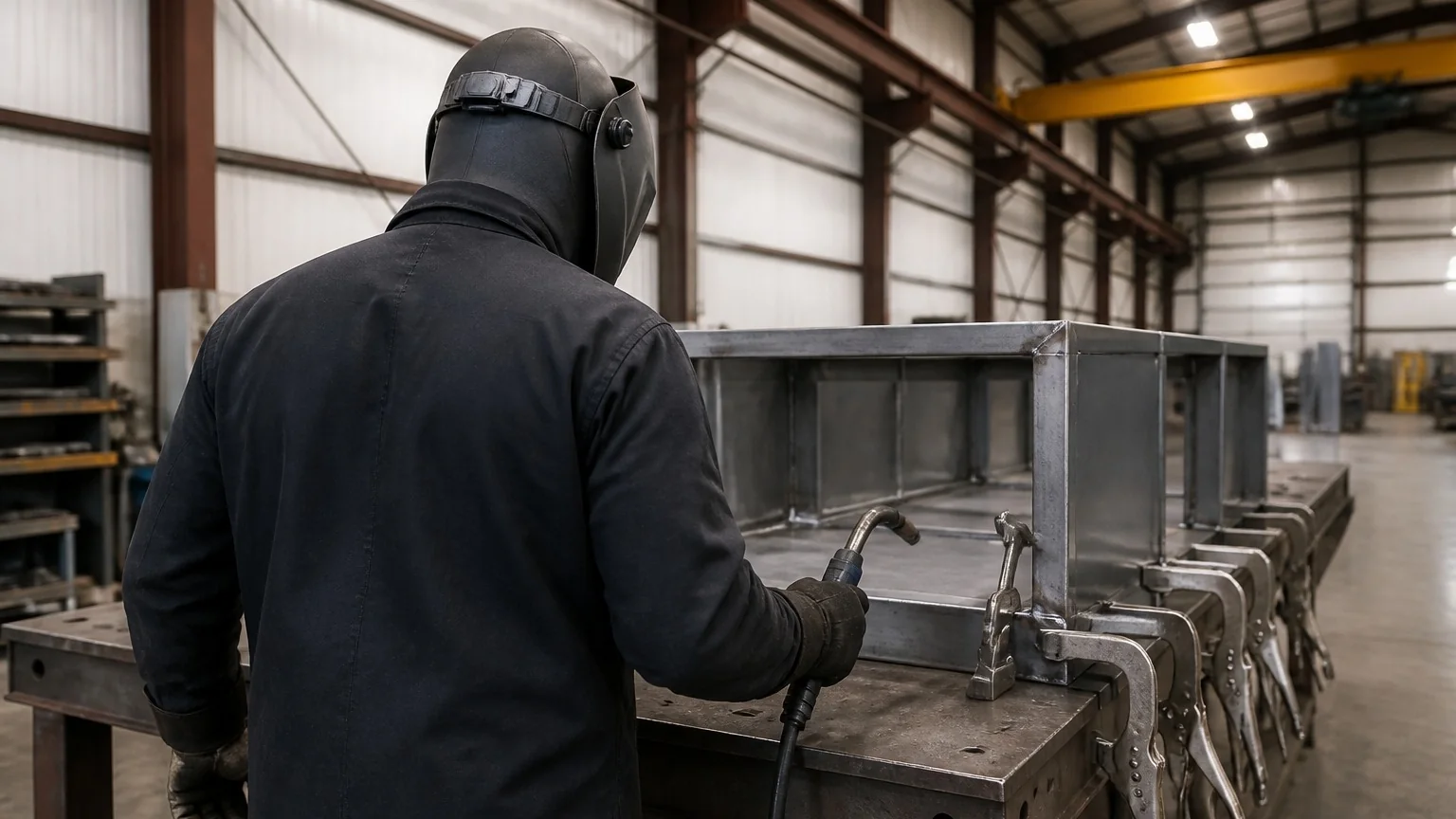
| Welding and forming | Aluminum requires AWS D1.2 procedures, clean preparation and larger bend radii (see 5052 bend radius); steel is forgiving |
| Finish | Aluminum: mill, brushed, anodized or powder-coated; steel: powder coat or galvanize, always coated |
Typical comparisons for 5052-H32 aluminum and powder-coated carbon steel; the application and the owner’s standard govern.
Where aluminum wins
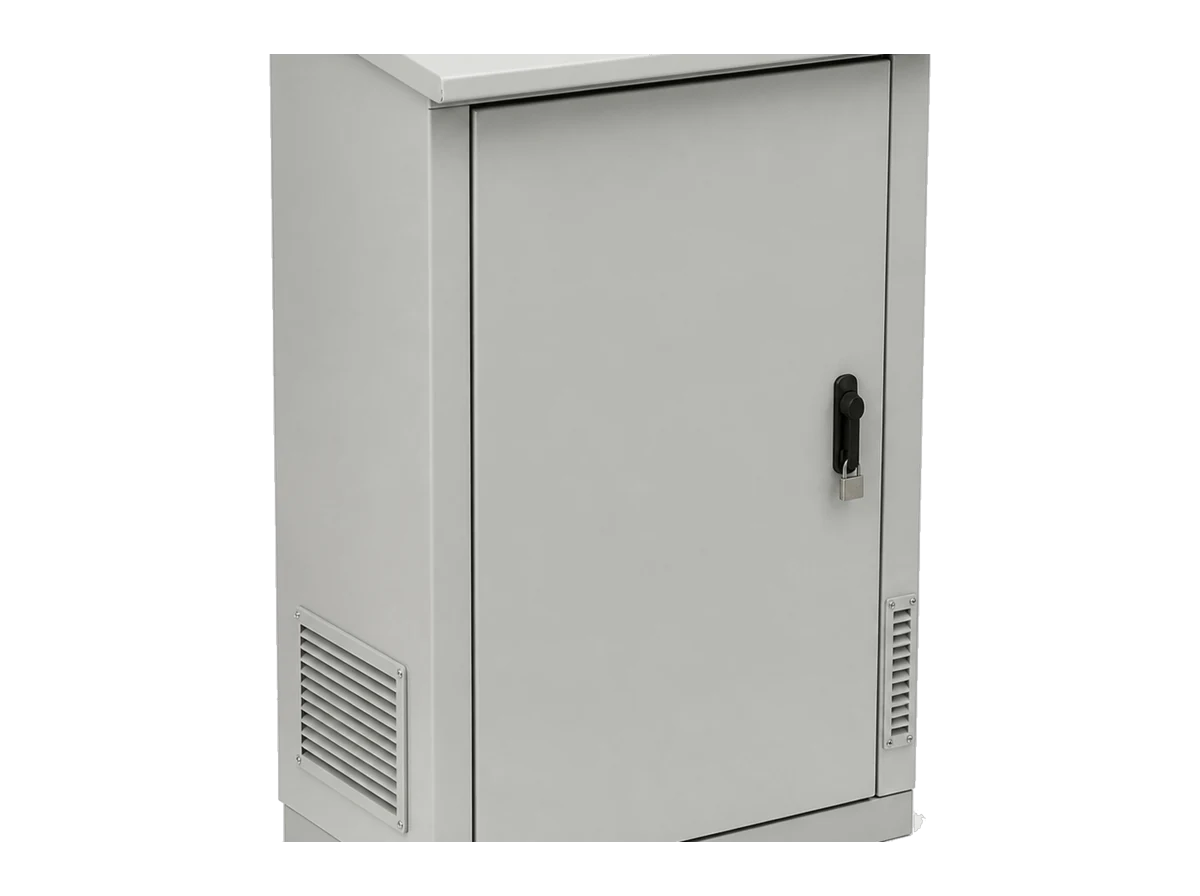
- Pole- and structure-mounted cabinets — traffic, telecom and utility cabinets where weight on the pole and installation by two people matter; see traffic cabinets and telecom cabinets.
- Trailers and vehicles — mobile power and rental enclosures where every pound is payload.
- Rooftops — equipment enclosures where structural load is limited.
- Coastal and roadside salt — where a coated steel enclosure’s life is the coating’s life and a scratch becomes a rust streak.
- Electronics in the sun — combiner boxes, radio cabinets and controller cabinets where heat rejection is the design problem; see combiner enclosures.
Where steel wins
- Pad-mounted utility gear — transformer cabinets and switchgear housings built to tamper and impact requirements, where mass and stiffness are the point; see C57.12.28.
- Switchgear and E-Houses — large structures where steel’s stiffness, weldability and cost dominate.
- Generator enclosures — where mass helps attenuation and the base interface is steel.
- Anything galvanized — bases, frames and structures that go through the kettle.
- Cost-driven programs — where the environment is inland and a 2000-hour powder coat is more than adequate.
Galvanic isolation and hardware
Aluminum in contact with stainless, copper or carbon steel in the presence of moisture corrodes galvanically at the contact. Stainless hardware on aluminum enclosures is standard, but mounting feet on steel structures, copper ground lugs and steel brackets need isolation — nylon washers, dielectric tape, or compatible plating — and the ground connection needs a listed bimetallic lug. Steel enclosures have the opposite concern: bare steel at a scratch or a drilled hole rusts, so field drilling should be touched up and the print should pre-cut everything that can be. Hardware selection is covered in latches, hinges and gasketing.
Finish for each
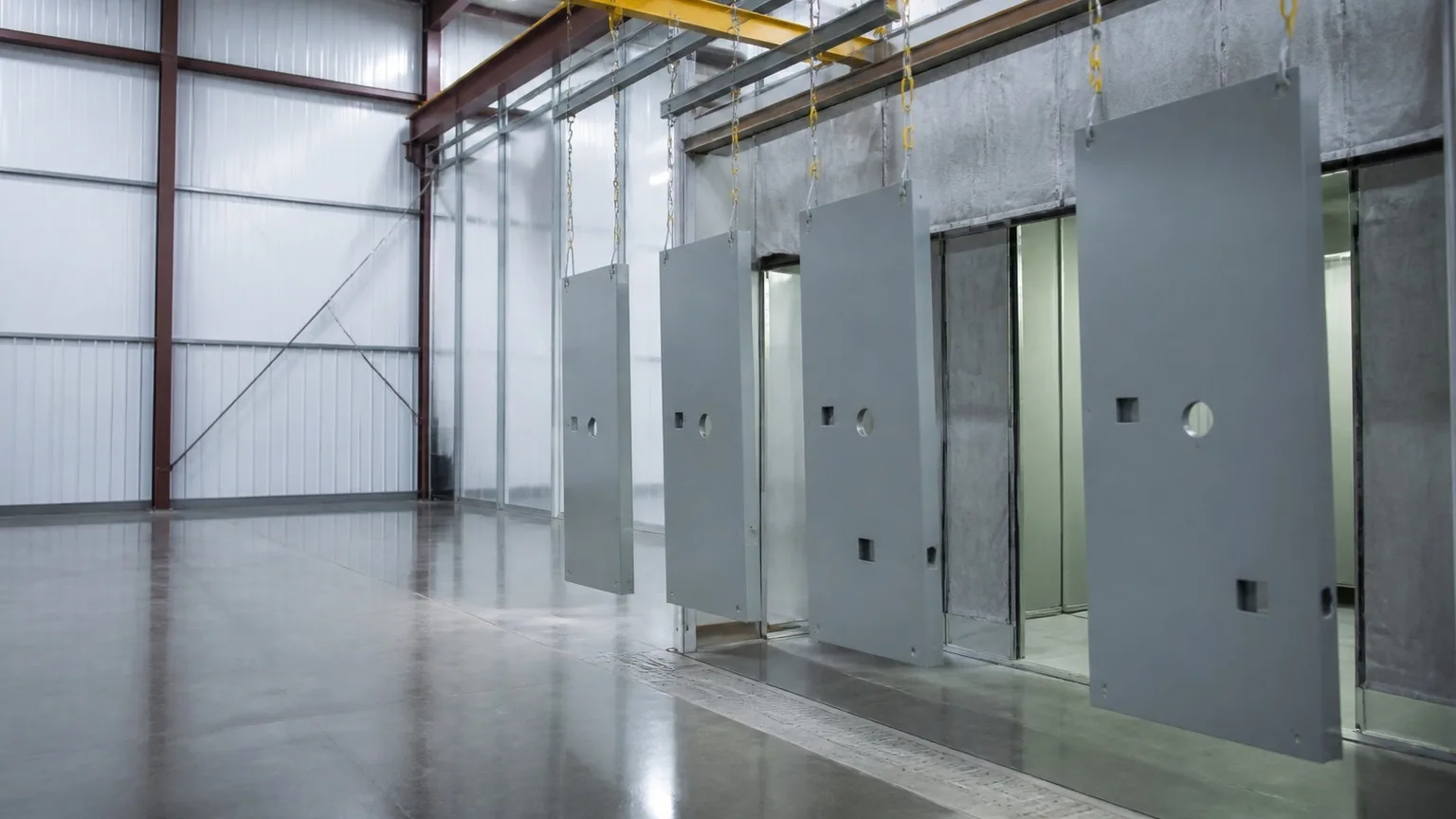
Aluminum can be left bare (mill or brushed), anodized for a hard, colorfast surface, or powder-coated when a color is required; powder on aluminum needs chromate or chrome-free conversion pretreatment to adhere. Steel is always coated: powder coat over blast or phosphate pretreatment to a film thickness and salt-spray requirement, or hot-dip galvanizing for bases and structures. FabTek’s in-house powder lines carry an IEEE 2000-hour salt-spray rating on steel; the choice across all three options is laid out in choosing an enclosure finish, and the stainless alternative in 304 vs. 316.
Aluminum is the answer when the enclosure has to be light, cool or scratched without consequence. Steel is the answer when it has to be stiff, heavy or cheap. Most programs know which one they are.
FabTek Industries fabricates outdoor enclosures in 5052 aluminum (welded with qualified procedures, bare, brushed or powder-coated) and in carbon steel (powder-coated in-house to an IEEE 2000-hour salt-spray rating or hot-dip galvanized) — NEMA 3R, 4 and 4X, control cabinets and switchgear housings — under an ISO 9001:2015 quality system, from four production sites in Hazlehurst, Mississippi. Send us a print and the environment, and we will quote both.
Working on something like this? Send a print or a scope — pricing and lead time within one business day, from four Mississippi plants.
Frequently asked questions
Is aluminum or steel better for an outdoor electrical enclosure?
It depends on the application. Aluminum is about a third the weight, corrosion-resistant without a coating and rejects heat better, so it wins on poles, trailers, roofs, coasts and electronics cabinets in the sun. Powder-coated steel is stiffer, cheaper on large enclosures and easier to weld, so it wins on pad-mounted gear, switchgear, E-Houses and generator enclosures.
Does aluminum need to be painted outdoors?
No. 5052 aluminum forms its own protective oxide and performs well bare or brushed in most outdoor environments. It is powder-coated when a color is required, with a conversion pretreatment for adhesion, or anodized for a hard, colorfast surface.
What gauge aluminum replaces 14-gauge steel?
Because aluminum is about one-third as stiff, 0.125-inch (roughly 8-gauge equivalent) aluminum is commonly used where 14- or 12-gauge steel would be, with additional stiffening on large panels.
What is galvanic corrosion on an aluminum enclosure?
Corrosion at the contact between aluminum and a dissimilar metal — stainless, copper or carbon steel — in the presence of moisture. It is prevented with stainless hardware, isolation washers or dielectric tape at steel mounting points, and listed bimetallic lugs for copper ground connections.