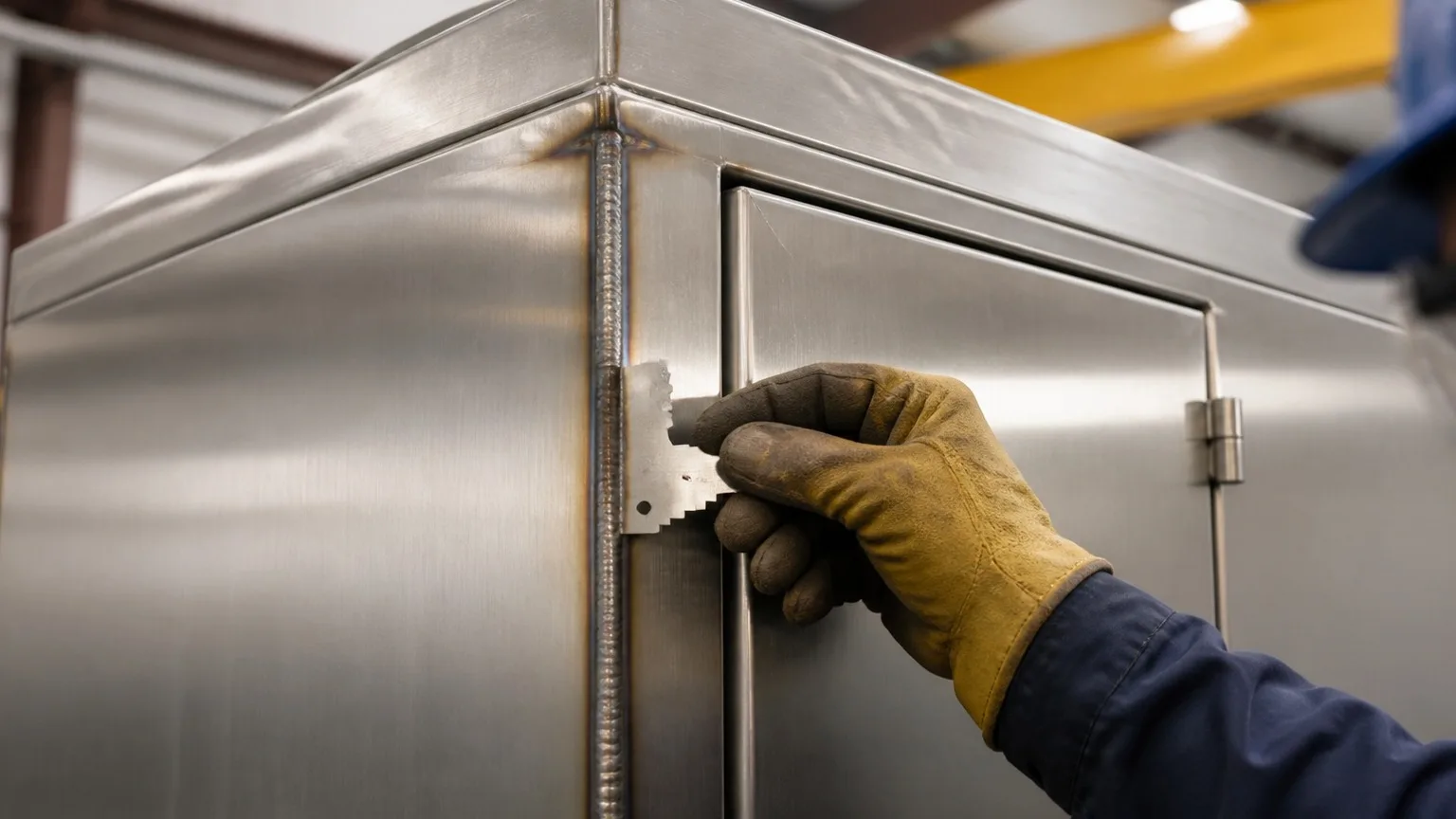
“Stainless steel enclosure” on a specification is not enough. Type 304 and Type 316 look identical, cost differently and perform very differently in chloride and sulfide environments, and a 304 enclosure at a coastal substation or a wastewater headworks will pit within a few years. This spec sheet explains what separates the two alloys, where each belongs, and how to write the specification so the right one shows up.
Specifying stainless enclosures and unsure which alloy? Call 601.892.5017 or email collin.t@fabtekindustries.com — send a print and a quantity and we’ll quote it.
- 316 adds molybdenum, which resists the chloride pitting and crevice corrosion that attacks 304.
- Use 316 for coastal, de-icing-salt, chemical, wastewater and washdown-with-sanitizer sites; 304 for dry, inland, mild service.
- L-grades (304L/316L) are preferred for welded enclosures to avoid sensitization at the welds.
- Specify the alloy, the finish and the hardware together — a 316 box with 304 hinges still rusts at the hinges.
What separates the two
Both are austenitic chromium-nickel stainless steels. Type 316 adds roughly 2–3% molybdenum, which dramatically improves resistance to pitting and crevice corrosion in the presence of chlorides — salt air, de-icing salt, brine, hypochlorite, many process chemicals — and to attack by sulfur compounds. Type 304 has no molybdenum and, while it resists ordinary atmospheric corrosion well, it pits in chloride exposure, especially in crevices under gaskets and hardware where the chloride concentrates and oxygen is excluded. The pitting resistance equivalent number (PREN) captures it: roughly 18–20 for 304, 24–26 for 316.
| Environment | 304 · 316 |
|---|---|
| Inland, dry, indoor industrial | Suitable · Not required |
| Coastal (within a few miles of salt water) | Pits · Required |
| Roadside with de-icing salt | Marginal · Preferred |
| Wastewater (H2S), chlorine, chemical | Attacked · Required |
| Food washdown with chlorinated sanitizers | Marginal · Preferred |
| Pharmaceutical, clean process | Common · Where chlorides present |
Industry-typical guidance; the site corrosion study or the owner’s standard governs.
The cost difference
316 sheet typically carries a meaningful premium over 304 — the molybdenum and nickel content drive it, and the premium moves with alloy surcharges — so on a large enclosure the material difference is real. Set against the cost of replacing a pitted enclosure at a lift station or a coastal substation, including the panel work and the outage, the premium is usually the cheaper number. Where budget forces 304 in a borderline environment, a sunshield, a drained design that avoids standing water and regular freshwater rinsing extend its life; where chlorides are certain, 304 is a false economy.
L-grades, welding and passivation
- L-grades — 304L and 316L have lower carbon, which prevents chromium carbide precipitation (sensitization) in the heat-affected zone of welds; for welded enclosures they are the right choice and are often dual-certified (304/304L, 316/316L) at no premium.
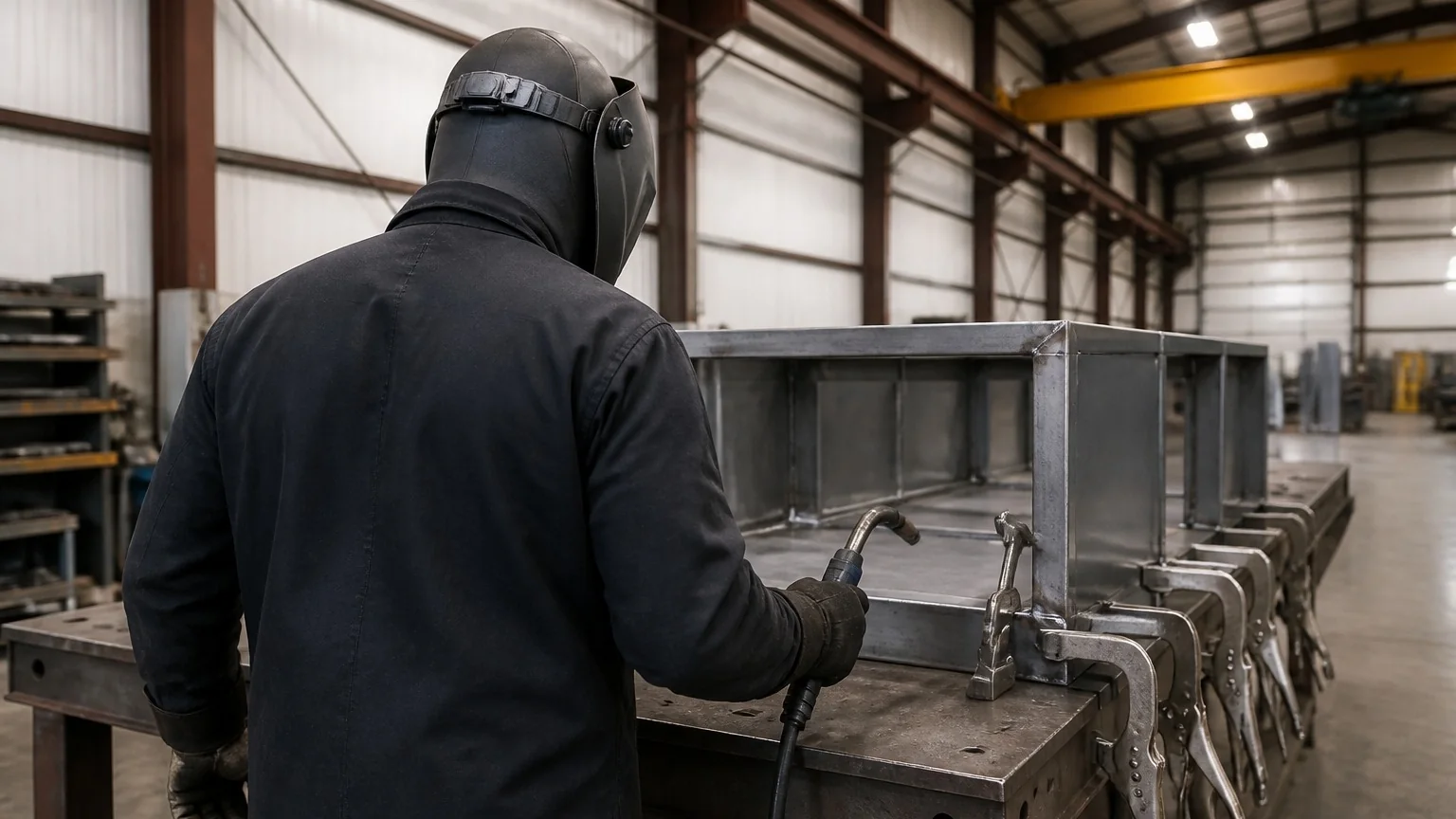
- Welding — to AWS D1.6 with matching filler (308L for 304, 316L for 316), continuous exterior seams ground smooth so there are no crevices.
- Passivation — chemical passivation after fabrication removes free iron from grinding and welding and restores the passive layer; a stainless enclosure that was not passivated rusts where it was ground.
- Contamination — carbon steel tooling, grinding dust and wire brushes embed iron; FabTek keeps stainless fabrication separated from carbon steel for that reason.
Surface finish and hardware
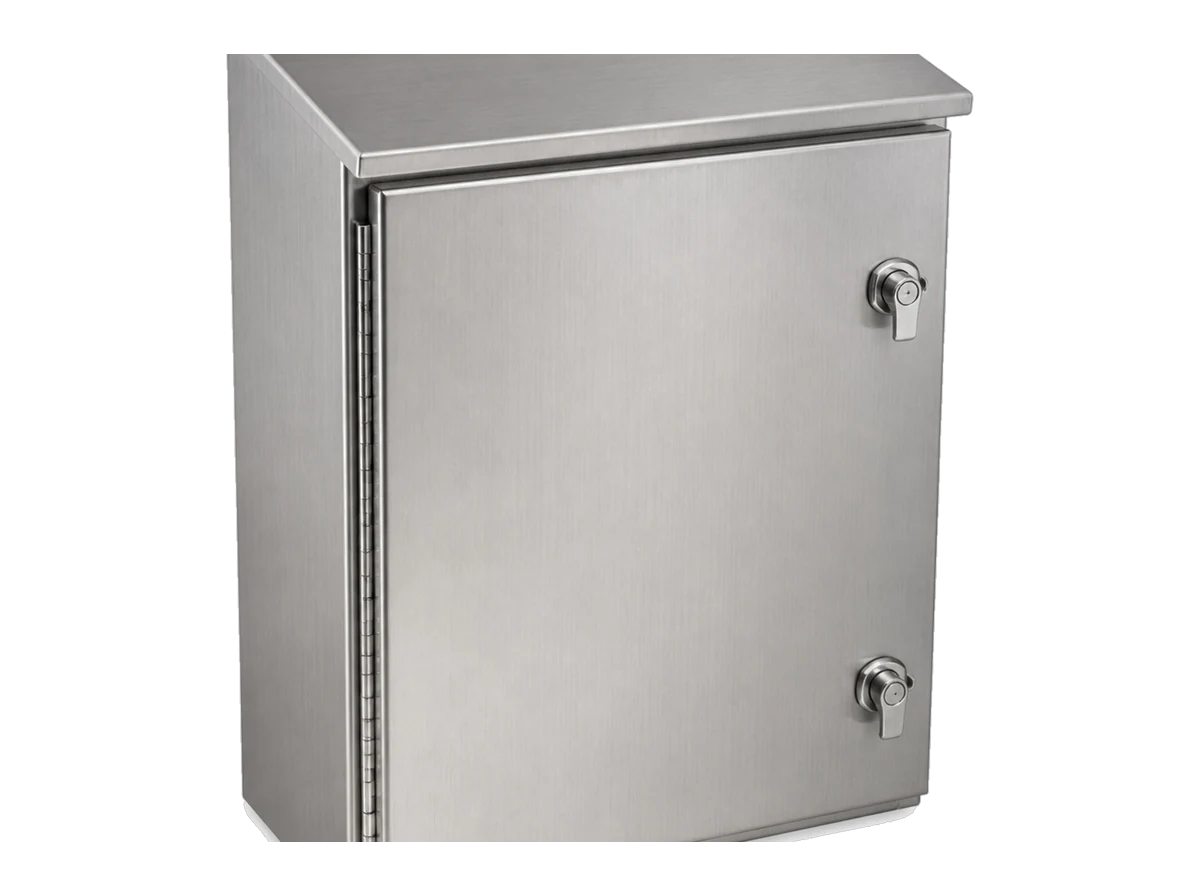
A #4 brushed finish is the standard for enclosures; #2B mill finish is used where appearance does not matter and cost does; electropolish or #8 is specified in sanitary and pharmaceutical service. Finish direction and consistency matter on multi-panel enclosures. Hardware must match: 316 hinges, latches, handles and fasteners on a 316 enclosure, because a 304 or zinc-plated hinge on a 316 box corrodes first and stains the enclosure. Gasket material should be chosen for the same chemicals. The hardware side is in latches, hinges and gasketing.
Writing the specification
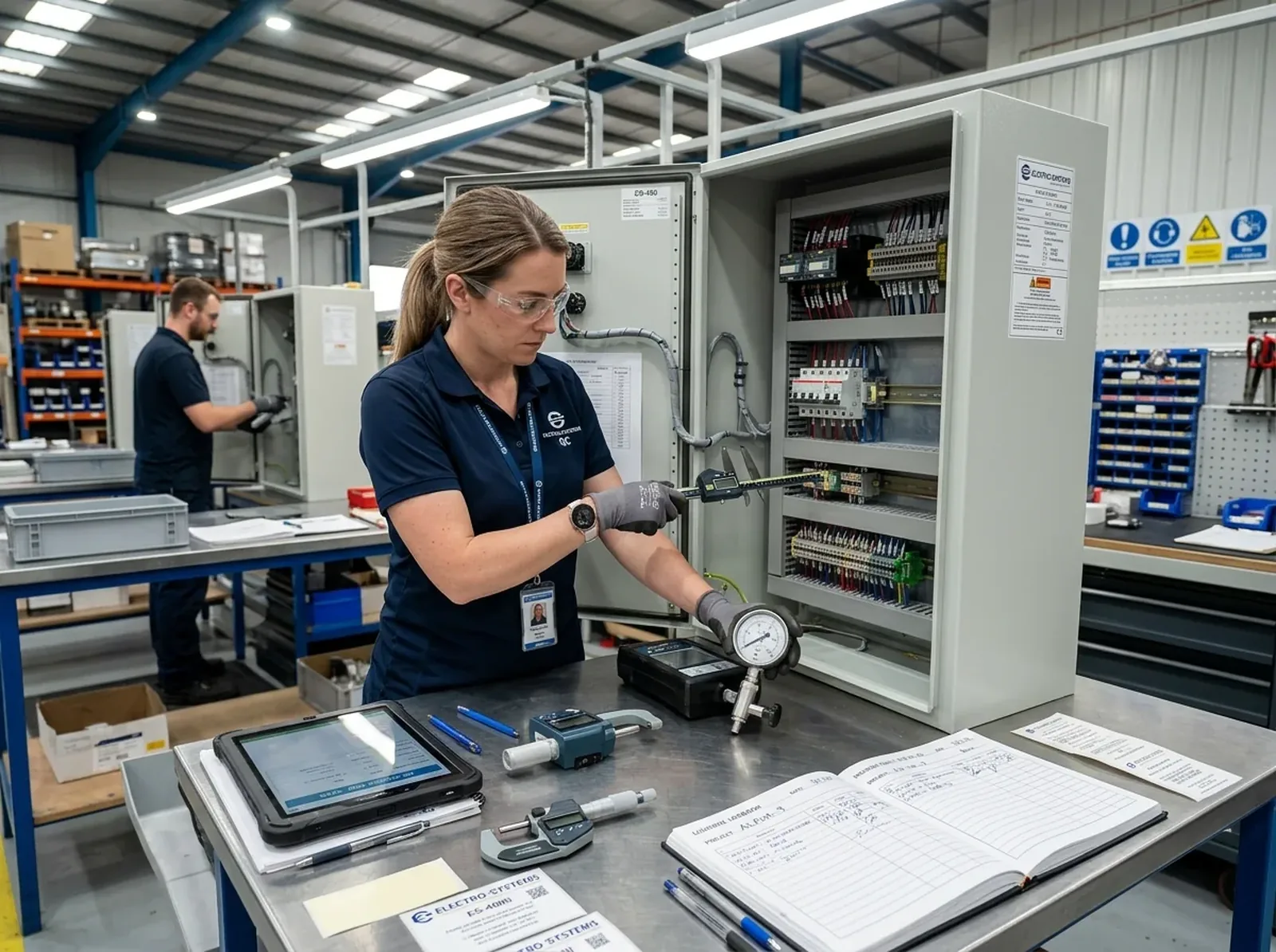
State the alloy (316/316L), the sheet thickness, the finish (#4), the welding code (AWS D1.6, continuous exterior seams ground smooth), passivation (per ASTM A967 or A380), the hardware alloy (316), the gasket material, and the type rating (NEMA 4X). Ask for mill test reports to confirm the alloy — see material certs and traceability. That language, on the drawing, is what prevents a 304 enclosure with plated hinges from arriving at a coastal site. FabTek builds both alloys on the NEMA 4X line; the environments are described in water and wastewater and industrial plants.
The difference between 304 and 316 is invisible on the day the enclosure ships and obvious three years later. Write the alloy on the drawing.
FabTek Industries fabricates 304/304L and 316/316L stainless steel enclosures — welded to AWS D1.6 with matching filler, seams ground, passivated, #4 finish, matching stainless hardware, NEMA 4X — with mill test reports on request, under an ISO 9001:2015 quality system, from four production sites in Hazlehurst, Mississippi. See NEMA 4 and 4X enclosures, or send us a print.
Working on something like this? Send a print or a scope — pricing and lead time within one business day, from four Mississippi plants.
Frequently asked questions
What is the difference between 304 and 316 stainless steel enclosures?
316 contains molybdenum, which gives it much better resistance to pitting and crevice corrosion from chlorides — salt air, de-icing salt, hypochlorite — and to sulfur compounds. 304 resists ordinary atmospheric corrosion but pits in chloride exposure, especially under gaskets and hardware.
When should an enclosure be 316 stainless?
At coastal sites, on roadsides with de-icing salt, at wastewater plants with hydrogen sulfide, in chlorine and chemical areas, and in food washdown with chlorinated sanitizers. 304 is suitable for dry, inland and mild indoor industrial service.
Why specify 304L or 316L for enclosures?
The low-carbon L-grades prevent sensitization in the heat-affected zone of welds, which otherwise leaves the weld area prone to corrosion. Dual-certified 304/304L and 316/316L sheet is standard and carries no premium.
Does the hardware need to match the enclosure alloy?
Yes. A 304 or zinc-plated hinge on a 316 enclosure corrodes first and stains the enclosure. Hinges, latches, handles and fasteners should be the same alloy as the enclosure, and gaskets chosen for the same chemical exposure.