The sheet metal is the enclosure; the hardware is how people use it. Latches that will not pull a door tight, hinges that sag, gaskets that take a set, gland plates with no room for the cables — these are the defects that reach the field, and most of them trace back to a print that said “hardware by fabricator” and nothing else. This spec sheet covers the hardware families, what each is for, and how to call them out.
Need hardware installed to a standard across an enclosure program? Call 601.892.5017 or email collin.t@fabtekindustries.com — send a print and a quantity and we’ll quote it.
- Hardware is specified by NEMA type, duty and user: a 4X washdown door and a 3R utility cabinet door want different latches, hinges and gaskets.
- Three-point latching for tall doors, quarter-turn for small ones, compression for 4/4X and acoustic seals.
- The gasket system — strip, poured or compression — is chosen with the latch, not after it.
- Put manufacturer part numbers or an approved-equal list on the print; “by fabricator” is a defect waiting to happen.
Latches
| Quarter-turn | Small doors and covers; single cam, tool or key operated; low cost; limited gasket compression — NEMA 12 and 3R, small 4X boxes |
|---|---|
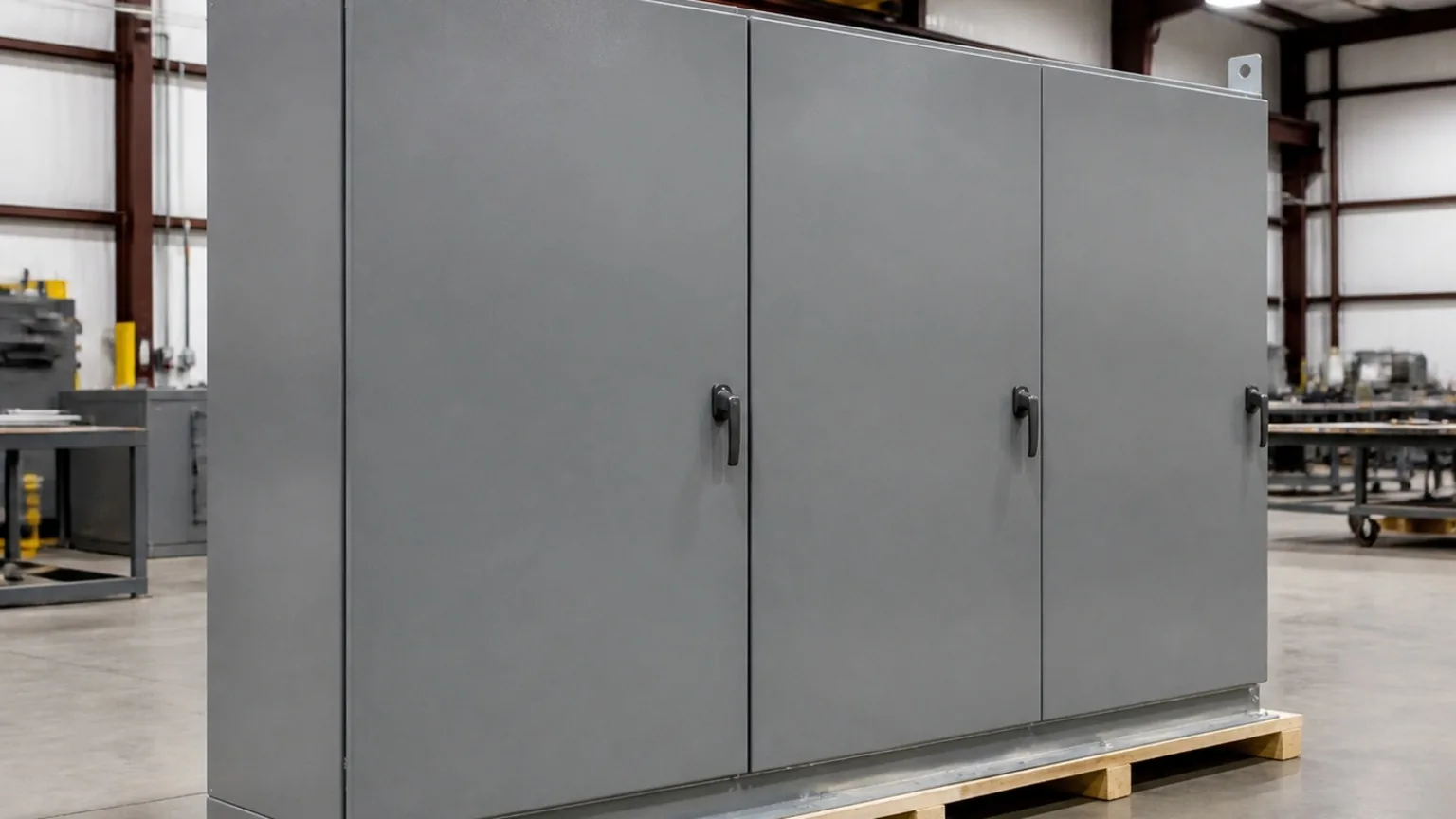
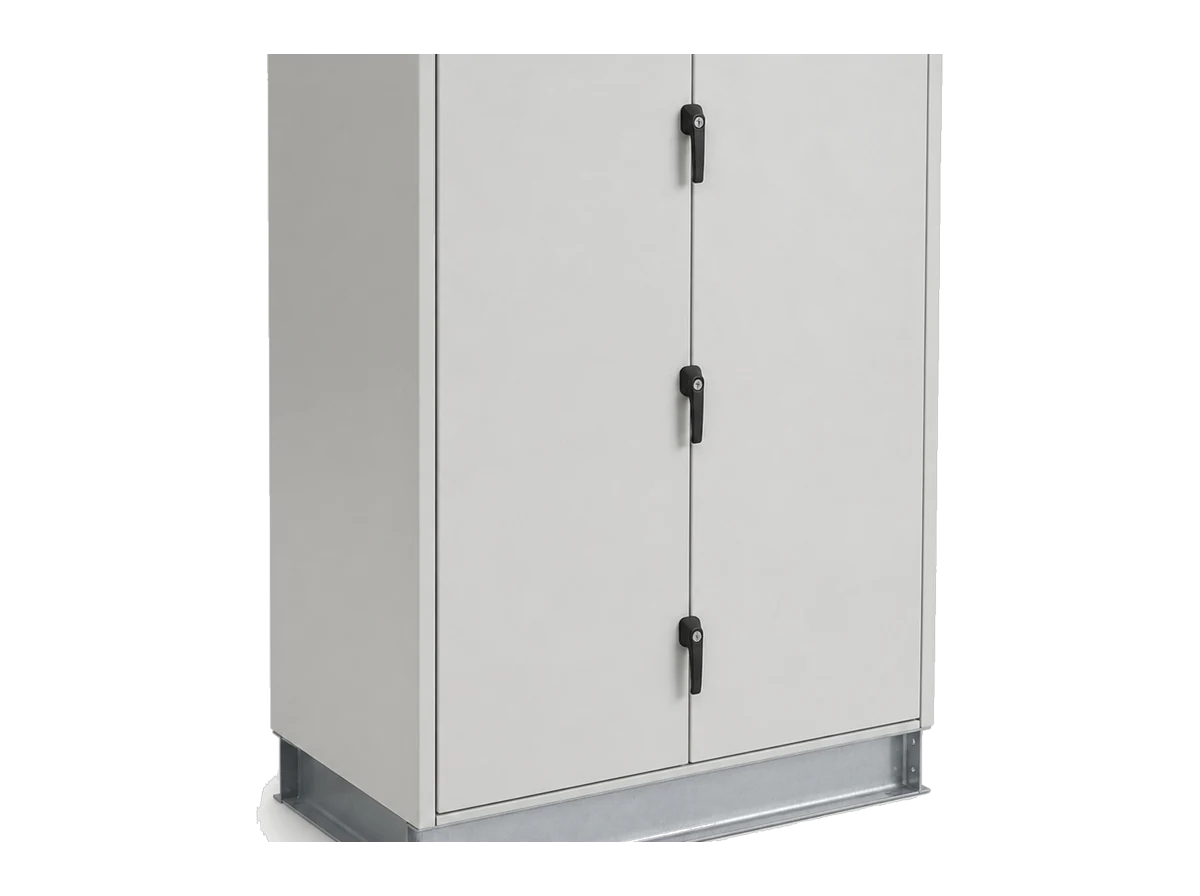
| Three-point | Doors over about 36 inches; a handle drives a center cam and top and bottom rods so the door pulls tight along its height; padlockable handles; the utility and switchgear standard |
| Compression (adjustable) | Latches that draw the door progressively against the gasket; NEMA 4/4X and acoustic enclosures; often paired with three-point rods |
| Clamp and toggle | Multiple clamps around the door for hose-tight 4X boxes; no handle |
| Security | Penta-head or other security-drive fasteners, recessed padlock hasps, lock-out provisions; utility and public-access enclosures; see C57.12.28 |
Hinges and door support
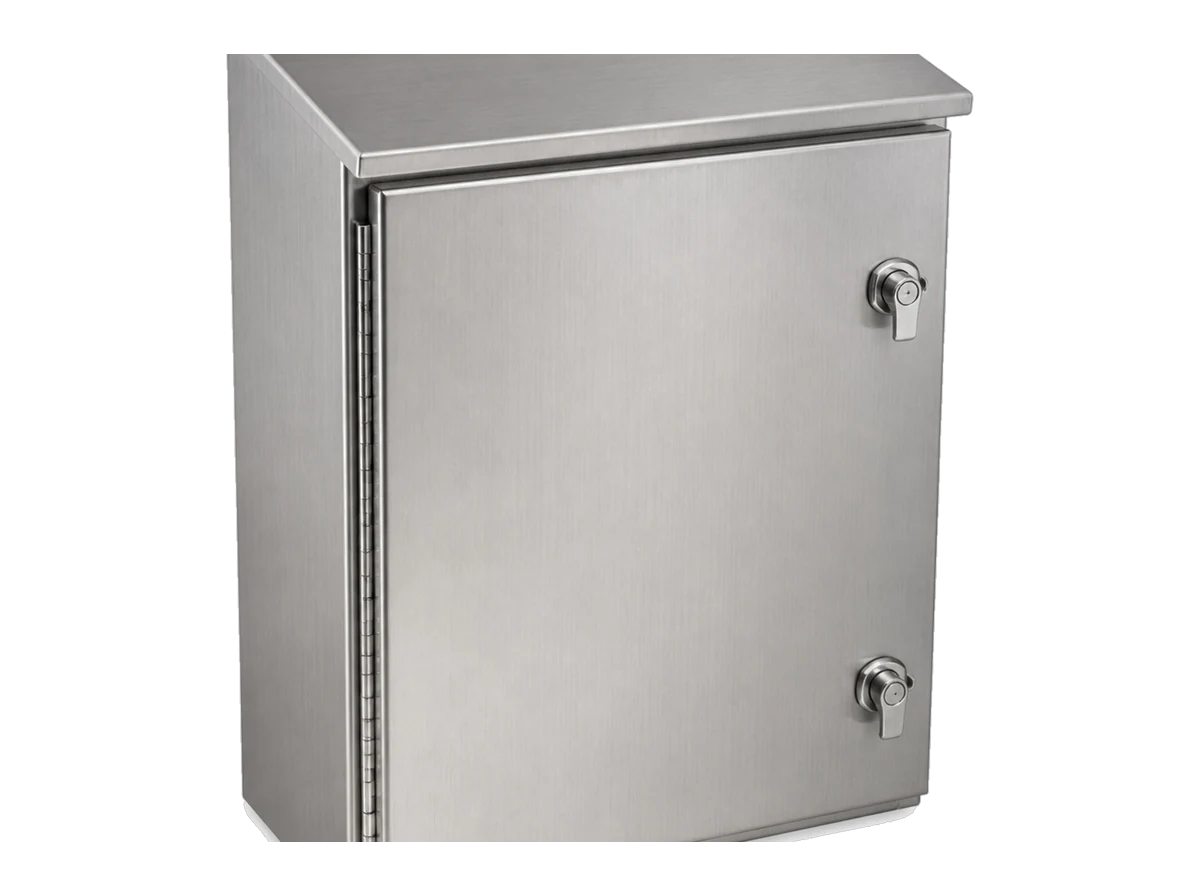
- Continuous (piano) hinge — full-height, distributes load, hard to defeat; the default on 4X stainless and acoustic doors; stainless on stainless enclosures.
- Lift-off hinges — let the door be removed for panel work; common on control cabinets and consoles; specify the number by door height and weight.
- Concealed or welded-pin hinges — hinges inside the door return or with pins that cannot be driven out; security and utility enclosures.
- Heavy-duty weld-on hinges — walk-in enclosure and E-House doors, with grease fittings where specified.
- Door stops and hold-opens — 90- or 120-degree stops and a hold-open arm or gas strut on every outdoor door someone will work behind in wind; required on relay cabinets and switchgear doors.
Gasketing by NEMA type
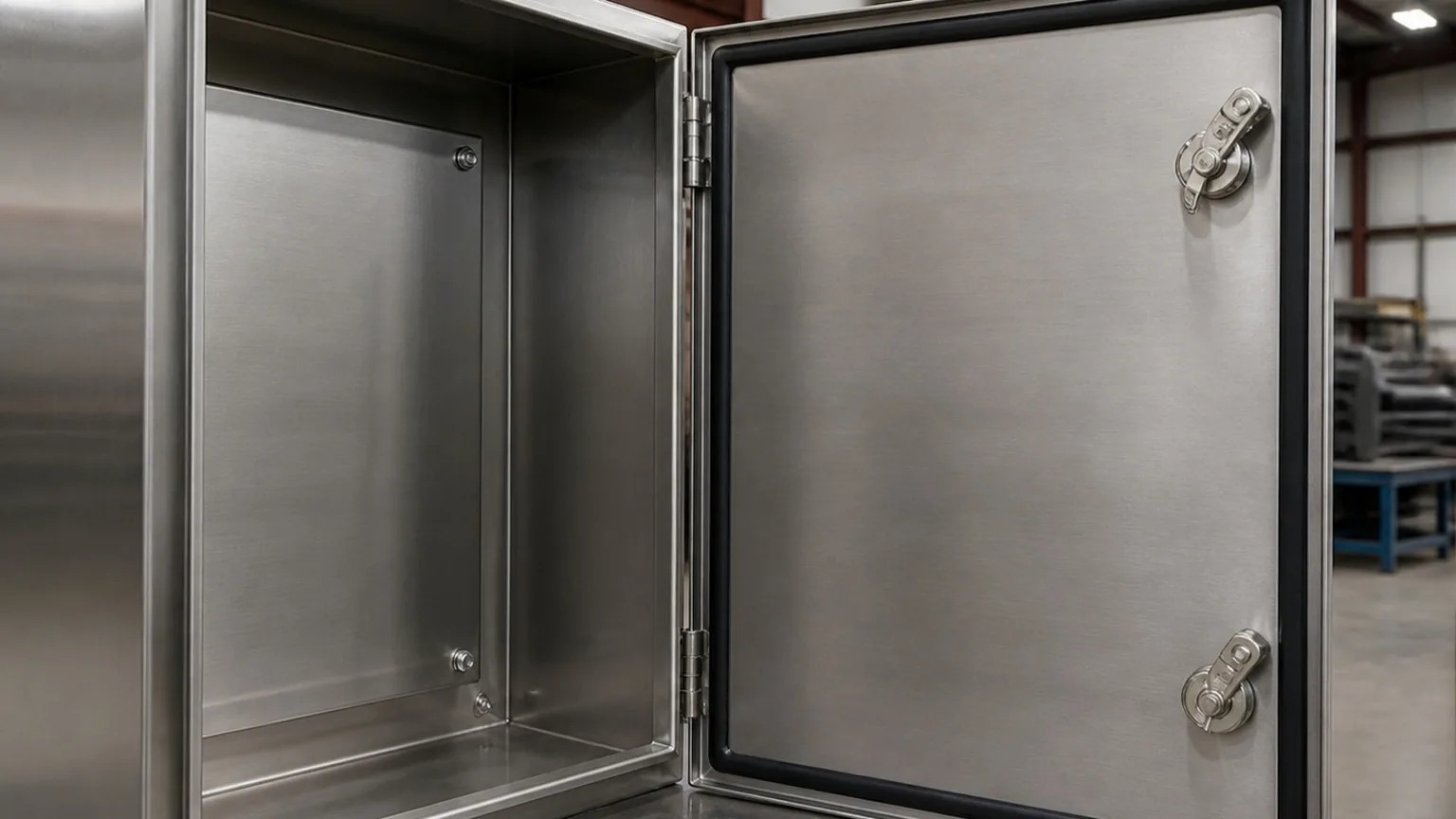
The gasket, the latch and the door stiffness are one system: a gasket needs a specified compression to seal, the latch has to deliver it, and the door has to stay flat enough to compress it evenly. Strip gasket — adhesive-backed closed-cell neoprene, EPDM or silicone in a formed channel — serves NEMA 12 and 3R. Poured-in-place polyurethane foam gasket, dispensed into a channel on the door, gives a continuous, corner-free seal and is the standard for 4 and 4X. Compression gaskets with a defined bead are used on walk-in and acoustic doors. Material follows the exposure: EPDM for outdoor UV and ozone, silicone for temperature extremes, specific compounds for chemical or sanitizer contact. The ratings themselves are in NEMA 3R vs. 4 vs. 4X.
Gland plates and cable entries
A removable gland plate — steel or aluminum, blank or pre-drilled — bolted over a bottom or side opening with its own gasket is the standard cable entry on control, relay and communications cabinets. Size it to the cable schedule with growth; use aluminum where single-conductor power cables pass through, to avoid eddy heating; add a cable support bar above it. Conduit entry plates with the conduit pattern pre-punched, or hubs for 4X, replace it where conduit is used. Knockouts are not permitted on 4X and are rarely wanted on anything outdoor.
Vents, breathers, drains and lifting
- Vents and louvers — screened, hooded, filtered; free area to the design; drainable sills.
- Breather valves — pressure-equalizing membrane vents on sealed 4X and electronics enclosures to prevent condensation pumping without admitting water.
- Drains — screened drain fittings on 3R; none on 4X.
- Lifting — rated eyes, lugs or removable lifting angles on anything over a two-person lift; forklift pockets on bases.
- Interior — sub-panel studs, DIN rail, drawing pockets, door-switch lights, grounding studs and bus.
- Sunshields — standoff panels on roof and sun-facing sides for electronics cabinets.
How to call it out
Give manufacturer part numbers or an approved-equal list per hardware item, by door; the gasket system and material; the gland plate size, material and drilling; the lock dimension for padlockable handles; the hold-open requirement; and which items the fabricator installs versus the end user. The RFQ guide treats hardware as one of the six parts of a complete package, and on stainless enclosures the hardware alloy must match the box, per 304 vs. 316. FabTek installs hardware on its mechanical assembly line from the print’s BOM, and keeps the OEM’s part numbers on file for the program.
A technician never says the gauge was wrong. They say the door would not latch, the hinge sagged, or the gasket fell out. Hardware is the enclosure they actually touch.
FabTek Industries fabricates enclosures with hardware installed to the print’s bill of materials — three-point, compression and security latches, continuous and lift-off hinges, strip and poured-in-place gaskets, gland plates, hold-opens, vents, breathers and lifting hardware — on control cabinets, NEMA 4X enclosures and switchgear housings, under an ISO 9001:2015 quality system, from four production sites in Hazlehurst, Mississippi. Send us a print and a hardware list.
Working on something like this? Send a print or a scope — pricing and lead time within one business day, from four Mississippi plants.
Frequently asked questions
When should an enclosure door have a three-point latch?
On doors taller than roughly 36 inches, where a single latch cannot pull the door tight along its height. A three-point handle drives a center cam plus top and bottom rods; it is the standard on utility, switchgear and control cabinet doors and can be padlockable.
What gasket is used on a NEMA 4X enclosure?
Poured-in-place polyurethane foam gasket, dispensed into a channel on the door for a continuous, corner-free seal, paired with compression-type latching. Strip gaskets serve NEMA 12 and 3R. Material is chosen for the exposure — EPDM for outdoor UV, silicone for temperature extremes, specific compounds for chemicals.
What is a gland plate?
A removable, gasketed plate — steel or aluminum, blank or pre-drilled — bolted over an opening in the enclosure for cable entry. It is sized to the cable schedule with room for growth, made of aluminum where single-conductor power cables pass through, and usually paired with a cable support bar.
Should hardware be specified by part number?
Yes. Manufacturer part numbers or an approved-equal list per item and per door, with the gasket system, gland plate details, lock dimension and hold-open requirement, so the fabricator installs exactly what the end user expects.