Every signalized intersection, every highway camera, every tolling gantry and every roadside sensor has a cabinet beside it. Transportation agencies specify them to their own standards, contractors and integrators buy them by the hundred on capital programs, and they are replaced on maintenance cycles that have nothing to do with any other market. The cabinets are almost always aluminum, built to a small number of standard families. This guide covers what agencies specify and how contractors source them.
DOT contractor or ITS integrator sourcing roadside cabinets? Call 601.892.5017 or email collin.t@fabtekindustries.com — send a print and a quantity and we’ll quote it.
- Roadside cabinets follow agency standards and the NEMA TS 2 family; the agency’s approved drawing is the specification.
- Aluminum — 0.125-inch 5052 is typical — is the material, natural or powder-coated.
- The details are ventilation and filtration, the police panel, door hardware and the mounting.
- Contractors buy to agency approval; a fabricator with an approved design and stock is the one they call.
The cabinet families
| Signal controller cabinets | NEMA TS 2 Type 1/2 sizes and agency-specific variants (e.g., the 332/336 family on the West Coast) housing the controller, load switches, detectors and conflict monitor; base- or pole-mount |
|---|---|
| ITS and camera cabinets | Smaller pole- and pedestal-mount cabinets for cameras, radar, dynamic message sign controllers and communications |
| Communications and hub cabinets | Larger cabinets with rack rails for fiber, switches and radios at hubs and interchanges |
| Battery backup cabinets | Side- or base-mount cabinets for UPS and batteries that keep signals running through outages, often attached to the controller cabinet |
| Tolling and sensor cabinets | Gantry- and roadside-mounted enclosures for tolling readers, weigh-in-motion and environmental sensors |
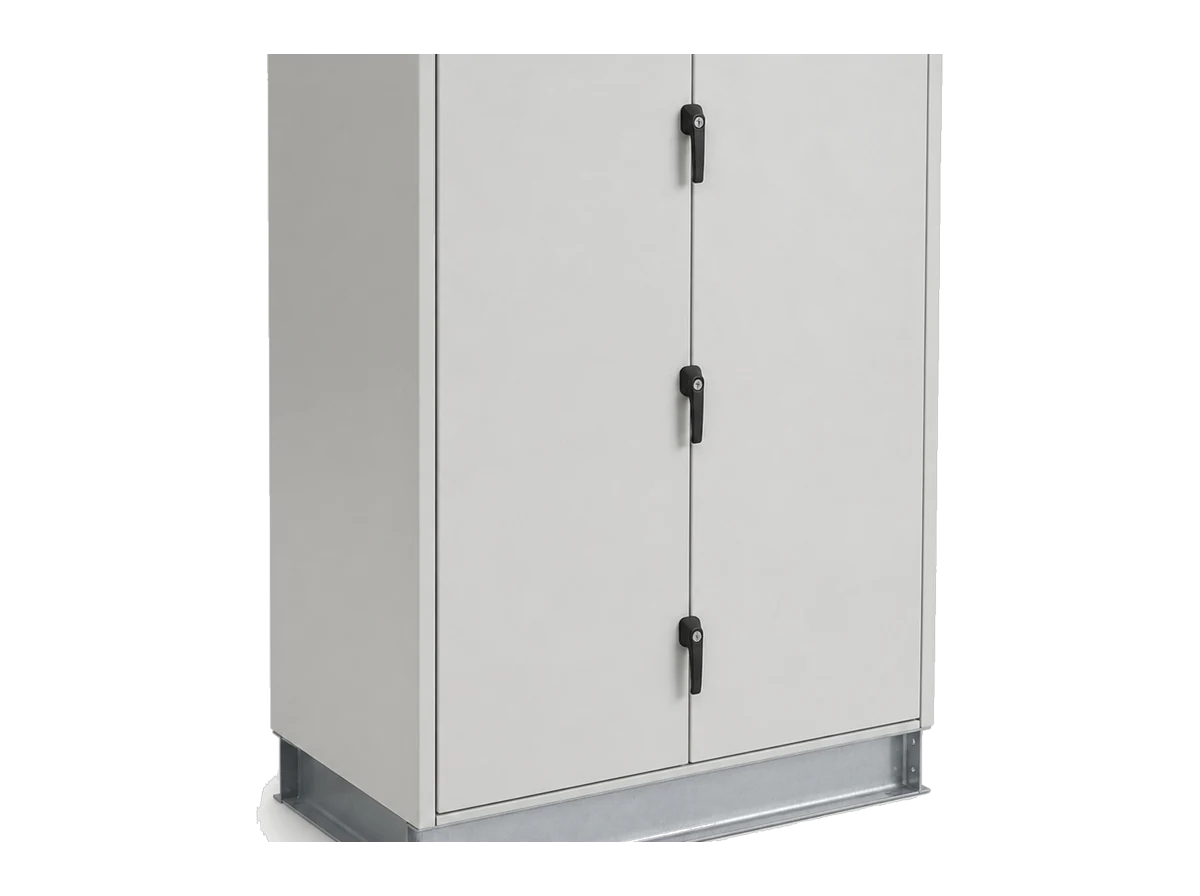
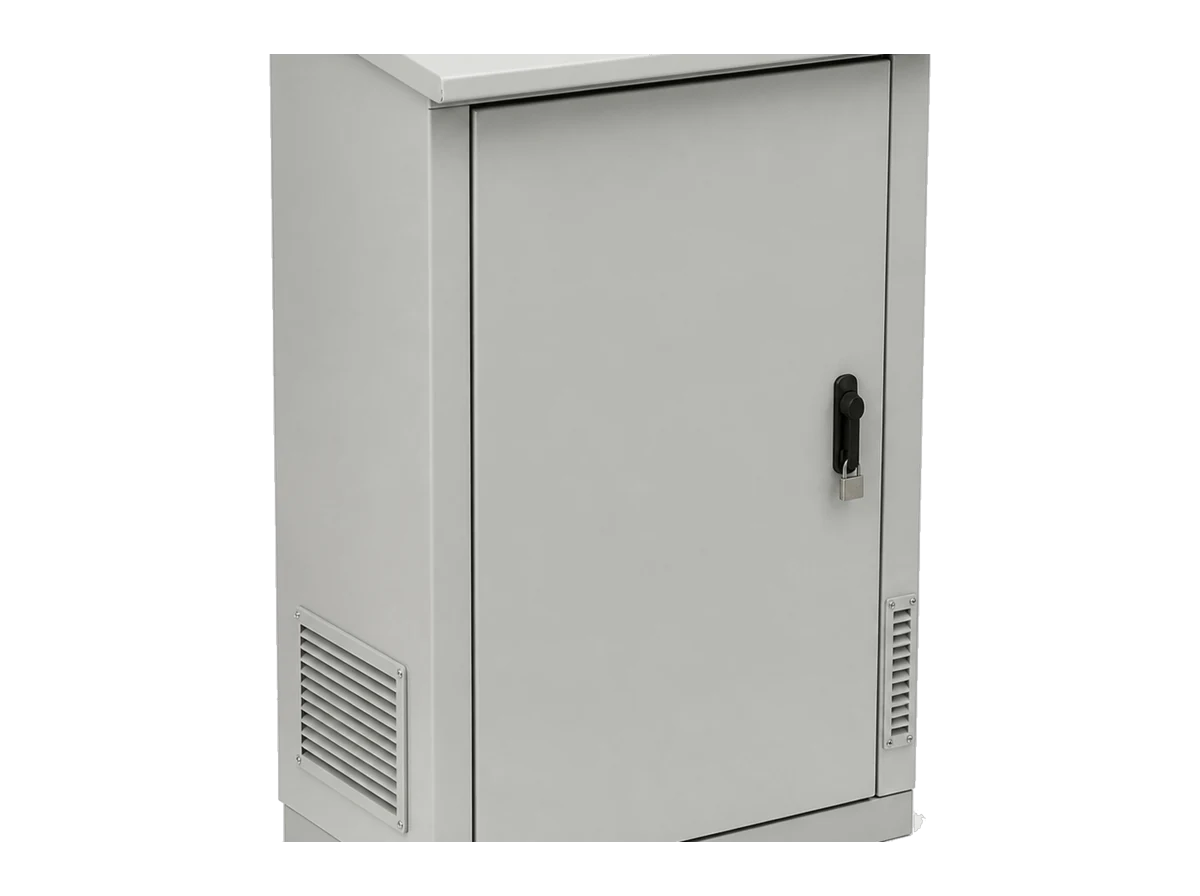
FabTek builds these as aluminum control cabinets and NEMA 3R enclosures to agency drawings.
Agency standards
Each state DOT and many large cities publish a cabinet standard — often derived from NEMA TS 2 or the Caltrans/ITS cabinet specifications — with the dimensions, material and thickness, door and police panel requirements, ventilation, shelving and wiring harness layout. The standard is the drawing; a cabinet that does not match it is not accepted, regardless of quality. Contractors therefore buy from fabricators whose cabinet has been reviewed or approved by the agency, and the fabricator’s value is holding that approved drawing and building to it repeatedly. The same build-to-the-standard discipline applies as in utility switchgear enclosures.
Aluminum construction
- Material — 5052-H32 aluminum, commonly 0.125 inch for the body and doors, welded with continuous exterior seams; see bend radius for 5052.
- Finish — natural mill finish, brushed, or powder-coated in the agency’s color; anodized where specified.
- Doors — main door with a three-point latch and the agency’s lock, continuous gasket, hold-open; a separate police panel door with its own lock for manual control.
- Ventilation — louvered intake low on the door with a replaceable filter, thermostat-controlled exhaust fan at the top, screened so insects stay out.
- Interior — shelves, rack rails and the input/output panel positions to the agency layout; drawing pocket and light.
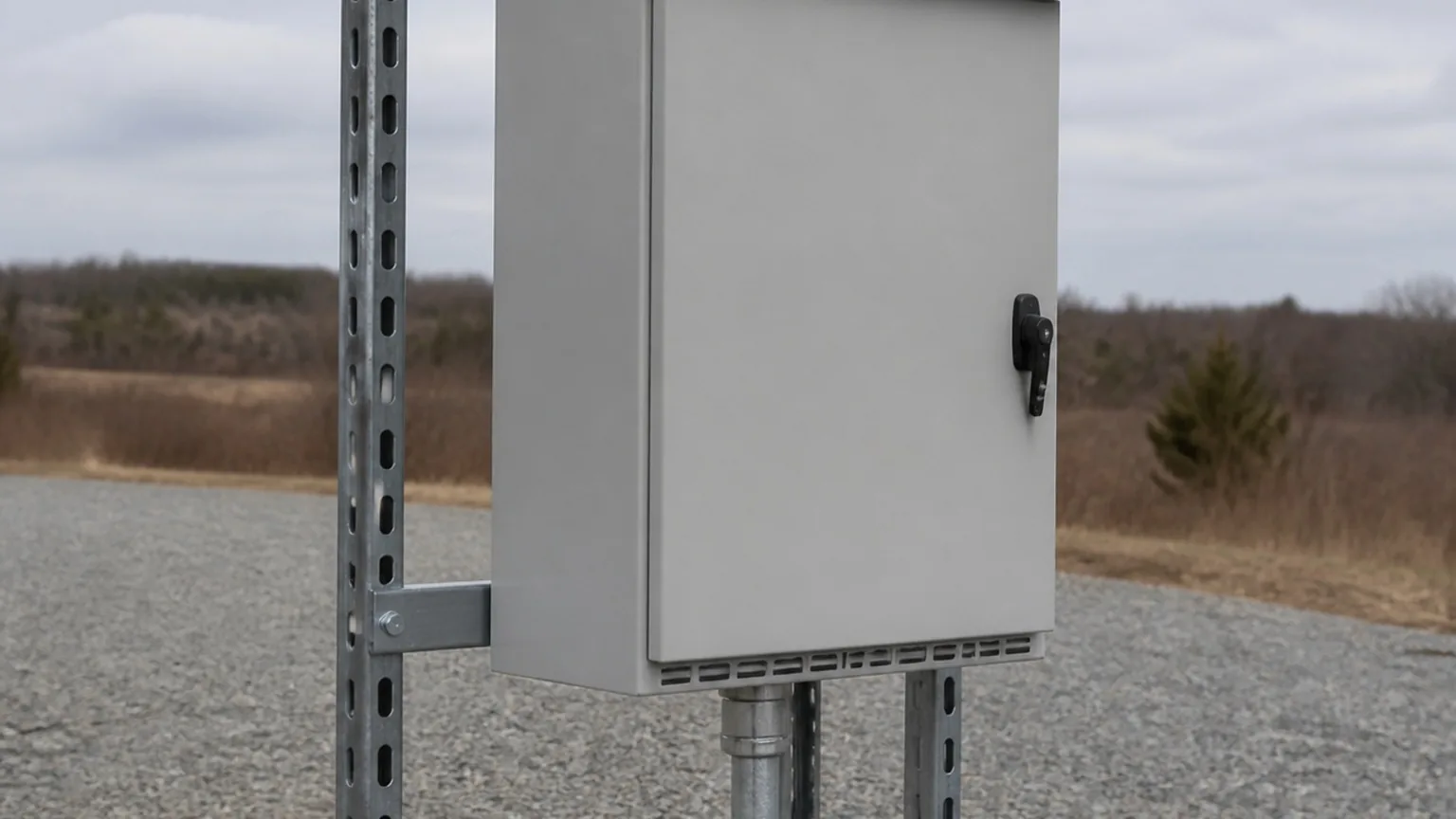
- Mounting — base-mount with an anchor pattern to the agency foundation, pole-mount with band or bracket, or pedestal.
Why aluminum
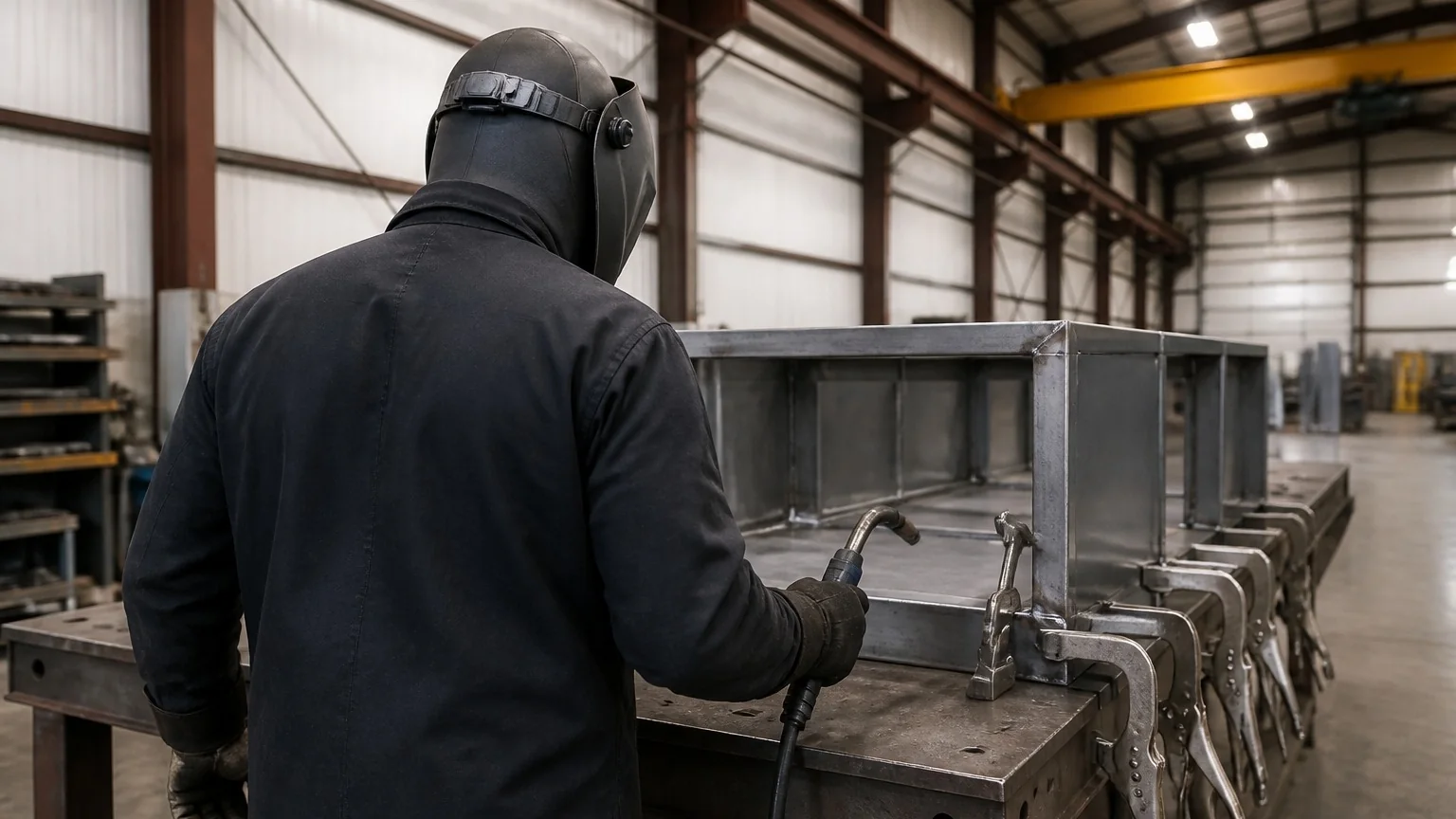
Roadside cabinets are aluminum for three reasons: corrosion resistance without a coating in road salt and weather, weight on poles and pedestals, and the thermal behavior of a light, reflective material in the sun. The trade-offs against steel are covered in aluminum vs. steel outdoor enclosures. Welding aluminum to a consistent, leak-free seam takes AWS D1.2 procedures and practiced welders, which is where contract fabricators with an aluminum line earn their place.
How contractors and agencies buy
Signal and ITS contractors buy cabinets per project against the agency standard, often with the integrator supplying the populated cabinet. Agencies buy directly for maintenance replacement and for standardization programs where a region upgrades hundreds of intersections. In both cases the program looks like the utility cabinet programs described in RTU cabinets: a frozen agency drawing, a first article approved by the agency, batches against a program forecast, and stock so a knocked-down cabinet is replaced in days. The fabricator needs the agency standard drawing, the mounting type, the finish, the hardware and lock specification, and the quantity.
No one at a DOT wants a better cabinet. They want the approved cabinet, in stock, from someone who will still be building it in ten years.
FabTek Industries fabricates aluminum traffic signal, ITS, communications and battery backup cabinets to agency standard drawings — 5052 aluminum welded with qualified procedures, natural or powder-coated, with police panels, filtered ventilation, shelving and base, pole or pedestal mounting — in batches against a program, under an ISO 9001:2015 quality system, from four production sites in Hazlehurst, Mississippi. See control cabinets, or send us an agency standard.
Working on something like this? Send a print or a scope — pricing and lead time within one business day, from four Mississippi plants.
Frequently asked questions
What standards govern traffic signal cabinets?
NEMA TS 2 defines the standard controller cabinet family, and each state DOT or large city publishes its own cabinet standard — often derived from TS 2 or the Caltrans ITS cabinet specifications — with dimensions, material, doors, police panel, ventilation and layout. The agency’s drawing is the specification.
Why are roadside cabinets made of aluminum?
Corrosion resistance without a coating in road salt and weather, low weight for pole and pedestal mounting, and favorable thermal behavior in the sun. 0.125-inch 5052 aluminum is typical for the body and doors.
What is a police panel on a traffic cabinet?
A small separately locked door on the main cabinet door that gives police and maintenance staff access to manual signal control and flash switches without opening the main cabinet.
How do contractors buy traffic and ITS cabinets?
Per project against the agency standard, from a fabricator whose cabinet matches or has been approved to that standard, with agencies buying directly for maintenance replacement and regional standardization programs in batches with stock on hand.