A utility-scale solar site has hundreds of combiner boxes and a storage site has dozens of DC collection enclosures, every one of them outdoors, in the sun, full of fuses and carrying current all day. They are not glamorous, but they are bought by the thousand, to a standard drawing, and they fail expensively when the enclosure is wrong. This spec covers the enclosure side of combiners and recombiners and how equipment OEMs and EPCs buy them.
Combiner OEM or solar EPC sourcing enclosures in volume? Call 601.892.5017 or email collin.t@fabtekindustries.com — send a print and a quantity and we’ll quote it.
- Combiner enclosures are NEMA 4 or 4X outdoor boxes built in volume to the combiner OEM’s standard print.
- The fabricator supplies the enclosure, cutouts, gland plates and mounting; the OEM populates, lists and tests.
- Heat and sun set the material and venting choices more than rain does.
- Volume programs run on a frozen drawing, staged material and releases per project.
What the enclosure houses
A combiner collects the output of multiple PV strings through fuses onto a common bus and sends one DC feed to the inverter; a recombiner collects several combiners. Storage systems use similar DC collection and disconnect enclosures between battery racks and the PCS. Inside are fuse holders, a disconnect switch, bus bars, surge protection, and often string monitoring electronics. The combiner OEM designs and lists the assembly (typically to UL 1741); the enclosure is a NEMA 4 or 4X box that the OEM buys from a fabricator to its print and populates on its own line. FabTek builds these on the NEMA 4X and NEMA 3R lines.
Construction and material
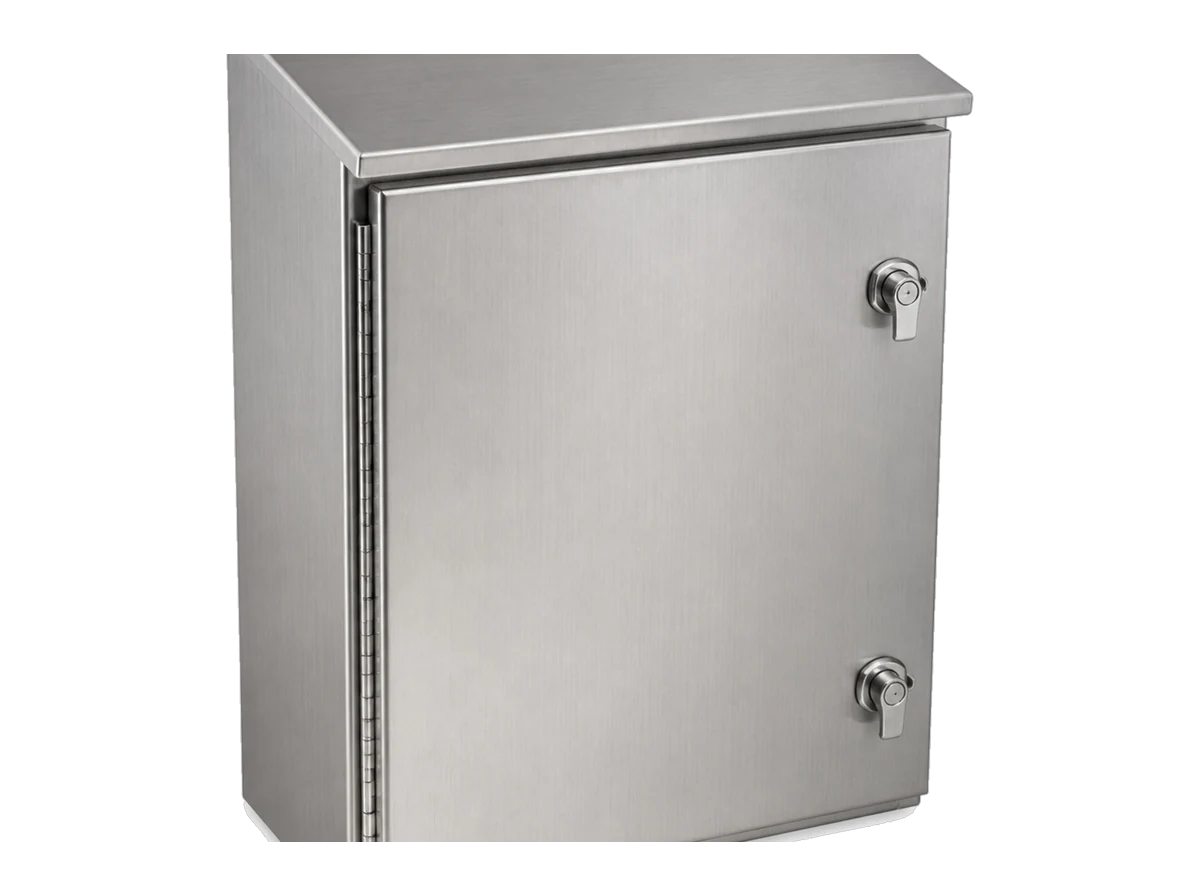
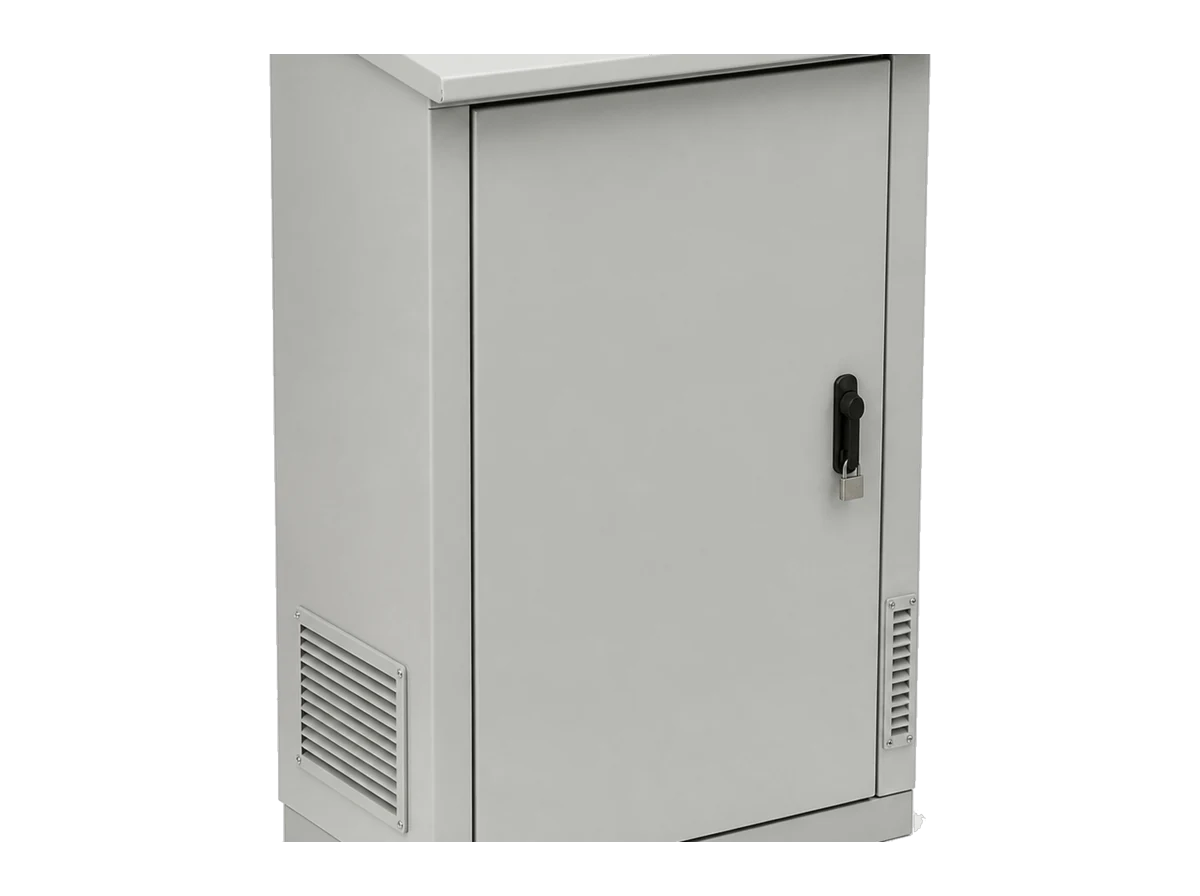
| Rating | NEMA 4 as standard, 4X at coastal, agricultural and corrosive sites; gasketed door, no drain holes, latched or clamped |
|---|---|
| Powder-coated steel | 14- or 12-gauge, lowest cost, heaviest; coating to a salt-spray spec |
| Aluminum (5052) | Lighter for pile and rack mounting, corrosion-resistant without coating, better heat rejection; see aluminum vs. steel |
| Stainless (304/316) | Coastal and chemical exposure; heaviest and highest cost; see 304 vs. 316 |
| Door | Hinged with quarter-turn or three-point latches, padlockable; continuous gasket; door stop for wind |
Industry-typical selections; the combiner OEM’s listed design and the project specification govern.
Cutouts, gland plates and mounting
- Disconnect cutout — door or side cutout and mounting for the OEM’s disconnect handle, with the interlock provision the listing requires.
- Monitoring and antenna — cutouts for indicators, a sealed antenna gland for wireless monitoring, or a fiber entry.
- Gland plate — removable bottom plate, blank or drilled for the string cable glands or conduit hubs; aluminum where single conductors pass through.
- Output entry — conduit hub or gland for the DC output feed, sized to the conductor.
- Mounting — rear mounting feet or a bracket for the pile, rack or post; slotted for field adjustment; sized so the box stands off the structure for airflow behind it.
- Ground — external ground lug and internal ground bus mounting.
Heat and sun
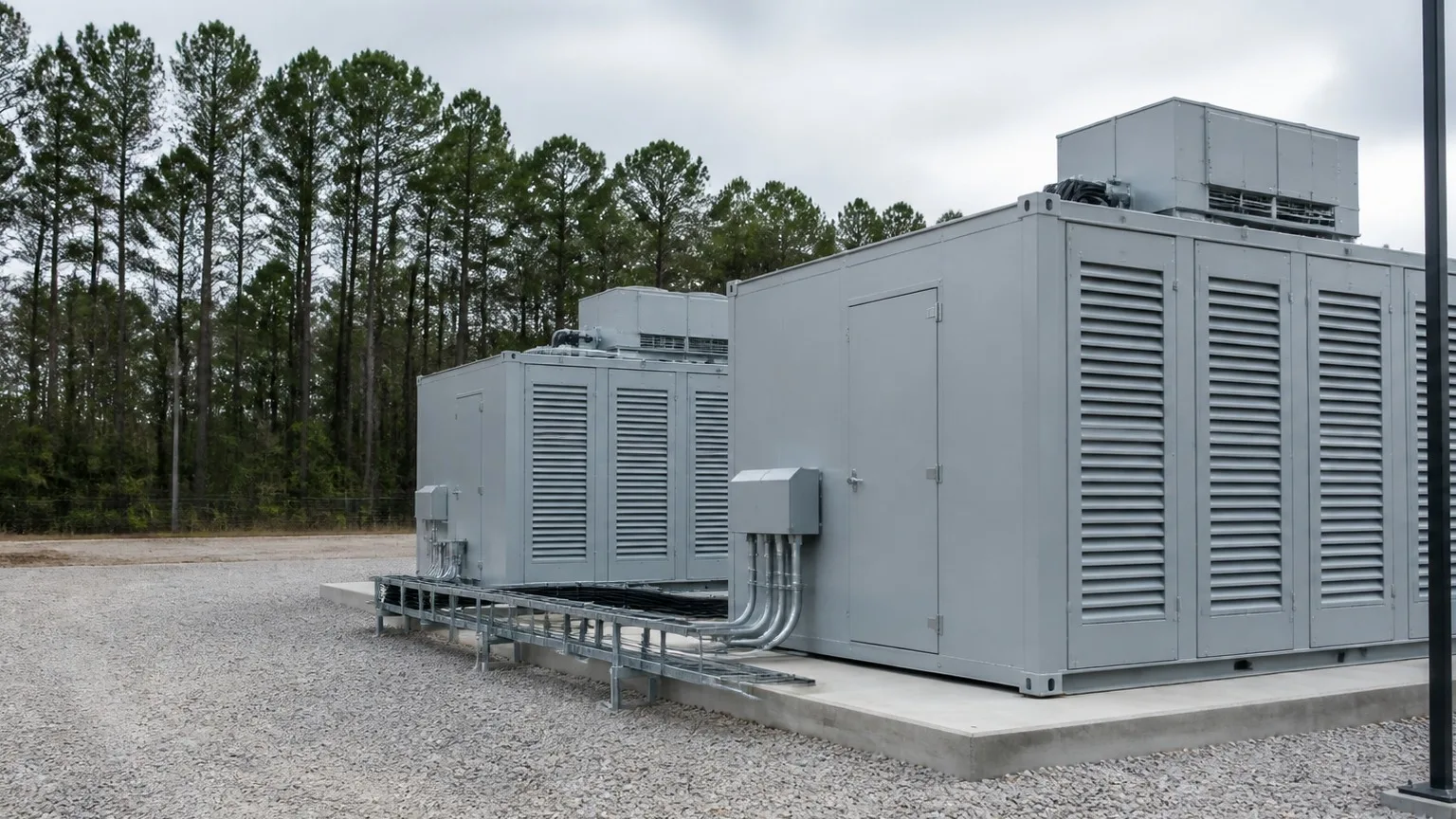
A combiner in a field in summer sees full sun on a dark box with fuses carrying current inside; interior temperature drives fuse derating and electronics life. Designs manage it with light-colored finish, aluminum for its conductivity, a sunshield or double roof, and in some cases sealed vents or breather valves that equalize pressure without admitting water. The fabricator builds the sunshield standoffs and vent cutouts to the OEM’s design; what it controls is the finish color and the standoff that keeps air moving behind the box. The same considerations at larger scale are in the PCS enclosure guide.
Buying in volume
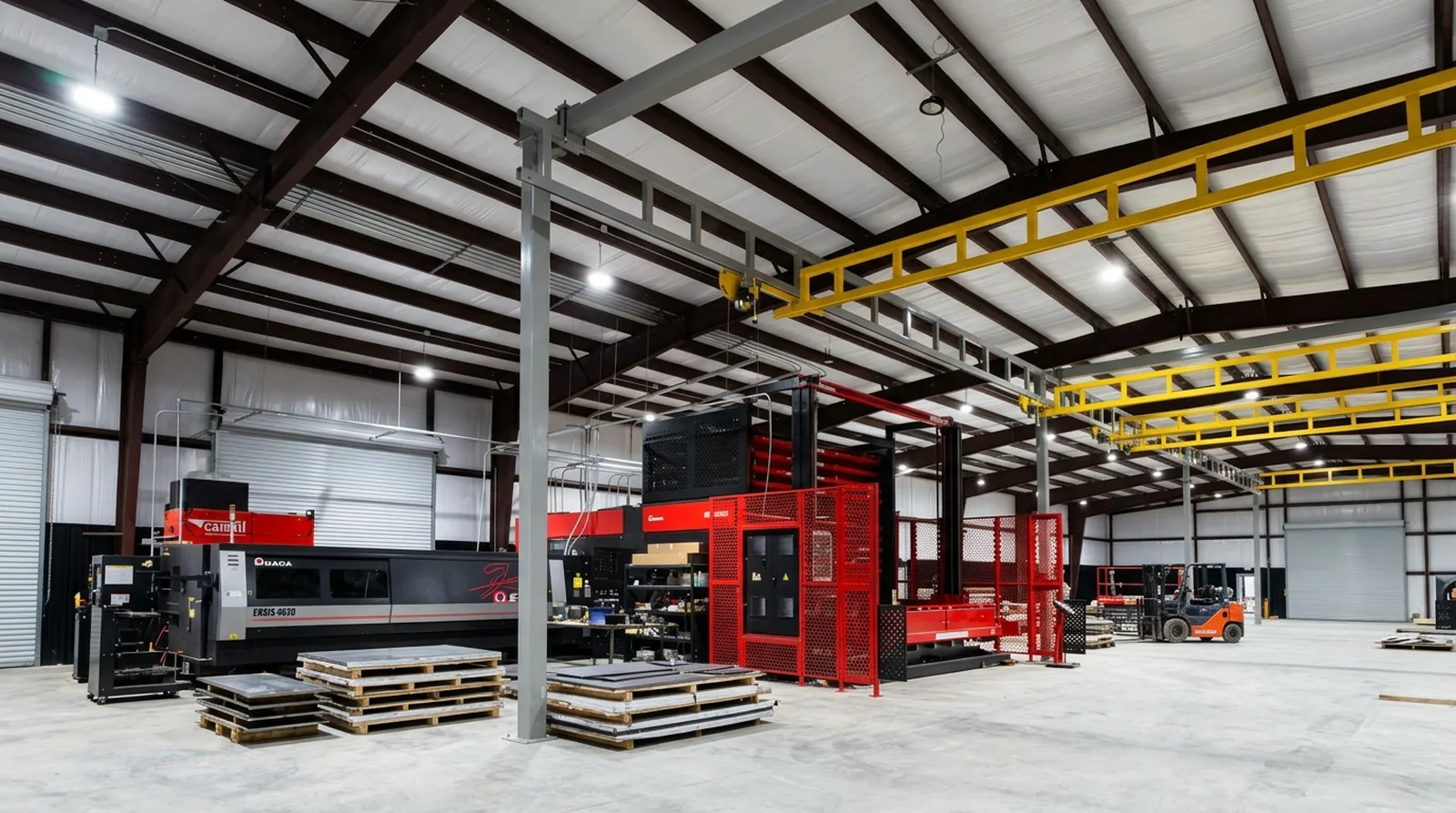
Combiner OEMs buy enclosures by the thousand per year across a handful of sizes, and EPCs sometimes buy site-specific DC enclosures directly. The program is a frozen drawing per size, a first article populated on the OEM’s line, material and powder staged against a forecast, and releases per project with the project’s quantity and ship date. Lead time per release is short when the material is on the floor; kit programs and lead times and capacity explain the mechanics. A second source is common on this product because site schedules do not wait; see dual-sourcing enclosures.
A combiner box is the simplest enclosure on the site and the one ordered in the largest number. The program, not the part, is what the OEM is buying.
FabTek Industries fabricates DC combiner, recombiner and collection enclosures to combiner OEM and EPC prints — NEMA 4 and 4X in powder-coated steel, aluminum or stainless, with cutouts, gland plates, sunshields and mounting, built in volume against a forecast — under an ISO 9001:2015 quality system, from four production sites in Hazlehurst, Mississippi. See NEMA 4 and 4X enclosures, renewables and energy storage, or send us a print.
Working on something like this? Send a print or a scope — pricing and lead time within one business day, from four Mississippi plants.
Frequently asked questions
What enclosure rating does a solar combiner box need?
NEMA 4 as a standard outdoor rating, with a gasketed door, no drain holes and latched or clamped closure. NEMA 4X is specified at coastal, agricultural and corrosive sites, usually met with aluminum or stainless steel.
Should combiner enclosures be steel or aluminum?
Aluminum is lighter for pile and rack mounting, corrosion-resistant without coating and rejects heat better; powder-coated steel is lower cost and heavier. Stainless is used where chloride or chemical exposure requires it.
Who lists the combiner — the OEM or the enclosure fabricator?
The combiner OEM designs, populates and lists the assembly, typically to UL 1741. The fabricator builds the enclosure with the cutouts, gland plates and mounting to the OEM’s print.
How are combiner enclosures bought in volume?
With a frozen drawing per size, a first article populated on the OEM’s line, material and powder staged against a forecast, and releases per project with the site’s quantity and ship date.