Buyers ask for lead time as if it were a property of the fabricator. It is mostly a property of the order: how ready the drawing is, whether the material and hardware are on hand, how much of the shop is already committed, and what happens after release. Understanding where the weeks go is the first step to removing them. This guide walks the sequence and lists the six things buyers do that shorten enclosure lead time more than any expedite fee.
Need enclosures faster than your current source delivers? Call 601.892.5017 or email collin.t@fabtekindustries.com — send a print and a quantity and we’ll quote it.
- Enclosure lead time is a sum of queues: drawing, material, programming, forming and welding, finish, inspection, packaging.
- The biggest avoidable delays are revisions after release, long-lead hardware and specialty material.
- Forecasts and staged material turn a weeks-long lead time into days for a released unit.
- Reserved capacity is what makes a quoted date hold when the shop is busy.
Where the time goes
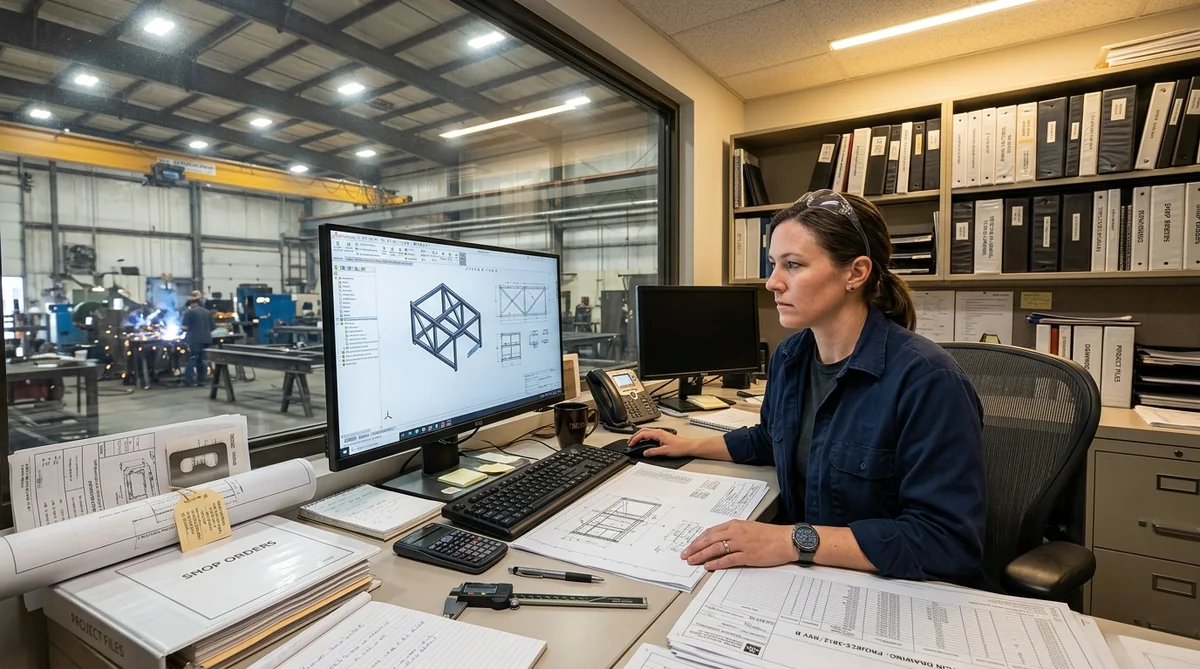
| Drawing readiness | Release of a complete, frozen print; DFM questions back and forth; days to weeks if the print is incomplete |
|---|---|
| Material and hardware | Sheet and plate on hand or on order; hardware in stock or long-lead; stainless, aluminum and specialty hardware are the usual waits |
| Programming and first article | Laser nests, brake programs, fixtures; a first-article build and approval on new parts |
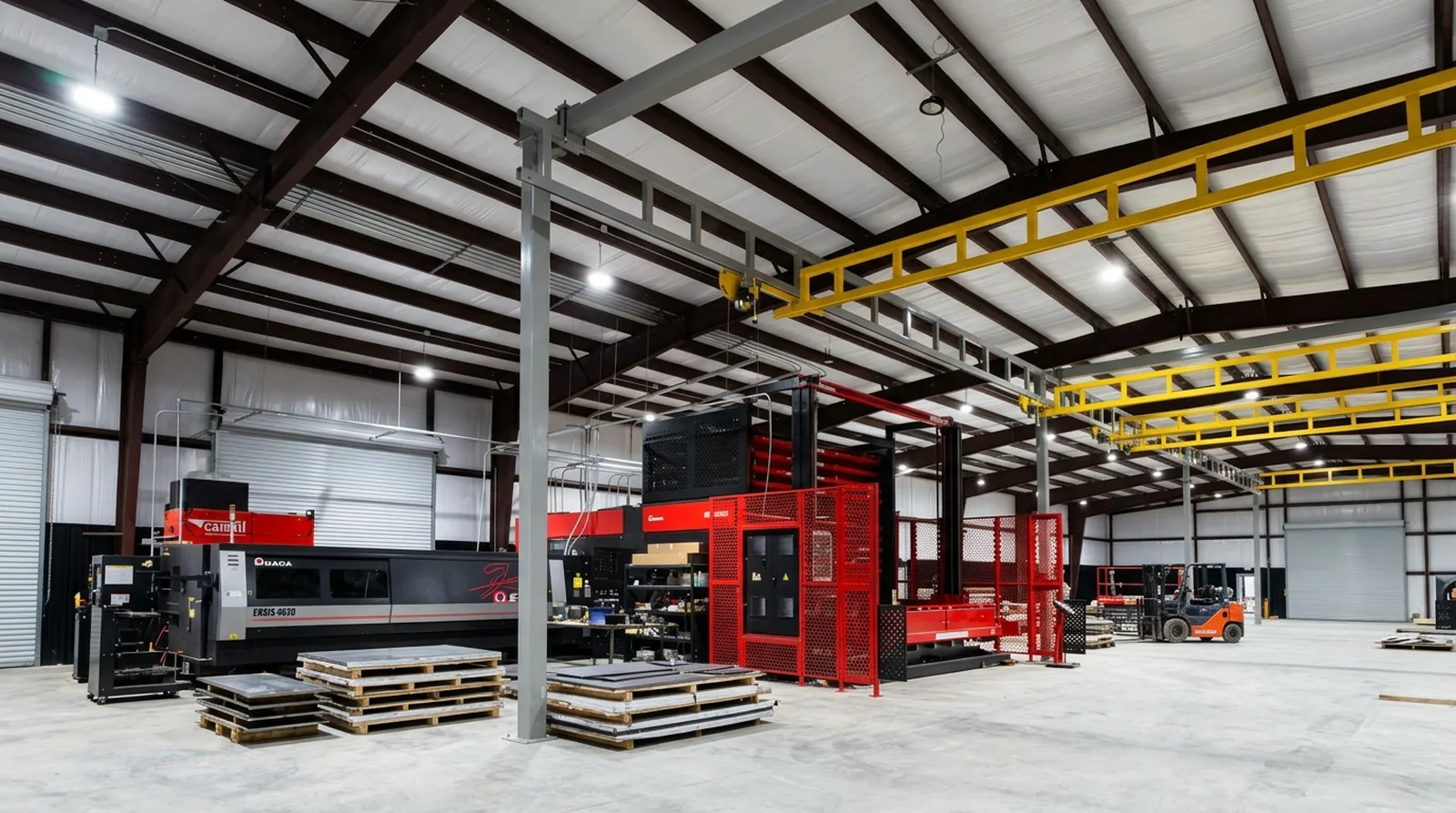
| Forming, welding, assembly | Shop hours in queue with every other job; the binding constraint when the shop is full |
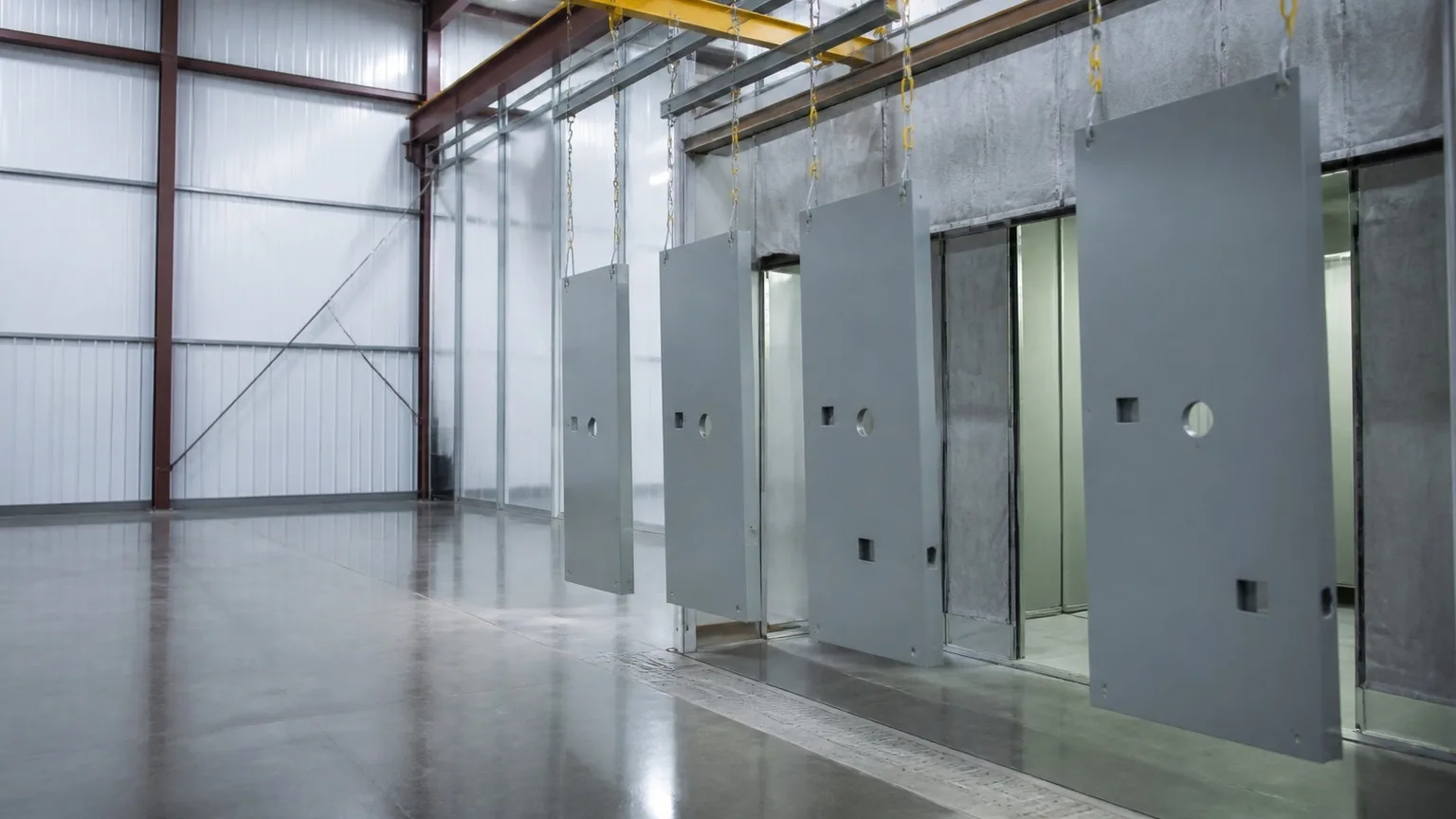
| Finish | Powder coat in-house (days) or galvanizing through a partner (a week or more plus transport) |
| Inspection and packaging | Final inspection, documentation, crating or racking, freight scheduling |
FabTek’s approach to quoting a date through this sequence is explained in lead times and capacity.
What lengthens it
- Revisions after release — every change re-dates the job; the later the change, the more it costs in time. See late design changes.
- Long-lead hardware — specialty latches, listed vent panels, particular locks; order them with the enclosure, not after.
- Specialty material — 316L in heavy gauge, specific aluminum tempers, pre-painted stock.
- Finish queues — a color change on the powder line, or a galvanizer’s backlog.
- Approval cycles — approval drawings and first-article sign-off that wait on the buyer’s engineering.
- Full shops — when the fabricator is at capacity, a new order waits behind reserved programs.
Six ways buyers shorten it
1. Give a forecast. Even a rough annual quantity by family lets the fabricator stage material and powder, which removes the longest queue. 2. Stage material. For programs, agree on a material and hardware inventory held at the fabricator against the forecast; released units then start on the floor the day they are released. 3. Freeze the drawing. Finish the design before release and route changes through a revision process with re-dating, rather than mid-build. 4. Standardize hardware. Pick latches, hinges and gaskets from stock families where the spec allows; keep specialty items to the few that matter. 5. Reserve capacity. Commit to a volume band and get a lead time inside it that holds when the shop is busy; the economics are in stalled line vs. reserved capacity. 6. Do DFM early. Send the preliminary design for review so the questions are answered before release, not during; see DFM review.
What an expedite actually buys
An expedite fee buys queue position — the job moves ahead of others — and sometimes overtime. It does not buy material that is not on the shelf, a drawing that is not finished or a galvanizer’s schedule. Buyers who expedite regularly are paying for the absence of a forecast; the money is better spent on staged material and a reserved line. Where a genuine emergency exists, FabTek’s surge capacity and rush fabrication describes what can be done and what cannot.
Lead time by enclosure family
Families differ. Pad-mount cabinets and kitted switchgear sheet metal on a program ship in days from staged material; a one-off walk-in enclosure or an E-Room is weeks because of structure, finish and fit-out; stainless 4X enclosures add material lead time; galvanized bases add the galvanizer. The family guides give the specifics — kit programs, pad-mount cabinets, walk-in enclosures, 4X stainless — and the RFQ guide shows how to ask for a date that means something.
Lead time is not something a fabricator has. It is something an order has. The buyer controls more of it than the shop does.
FabTek Industries quotes enclosure lead times after reviewing the drawing, material and shop load, reserves capacity for programs against a forecast, stages material and hardware for repeat families, and re-dates revisions the week they arrive — on switchgear enclosures, control cabinets, transformer cabinets and NEMA enclosures, from four production sites in Hazlehurst, Mississippi. See lead times and capacity, or send us a drawing and a quantity.
Working on something like this? Send a print or a scope — pricing and lead time within one business day, from four Mississippi plants.
Frequently asked questions
What determines the lead time on a custom enclosure?
The readiness of the drawing, whether material and hardware are on hand or on order, programming and first-article time on new parts, the shop’s current load, the finish route (in-house powder coat or partner galvanizing), inspection and packaging, and any revisions after release.
How can a buyer shorten enclosure lead time?
Give a forecast, stage material and hardware at the fabricator, freeze the drawing before release, standardize hardware, reserve capacity with a volume commitment, and send the preliminary design for DFM review early.
Does an expedite fee shorten lead time?
It buys queue position and sometimes overtime, not material that is not on the shelf, an unfinished drawing or a galvanizer’s schedule. Regular expediting usually signals a missing forecast; staged material and reserved capacity are the better investment.
Why does reserving capacity matter for lead time?
Because a quoted date on a busy shop only holds if the capacity behind it is committed. Reserved capacity means released units in a program are not waiting behind other customers’ orders.