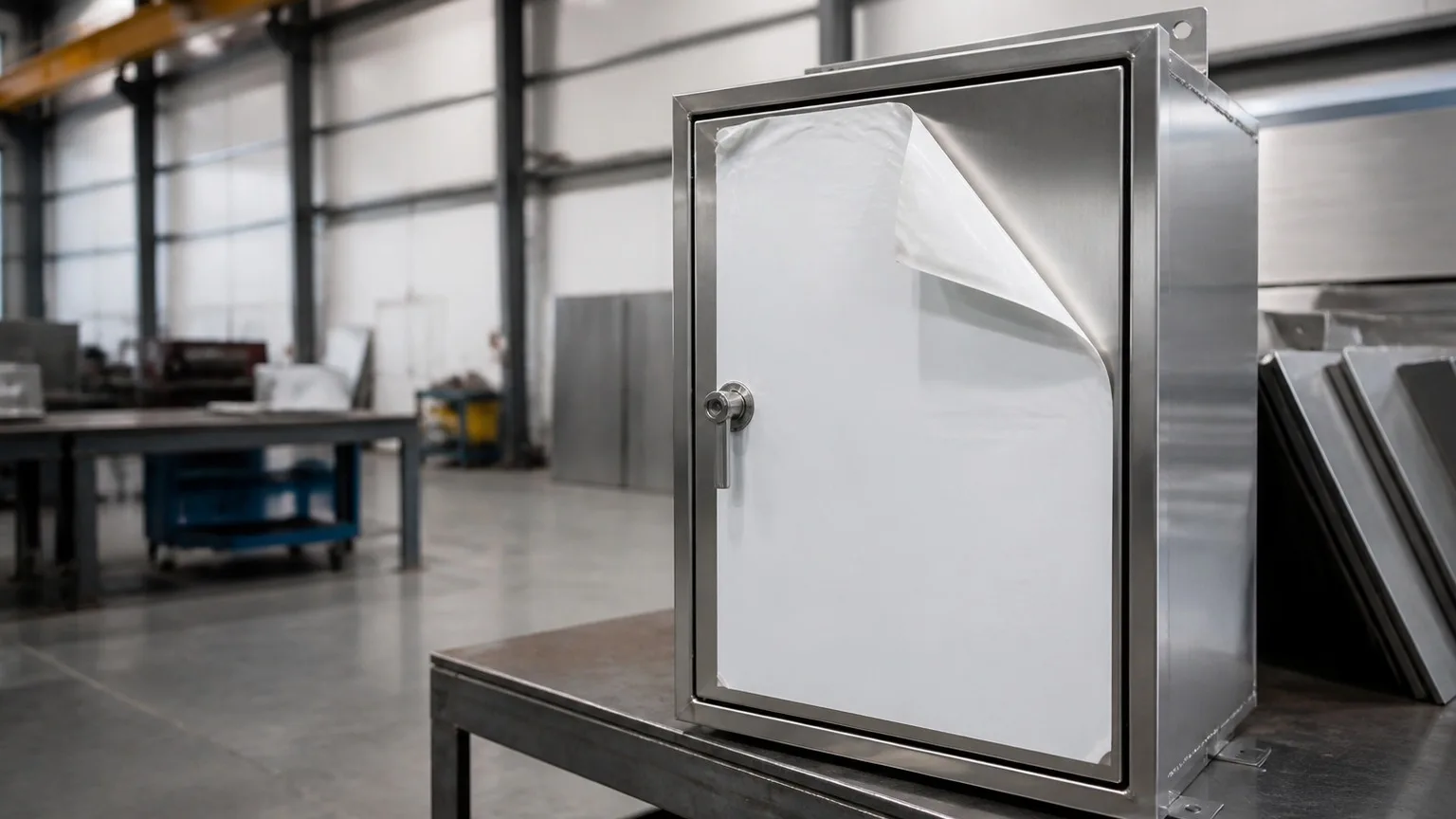
Water and wastewater facilities are among the hardest environments an electrical enclosure sees: hydrogen sulfide in headworks and wet wells, chlorine in disinfection, washdown everywhere, and outdoor exposure at every pump station. The enclosure standard for the industry is NEMA 4X stainless steel, and municipal utilities, system integrators and contractors buy them continuously as plants are built, expanded and rehabilitated. This guide covers what the environment demands and how the enclosures are sourced.
Water utility, integrator or contractor sourcing 4X stainless enclosures? Call 601.892.5017 or email collin.t@fabtekindustries.com — send a print and a quantity and we’ll quote it.
- Water and wastewater sites demand NEMA 4X stainless because of hydrogen sulfide, chlorine and washdown — not just rain.
- 316 stainless is the default where chlorides or H2S are present; 304 serves drier, less corrosive areas.
- Construction details — welded seams, passivation, sloped tops, stainless hardware — determine service life.
- Enclosures are bought through integrators and electrical contractors on plant projects, and directly by utilities for replacements.
The environment
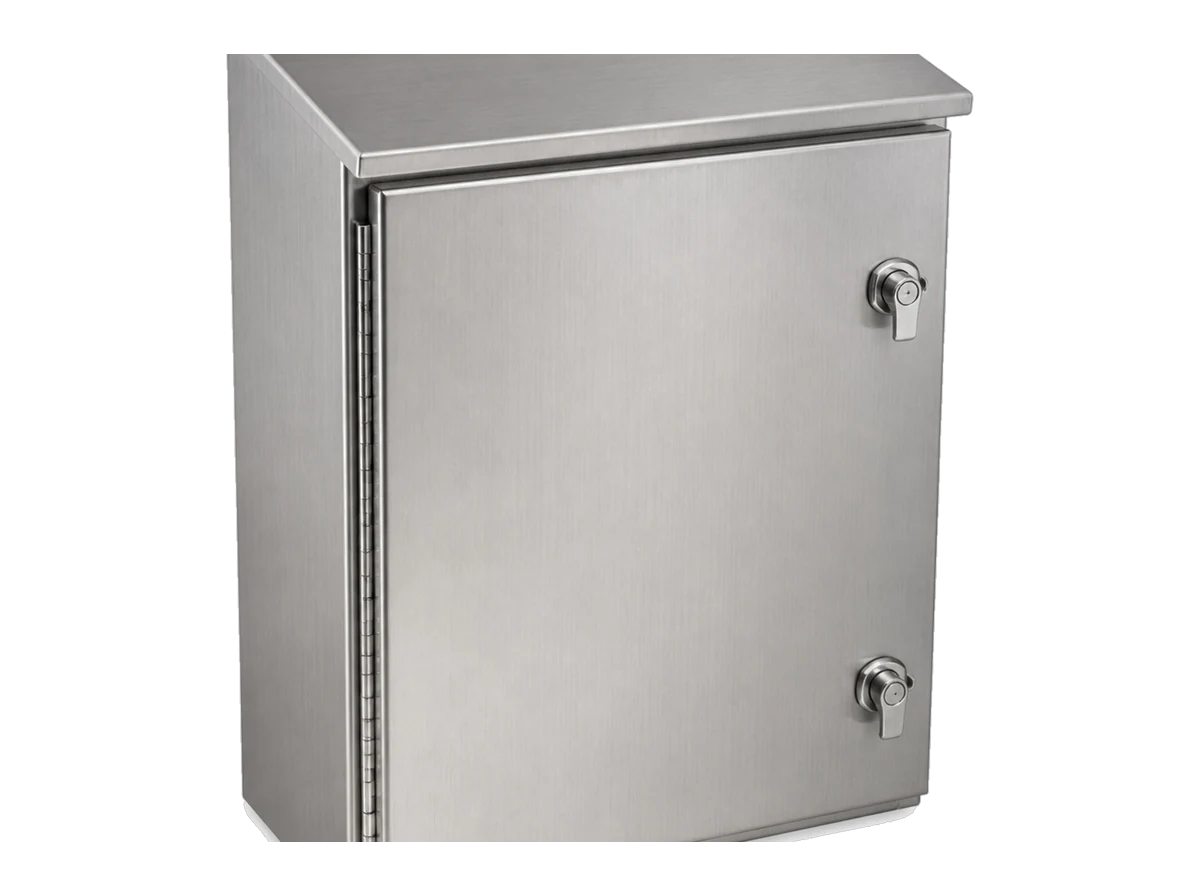
Hydrogen sulfide from wastewater attacks carbon steel and even some stainless grades, producing the corrosion that strips coatings and pits metal at headworks, lift stations and digesters. Chlorine and hypochlorite in disinfection areas add chloride attack. Washdown with hoses is routine. Outdoor pump stations add sun, rain and sometimes coastal salt. The specification response is NEMA 4X — hose-tight, corrosion-resistant — in stainless steel, with the alloy chosen for the exposure. FabTek builds these on the NEMA 4 and 4X enclosure line.
304 vs. 316
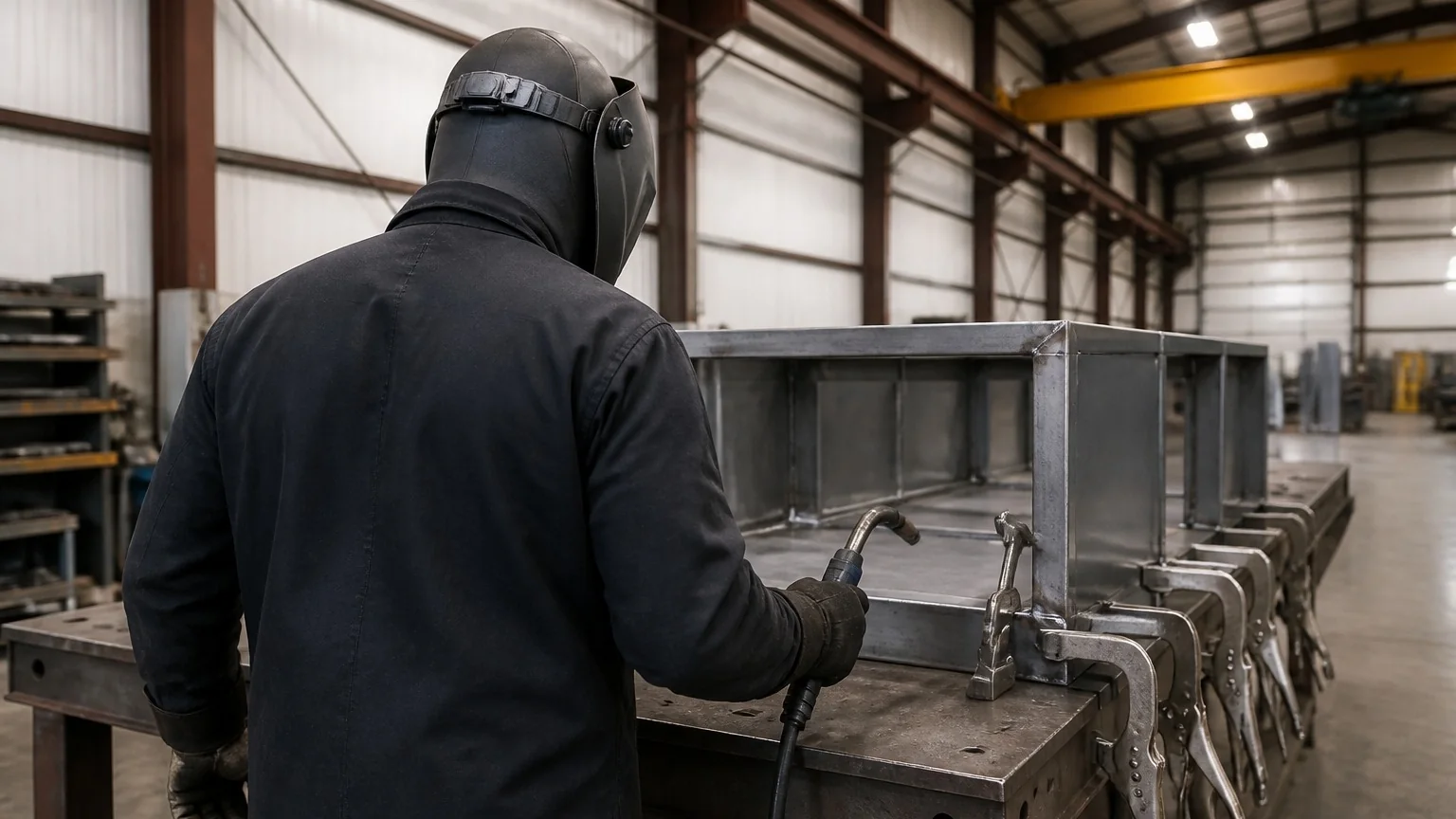
Type 304 stainless performs well in dry and mildly wet areas; Type 316, with its molybdenum content, resists chloride pitting and sulfide attack far better and is the default for wet wells, headworks, chemical rooms and coastal plants. Many municipal specifications simply require 316 throughout to avoid the judgment call. The alloy decision, including the cost difference and the welding implications, is covered in 304 vs. 316 stainless for enclosures. Whatever the alloy, the enclosure should be welded to AWS D1.6 with seams ground and passivated, so the heat-affected zones do not become the corrosion sites.
Construction details that matter
- Sloped top — a sloped or crowned top so water and chemicals do not stand on the enclosure; a requirement in many specs.
- Continuous welds — seams welded continuously and ground smooth; no spot-welded lap seams where liquid can wick in.
- Passivation — after welding and grinding, so the surface recovers its chromium oxide layer.
- Gasketing — continuous poured or strip gasket, with a drip lip over the door; see hardware and gasketing.
- Stainless hardware — hinges, latches, handles and fasteners in stainless, with stainless or non-metallic breather and drain fittings where a breather is specified.
- No drain holes — NEMA 4X does not permit them; condensation is managed with a breather valve or a heater.
- Sunshield — on outdoor pump station enclosures in hot climates, to keep PLCs and VFDs within rating.
Standard sizes vs. custom
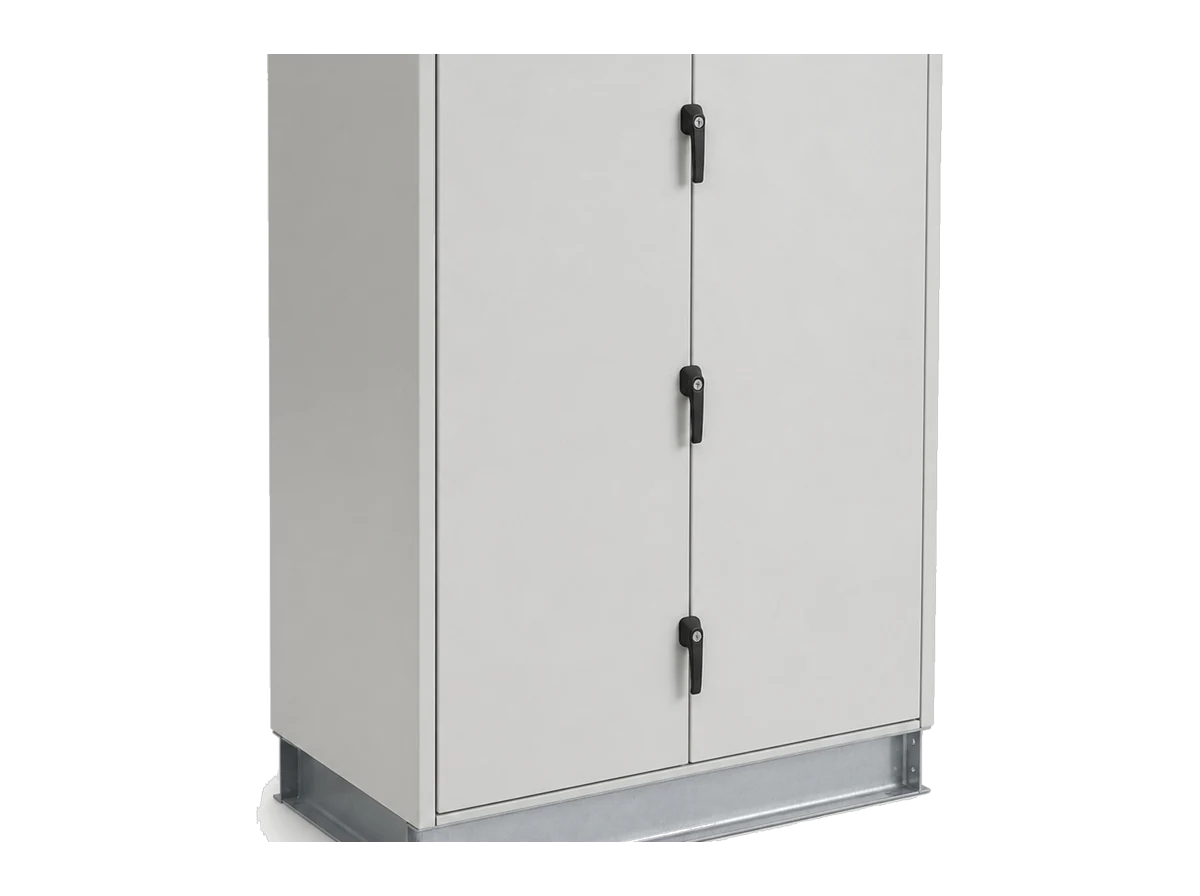
Catalog 4X stainless enclosures cover wall-mount and free-standing sizes well, and many plant panels fit them. Custom fabrication is specified when the panel is larger or deeper than catalog, when the plant standard requires a particular gauge or 316 in a size the catalog offers only in 304, when cutouts for HMIs, disconnects, cooling units and pushbuttons should be pre-cut and gasketed, when a two-door or multi-compartment arrangement is needed, or when a dozen identical enclosures for a pump station program justify a kitted build. The volume case is covered in pump and lift station control enclosures.
Panel integration
The enclosure is populated by a UL 508A panel shop or the integrator, who designs the control panel, selects components and applies the listing; the fabricator supplies the enclosure with its own UL 50/50E listing where the spec requires it and the cutouts the panel drawing calls for. The division is explained in panel shops vs. enclosure fabricators. Water-industry integrators that build many similar panels benefit from a standing enclosure program — a few enclosure families kitted with cutouts and hardware — so their technicians wire rather than cut.
How water enclosures are bought
On new plants and expansions the enclosures arrive through the integrator or the electrical contractor as part of the control and electrical package, specified by the engineer of record. Utilities buy directly for replacements — a corroded enclosure at a lift station on a maintenance budget — and for standardized small enclosures across many stations. In both cases the fabricator needs the enclosure drawing or the panel drawing it will house, the alloy and gauge, the cutout schedule, the hardware and gasket spec, the sunshield and breather requirements, and the quantity. The same environment at industrial scale is in enclosures for industrial plants.
A 4X stainless enclosure at a lift station is expected to outlast the panel inside it twice over. The alloy and the welds are what make that true.
FabTek Industries fabricates NEMA 4X stainless steel enclosures for water and wastewater treatment plants, pump stations and lift stations — 304 and 316 welded to AWS D1.6, ground and passivated, sloped tops, continuous gasketing, stainless hardware, cutouts pre-cut to the panel drawing, UL 50/50E listed where required — under an ISO 9001:2015 quality system, from four production sites in Hazlehurst, Mississippi. See control cabinets, or send us a panel drawing.
Working on something like this? Send a print or a scope — pricing and lead time within one business day, from four Mississippi plants.
Frequently asked questions
Why do water and wastewater plants specify NEMA 4X stainless enclosures?
Because hydrogen sulfide at headworks and wet wells, chlorine in disinfection areas, routine washdown and outdoor exposure at pump stations corrode coated carbon steel. NEMA 4X stainless is hose-tight and corrosion-resistant without depending on a coating.
Should wastewater enclosures be 304 or 316 stainless?
316 is the default where hydrogen sulfide or chlorides are present — wet wells, headworks, chemical rooms, coastal plants. 304 serves drier, less corrosive areas. Many municipal specifications require 316 throughout.
What construction details matter on a 4X stainless enclosure?
A sloped top, continuously welded and ground seams, passivation after welding, continuous gasketing with a drip lip, stainless hardware, no drain holes, and a breather or heater for condensation, with a sunshield on outdoor units in hot climates.
Who buys enclosures for water treatment plants?
Integrators and electrical contractors on new plants and expansions, as part of the control and electrical package specified by the engineer of record, and utilities directly for replacements and standardized small enclosures across many stations.