The pad-mount transformer cabinet is the most-produced enclosure in the power system: every distribution transformer set on a pad ships inside one. Transformer OEMs buy them by the thousand from contract fabricators; utilities buy replacements for weathered units; remanufacturers buy them to re-case rebuilt cores. The product is standardized by ANSI and customized by every OEM’s print. This guide covers how the cabinet is specified and how each kind of buyer sources it.
OEM, utility or remanufacturer sourcing pad-mount cabinets? Call 601.892.5017 or email collin.t@fabtekindustries.com — send a print and a quantity and we’ll quote it.
- Pad-mount cabinets are built to the OEM’s print within the ANSI C57.12 family: compartment layout, tamper resistance and the utility’s hardware.
- The volume is in three-phase two-compartment and single-phase one-piece cabinets; variants are sills, hoods, doors and barriers sold as components.
- OEMs buy cabinets on dedicated production lines with reserved capacity; utilities and remanufacturers buy by standard drawing or by matching an existing unit.
- Finish is powder coat in the utility’s ANSI color with a salt-spray requirement; FabTek’s lines carry an IEEE 2000-hour rating.
Anatomy of a pad-mount cabinet
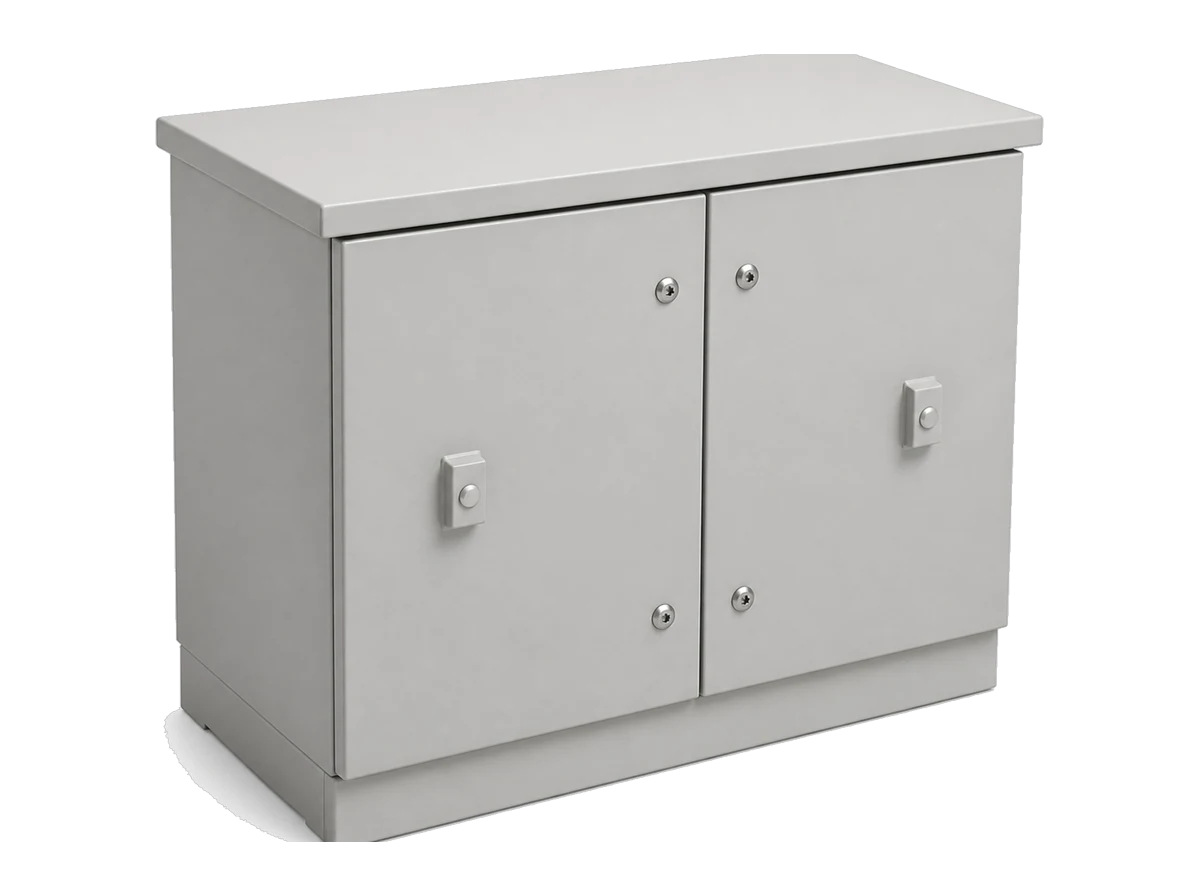
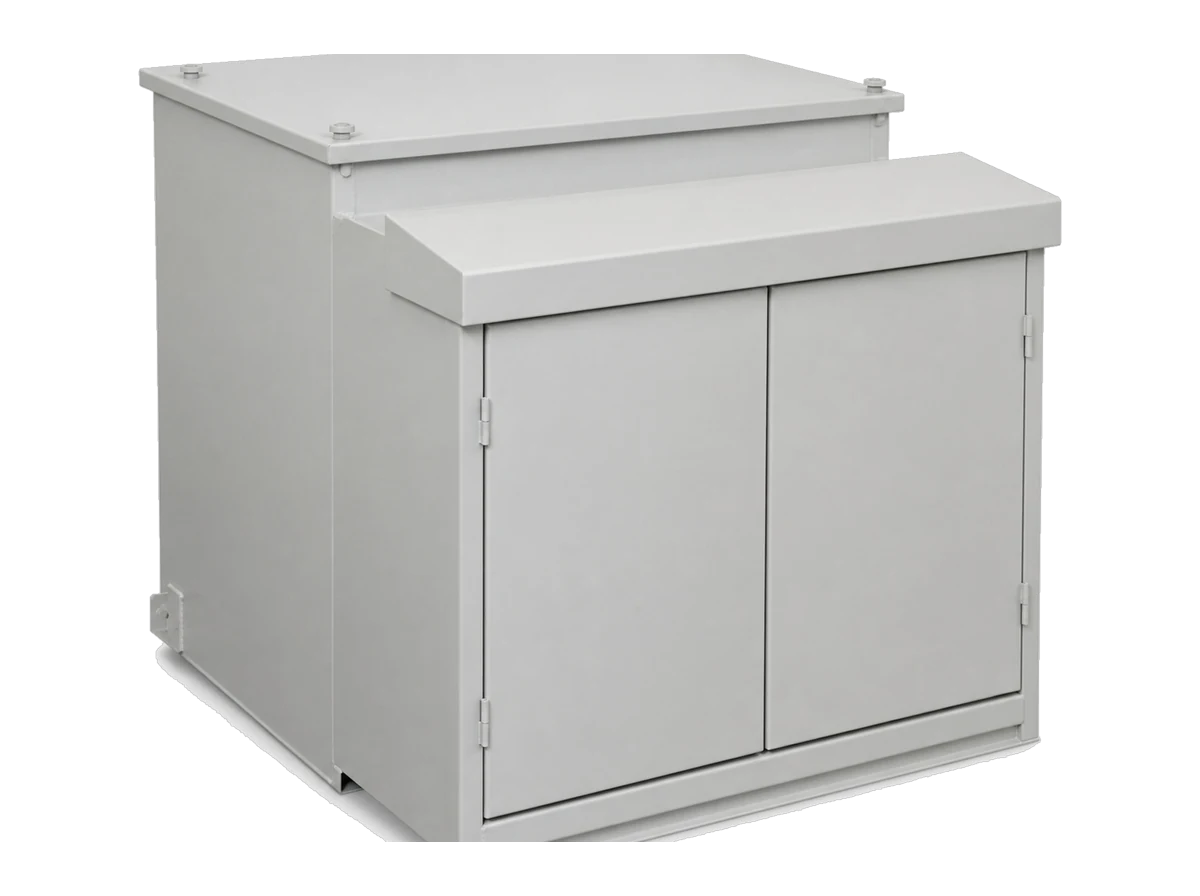
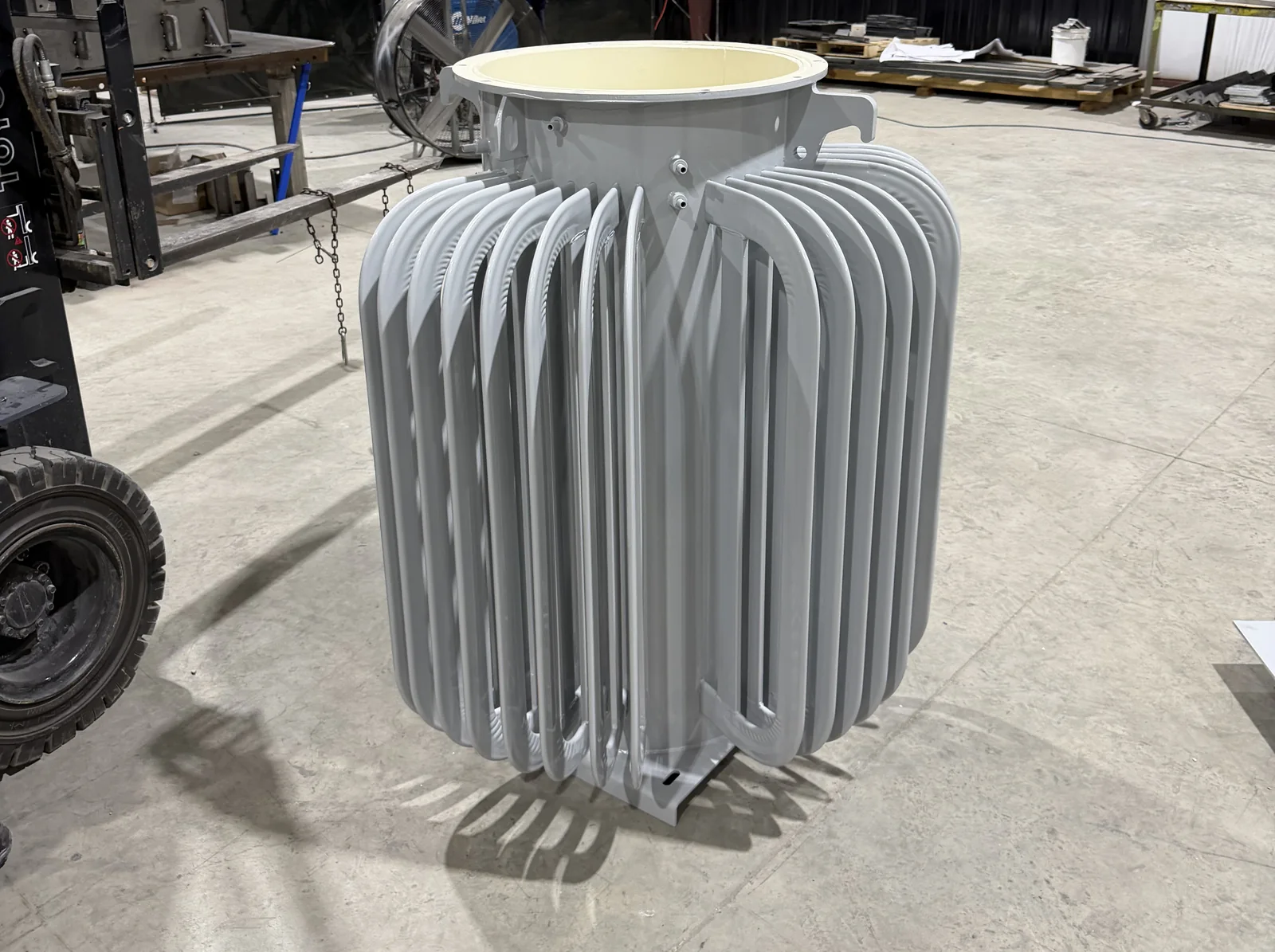
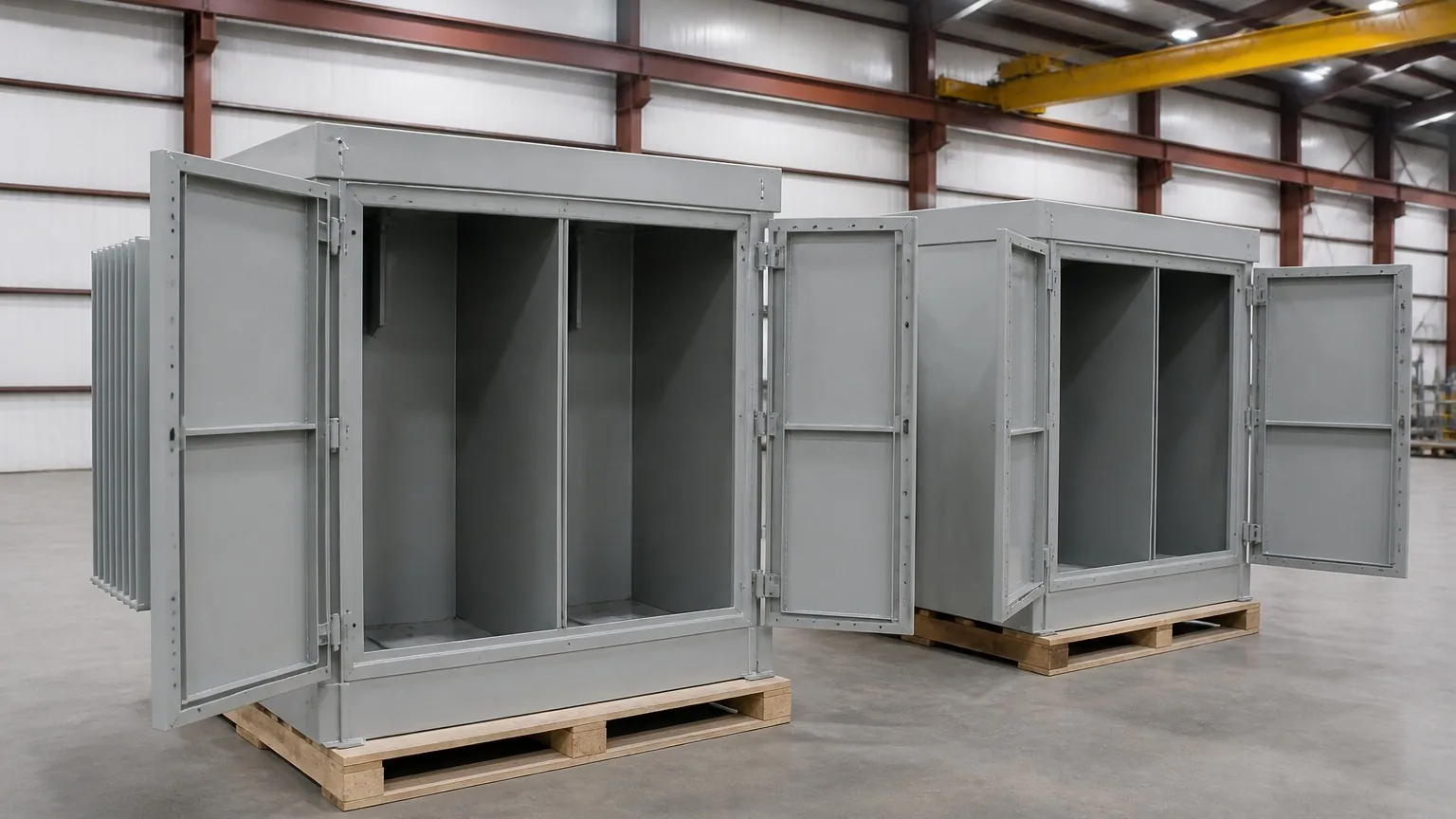
A three-phase pad-mount cabinet is a two-compartment enclosure bolted to the transformer tank: a high-voltage compartment and a low-voltage compartment separated by a barrier, a sill that sits on the pad and seals against it, hinged doors or a lift-off hood with a hold-open, parking stands and bushing-well provisions in the HV side, and the penta-head bolts, hasps and recessed hinges that make it tamper-resistant. A single-phase cabinet is a one-piece hood over a single compartment. The tank is a separate product — see pad-mount transformer tanks — and FabTek builds both on the lines described under pad-mount transformer cabinets.
The standards behind the print
ANSI/IEEE C57.12.34 (three-phase) and C57.12.38 (single-phase) define the compartment arrangement, dimensions and interlock requirements for pad-mounted distribution transformers; C57.12.28 defines enclosure integrity — the pry, pull, wire-probe and impact tests that make the cabinet tamper-resistant, covered in ANSI C57.12.28 and cabinet fabrication; and C57.12.29 extends the integrity requirements to coastal environments with a stainless or heavily coated construction. The OEM translates these, plus each utility’s own standard, into a print with gauge, hardware, hole patterns and finish. The fabricator builds the print; it does not interpret the standard.
Configurations and components
- Three-phase, dead-front, loop-feed — the utility default: two compartments, six bushing wells, parking stands, radial or loop configuration by print.
- Three-phase, live-front — older utility standards and some industrial units; different HV compartment depth and barrier.
- Single-phase — one-piece hood cabinets in a few standard sizes, built in high volume.
- Components — sills, hoods, doors, sill extensions, barriers, bushing-well surrounds and hardware kits, sold to OEMs that assemble their own and to utilities repairing units in the field.
- Specialty — step-down, network and custom compartment enclosures to print.
Finish and corrosion
The cabinet is outdoors for forty years, so the finish is specified by the utility: powder coat over blast or phosphate pretreatment in ANSI 61 or Munsell 7GY 3.29/1.5 green, to a film thickness and a salt-spray requirement, applied to the inside and outside. Coastal utilities under C57.12.29 require a stainless or a two-coat system with a longer salt-spray requirement. FabTek’s in-house powder lines carry an IEEE 2000-hour salt-spray rating, and the film thickness and 2000-hour test posts explain what the numbers mean. The cabinet and the tank it bolts to are usually painted on the same line in the same lot so they match.
How OEMs buy cabinets
A transformer OEM building thousands of pad-mounts a year treats the cabinet as a production input: a frozen print per model, a monthly release against a forecast, cabinets delivered wrapped and staged in line sequence, and a fabricator with a dedicated line that does not get reassigned. FabTek runs these programs at hundreds of units per month per line, with the mechanics described in running an OEM–fabricator program and why OEMs outsource tanks and cabinets. Qualifying the fabricator follows how to qualify a tank fabricator; the same audit covers cabinets.
How utilities and remanufacturers buy them
Utilities buy replacement cabinets when a unit’s enclosure has corroded or been damaged but the transformer is sound — a common situation on the coast and in older subdivisions. The order is either to the utility’s standard drawing or to match an existing cabinet from measurements and photographs; the fabricator reverse-engineers the sill pattern and bolt holes to the tank. Remanufacturers rebuilding cores and coils buy new cabinets and tanks to re-case units, usually in small, mixed batches that need a fabricator willing to quote one-offs quickly. In both cases the hardware — the utility’s penta-head size, padlock hasp and hold-open — has to be specified, because it is what the field crew will notice first.
The OEM sees a cabinet as a line item on a bill of materials. The utility lineman sees it as the thing they open in the rain. The print has to satisfy both.
FabTek Industries fabricates pad-mount transformer cabinets, hoods, sills, doors and barriers for transformer OEMs, utilities and remanufacturers — laser-cut, CNC-formed, welded, hardware installed and powder-coated in-house to the utility’s ANSI color with an IEEE 2000-hour salt-spray rating — on dedicated production lines under an ISO 9001:2015 quality system, from four production sites in Hazlehurst, Mississippi. See how we work with transformer OEMs, or send us a print.
Working on something like this? Send a print or a scope — pricing and lead time within one business day, from four Mississippi plants.
Frequently asked questions
What standards govern pad-mount transformer cabinets?
ANSI/IEEE C57.12.34 for three-phase and C57.12.38 for single-phase pad-mounted distribution transformers define the compartment arrangement and interlocks; C57.12.28 defines enclosure integrity and tamper resistance; C57.12.29 covers coastal environments. The OEM’s print translates these and the utility’s standard into fabrication requirements.
Can a utility buy a replacement pad-mount cabinet without the transformer?
Yes. Utilities buy replacement cabinets for units whose enclosure has corroded or been damaged while the transformer is sound, either to the utility’s standard drawing or by matching the existing cabinet’s sill pattern and bolt holes from measurements.
What finish is used on pad-mount transformer cabinets?
Powder coat over blast or phosphate pretreatment in the utility’s ANSI color — typically ANSI 61 gray or Munsell green — applied inside and out to a specified film thickness and salt-spray requirement. Coastal specifications require stainless or extended-performance coating systems.
How do transformer OEMs source cabinets at volume?
Through contract fabricators running dedicated production lines against a monthly forecast, with frozen prints per model, cabinets delivered wrapped and staged in line sequence, and capacity reserved for the program.