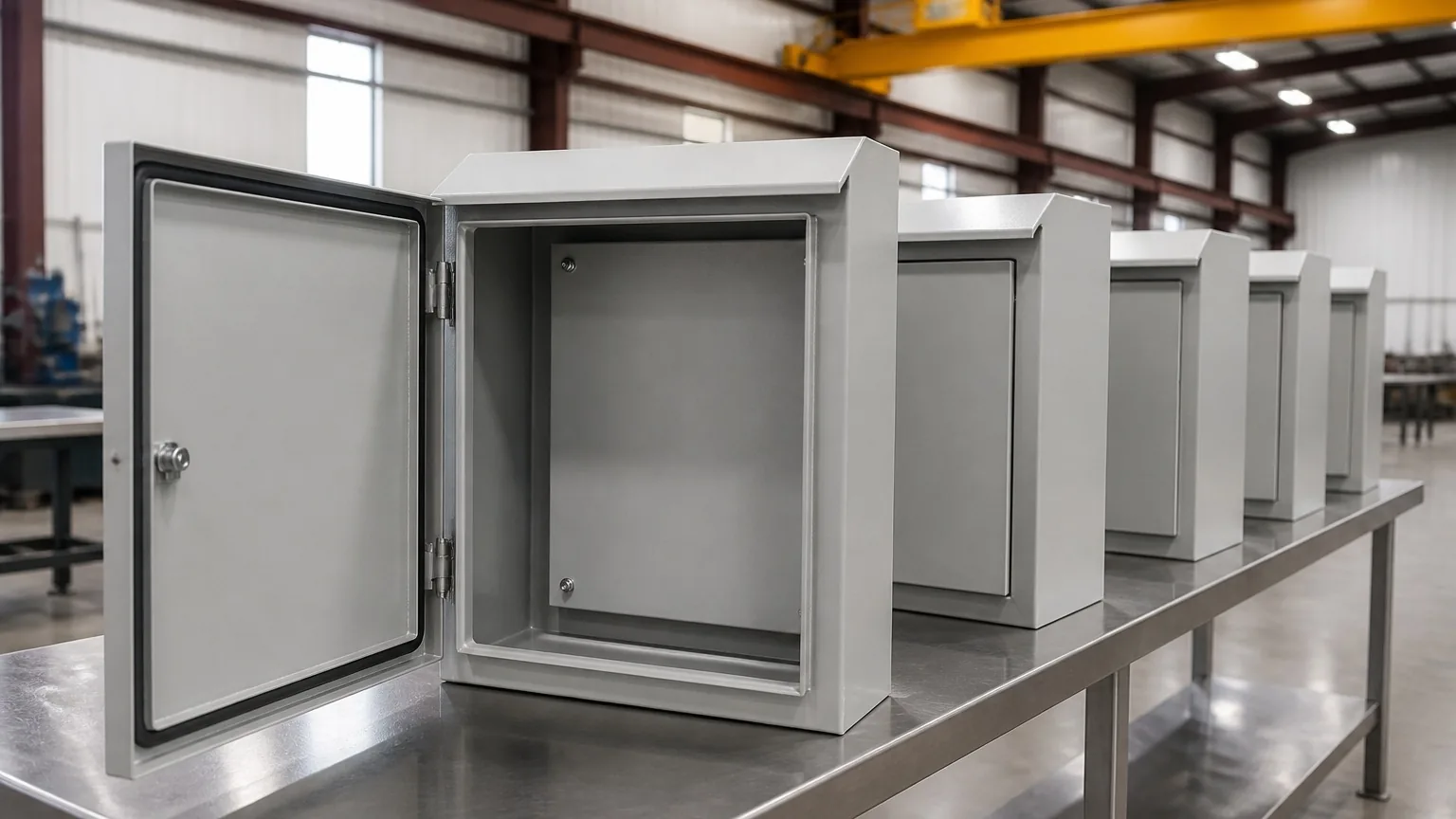
Powder coat adds material to every surface, wraps around edges only partly, struggles to reach deep inside corners, and needs every part to hang from something and make ground. None of that is a problem if the design allows for it. Here are the rules that keep powder-coated parts fitting, sealing and looking right.
Want a design-for-fabrication review on your drawing? Call 601.892.5017 or email collin.t@fabtekindustries.com — send the model or drawing and our engineers will mark it up.
- Allow for film build: powder adds about 0.002–0.005″ per surface (more for two-coat systems), so fits, slots and hinge gaps need clearance, and threads are masked or chased after coating.
- Break sharp edges — a small radius lets powder build to thickness; film pulls thin on a knife edge, which is where outdoor enclosures rust first.
- Avoid lap seams and blind pockets that trap pre-treatment chemistry, keep inside corners open enough for powder to reach, and show hang holes and masked surfaces on the drawing.
Film build and fits
| System | Typical dry film thickness | Added to a dimension (two coated faces) |
|---|---|---|
| Single coat, indoor | 2–3 mils (0.002–0.003″) | ~0.004–0.006″ |
| Two-coat, outdoor | 3–5+ mils (0.003–0.005″+) | ~0.006–0.010″+ |
See Powder Coat Film Thickness for Outdoor Enclosures for thickness by environment. Film is often thicker in the middle of a panel and at a gun’s sweet spot.
A slot that must accept a tab, a hinge that must swing, a bus bar that must slide into a slotted support, a panel that must drop into a frame — each loses clearance on every coated face. Design coated fits with the film included, and for close fits, either mask one face or tolerance the part in its coated condition. Tapped holes and studs are masked with plugs and caps or chased after coating; press-in hardware is installed before coating and its threads masked. Electrical contact surfaces — ground pads, bonding points, bus connections — must be masked, because powder is an insulator.
Edges
Liquid powder flows during cure and pulls away from sharp edges, so the film at a knife edge can be a fraction of the film on the flat — and the edge is where impact, abrasion and corrosion start. A small edge break (on the order of 0.02″) or a deburred, radiused laser edge lets the powder build properly. Laser edges cut with oxygen also carry an oxide layer that should be removed before coating (see Fiber Laser Cutting). For outdoor enclosures, “break all sharp edges” is one of the most valuable notes on the drawing.
Recesses and the Faraday cage effect
Electrostatic powder follows the electric field, and the field concentrates on edges and outside surfaces. In a deep inside corner or narrow channel, the field is weak and the powder tends to build on the lips and not reach the bottom — the Faraday cage effect. Keep inside corners reasonably open, avoid deep, narrow slots and channels where the part can be redesigned, and flag areas that must be fully covered so the finisher can hand-touch them with reduced voltage. Two-coat systems help, because the primer builds a base the top coat can follow.
Seams and trapped chemistry
Pre-treatment is a series of water-based washes, and anything that can hold liquid will. A lap seam or hem that isn’t sealed wicks in cleaner and phosphate, which boils out in the cure oven as blisters or streaks and bleeds rust later. Seal lap joints with continuous welds or design them out; add drain holes to channels and pockets that would hold water; and avoid spot-welded overlaps on outdoor parts unless the seam is sealed. Hollow tubes need vents so trapped air doesn’t outgas through the film in the oven.
Hang holes and grounding
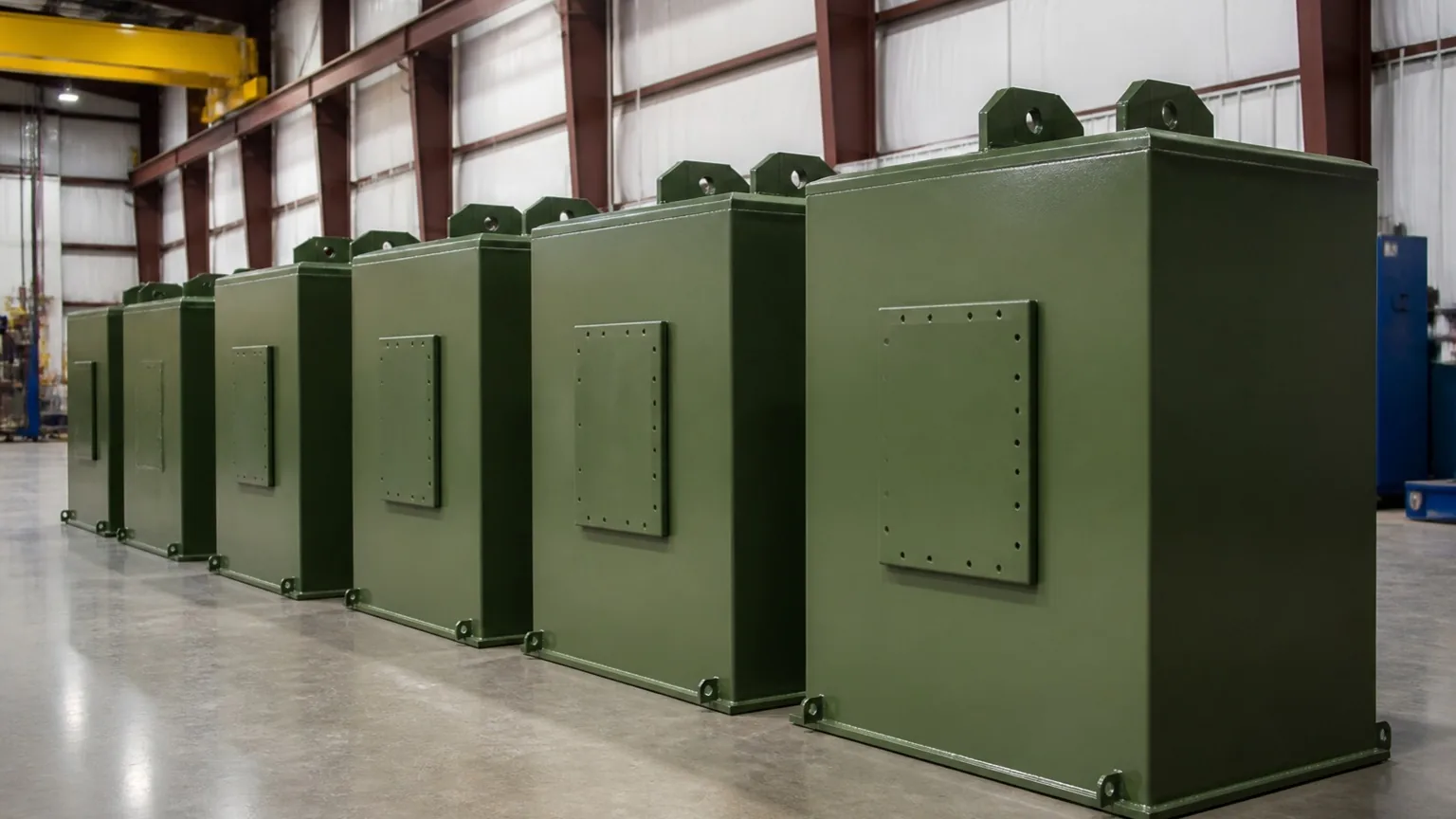
Every part hangs from the line on a hook or rack, and that contact is also its electrical ground — no ground, no powder. Put a hang hole (commonly about 1/4″ to 3/8″) in a location that won’t show on the finished product and that lets the part hang so it drains, and show it on the drawing. If a part can’t have a hole, say so and show a tab, an existing hole or a threaded boss that can be used instead. Heavy parts such as tank bodies and weldments need designed lifting and hanging points rated for the load.
Masking call-outs
Show every surface that must stay bare, with a note that defines it: gasket faces, ground and bonding pads, bushing pads, machined surfaces, threads, and faying surfaces that will be welded or bonded later. “Mask all threads” and “mask ground pads per detail” with a hatched area on the view leave no room for guesswork. Where masking is critical, the finisher records it on the traveler.
How to write it
“Finish: pre-treat and powder coat per spec, two-coat system (primer + polyester top coat), ANSI 61 gray, total DFT 3–5 mils. Break all sharp edges. Mask threads, ground pads and gasket faces as shown. Coated fits are dimensioned after coating where marked ‘AC’. Hang holes at locations shown; plug after coating where noted. All lap seams on exterior surfaces shall be continuously sealed.”
How FabTek handles it
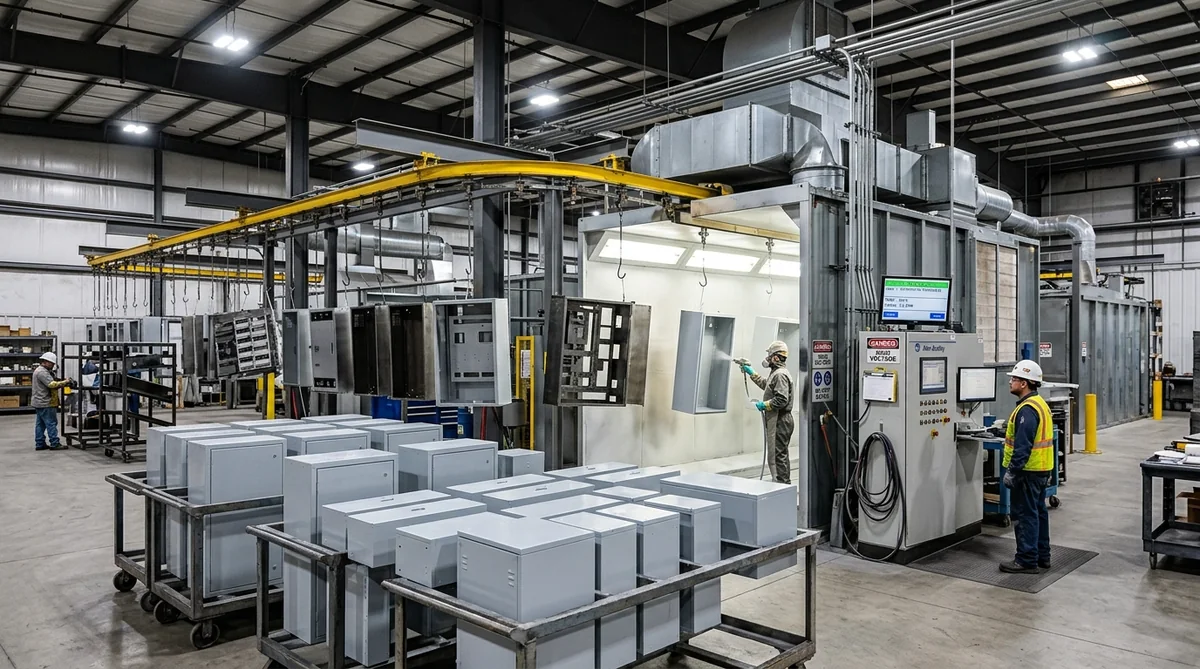
FabTek engineering reviews coated parts for film build, edges, seams and hang points during DFM review. Parts are finished in house on an automated conveyor line with pre-treatment, powder primer, top coat and cure, or on a heavy-duty monorail line for tanks and large weldments — the same IEEE 2,000-hour salt-spray certified system on both, with masking to the drawing and film thickness recorded per rack. How the process works end to end is in How Powder Coating Works.
Frequently asked questions
How much thickness does powder coating add?
A single indoor coat typically adds about 0.002 to 0.003 inch per surface, and a two-coat outdoor system about 0.003 to 0.005 inch or more per surface. A dimension across two coated faces therefore grows by roughly 0.004 to 0.010 inch.
Should threads be masked before powder coating?
Yes, or chased after coating. Powder builds on threads and prevents fasteners from starting. Tapped holes are plugged and studs capped before coating, and press-in hardware threads are masked.
What is the Faraday cage effect in powder coating?
The electrostatic field that attracts powder concentrates on outside surfaces and edges and is weak inside deep recesses and inside corners, so powder builds on the edges and may not reach the bottom. Open corners, shallow recesses and two-coat systems reduce the problem.
Where should hang holes go on a powder coated part?
In a location hidden on the finished product that lets the part hang so it drains, typically a hole of about 1/4 to 3/8 inch. The hanger contact is also the electrical ground, so the location should be shown on the drawing.