Hot-dip galvanizing dips a whole fabricated assembly into molten zinc at about 840°F. That is what gives galvanized steel its complete, decades-long protection — and it is also why the design has to let zinc and cleaning solutions flow in and out freely, let air and steam escape, and survive the heat without warping. Most galvanizing problems are designed in. Here is how to design them out.
Want a design-for-fabrication review on your drawing? Call 601.892.5017 or email collin.t@fabtekindustries.com — send the model or drawing and our engineers will mark it up.
- Every enclosed or hollow space must be vented and drained (ASTM A385): holes at the high and low points as the piece hangs, sized generously. Unvented tubes and pockets can fail to coat inside — or rupture in the kettle.
- Overlapping plates are either fully seal-welded or vented; a partly welded overlap traps pickling acid that weeps out later as rust stains.
- Design for the heat: symmetric sections, similar thicknesses joined together, balanced welds, and steel chemistry in the ranges A385 recommends (low silicon, or silicon 0.15–0.22%).
What happens in the kettle
At the galvanizer, the steel goes through a degreasing (caustic) bath, a rinse, an acid pickle to remove rust and mill scale, a rinse, and a flux bath, then is dipped in molten zinc at roughly 830–850°F until it reaches bath temperature, and withdrawn. Every one of those liquids has to reach every surface and drain out again, and any air or moisture trapped inside a closed space expands violently in the zinc. The finished coating is metallurgically bonded zinc-iron alloy layers under pure zinc, with thickness set by ASTM A123 by steel thickness (see ASTM A123 vs. A153).
Venting and draining
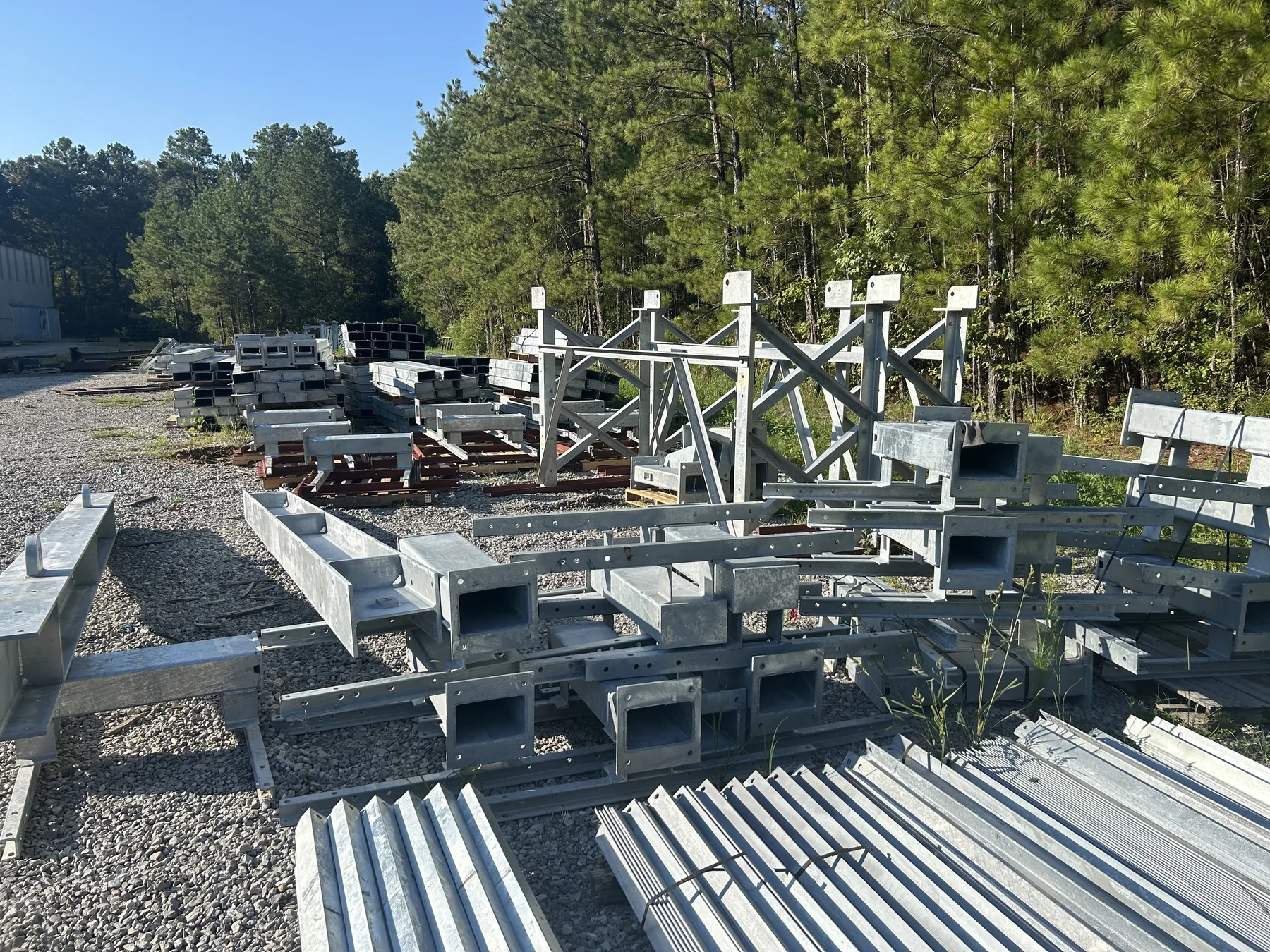
Tubes, pipe, box sections, closed stiffeners and any pocket formed by welded plates must have openings that let air out as the piece goes in and zinc out as it comes up. The rules of thumb from ASTM A385 and the American Galvanizers Association’s detailing guidance: put vent and drain holes at both ends, diagonally opposite at the highest and lowest points as the piece will hang; make them as large as the design allows — for small tubes, the guidance is on the order of a quarter to a third of the tube’s inside area at each end; and vent every internal compartment formed by gussets, end plates and diaphragms, cropping corners of internal stiffeners so zinc can flow past them. Base plates and cap plates on tubular members need their own vent holes. Galvanizers would much rather see an extra hole than a missing one.
Consult ASTM A385 and your galvanizer’s detailing guide for minimum hole sizes by section. Holes can be plugged after galvanizing where appearance or moisture ingress matters.
Overlaps and sealed welds
Where two plates lie face to face — a doubler plate, a lapped connection, a back-to-back angle — pickling acid and flux can wick into the gap and never fully rinse out; the zinc can’t enter, and the trapped chemistry weeps out for months as rust bleed. The options are to seal-weld the overlap completely (small overlaps), or, for larger overlapping areas, to seal-weld and add a vent hole through one plate so trapped air can escape without rupturing the weld. Intermittent welds on overlaps that will be galvanized are the most common cause of weeping. Weld slag also must be removed before galvanizing — pickling does not remove it, and the zinc won’t coat over it.
Warpage and distortion
Dipping steel at 840°F releases residual stresses from rolling, cutting and welding, and heats thin and thick sections at different rates. Assemblies warp when they are asymmetric, when thin plate is welded to heavy sections, or when welds are unbalanced. Design symmetric sections where possible, join members of similar thickness, balance welds on both sides of a member, avoid large unstiffened thin panels, and add temporary bracing to open shapes that could spring. Long members that exceed the kettle length can be progressive-dipped (one end, then the other), which the galvanizer should confirm before the part is detailed.
Steel chemistry
Silicon and phosphorus in the steel control how fast zinc and iron react. Steels in the reactive range produce thick, dull gray, sometimes brittle coatings. ASTM A385 recommends steels with silicon below 0.04% and phosphorus below 0.02%, or silicon between 0.15% and 0.22%, for predictable coatings. The practical point for designers: members of different steels in one assembly may come out different colors and thicknesses, which is a cosmetic, not a performance, difference — and the mill test report will tell you ahead of time (see Material Certs & Heat Numbers).
Clearances, threads and masking
Zinc builds thickness on every surface, so parts that must move or mate need room: allow about 1/16″ or more of clearance between moving parts such as hinges and shackles. Threaded fasteners are galvanized to ASTM A153 or F2329, and nuts are tapped oversize after galvanizing to fit the coated bolt; tapped holes in fabricated parts are re-tapped after galvanizing or masked. Surfaces that must stay bare — faying surfaces of slip-critical connections, machined faces — are masked or specified for post-galvanize treatment. Bolt holes should follow the standard sizes in our bolt-hole spec sheet; zinc slightly reduces their diameter.
How to write it
“Hot-dip galvanize after fabrication per ASTM A123; hardware per ASTM A153 or F2329. Fabrication details shall conform to ASTM A385: all enclosed spaces vented and drained, overlapping surfaces seal-welded (vented where noted), weld slag removed. Steel for galvanized members shall have Si < 0.04% and P < 0.02%, or Si 0.15–0.22%, where available. Repair damaged coating per ASTM A780.”
How FabTek handles it
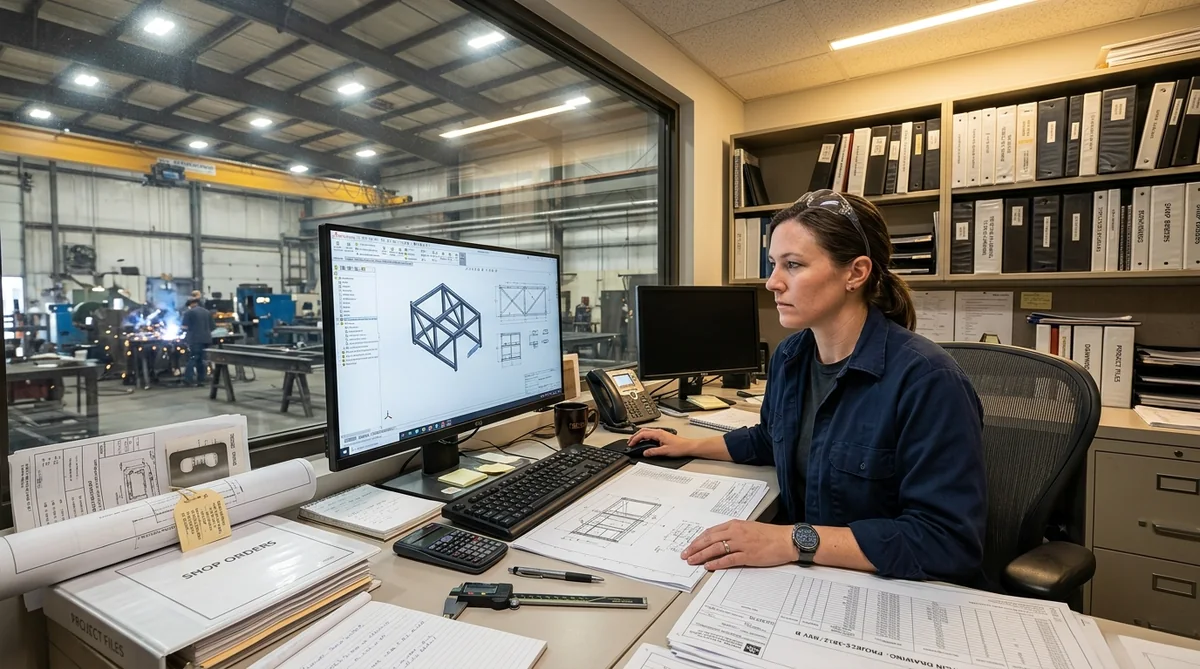
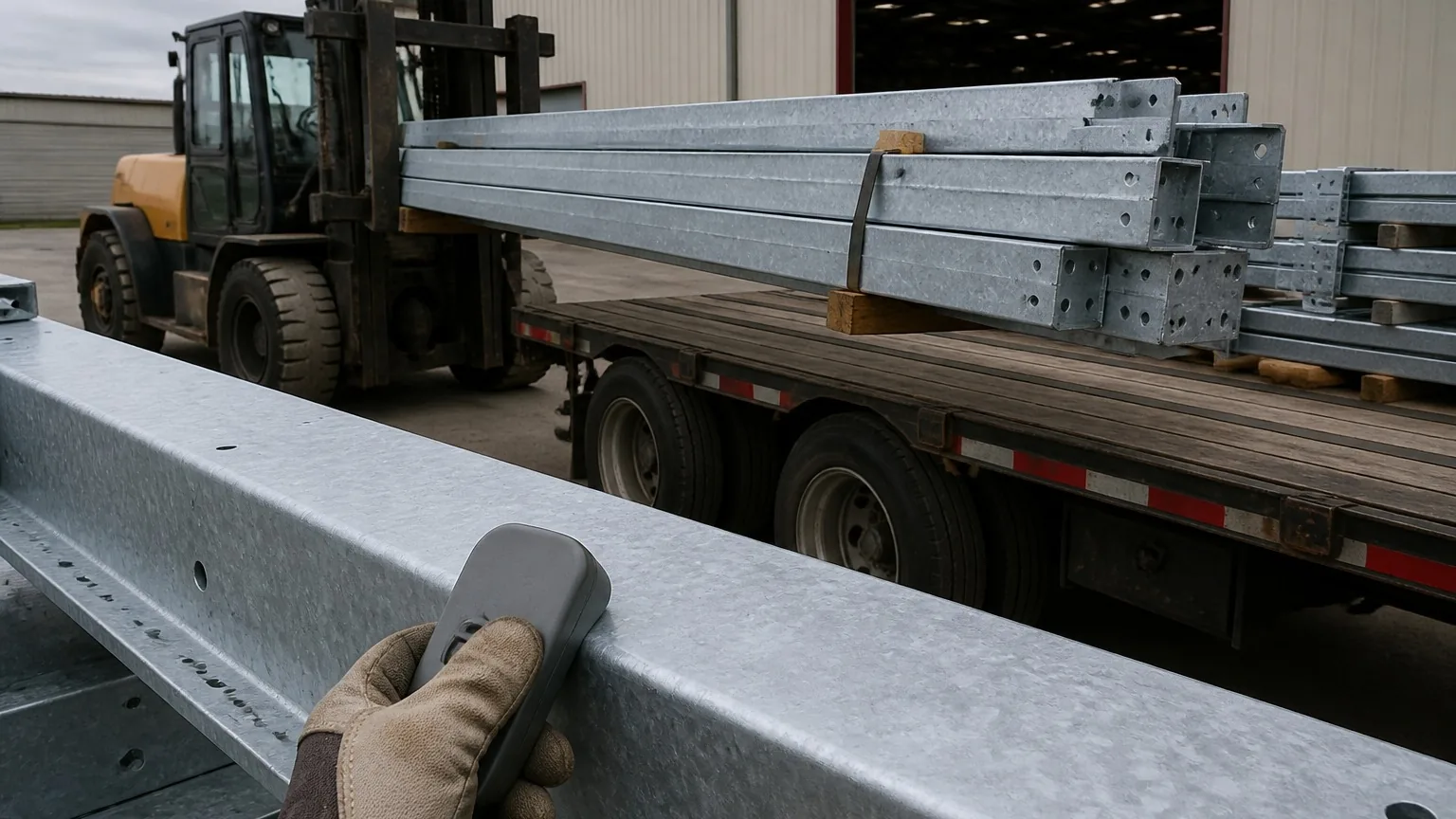
FabTek details substation, transmission and structural steel for the kettle in house — vents, drains, sealed welds and hanging points shown on the shop drawings — and blasts or cleans weld areas before dispatch. Hot-dip galvanizing is done through FabTek’s long-standing galvanizing partners to ASTM A123, scheduled and managed by FabTek as part of one scope, with coating thickness and appearance checked on return and records kept by member.
Frequently asked questions
Why do galvanized parts need vent holes?
Hot-dip galvanizing immerses the whole part in cleaning solutions and molten zinc at about 840 degrees Fahrenheit. Vent and drain holes let those liquids flow in and out and let air and steam escape. Without them, the inside will not coat and trapped air or moisture can rupture the part in the kettle.
Where should vent holes go for galvanizing?
At both ends of every enclosed or hollow space, placed diagonally opposite at the highest and lowest points as the part hangs in the kettle, and as large as the design allows. Internal stiffeners and gussets should have cropped corners so zinc can pass.
What steel is best for hot-dip galvanizing?
ASTM A385 recommends steel with silicon below 0.04 percent and phosphorus below 0.02 percent, or silicon between 0.15 and 0.22 percent. Steels outside those ranges can produce thicker, duller coatings, which is mainly a cosmetic difference.
Do overlapping plates need to be sealed before galvanizing?
Yes. Overlapping surfaces should be completely seal-welded, and larger overlaps should also get a vent hole, so pickling acid cannot become trapped between the plates and weep out later as rust stains.