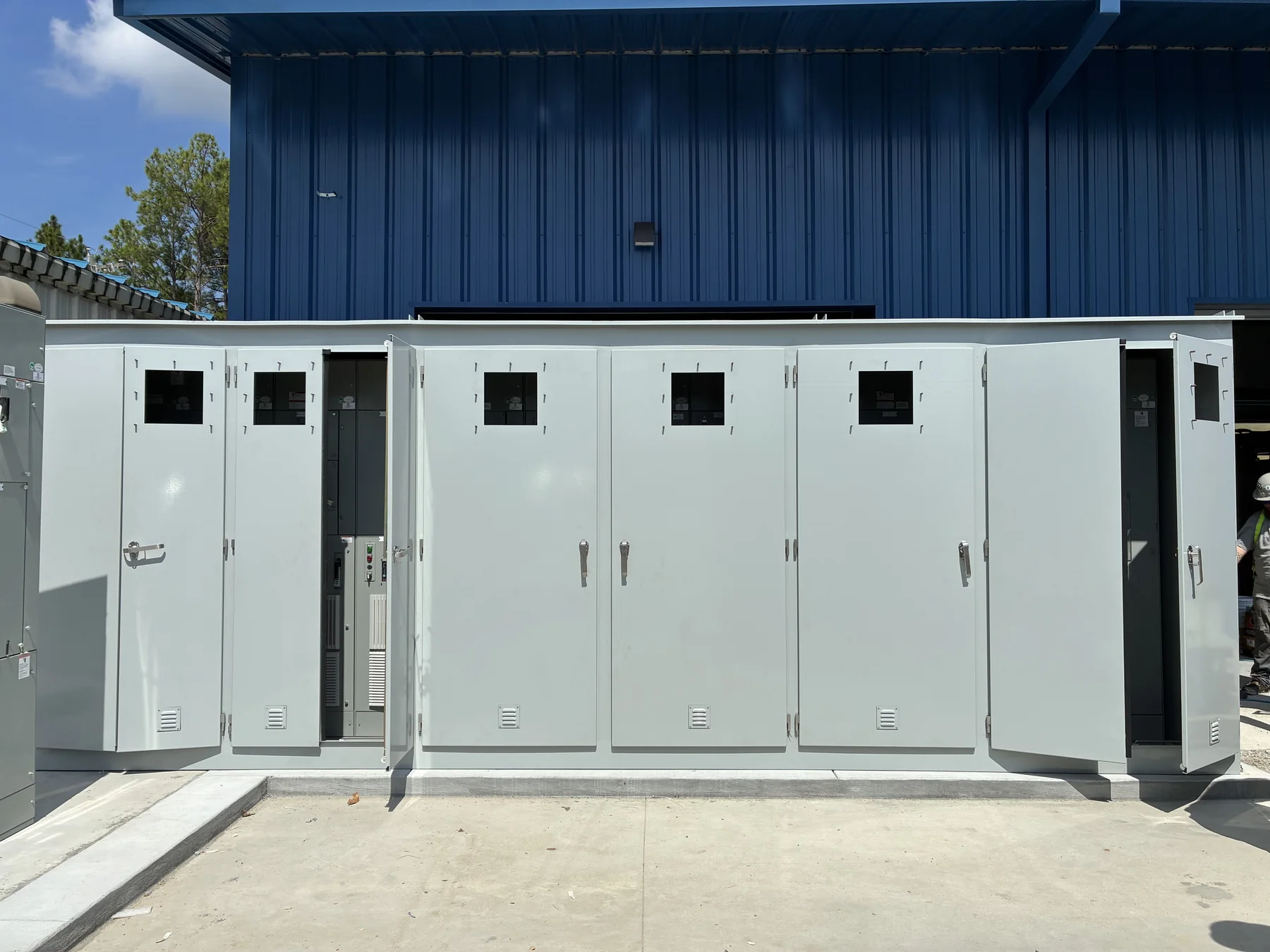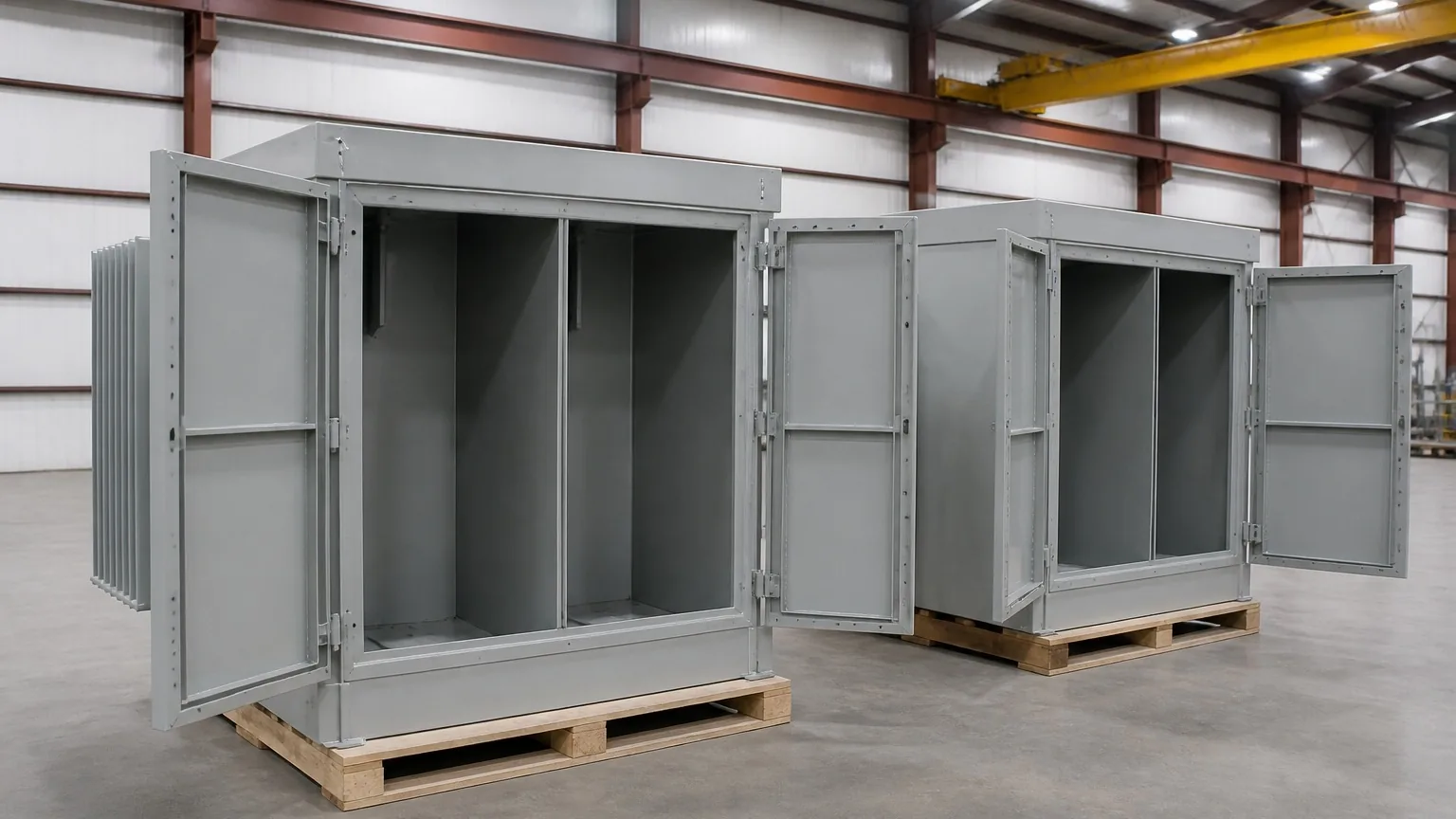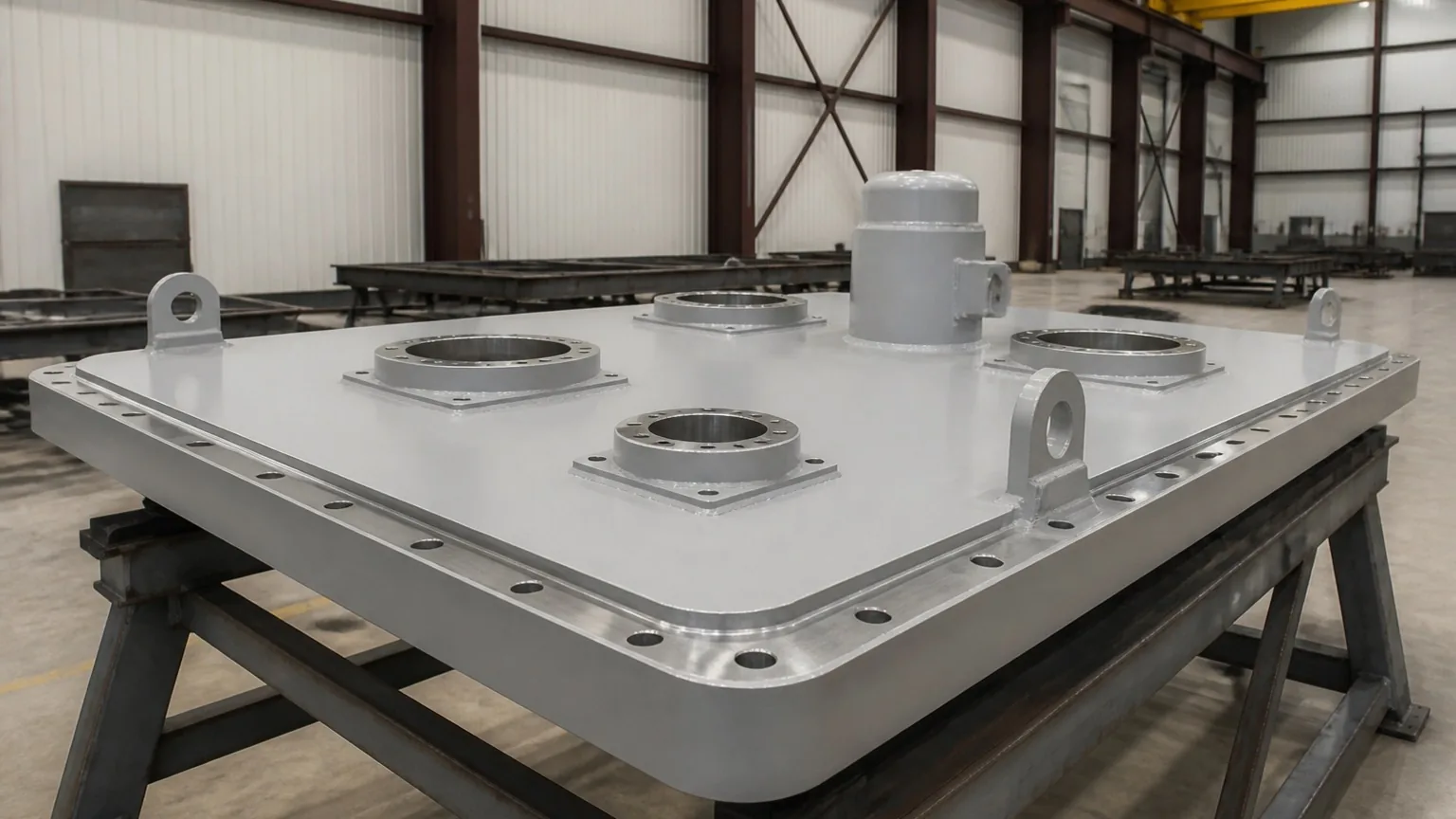
Almost every cabinet and enclosure needs threads: for mounting panels, DIN rail, breakers, covers, doors and ground bars. Sheet metal is usually too thin to tap, so fabricators add threads another way — pressed-in hardware, welded studs, rivet nuts, weld nuts or formed holes. Each has its place, and the right choice depends on thickness, load, sealing and when the part is painted. Here is how they compare.
Want a design-for-fabrication review on your drawing? Call 601.892.5017 or email collin.t@fabtekindustries.com — send the model or drawing and our engineers will mark it up.
- Thin sheet can’t hold tapped threads: 14-gauge steel is about 0.075″ thick, so a 1/4-20 tapped hole gets only about 1.5 threads. Tapping works on plate and thick sheet; below that, add hardware.
- Self-clinching (PEM-style) nuts, studs and standoffs press permanently into sheet for clean, flush, repeatable threads; weld studs attach from one side with no hole and no leak path; rivet nuts install blind from one side after fabrication.
- Mind the finish order: hardware is usually installed before powder coat and its threads masked; weld studs go on at fit-up before blast and coat.
- Sheet Metal Gauge Chart
- How to Tolerance a Sheet Metal Drawing
- K-Factor, Bend Allowance & Bend Deduction
- Weld Symbols & Weldment Design
- Designing for Hot-Dip Galvanizing
- Designing for Powder Coat
- PEM Hardware vs. Stud Welding vs. Tapped Holes (you are here)
- Galvanneal vs. Galvanized vs. Cold-Rolled Steel
The options
Self-clinching fasteners — nuts, studs, standoffs and pins, widely known by the PEM brand — are pressed into a punched or laser-cut hole; the sheet cold-flows into a groove on the fastener and locks it permanently. Weld studs are welded to the surface in a fraction of a second by drawn-arc or capacitor-discharge stud welding. Tapped holes are threads cut or formed directly in the material. Extruded or flow-drilled holes form a collar in thin sheet so there is more material to thread. Rivet nuts (blind threaded inserts) are installed from one side with a setting tool. Weld nuts are nuts projection-welded or fillet-welded to the part.
Side-by-side comparison
| Self-clinching | Weld stud | Tapped hole | Rivet nut | Weld nut | |
|---|---|---|---|---|---|
| Sheet thickness | Thin to medium sheet (minimum per fastener) | Thin sheet (CD) to plate (drawn arc) | Thick sheet and plate | Thin to medium | Medium sheet to plate |
| Hole required | Yes | No | Yes | Yes | Usually |
| Leak path | Possible | None | Through-hole | Possible | Sealed if welded around |
| Show-face marks | Flush or minimal | May mark thin sheet (CD minimal) | None | Head on one side | Heat marks |
| Strength | Good; rated by manufacturer | High; full-strength weld | Depends on engagement | Moderate | High |
| Installed | In the shop, before assembly | At fit-up | In the shop | Any time, one side | At fit-up |
Self-clinching hardware rules
Self-clinching fasteners depend on the sheet flowing around the fastener, so the manufacturer’s catalog governs, but the core rules are consistent. The sheet must meet the minimum thickness for that fastener. The fastener must be harder than the sheet — standard steel hardware for mild steel and aluminum, and special hardened types for stainless sheet. The mounting hole must be the catalog size, not a drill-chart approximation. And the fastener needs a minimum centerline-to-edge distance and clearance from bends so the sheet doesn’t bulge. Install with a press (squeezing, not hammering) for full, flush seating.
Weld studs
A stud welded to the inside of a tank wall or enclosure panel puts a thread exactly where it’s needed with no hole through the wall: no leak path on a sealed tank, no hole to weatherproof on a NEMA 3R enclosure, and a clean outside face. Drawn-arc stud welding makes a full-strength weld on plate and heavier sheet — insulation studs on tanks, ground studs, mounting studs on frames. Capacitor-discharge (CD) stud welding fires a very short, high-current pulse that welds small studs to thin sheet with little or no marking on the far side. Stud location comes from a layout on the drawing or a template, and studs should be shown with thread size, length and material.
When tapping is fine
A common guideline is thread engagement of at least about one to one-and-a-half times the fastener diameter for full strength in steel. That is easy in plate — a 1/2″ base plate holds a 1/2-13 thread well — and impossible in thin sheet: 14-gauge (0.075″) gives a 1/4-20 screw only about 1.5 threads. Tapping is a good choice in plate, thick sheet, machined blocks and bosses, and for low-load, non-structural threads in 10- and 11-gauge. Extruded or flow-drilled holes roughly double or triple the available thread length in thin sheet and are a low-cost middle ground.
Finish order
Hardware and coating interact. Self-clinching hardware is normally installed before powder coat (pressing it in afterward can crack the finish), with threads masked. Weld studs and weld nuts go on at fit-up, before blast and coat, and are masked or capped. Rivet nuts can be installed after coating, which makes them useful for late changes and field additions. For galvanized parts, threads are cleaned or re-tapped after galvanizing (see Part 5). The drawing should say which features are installed before and after finishing.
How to write it
“Install self-clinching nuts per manufacturer’s specification, flush to the far side, before finish; mask threads. Weld studs: 1/4-20 × 3/4″ steel, drawn-arc, locations per layout, before blast and coat; mask threads. Do not tap threads in material under 0.12″ unless extruded. Hardware material and plating per BOM.”
How FabTek handles it
FabTek installs hardware in house between forming and welding and applies studs on an Arc 1200 drawn-arc stud welder, with capacitor-discharge for thin sheet, at fit-up before blast and powder coat. Tapped and machined threads in plate and bosses are cut on the CNC mills. Mechanical assembly — hinges, latches, gaskets, panels, DIN rail and hardware — happens after finishing, so the cabinet ships ready for its electrical build.
Frequently asked questions
Can you tap threads in sheet metal?
Only in thicker sheet and plate. Full-strength threads need engagement of about one to one-and-a-half times the fastener diameter, but 14-gauge steel is only about 0.075 inch thick, giving a 1/4-20 screw about 1.5 threads. Thin sheet uses self-clinching nuts, weld studs, rivet nuts or extruded holes instead.
What is a PEM nut?
PEM is a widely used brand of self-clinching fastener. A self-clinching nut is pressed into a sized hole in sheet metal, and the sheet cold-flows into a groove on the nut, locking it permanently to provide strong, reusable threads in thin material.
Should hardware be installed before or after powder coating?
Self-clinching hardware and weld studs are usually installed before powder coat with the threads masked, because pressing hardware into a finished part can crack the coating. Rivet nuts can be installed after coating.
When should I use stud welding instead of self-clinching hardware?
Use weld studs when you cannot have a hole through the part, such as tank walls and weatherproof enclosure panels, when you need a clean outside face, or when the material is plate. Self-clinching hardware suits thin sheet where a hole is acceptable and a flush fastener is wanted.