Arc-resistant switchgear is specified wherever personnel stand near energized gear — utility substations, industrial plants, generation sites, hospitals, data centers — and the enclosure is what makes it arc-resistant. The gear inside is the same; the housing is built to contain and redirect the pressure and gases of an internal arc for the duration of the test. That puts unusual demands on the sheet metal. This spec sheet explains what changes and what the OEM has to communicate to a contract fabricator.
Switchgear OEM sourcing enclosures for an arc-resistant design? Call 601.892.5017 or email collin.t@fabtekindustries.com — send a print and a quantity and we’ll quote it.
- Arc resistance is a type-tested property of the whole assembly under IEEE C37.20.7; the enclosure is built to the tested design, nothing else.
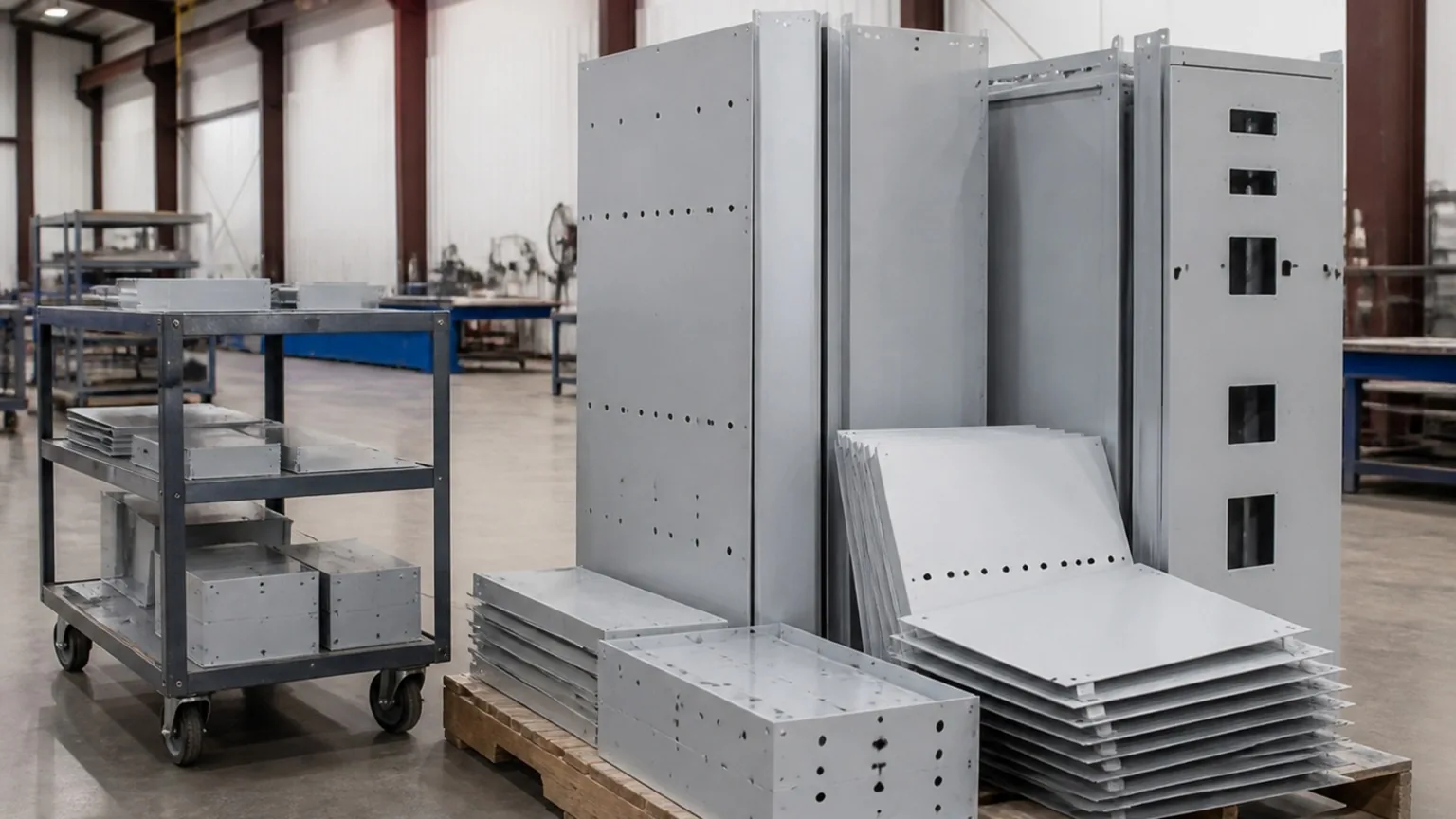
- The fabricator supplies reinforced walls, doors and frames, pressure-relief flaps, plenums and ducts to the OEM’s print.
- Bolt patterns, bolt grades and torque are structural, not cosmetic — every fastener on an arc-resistant enclosure is on the drawing for a reason.
- Changes in gauge, hardware or joint design void the test; supplier substitutions are never made without OEM engineering approval.
What arc-resistant means
IEEE C37.20.7 defines a test: an arcing fault is initiated inside the switchgear, and the assembly passes if, for the rated duration, doors and covers stay closed, no parts are ejected, no openings appear in the accessible surfaces, indicators placed around the gear do not ignite, and the grounding stays intact. Accessibility type describes which surfaces are protected — Type 1 the front, Type 2 the front, sides and rear, with suffixes for compartment-level protection. The OEM designs and tests the assembly. The enclosure fabricator’s job begins after the test: build the housing so every production unit is the one that passed.
What changes in the enclosure
- Heavier skins and frames — walls and doors step up in gauge, or carry welded stiffeners, so they do not bulge or tear under the pressure pulse.
- Pressure-relief flaps — hinged or frangible panels on the roof, held closed by gravity or a calibrated latch, that open to vent the arc gases upward and reclose.
- Plenums and exhaust ducts — sheet-metal plenums above the gear that collect the vented gases and duct them outside the room; built as separate fabricated assemblies with their own supports.
- Bolted, gasketed joints — covers and panels bolted on a tight pattern with the specified bolt grade, so joints hold and gases go where the design sends them.
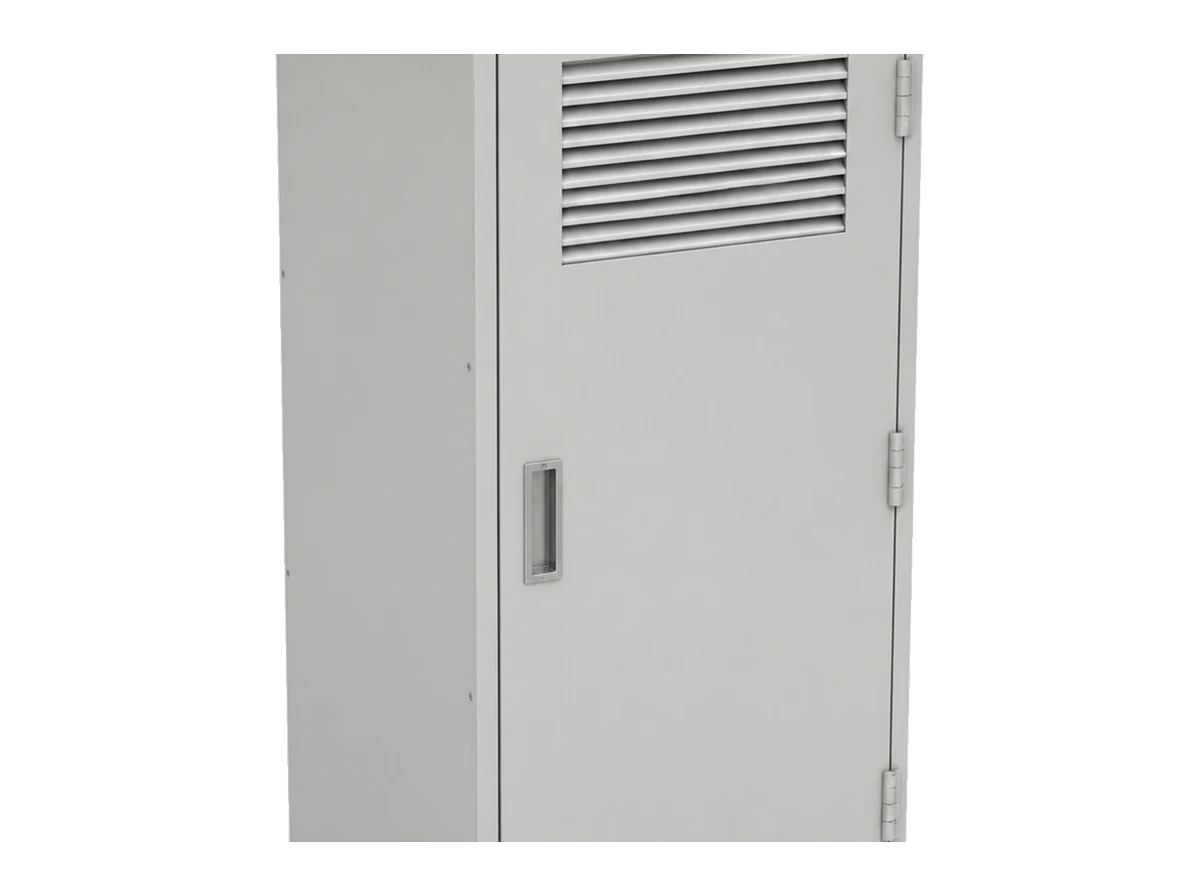
- Door construction — reinforced doors with multi-point latches and hinge reinforcement; viewing windows in rated glazing with retained frames.
- Sealed penetrations — cable and conduit entries, instrument cutouts and vents sealed or shielded so they do not become exits for hot gas.
Fabrication implications
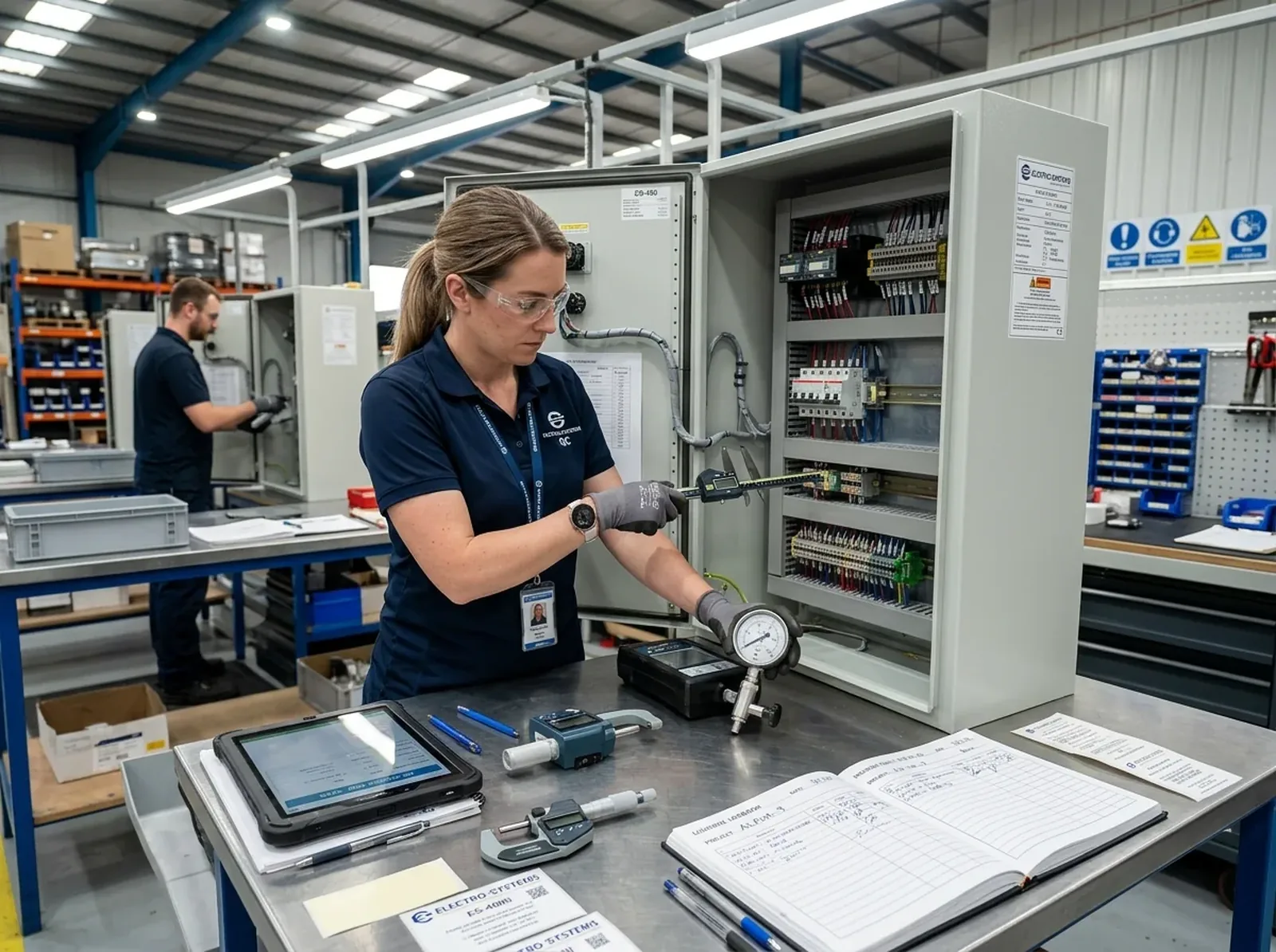
Three things change on the shop floor. First, the drawing is law: a 12-gauge panel is not swapped for 14 because it is in stock, a hinge is not substituted, a weld is not left off because the joint also has bolts. Second, hole patterns and bolt holes are held to the drawing tolerance because the fastener spacing was part of the tested joint; that means fixtures and first-article inspection, as on metal-clad frames. Third, inspection records matter: the OEM needs evidence that each unit was built to the tested construction, so weld maps, material certs and dimensional reports ship with the job. FabTek builds to this discipline on its switchgear enclosure lines, with the records described under quality and compliance.
Plenums, ducts and the building
The plenum and exhaust duct are often the largest sheet-metal items in the package and the ones most likely to be custom per site, because the duct has to run from the top of the lineup to an exterior wall or a discharge point the building engineer chooses. They are fabricated as flanged, gasketed sections in the gauge the OEM’s test used, with support brackets to the ceiling or the switchgear structure. On walk-in and E-House installations, the plenum may be integral to the enclosure roof — see walk-in switchgear enclosures. The EPC or electrical contractor usually owns the duct routing; the fabricator builds the sections.
What the OEM needs to put on the print
Gauge and material per part, stiffener locations and welds, the bolt pattern with grade and torque, the flap and latch design with its calibration, gasket material and placement, glazing specification, and which dimensions are inspection points. If the enclosure is also NEMA 3R for outdoor service, the drip and drainage details have to coexist with the pressure-relief design and should be shown together. The RFQ checklist covers the rest of the package.
On an ordinary enclosure, a substituted bolt is a nonconformance. On an arc-resistant enclosure, it is a different product than the one that was tested.
FabTek Industries fabricates arc-resistant switchgear enclosures, reinforced doors and covers, pressure-relief assemblies, plenums and exhaust ducts to the OEM’s type-tested print — fixture-built, first-article inspected and documented — under an ISO 9001:2015 quality system with AWS-certified welding, from four production sites in Hazlehurst, Mississippi. See how we work with switchgear OEMs, or send us a print.
Working on something like this? Send a print or a scope — pricing and lead time within one business day, from four Mississippi plants.
Frequently asked questions
What makes a switchgear enclosure arc-resistant?
The assembly is designed and type-tested under IEEE C37.20.7 so that an internal arcing fault is contained for the rated duration: doors and covers stay closed, nothing is ejected, no openings appear in accessible surfaces, and gases are vented through pressure-relief flaps and plenums. The enclosure construction — reinforced skins, bolted joints, flaps, ducts — is what achieves it.
Can a contract fabricator build arc-resistant switchgear enclosures?
Yes, to the OEM’s tested design. The fabricator builds reinforced walls, doors, frames, pressure-relief flaps, plenums and ducts exactly to the print, with no substitutions in gauge, hardware or joint design, and ships inspection records with each unit.
What are arc-resistant accessibility types?
Type 1 protects the front of the switchgear; Type 2 protects the front, sides and rear. Suffix letters (such as B and C) indicate protection at the compartment level, allowing certain compartments to be opened while adjacent ones are energized.
Why are bolt patterns critical on arc-resistant enclosures?
Because the fastener spacing, grade and torque were part of the joint that passed the type test. Changing them changes the joint strength and the path arc gases take, so the enclosure may no longer perform as tested.