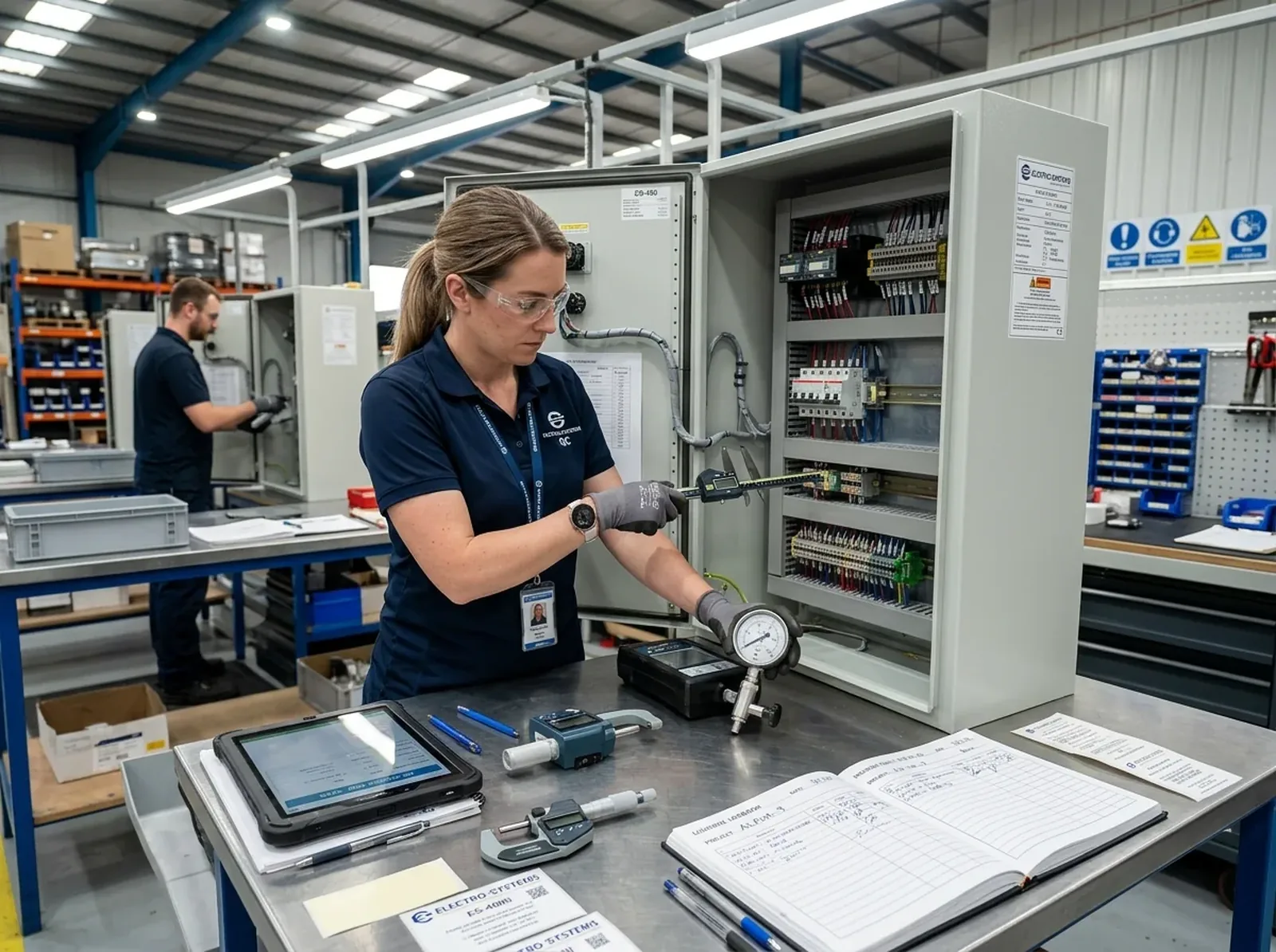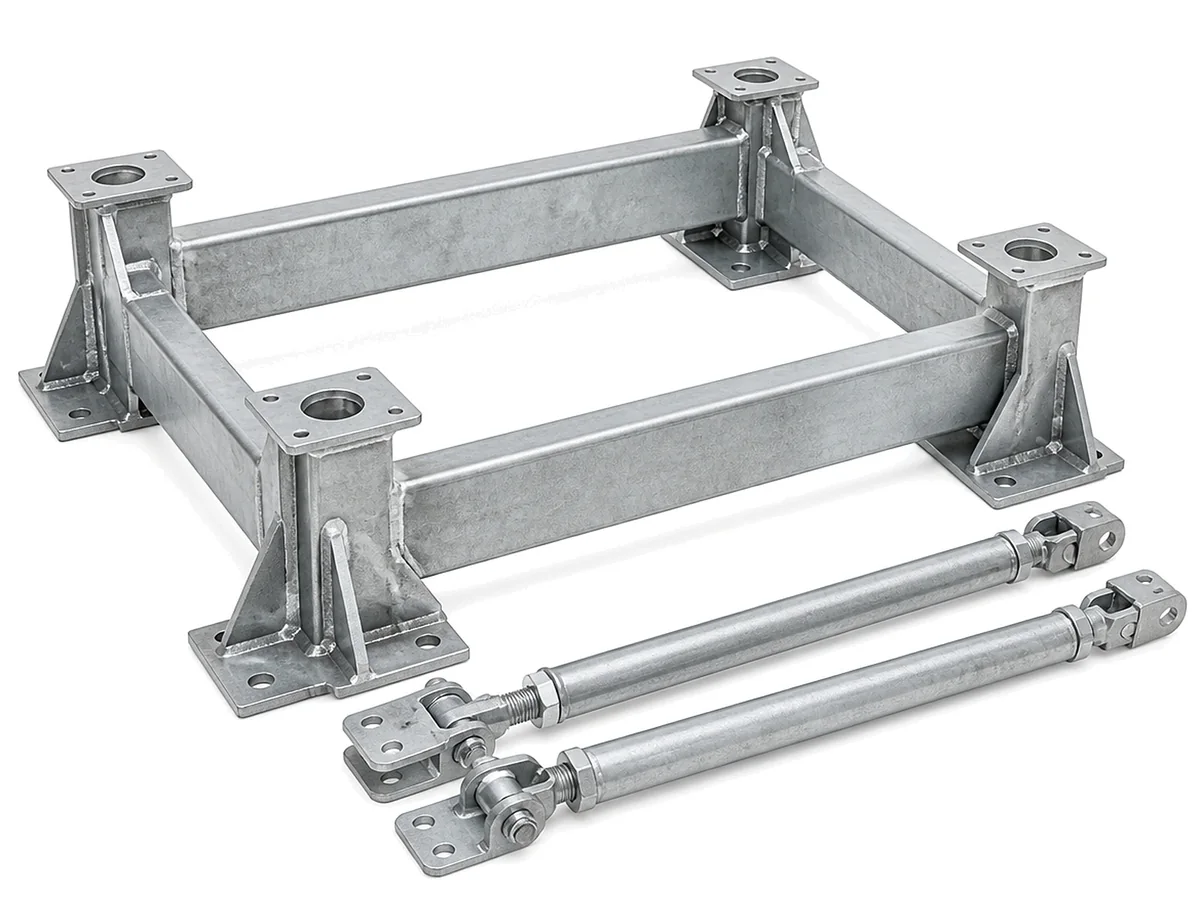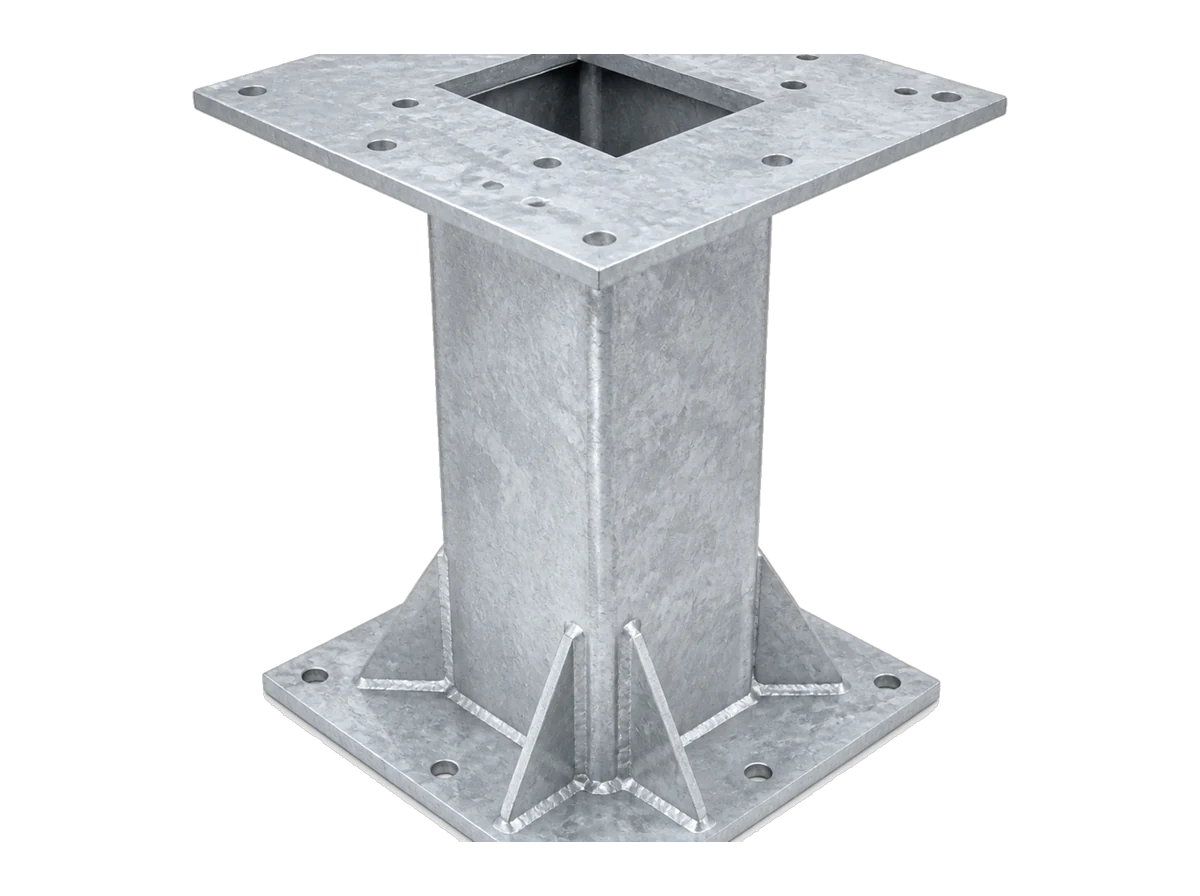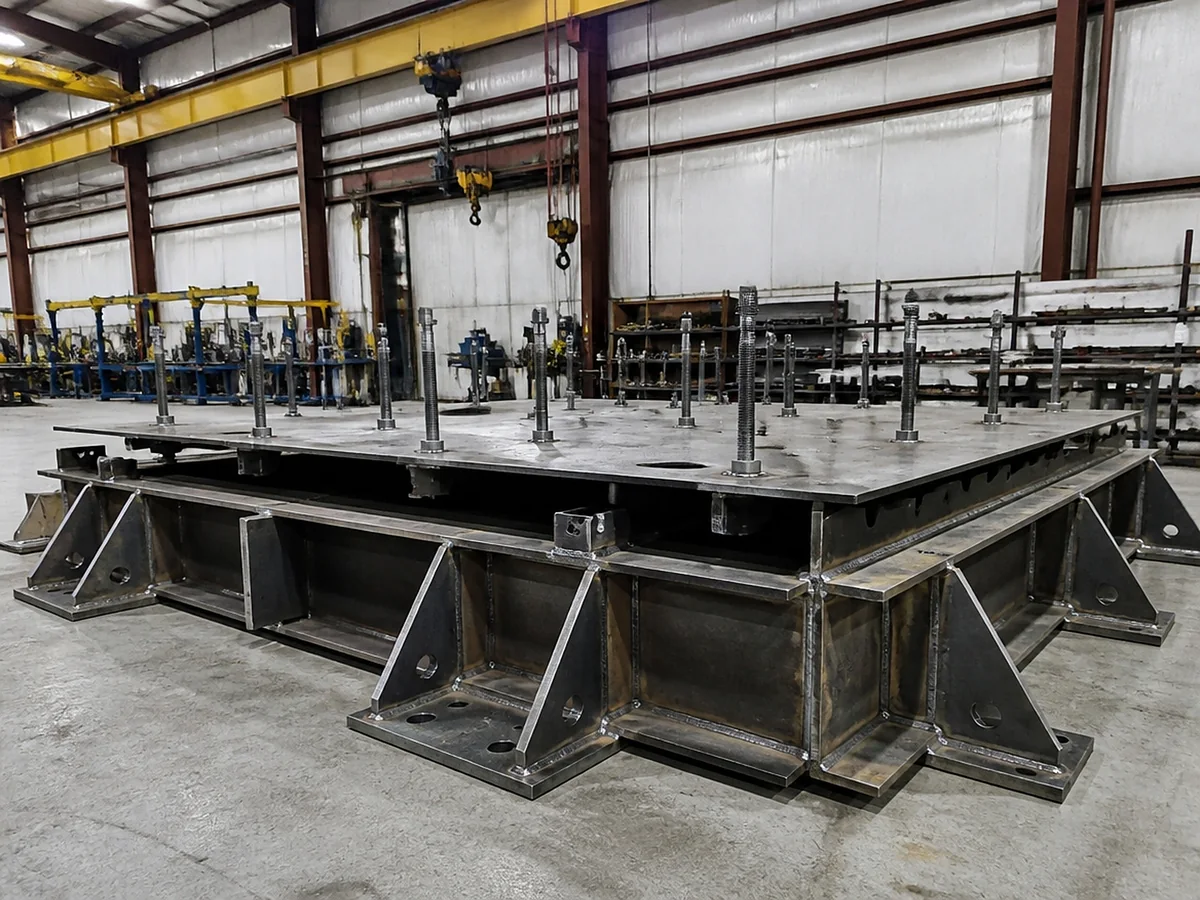
An outdoor enclosure is a small structure, and in a hurricane, an ice storm or an earthquake it is loaded like one. Wall boxes see wind on their doors; walk-in enclosures and E-Houses see wind on walls and roofs and inertia loads through their anchors; equipment inside sees accelerations the anchorage has to resist. The project engineer calculates the loads; the fabricator builds the structure, bracing and anchorage to them. This spec sheet covers what the fabricator needs and where the responsibilities sit.
Need an enclosure or E-House built to site loads? Call 601.892.5017 or email collin.t@fabtekindustries.com — send a print and a quantity and we’ll quote it.
- Outdoor enclosures are designed to site wind and seismic loads from the engineer of record, not to a generic standard.
- The fabricator needs the wind speed and exposure, seismic design category, importance factor and anchorage design on the print.
- Anchorage, base plates and internal bracing are the fabrication items that carry the loads; sunshields and doors are the usual wind weak points.
- IEEE 693 governs substation equipment and its supports; ASCE 7 governs buildings and nonstructural components.
The loads
| Wind | Basic wind speed and exposure category from ASCE 7 for the site; pressure on walls, roof, doors (open and closed) and sunshields; uplift on roofs and hoods |
|---|---|
| Seismic | Seismic design category, site class, component importance factor (Ip = 1.5 for essential equipment), and the resulting horizontal and vertical accelerations under ASCE 7 Chapter 13 for nonstructural components |
| Snow and ice | Ground snow load and ice thickness on roofs, hoods and louvers; relevant to walk-in units and E-Houses |
| Equipment | Weight and center of gravity of installed equipment, which drives both seismic inertia loads and anchorage |
| Lifting and transport | Single-point or spreader lift, dynamic factors, road vibration for skid units; see mobile enclosures |
The engineer of record or the equipment supplier’s engineer provides the values; the references are the current IBC, ASCE 7 and, for substation equipment, IEEE 693.
Who calculates and who builds
The engineer of record for the site, or the OEM’s or integrator’s engineer for a packaged product, determines the loads and designs the structure, anchorage and bracing to resist them, usually documented in a calculation package and on the drawings. The fabricator builds what is drawn: the base frame and plates to the anchor pattern, the bracing members and connections, the roof structure, the door reinforcement, the sunshield standoffs. A fabricator can advise on constructability and can provide standard details for review, but it does not stamp the structural design. FabTek’s engineering and detailing group produces the shop drawings from the engineer’s design, as it does for substation structures.
Anchorage and base plates
- Anchor pattern — bolt size, spacing, edge distance and embedment per the engineer; the fabricator drills the base to it and supplies templates.
- Base plates and stiffeners — plate thickness and stiffener layout sized to the anchor forces; often the heaviest members on a cabinet.
- Equipment anchorage inside — rack and equipment bolt patterns tied through the floor to the base, so the gear is anchored to the structure, not just the floor plate; see battery racks and seismic bracing and anchorage.
- Isolation — where vibration isolators are used, seismic snubbers and restraints as the engineer specifies.
Bracing, roofs and doors
Walk-in enclosures and E-Houses carry wind and seismic loads through their wall framing to the base, so the framing, diagonal bracing or shear panels, and the connections are structural items on the print, as is the roof structure for snow, ice and rooftop equipment. Doors are the common wind weak point: a wide equipment door open in a gust puts a large moment on its hinges and hold-open, and a closed door needs enough stiffness and latch points to stay sealed under design pressure. Sunshields and rain hoods are the other weak point — large, light, standoff-mounted — and their brackets are sized to the wind, not to the sunshield’s weight. Construction guidance for the housing is in walk-in switchgear enclosures and industrial E-Houses.
IEEE 693 and substation equipment
Substation equipment and its supporting structures — including control enclosures mounted on structures and cabinets whose failure would affect the equipment — may fall under IEEE 693 seismic qualification at the utility’s discretion, with performance levels (low, moderate, high) that set the design accelerations and sometimes require shake-table or analytical qualification by the equipment supplier. The fabricator builds the stands, supports and enclosures to the qualified design; the qualification itself is the supplier’s. Substation steel practice is in the anchor bolt patterns spec sheet and the substation steel buyer’s guide.
What to put on the print
Basic wind speed and exposure; seismic design category, site class and importance factor; snow and ice; equipment weights and centers of gravity; the anchor pattern with bolt specification and embedment; bracing and connection details; door and sunshield design pressures or the resulting member sizes; lifting arrangement and dynamic factor; and a note identifying the engineer of record and the calculation package. With that, the fabricator can detail, build and document the structure; without it, the enclosure is designed to nothing in particular. The RFQ guide treats loads as part of the drawing package.
Every outdoor enclosure is designed for some wind speed. The only question is whether anyone wrote it down.
FabTek Industries fabricates outdoor enclosures, E-Houses, skids and equipment stands to the engineer’s wind, seismic, snow and lifting loads — base frames and plates drilled to the anchor pattern, bracing and connections as designed, door and sunshield reinforcement, seismic bracing and anchorage — with shop drawings from our detailing group, under an ISO 9001:2015 quality system with AWS-certified welding, from four production sites in Hazlehurst, Mississippi. See engineering and detailing, or send us the loads and a layout.
Working on something like this? Send a print or a scope — pricing and lead time within one business day, from four Mississippi plants.
Frequently asked questions
Who is responsible for the seismic and wind design of an outdoor enclosure?
The engineer of record for the site, or the OEM’s or integrator’s engineer for a packaged product, determines the loads and designs the structure, bracing and anchorage. The fabricator builds what is drawn and produces shop drawings, but does not stamp the structural design.
What load information does an enclosure fabricator need?
Basic wind speed and exposure, seismic design category, site class and importance factor, snow and ice loads, equipment weights and centers of gravity, the anchor pattern with bolt specification and embedment, bracing and connection details, door and sunshield design pressures, and the lifting arrangement.
What are the wind weak points on an outdoor enclosure?
Wide doors open in a gust, which load hinges and hold-opens; closed doors that need stiffness and enough latch points to stay sealed; and sunshields and rain hoods, whose standoff brackets must be sized to wind pressure rather than the shield’s weight.
When does IEEE 693 apply to enclosures?
When a utility applies it to substation equipment and its supporting structures, which can include control enclosures mounted on structures and cabinets whose failure would affect equipment. The equipment supplier qualifies the design to the specified performance level; the fabricator builds the stands, supports and enclosures to that qualified design.