Inside every battery enclosure is a rack, and under every rack is a base. They carry the modules’ weight, hold them in position to a tolerance the bus connections depend on, and keep them in place in a seismic event. Storage integrators and UPS battery OEMs buy this steel from contract fabricators in quantities that track their installed capacity. This guide covers what the rack has to do and how it is sourced.
Integrator or OEM sourcing battery racks, bases or bracing? Call 601.892.5017 or email collin.t@fabtekindustries.com — send a print and a quantity and we’ll quote it.
- A battery rack is a structural product: weight, seismic loads and module-fit tolerances are its specification.
- Welded frames hold tolerance and ship assembled; bolted racks ship flat and assemble on site — the integrator chooses.
- The integrator’s engineer owns the load and seismic design; the fabricator builds to it and holds the tolerances.
- Racks are bought in families by module type, on a forecast, finished to the enclosure’s color or galvanized.
What the rack does
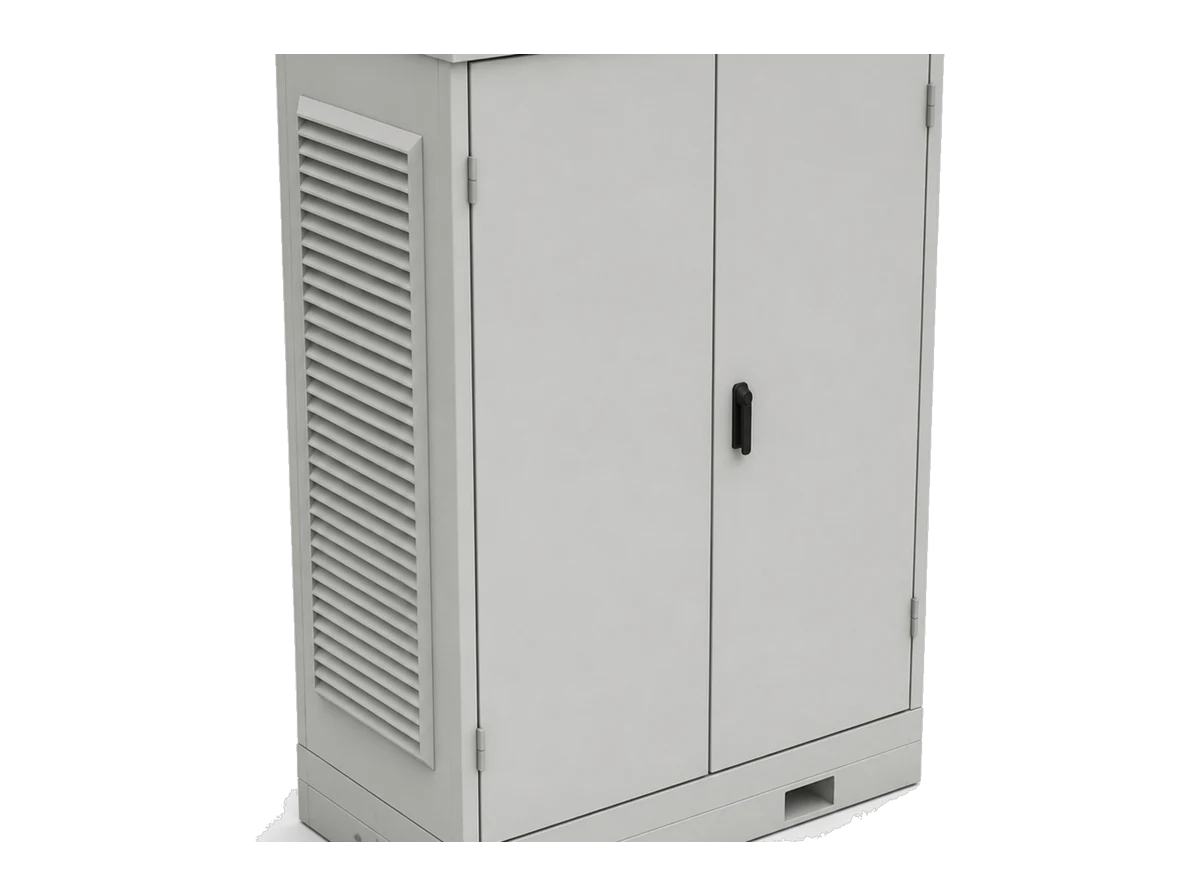
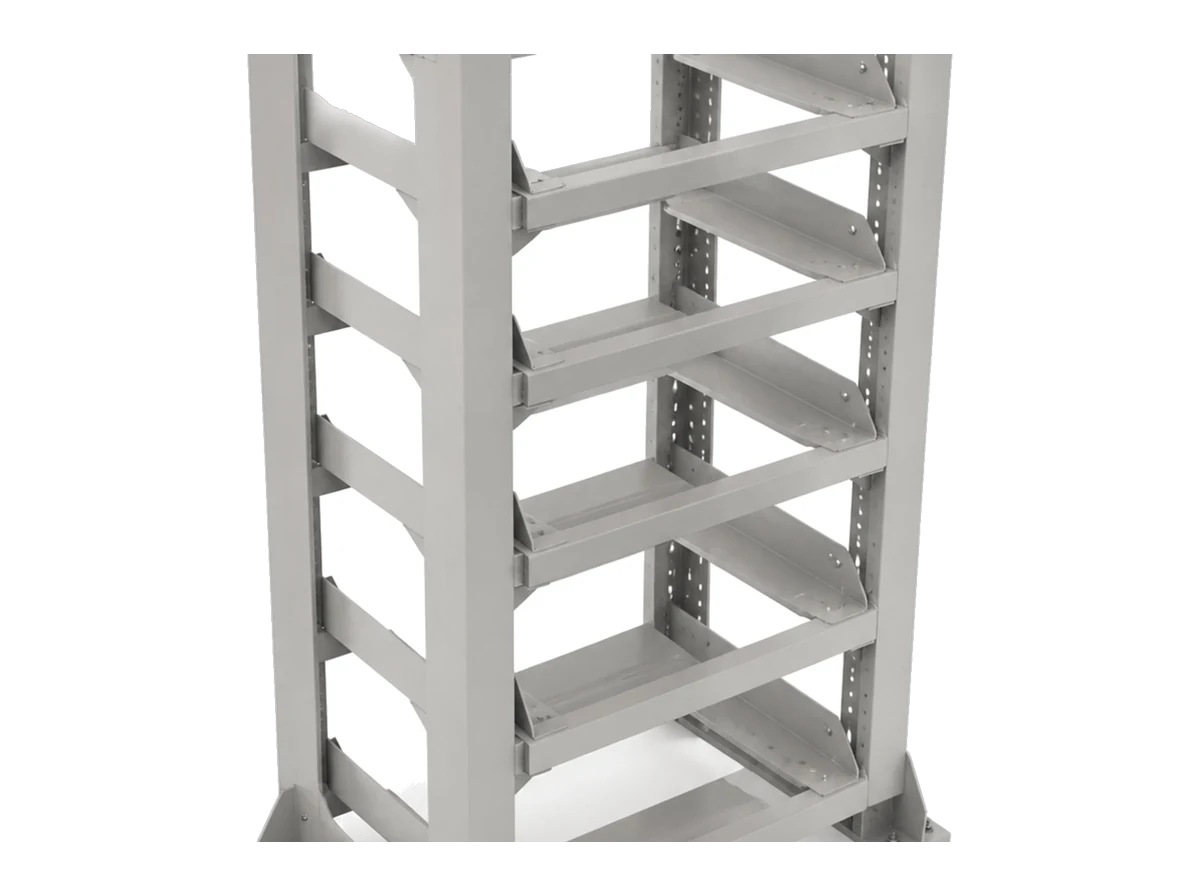
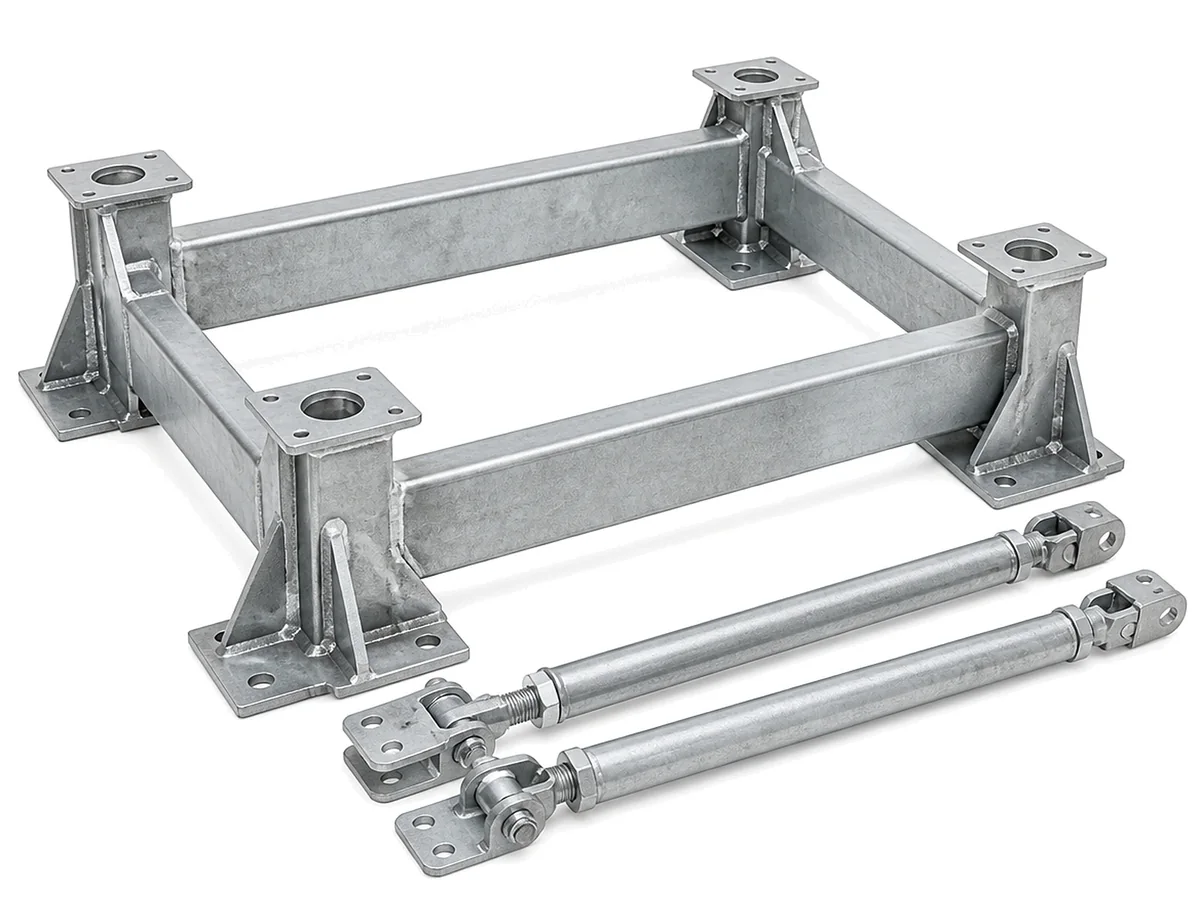
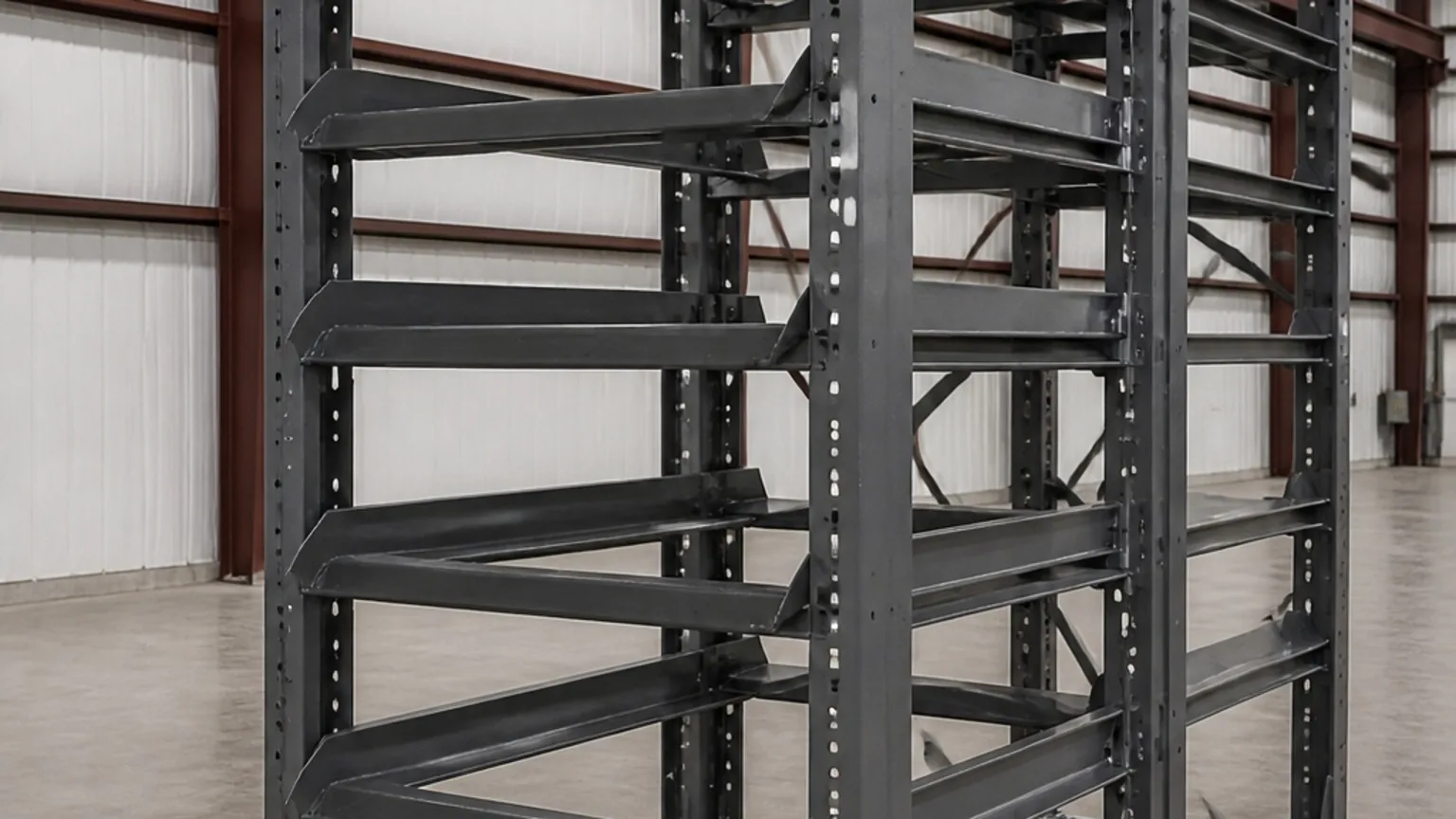
A rack frame positions a stack of battery modules so their terminals line up with the bus bars and their cooling paths stay open, carries their combined weight to the base, and restrains them laterally. Module shelves or rails support each module; a base or plinth spreads the load to the enclosure floor or the slab and carries the anchor bolts; bracing ties racks to each other and to the structure for seismic loads. Bus bar supports and cable management mount to the frame. FabTek builds racks, bases and bracing as part of BESS enclosures and data center racks and frames, and the bus bar itself under bus bar fabrication.
Welded vs. bolted
| Welded frame | Fixture-welded from tube, channel or formed sections; holds module-fit tolerances best; ships assembled or in large sub-assemblies; powder-coated or galvanized after welding |
|---|---|
| Bolted rack | Formed posts and shelves with punched hole patterns, assembled on site or at the integrator; ships flat and dense; tolerance depends on the hole pattern and assembly |
| Hybrid | Welded end frames with bolted shelves and bracing; common for container-style units where the frame is set before modules arrive |
The choice is the integrator’s and depends on shipping, assembly labor at the site and the tolerance the bus design needs. FabTek builds all three; the welding and fixture discipline is the same as for switchgear frames.
Load, seismic and tolerance
- Static load — module weight per shelf and total per rack, with the integrator’s safety factor, on the print.
- Seismic — the site’s seismic design category and the anchorage and bracing design from the integrator’s engineer; the fabricator builds the bracing, base plates and anchor patterns to it. See seismic and wind requirements.
- Module fit — shelf spacing, width between posts and terminal position held to the tolerance the bus bar and connector design requires; a first article is checked with a module or a gauge.
- Thermal — rack geometry preserves the airflow or liquid-cooling path the thermal design assumes; no added members in the path.
- Electrical — ground bonding points, insulating standoffs where the design isolates the rack, and bus support positions.
Finish
Racks inside a cabinet are powder-coated, usually in the enclosure’s color or a neutral gray, with contact surfaces and ground points masked. Bases and plinths that sit on a slab or in a container floor are often hot-dip galvanized for corrosion resistance under the enclosure, with the galvanizing managed through FabTek’s partner galvanizers. Where racks are in a conditioned enclosure and appearance matters, the powder coat is the same lot as the cabinet. The finish decision is covered in choosing an enclosure finish.
How racks are sourced
Racks are bought in families by module type and stack height, with bases and bracing by site. Integrators with a pipeline buy on a forecast with releases per site, often alongside the enclosures so rack and cabinet arrive together and fit. UPS battery OEMs serving data centers, hospitals and industrial plants buy rack families on a steady cadence for their battery cabinets, described in PDU, UPS and battery cabinets. In both cases the program runs on a frozen print, a first article checked for module fit, and reserved capacity. The BESS enclosure sourcing guide covers the enclosure side.
The rack is the one piece of steel the battery module actually touches. If the shelf spacing is right, the bus bar fits; if it is not, nothing else about the enclosure matters.
FabTek Industries fabricates battery rack frames, module shelves, rack bases, plinths and seismic bracing to integrator and OEM prints — fixture-welded or bolted, first-article checked for module fit, powder-coated in-house or hot-dip galvanized — under an ISO 9001:2015 quality system with AWS-certified welding, from four production sites in Hazlehurst, Mississippi. See BESS enclosures, racks and frames, or send us a rack drawing.
Working on something like this? Send a print or a scope — pricing and lead time within one business day, from four Mississippi plants.
Frequently asked questions
What is a battery rack frame?
The structural frame inside a battery enclosure that positions a stack of modules so their terminals align with the bus bars, carries their weight to a base, keeps their cooling paths open and restrains them laterally, with bracing and anchorage for seismic loads.
Should battery racks be welded or bolted?
Welded frames hold module-fit tolerances best and ship assembled; bolted racks ship flat and assemble on site; hybrids use welded end frames with bolted shelves. The integrator chooses based on shipping, site labor and the tolerance the bus design needs.
Who designs the seismic bracing for battery racks?
The integrator’s or project’s engineer, to the site’s seismic design category. The fabricator builds the bracing, base plates and anchor patterns to that calculation and holds the specified tolerances.
How are battery racks bought in volume?
In families by module type and stack height, with bases and bracing by site, on a forecast with releases per site and a first article checked for module fit before production.