A power conversion system or central inverter is a heat source in a box. Everything about its enclosure — the louvers, the filters, the fans, the door layout, the busbar entries — follows from moving that heat out while keeping dust and rain from getting in. Inverter OEMs and storage integrators design the electronics and the airflow; contract fabricators build the housing. This guide covers what has to be on the print.
Inverter OEM or integrator sourcing PCS enclosures? Call 601.892.5017 or email collin.t@fabtekindustries.com — send a print and a quantity and we’ll quote it.
- The PCS enclosure is designed around the airflow path: intake, filter, electronics, exhaust, with free areas set by the thermal design.
- Outdoor units are NEMA 3R with hooded, filtered intakes; washdown or dust-heavy sites go to NEMA 4 with closed-loop cooling.
- DC and AC entries, busbar landings and the skid interface are the detailed fabrication items.
- The enclosure ships with or on a skid that carries the transformer and switchgear in a medium-voltage power station.
Designed around the airflow
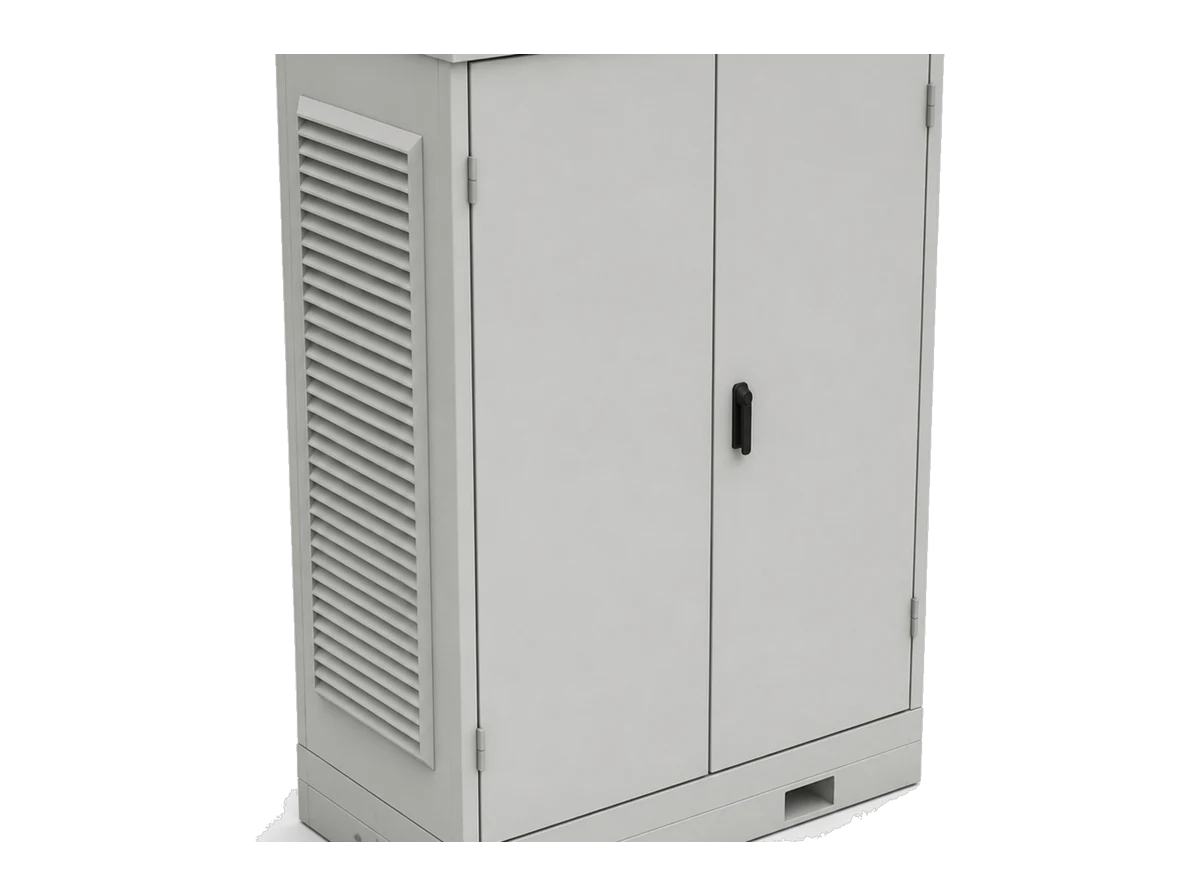
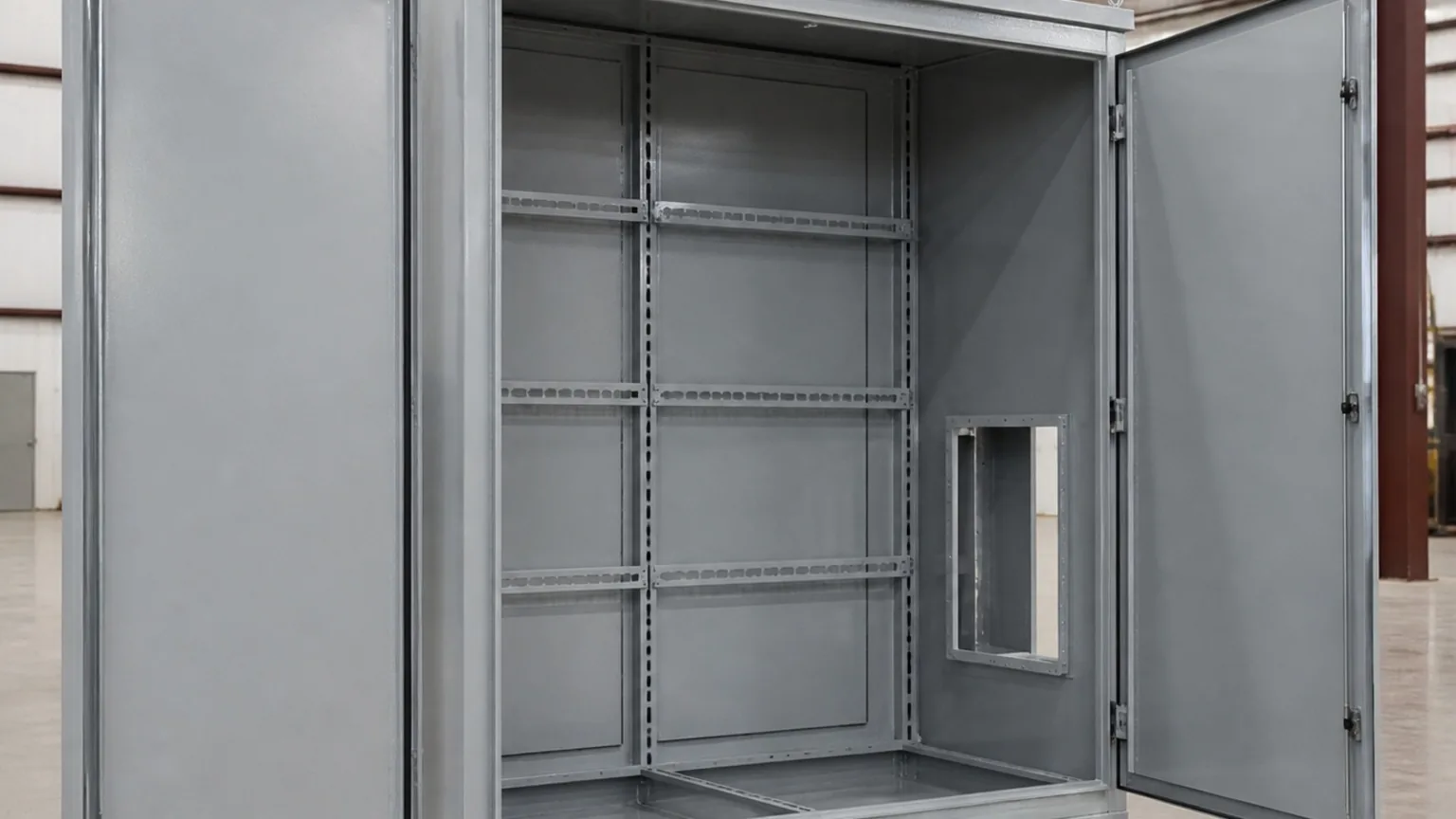
A central inverter rejects a few percent of its rating as heat — tens of kilowatts on a utility-scale unit — and the enclosure is the duct that carries it away. The OEM’s thermal design sets the intake and exhaust free areas, the filter class and area, the fan positions and the path across the heat sinks; the fabricator produces those openings, the filter frames, the fan mounting and the internal baffles that keep intake and exhaust separated. Weather hoods over the intake must not reduce free area below the design. Some designs use closed-loop liquid or air-to-air cooling with a sealed cabinet, which changes the enclosure to a NEMA 4 box with a heat exchanger on a cutout. FabTek builds both on the BESS enclosure and switchgear enclosure lines.
Enclosure type and environment
Solar and storage sites are dusty, hot and often remote, so NEMA 3R with filtered ventilation is the default for ventilated designs; coastal and agricultural sites with corrosive or washdown exposure push the sealed portions to NEMA 4 or 4X. The ratings are explained in NEMA 3R vs. 4 vs. 4X. Sun load matters: a south-facing steel cabinet in a desert adds solar gain to the thermal budget, so many designs specify a sunshield or a double roof with an air gap, which the fabricator builds as standoff panels.
DC and AC entries and busbar landings
- DC entries — bottom gland plates or conduit entry plates sized to the string or combiner cable schedule, with a separate DC compartment where the design requires it.
- AC entries — bus or cable connection to the inverter output, usually through a side or bottom opening to the transformer or AC switchgear on the skid.
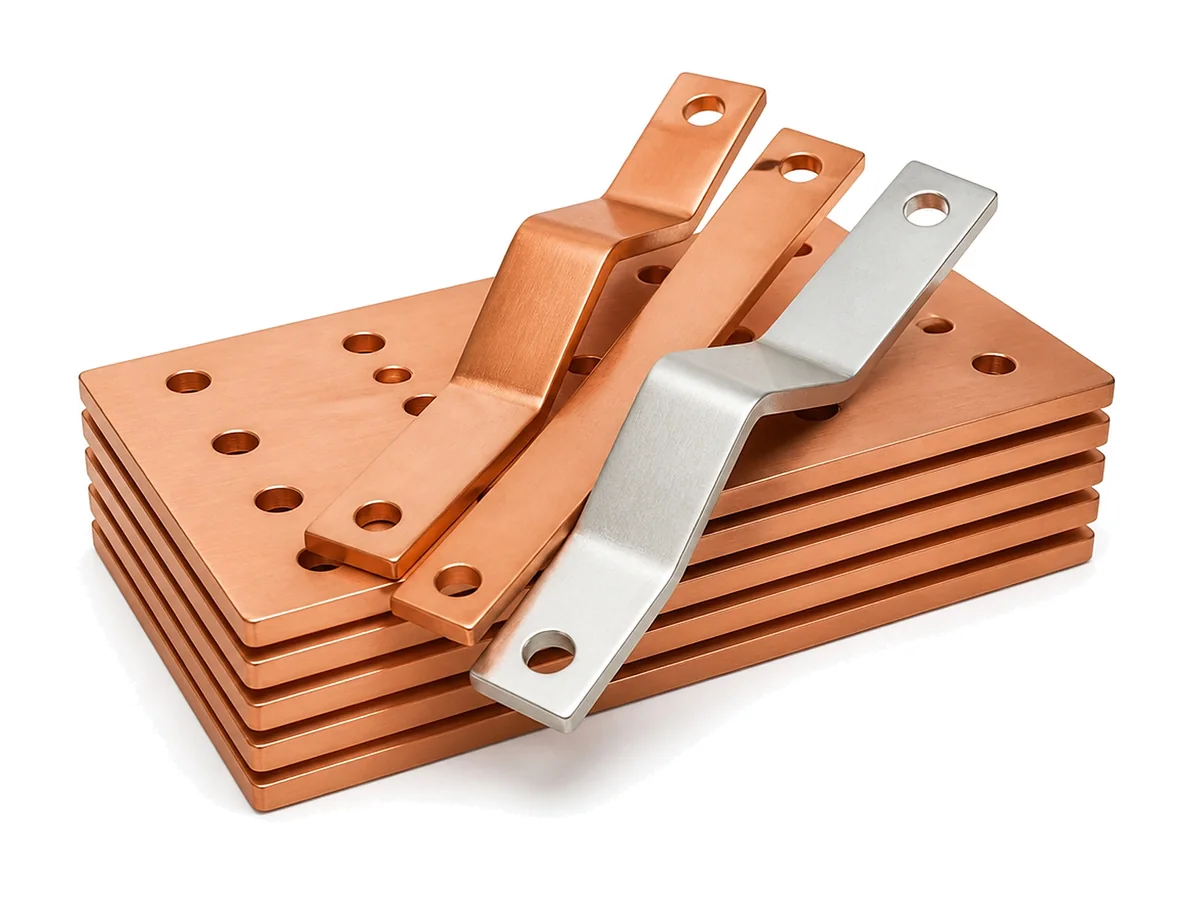
- Busbar supports — insulator standoff mounting and bus support brackets to the OEM’s bus layout; FabTek also fabricates the bus bar itself.
- Grounding — ground bus and pads bonded to the structure, with the door bonded.
- Auxiliary — compartment or sub-panel for auxiliary power, controls and communications.
Skid integration and the power station
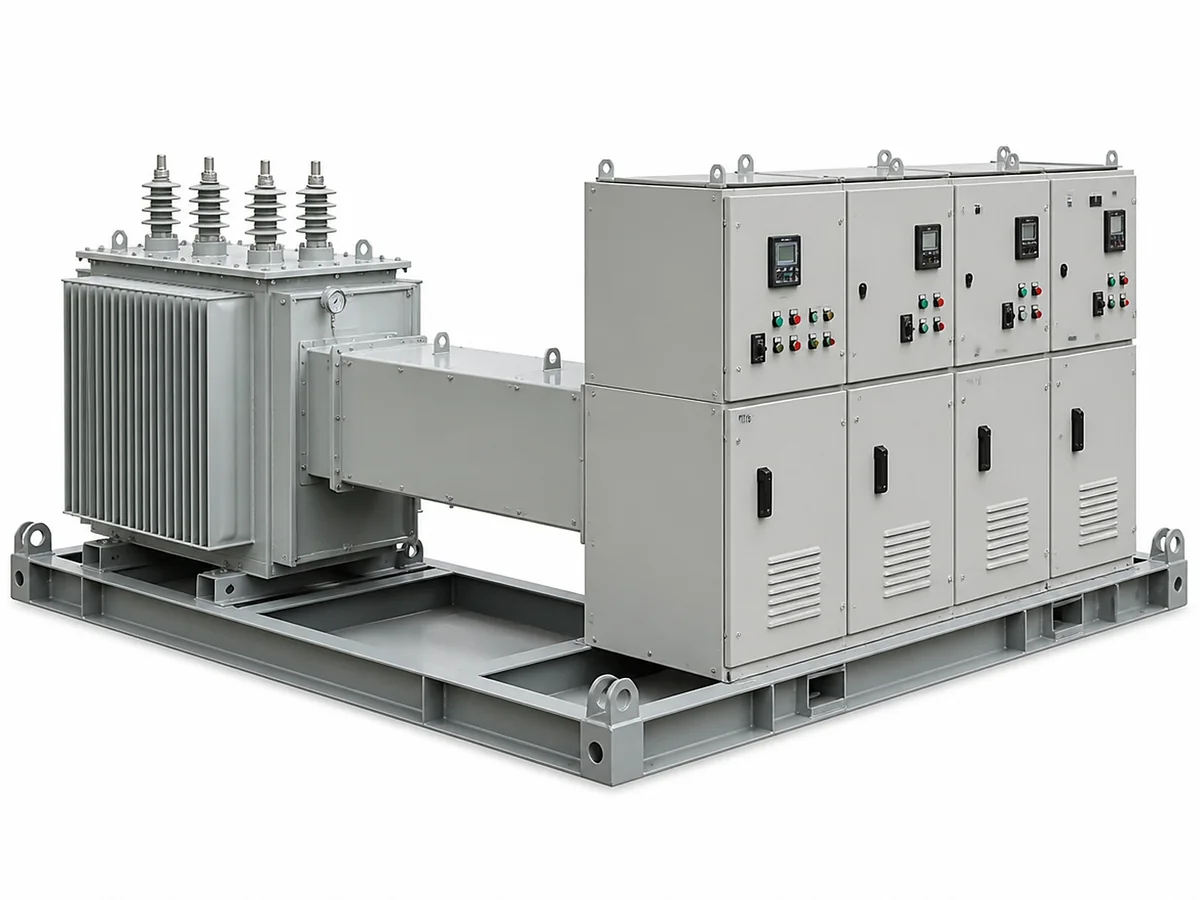
At utility scale the inverter rarely stands alone: it sits on a skid with a step-up transformer and medium-voltage switchgear as a power conversion station, lifted and set as one piece. The fabricator then builds the skid base with the transformer pad, the inverter enclosure mounting, the switchgear section, cable trays between them, and the lifting provisions, to the integrator’s general arrangement. Power skids and equipment skids and platforms describe the skid work; the switchgear section follows the outdoor switchgear requirements.
Access and maintenance
Field technicians change filters, inspect fans and work on the DC and AC sides for twenty years. Specify filter access without opening the electronics compartment, fan access from outside or through a dedicated door, door stops rated for wind, lockable three-point latches, and compartment barriers so the AC side can be opened with the DC side closed. Interior lighting and a receptacle are common on larger units. Hardware and gasketing covers the door side.
What the OEM puts on the print
Gauge and material per panel, the intake and exhaust free areas and hood geometry, filter frame and fan mounting, baffle positions, compartment layout, entry plates and the cable schedule, bus support positions, heat exchanger or air conditioner templates for sealed designs, sunshield details, finish and color, and the skid interface. With that package the fabricator can quote a family and build a first article; the RFQ guide covers the rest.
An inverter enclosure is a duct that happens to have doors. Get the free area and the hoods right and everything else is sheet metal.
FabTek Industries fabricates PCS and inverter enclosures, DC and AC compartments, sunshields and the power conversion skids they sit on — to OEM and integrator prints, with filtered intakes, fan and heat-exchanger provisions, bus supports and entries, powder-coated in-house to an IEEE 2000-hour salt-spray rating — under an ISO 9001:2015 quality system with AWS-certified welding, from four production sites in Hazlehurst, Mississippi. See BESS enclosures, renewables and energy storage, or send us a print.
Working on something like this? Send a print or a scope — pricing and lead time within one business day, from four Mississippi plants.
Frequently asked questions
What NEMA rating do inverter enclosures use?
Ventilated outdoor designs are NEMA 3R with hooded, filtered intakes and exhausts. Sealed designs with closed-loop cooling, and installations at coastal, agricultural or washdown sites, use NEMA 4 or 4X for the sealed compartments.
What does the fabricator build on a PCS enclosure?
The structure and panels, intake and exhaust openings with hoods, filter frames and fan mounting, internal baffles, compartment barriers, DC and AC entry plates, bus support brackets, grounding, sunshields, doors and hardware, and the finish — all to the OEM’s thermal and electrical design.
What is a power conversion skid?
A welded skid that carries the inverter enclosure, a step-up transformer and medium-voltage switchgear as one liftable unit, with cable tray between them and lifting provisions, so the station is set and connected at the site in a day.
Why do inverter enclosures have sunshields?
Solar gain on a steel cabinet in full sun adds to the heat the cooling system must reject. A sunshield or double roof with an air gap reduces that load and keeps the electronics within their temperature rating.