A unit substation packages a primary switch, a transformer and secondary switchgear into one close-coupled lineup, so a plant, campus, hospital or commercial building gets its medium-voltage service stepped down and distributed in one footprint. The enclosures that make it one lineup — the sections, the transition throats, the flanges and the weatherproof skins — are sheet-metal and structural products that OEMs buy from contract fabricators. This guide covers what they are and how they are sourced.
OEM or EPC sourcing unit substation sections or transition enclosures? Call 601.892.5017 or email collin.t@fabtekindustries.com — send a print and a quantity and we’ll quote it.
- A unit substation is three enclosures made to act as one: primary section, transformer enclosure, secondary section, joined by throats and flanges.
- The throat and flange dimensions are the critical interface: they have to match the transformer and both switchgear sections exactly.
- Outdoor units are NEMA 3R with weather hoods, drip shields and a continuous roof line across sections.
- OEMs buy the sections as families by rating and the transitions to project-specific prints.
Anatomy of a unit substation
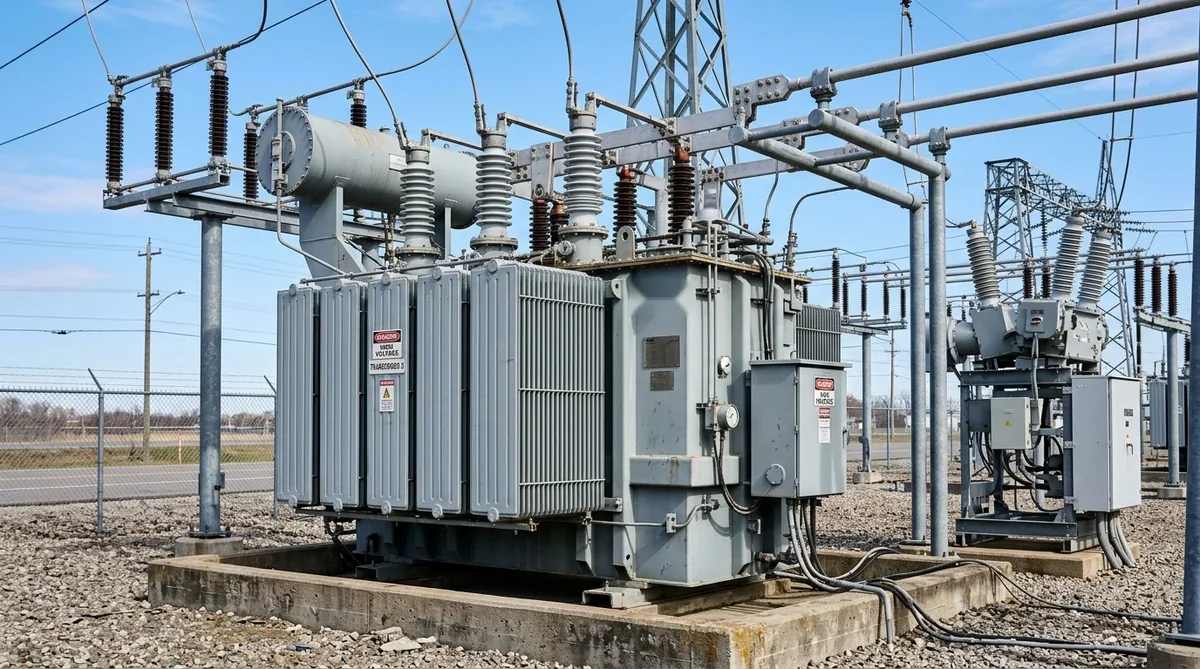
The primary section houses a load-interrupter switch or a medium-voltage breaker with fuses; it is a metal-enclosed switchgear section with a transition on one side. The transformer in the middle is either a liquid-filled unit in a tank with a throat flange on each side — see transformer tanks — or a dry-type unit in a ventilated enclosure with cable or bus compartments at each end, covered in dry-type transformer enclosures. The secondary section is low-voltage switchgear or a switchboard with an incoming bus compartment that bolts to the transformer’s secondary throat. FabTek fabricates the switchgear sections, the transformer enclosures and tanks, and the throats and transition pieces on its switchgear enclosure and transformer cabinet lines.
Throats, flanges and the critical interface
The close-coupling is a bolted, gasketed connection between the transformer’s throat flange and the switchgear section’s transition compartment, with the bus passing through. The flange bolt pattern, opening size, height above the base and gasket surface have to match on both sides, across three products that may come from three plants. The OEM controls this with an interface drawing, and the fabricator holds the flange dimensions to it with fixtures and a first-article check on the pattern. Where the transformer and switchgear come from different OEMs — common on EPC projects — the transition piece is often a project-specific fabrication that adapts one flange to the other.
The sections
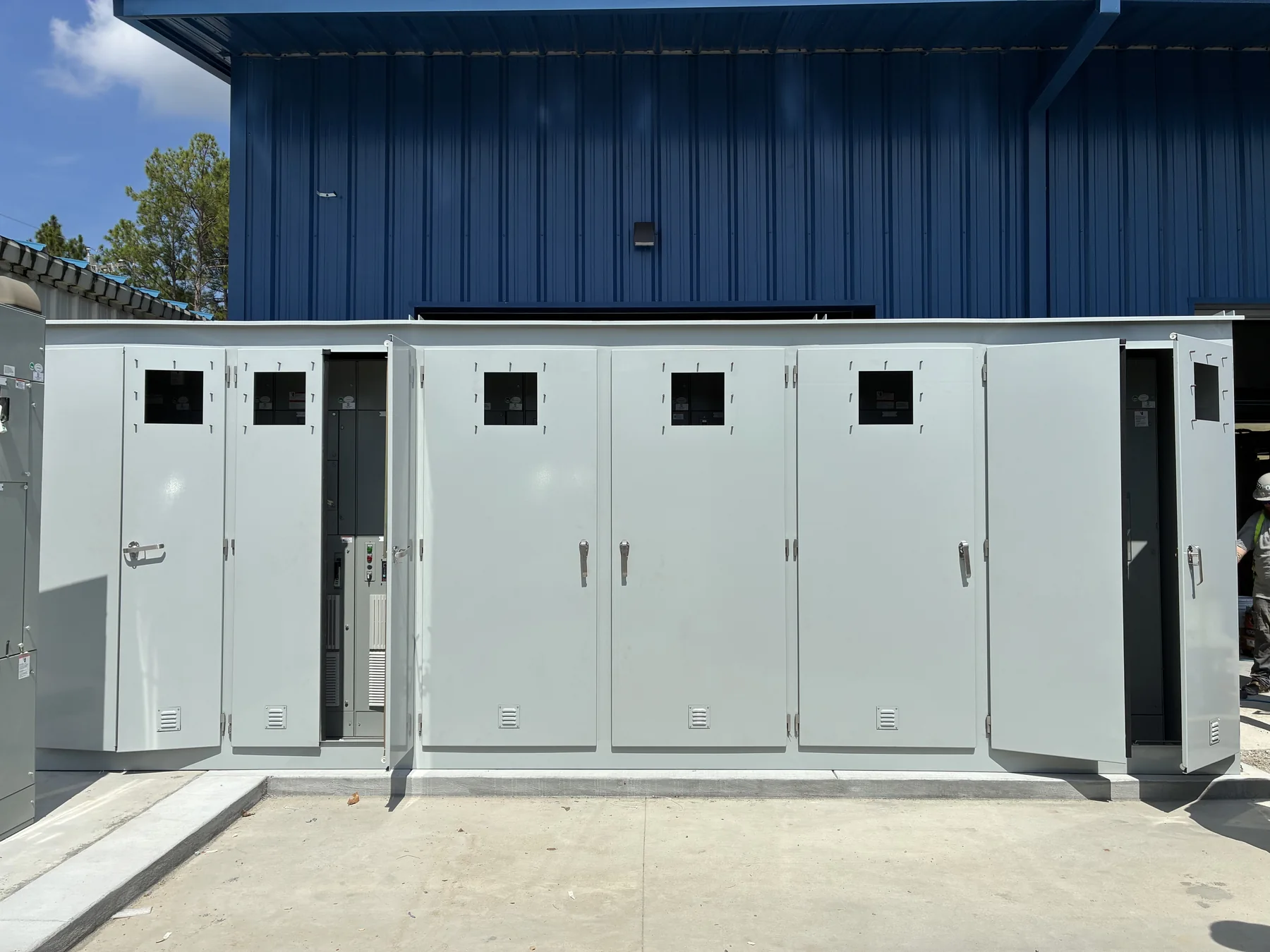
- Primary switch section — welded or formed frame, viewing window for the switch position, fuse access door with interlock, transition compartment with throat flange.
- Transformer enclosure — for dry-type: ventilated housing with terminal compartments at each end carrying the throat flanges; for liquid-filled: tank with throat flanges and, outdoors, weatherproof covers over the flange connections.
- Secondary section — LV switchgear or switchboard section with an incoming bus compartment and the main breaker cell, built as described in switchboard sheet-metal kits.
- Shipping splits — flanged joints with removable covers where the lineup ships in pieces, and lifting provisions on each piece.
Outdoor construction
Outdoor unit substations are NEMA 3R across the whole lineup: weather hoods over the transformer louvers, drip shields over every door, a continuous or stepped roof line with sealed joints between sections, drained bases, and gasketed throat covers so the close-coupling does not become a water path. Many are specified as walk-in secondary sections, which brings in the walk-in enclosure requirements. Finish is ANSI 61 gray powder coat as standard, with the salt-spray requirement the end user specifies; the transformer and switchgear sections should be painted from the same powder lot so the lineup matches.
How the enclosures are sourced
Switchgear OEMs buy primary and secondary section sheet metal in families by rating and size, as kits or assembled, on a forecast — the same program structure as any switchgear enclosure. Transformer OEMs buy tanks and dry-type enclosures with throat flanges to their standard. Transition pieces, outdoor roof systems and project-specific adapters are bought per project by the OEM or the EPC. A fabricator that builds all three — section frames, transformer enclosures and transitions — can hold the interface across them, which is the main argument for sourcing a unit substation’s metal from one plant. The RFQ checklist covers what to send.
Three enclosures from three plants meet at two flanges. The flange drawing is the product.
FabTek Industries fabricates unit substation enclosures — primary and secondary switchgear sections, ventilated dry-type transformer enclosures, transformer tanks with throat flanges, transition pieces and outdoor roof systems — to OEM and EPC prints, fixture-built with flange patterns verified at first article and powder-coated in-house, under an ISO 9001:2015 quality system with AWS-certified welding, from four production sites in Hazlehurst, Mississippi. See how we work with electrical OEMs, or send us an interface drawing.
Working on something like this? Send a print or a scope — pricing and lead time within one business day, from four Mississippi plants.
Frequently asked questions
What is a unit substation?
A close-coupled lineup of a primary medium-voltage switch or breaker section, a step-down transformer and a secondary low-voltage switchgear or switchboard section, connected through bolted throat flanges so the installation needs no cable between them.
What is a transformer throat?
The flanged opening on the side of a transformer enclosure or tank through which the primary or secondary bus passes into the adjacent switchgear section. Its bolt pattern, opening and height are the critical interface between the transformer and the switchgear.
What does a contract fabricator supply for a unit substation?
The primary and secondary switchgear section sheet metal or frames, the dry-type transformer enclosure or liquid-filled tank with throat flanges, transition pieces that adapt one flange to another, outdoor roof and weather-hood systems, and shipping-split hardware, all to the OEM’s or EPC’s print.
How are outdoor unit substations weatherproofed?
As NEMA 3R across the lineup: weather hoods over transformer louvers, drip shields over doors, a continuous or stepped roof with sealed section joints, drained bases and gasketed covers over the throat connections.