Electrical contractors and data center engineers ask how a non-segregated bus duct’s ampere rating relates to the copper inside and the housing around it — and what a housing fabricator needs to know to build one. The rating is the bus OEM’s tested value, but the relationships are worth understanding when you specify the run.
Need this built to your spec? Call 601.892.5017 or email collin.t@fabtekindustries.com — send the drawing and we’ll quote it.
- Non-seg bus duct ampacity is set by conductor cross-section and material, bars per phase, allowable temperature rise, phase spacing and housing ventilation — verified by the OEM’s heat-run test.
- Typical data center feeder ratings are 1,200 to 6,000 A; as a rough guide a single 1/4″ × 4″ copper bar carries on the order of 1,000 A in a ventilated enclosure at 65 °C rise.
- As ratings climb, the housing grows: more bars, wider spacing, more ventilation, non-magnetic (aluminum) housings to limit eddy heating, and heavier supports.
- What Gauge Steel for a NEMA 3R Walk-In Enclosure?
- ASTM A123 vs. A153: Which Galvanizing Spec Applies?
- Minimum Bend Radius for 5052 Aluminum Sheet
- Powder Coat Film Thickness for Outdoor Electrical Enclosures
- IEEE 2000-Hour Salt Spray: What the Rating Actually Means
- AWS D1.1 vs. D1.3 vs. D1.6: Which Welding Code Applies?
- Bolt-Hole Tolerances for Substation Steel Structures
- Non-Segregated Bus Duct: Ampacity, Bar Size and Housing (you are here)
- Material Certs and Heat Numbers: What Traceability Means
- How to Spec Anchor-Bolt Patterns for Equipment Stands
The answer
A non-segregated phase bus duct’s continuous current rating is the current its conductors can carry without exceeding the allowable temperature rise (commonly 65 °C rise over a 40 °C ambient for bare bus, 55 °C for some insulated designs) in its housing, as demonstrated by the manufacturer’s heat-run test. The variables are the conductor’s material (copper carries roughly 1.5× the current of the same aluminum section), cross-section and number of bars per phase, bar spacing (bars need gaps for convection), phase spacing, and the housing’s ventilation and material. The housing does not carry current, but it determines how heat leaves and whether stray magnetic fields heat it. FabTek fabricates non-segregated, segregated and isolated-phase bus duct housings to bus OEMs’ tested designs; the electrical rating is always theirs.
What sets the rating
- Conductor cross-section. More copper, more current — but not linearly. A second bar per phase adds less than double the ampacity because the bars shade each other and share the enclosure’s cooling.
- Material. Copper (ETP, C11000) is the standard for high ratings; aluminum bus (6101-T61 and similar) is lighter and cheaper per ampere but needs roughly 50–60% more cross-section and larger terminations.
- Temperature rise. The permitted rise over ambient, set by insulation, joint plating and the connected equipment; a lower rise means a lower rating for the same bars.
- Bar and phase spacing. Spacing governs convective cooling and dielectric clearance; tighter spacing lowers the rating.
- Housing ventilation. Ventilated (louvered, screened) indoor housings run cooler than sealed outdoor ones; outdoor NEMA 3R runs of the same bar are often derated.
- Housing material. Steel housings around high-current bus develop eddy-current heating; aluminum or non-magnetic stainless housings avoid it, which is why housings above roughly 3,000–4,000 A are commonly aluminum.
- Short-circuit rating is separate — set by bar bracing, insulator strength and spacing to withstand fault forces.
Indicative copper bar ampacities (ventilated non-seg, 65 °C rise)
| Conductor per phase | Approximate continuous rating |
|---|---|
| 1 × 1/4″ × 3″ Cu | ~800 A |
| 1 × 1/4″ × 4″ Cu | ~1,000–1,200 A |
| 2 × 1/4″ × 4″ Cu | ~1,800–2,000 A |
| 3 × 1/4″ × 4″ Cu | ~2,500–2,800 A |
| 4 × 1/4″ × 4″ Cu | ~3,200–3,500 A |
| Larger sections / 6″ bars, multiple per phase | 4,000–6,000 A and above |
Order-of-magnitude values for design orientation only. Ratings vary with spacing, ventilation, joint design and ambient; the bus OEM’s tested rating governs.
What changes in the housing as ratings climb
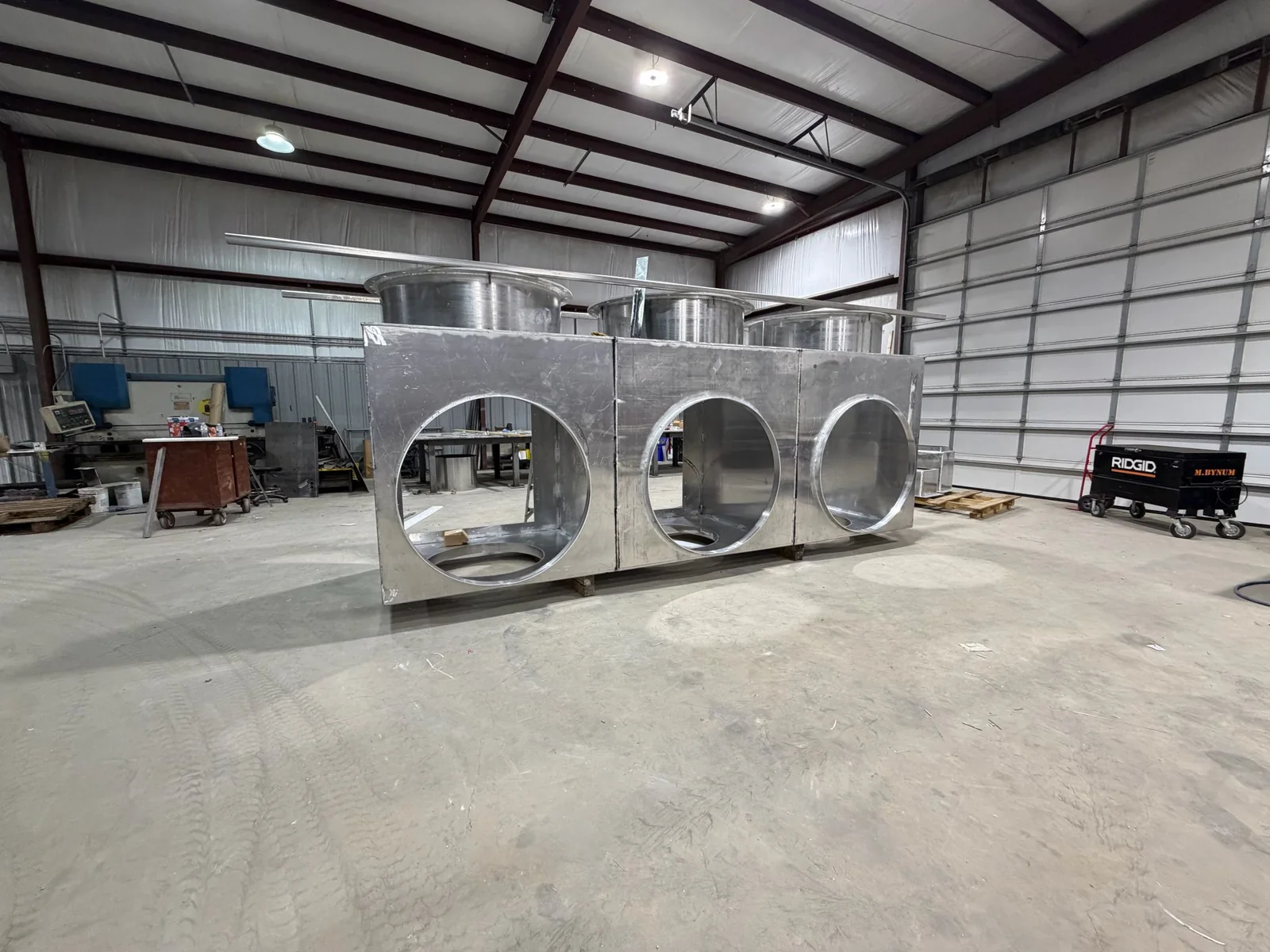
At 1,200 A a non-seg housing is a modest steel or aluminum box with bars on a few insulators. At 4,000–6,000 A it is a large, often aluminum, housing with multiple bars per phase, wider phase spacing, generous ventilation, more and heavier insulator supports to resist short-circuit forces, expansion sections every so often to absorb thermal growth, and reinforced joints and tap boxes. Fabrication accuracy requirements rise with size, because long, heavy sections still have to align at every joint; we covered that in Bus Duct & Busway for Data Centers. Housing gauge is typically 12- to 11-gauge steel or 0.125″ aluminum, per the OEM’s design.
IEEE C37.23
Metal-enclosed bus — non-segregated, segregated and isolated-phase — is standardized in IEEE C37.23, Standard for Metal-Enclosed Bus, which sets ratings (continuous current, voltage, short-circuit), temperature-rise limits, dielectric and heat-run tests, and construction requirements. Buyers should specify bus “per IEEE C37.23” with the continuous and short-circuit ratings required and the enclosure type (indoor ventilated, outdoor NEMA 3R). Related rules for busway (the plug-in overhead type) are in UL 857 and the NEC.
What the housing fabricator needs
To build housings, tap boxes and transitions to an OEM’s bus design, the fabricator needs the routing drawings with every section length, elbow, offset, penetration and expansion joint; the bar stack geometry (number, size and spacing of bars) so housing cross-section and insulator positions are right; the joint and flange details with bolt patterns, so sections mate to the OEM’s connectors and to switchgear and transformer throats; ventilation and enclosure-rating requirements; housing material and gauge; and the support and hanger scheme. Ampacity itself is not a fabrication input — it is already expressed in the bar geometry and the ventilation the OEM specifies.
How FabTek handles it: We fabricate bus duct housings, tap boxes and transitions to the bus OEM’s drawings on a dedicated datacenter bus duct line — aluminum or steel, laser-cut and CNC-formed, fixture-welded for alignment across long runs — and leave the electrical rating to the OEM’s tested design. If your drawing calls for something different, send it — we build to print. Request a quote.
Frequently asked questions
How is bus duct ampacity determined?
By the conductor material and cross-section, number of bars per phase, allowable temperature rise (commonly 65 °C over 40 °C ambient), bar and phase spacing, and the housing's ventilation and material — verified by the manufacturer's heat-run test per IEEE C37.23. Copper carries roughly 1.5 times the current of the same aluminum section.
How many amps can a 1/4 by 4 inch copper bus bar carry?
On the order of 1,000 to 1,200 A continuous in a ventilated non-segregated enclosure at 65 °C rise, as a design orientation figure. Actual rating depends on spacing, ventilation, joints and ambient and is set by the bus manufacturer's tested design.
Why are high-current bus duct housings made of aluminum?
Steel housings around high-current bus develop eddy-current heating from the bus's magnetic field; aluminum and non-magnetic stainless housings avoid it. Above roughly 3,000 to 4,000 A, non-magnetic housings are common.