Not every switchgear OEM outsources whole sections. Many keep frame welding and assembly in-house and buy the parts that eat press-brake and paint capacity: doors, covers, barriers, panels, roofs and bases. These are flat, formed, finished parts with hardware, bought in families and shipped on racks. This guide covers how those programs work from the OEM’s side and what the fabricator needs to run them.
Electrical OEM looking to outsource doors, covers, barriers or panels? Call 601.892.5017 or email collin.t@fabtekindustries.com — send a print and a quantity and we’ll quote it.
- OEMs outsource the parts that consume brake and paint hours — doors, covers, barriers, panels — and keep assembly in-house.
- Doors are the hardest part: flatness, hinge alignment, window and device cutouts, and finish are all visible to the end customer.
- Finish matching between suppliers and between the fabricator and the OEM’s own paint line has to be verified, not assumed.
- Parts ship kitted and labeled to the OEM’s BOM, on returnable racks where volumes justify them.
The part classes OEMs outsource
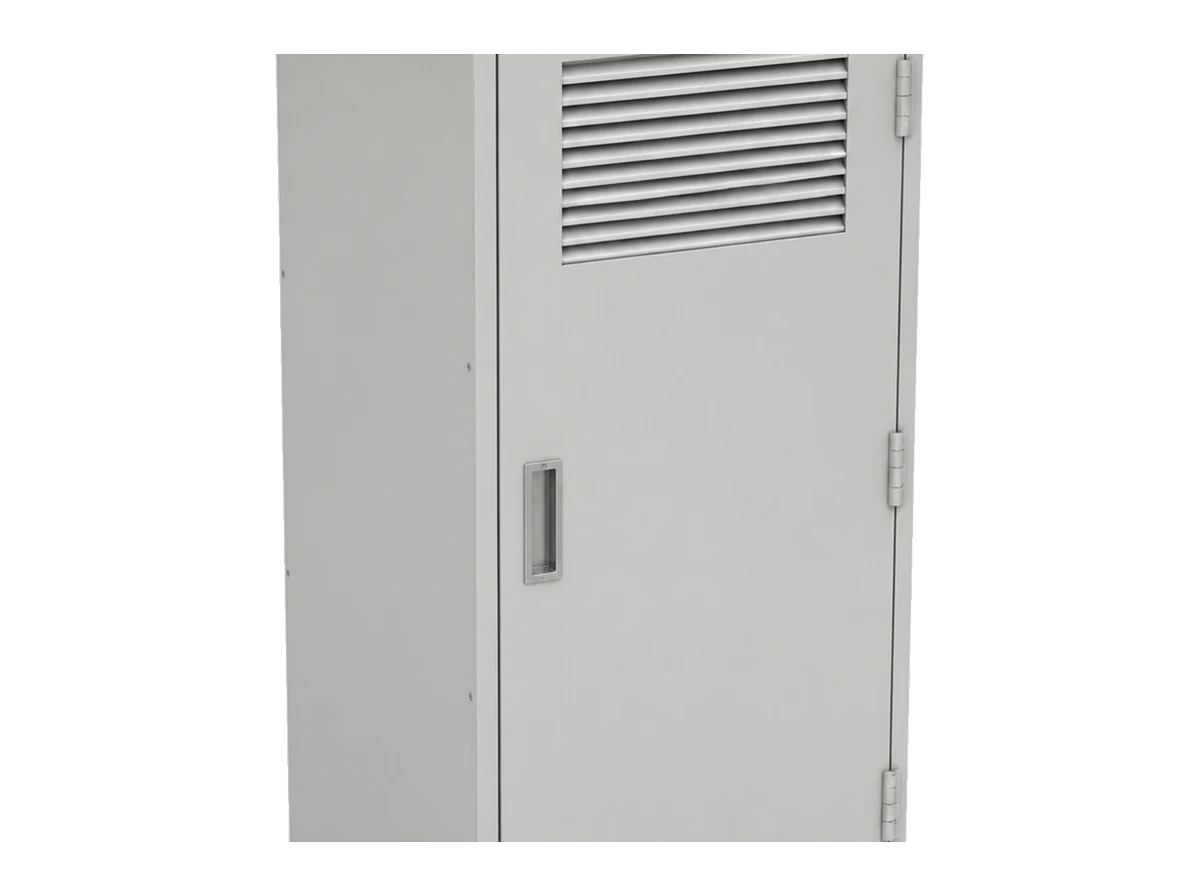
| Doors | Unit, instrument and compartment doors with hinges, latches, windows and device cutouts; stiffened with formed flanges or welded hat sections; the most visible part on the lineup |
|---|---|
| Covers and panels | Side, rear, top and bottom covers; wireway covers; removable panels with captive hardware |
| Barriers | Grounded compartment barriers with bus, bushing and cable cutouts; formed flanges for bolting to the frame |
| Roofs and bases | Formed roof assemblies with drip edges; channel bases with anchor and lifting provisions |
| Brackets and small parts | Relay and device mounting plates, hinge plates, gland plates, shutter and interlock brackets |
FabTek supplies all five classes as components or as complete section kits — see switchgear panels.
Doors: where the detail lives
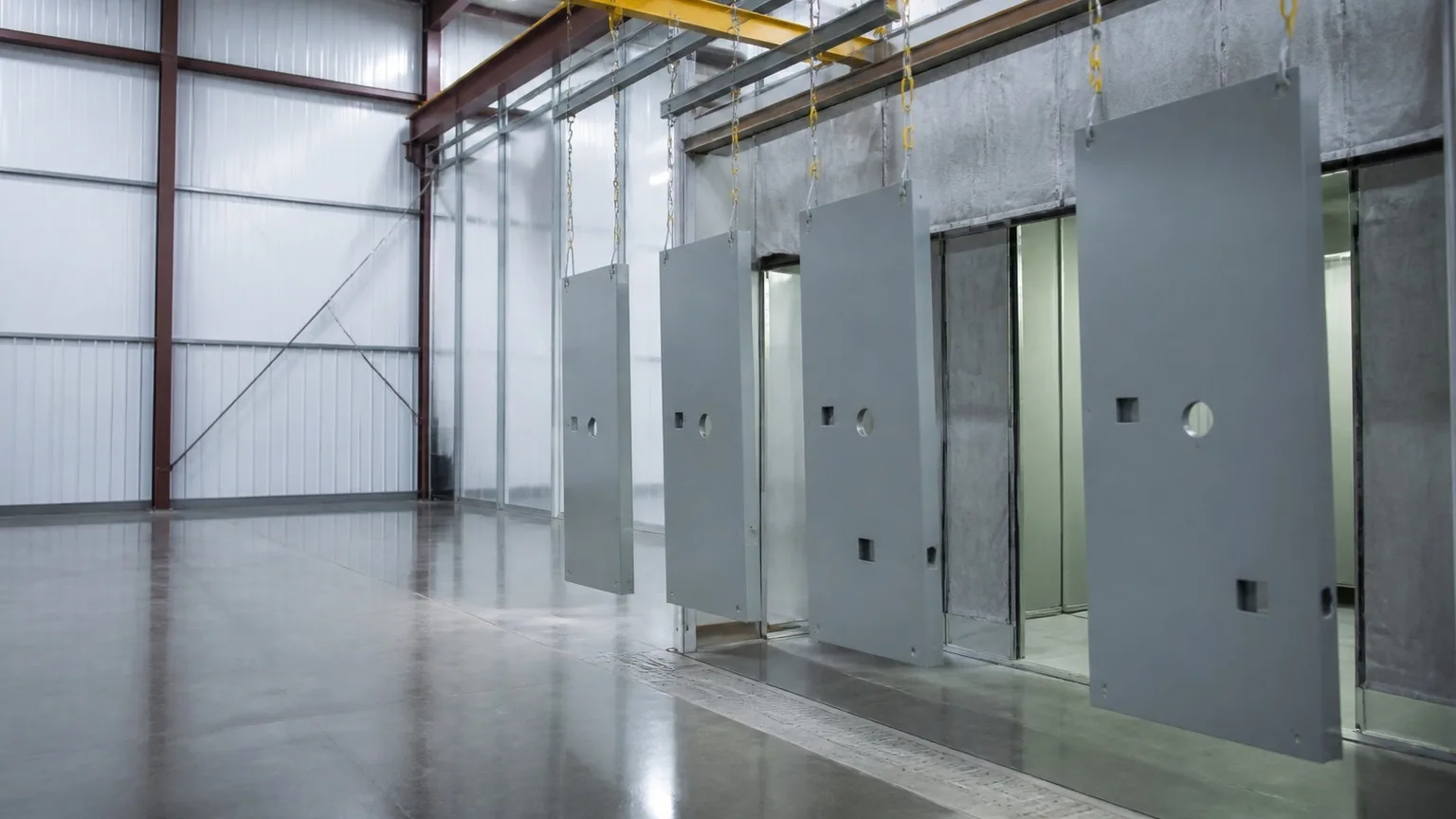
A door has to be flat enough to seal, stiff enough not to oil-can when a technician leans on it, and finished well enough to be the first thing the end customer sees. The fabrication sequence matters: cutouts for meters, relays, pilot devices and viewing windows are laser-cut in the flat; flanges are formed on the brake; stiffeners are welded or bonded and the door is checked flat; hinges and latches are installed on a fixture so the door hangs square in every section; then it is powder-coated with the hinge pins masked or the hardware installed after coating, as the OEM prefers. Ask the fabricator to show you a door hung on a frame, not just a door on a pallet. Gauge selection follows the spec sheet on enclosure gauge; door hardware is covered in latches, hinges and gasketing.
Cutouts and hardware
- Pre-cut vs. blank — decide by part family whether device cutouts are cut by the fabricator (fewer operations on the OEM’s line, more part numbers) or by the OEM (one blank, cut to order).
- Hardware installed — hinges, latches, handles, gaskets and captive screws installed by the fabricator to the OEM’s BOM, with the OEM’s part numbers.
- Windows — polycarbonate or glass viewing windows installed with gasket frames, or the opening supplied for OEM installation.
- Masking — ground pads, hinge pins, threaded inserts and bus-mounting surfaces masked before coating.
Finish matching
Doors from a contract fabricator sit next to frames painted on the OEM’s own line or by another supplier, so the color, gloss and texture have to match under the end customer’s lighting. The reliable method is a controlled powder — same manufacturer, same product code, ideally the same lot series — and a physical color match panel signed by the OEM, kept at both plants and checked with a spectrophotometer at each run. FabTek’s powder coat lines run OEM colors this way; our film-thickness and salt-spray practices are described in the film thickness post.
A door that is 0.02 inch out of flat is a quality issue. A door that is half a shade off is a sales issue. Both get the part sent back.
Kitting, labeling and inspection
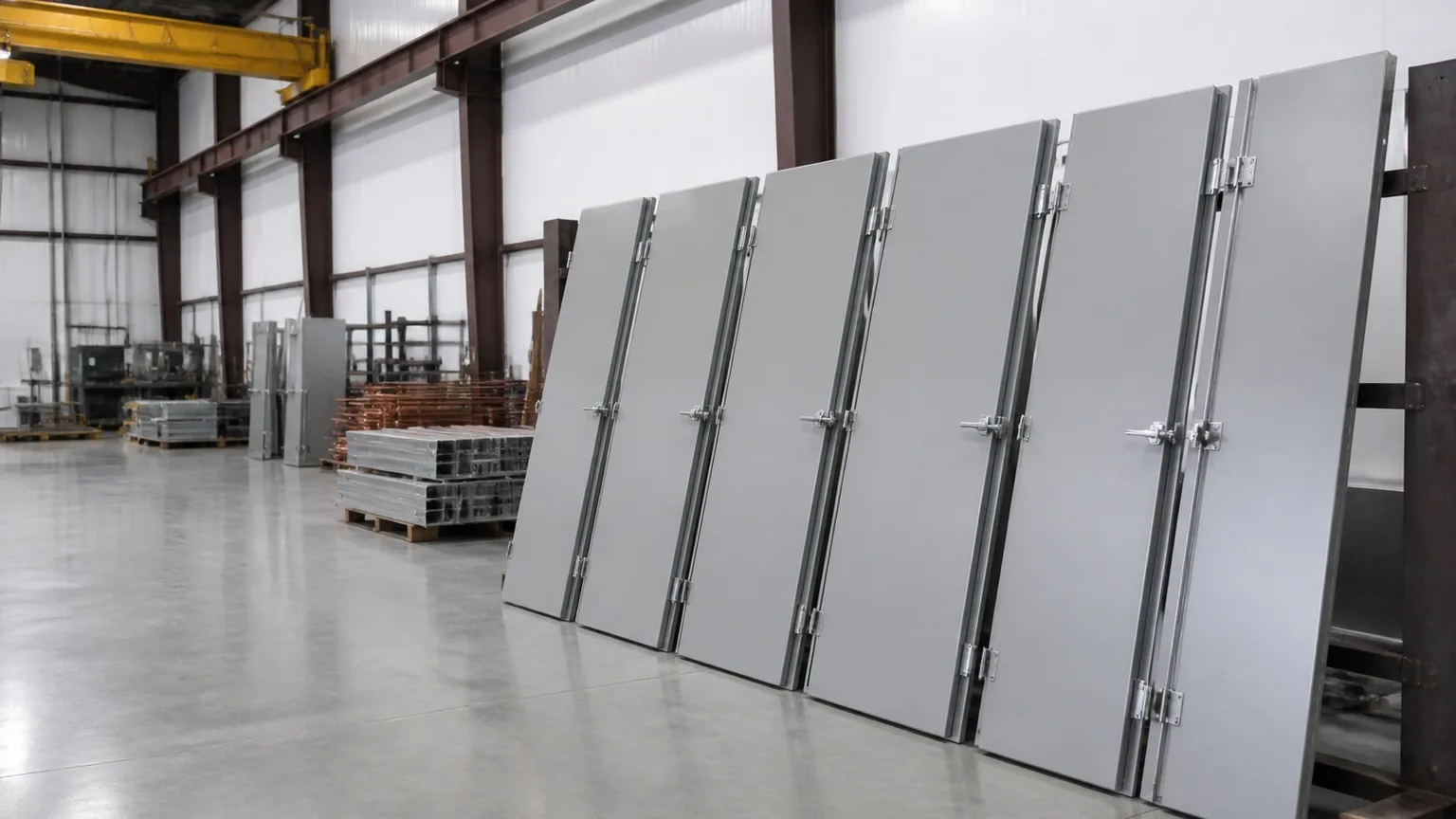
Parts ship labeled with the OEM’s part number, revision and order, bagged hardware per part or per kit, on returnable steel racks or crated pallets sized to the OEM’s dock. Inspection is a first-article report per new part number and a sampling plan per release, with results that travel with the shipment. For door families, the first article is usually hung on a frame at the OEM before the family is approved. The documentation package follows the quality system.
Becoming a qualified component source
OEMs qualify a component fabricator in stages: a sample set of the hardest parts, a first-article kit assembled on the line, a finish match, then a trial release at the expected cadence. The RFQ checklist covers what to send; MCC and switchboard kits covers how the full-kit version of the program runs.
FabTek Industries fabricates switchgear doors, covers, barriers, panels, roofs and bases to print for switchgear and electrical OEMs — laser-cut, CNC-formed, fixture-assembled with hardware installed and powder-coated in-house to a signed color match — under an ISO 9001:2015 quality system, from four production sites in Hazlehurst, Mississippi. See switchgear panels, how we work with electrical OEMs, or send us a part family.
Working on something like this? Send a print or a scope — pricing and lead time within one business day, from four Mississippi plants.
Frequently asked questions
What switchgear parts do OEMs typically outsource to a contract fabricator?
Doors, covers, panels, compartment barriers, roofs, bases and small brackets — the formed and finished parts that consume press-brake and paint capacity — while frame welding and assembly often stay in-house.
How is color matched between a contract fabricator and the OEM’s own paint line?
With a controlled powder product and lot series, a physical color match panel approved by the OEM and kept at both plants, and spectrophotometer checks at each run. Visual approval under the end customer’s lighting is the final test.
Should device cutouts be cut by the fabricator or the OEM?
It depends on the part family. Pre-cut doors reduce operations on the OEM’s line but multiply part numbers; blank doors keep one part number and are cut to order. Many OEMs pre-cut high-volume standard doors and blank the rest.
How does an OEM qualify a new switchgear sheet-metal supplier?
A sample set of the hardest parts, a first-article kit assembled on the OEM’s line, a finish match against existing parts, and a trial release at the expected cadence before production volume is awarded.