A power skid turns a week of rigging and interconnection into one lift. The buying decision is about what arrives on the skid and who is responsible for the joints between the pieces.
Sourcing power skids for a data center project? Call 601.892.5017 or email collin.t@fabtekindustries.com — send the drawings and the spec and we quote to print.
- Specify the skid as an assembly with a bill of materials, not as a base: equipment, bus, enclosures, mounting, weather protection.
- The fabricator needs equipment weights, centers of gravity and the rigging plan to design a base that lifts level.
- Compare bids on what is installed and tested before shipment; a bare base is not the same product.
- Repeat skids across halls should be released against retained drawings, not re-quoted.
What you are buying
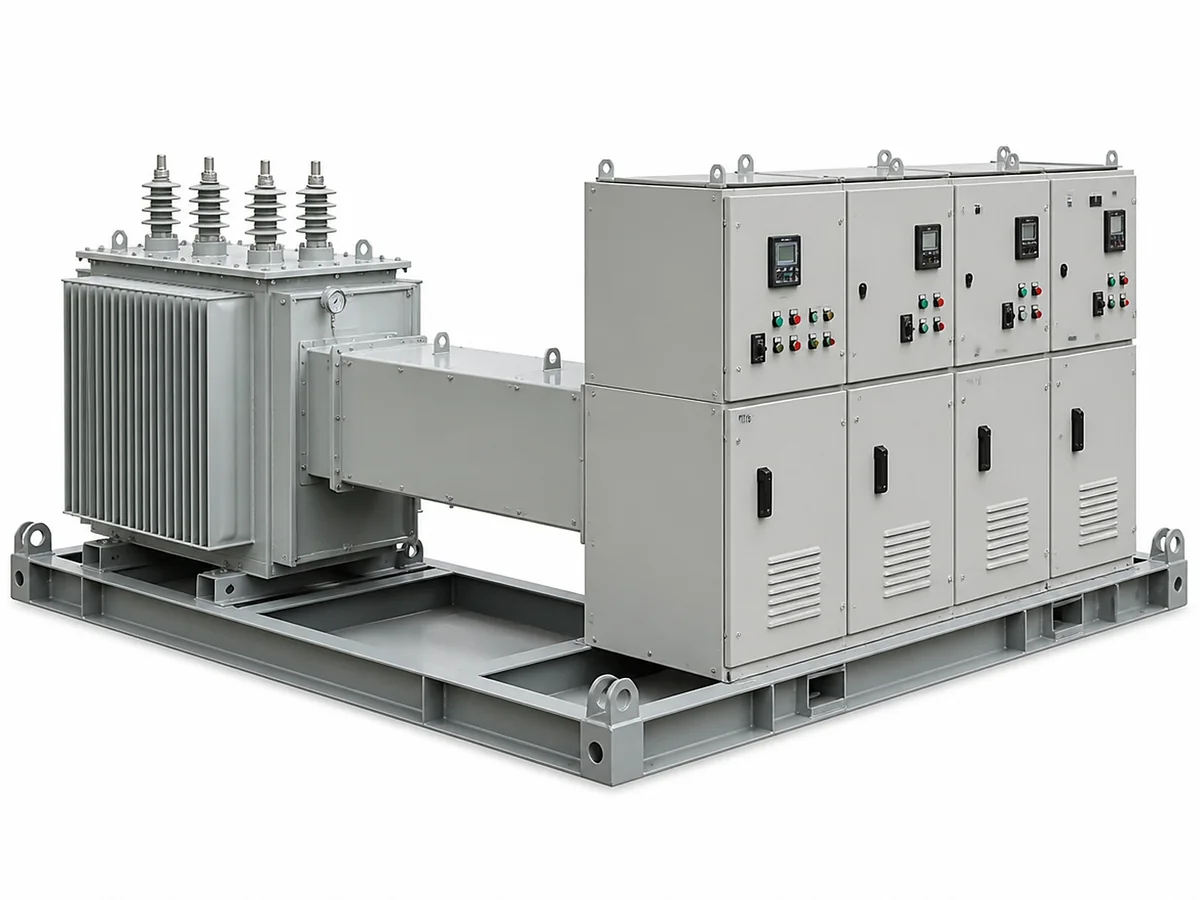
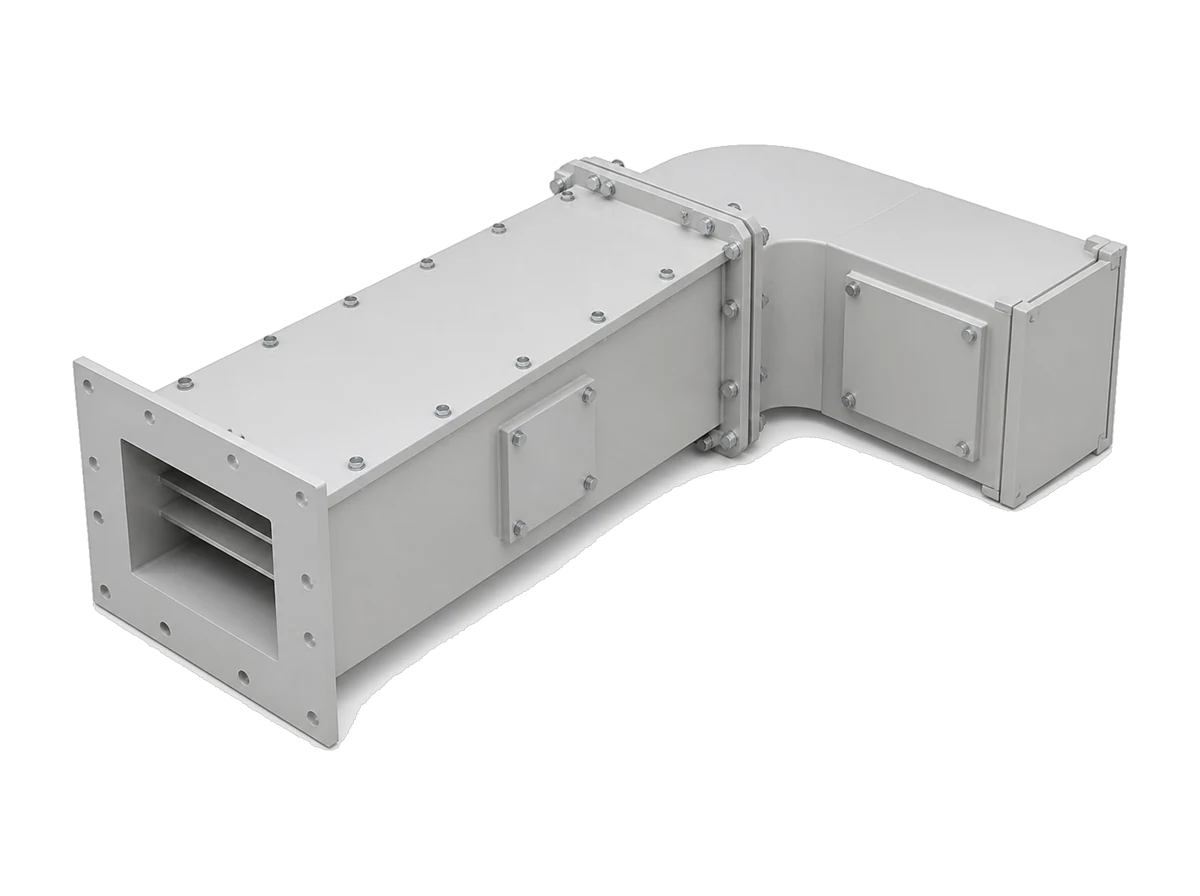
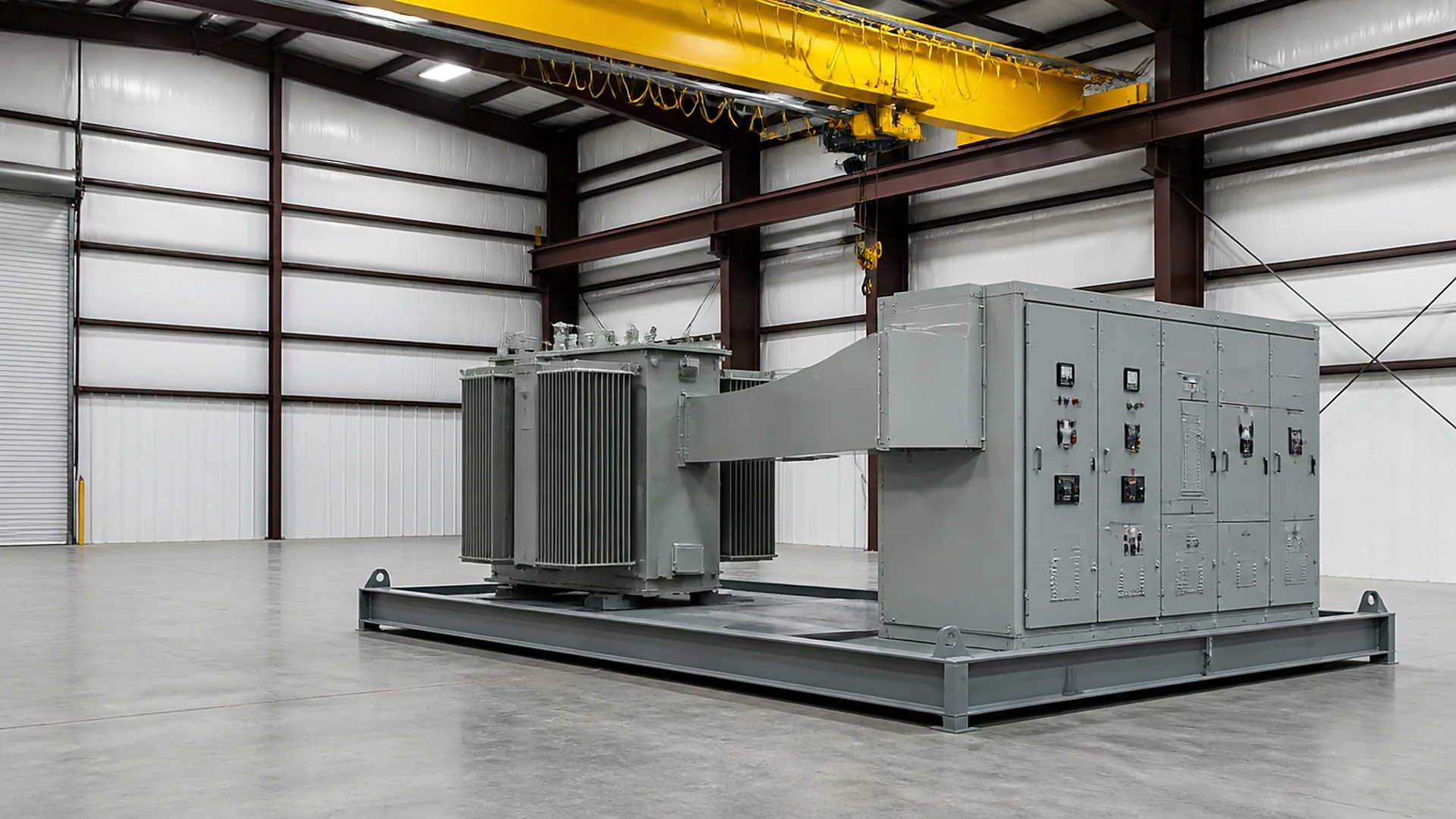
A power skid is a welded structural base carrying a transformer, its low-voltage switchgear or switchboard, the enclosed bus between them, and the cable management, grounding and weather protection around them. The electrical design is the engineer's and the equipment is the OEM's. The base, the enclosures, the bus housings, the supports, the weather protection and the assembly work are fabrication. Variants run from an open skid with equipment anchored to it, through weather-protected skids with roofs and screens, to fully enclosed units that are effectively small E-Rooms.
Where it sits in the project
Power skids go in the electrical yard or power block, between the medium-voltage feed and the hall. They are bought by the developer, EPC or electrical contractor after the transformer and switchgear are ordered, and they are released hall by hall. Because the skid carries owner-furnished equipment, the purchase order has to say who receives, stores and installs that equipment and who is liable for it while it is on the fabricator's floor.
What to put in the RFQ
| Bill of materials | Every item on the skid: transformer, gear, bus, panels, tray, weather protection; owner-furnished vs. fabricator-procured |
|---|---|
| Equipment data | Certified weights, dimensions, centers of gravity, anchor patterns and terminal locations for each item |
| Base design | Design loads, lifting method, forklift pockets, leveling, anchor provisions, oil containment if required |
| Enclosures and bus | NEMA ratings, enclosed bus or busway type, termination details to each piece of equipment |
| Finish | Powder coat color and system, or galvanized base; touch-up provisions |
| Testing | Fit-up check, torque records, bus insulation resistance, point-to-point where wiring is included |
| Repeat release | Number of identical skids, phasing, and whether drawings are to be retained for later halls |
How to qualify a fabricator
- Structural and sheet-metal in one plant. The base is structural; the enclosures and bus housings are sheet metal. Two shops means two sets of tolerances meeting on the pad.
- Equipment handling. Ask how owner-furnished transformers and gear are received, stored and protected.
- Rigging engineering. Lifting points should be designed to the equipment's center of gravity and the crane plan, with an anchor template supplied.
- Series production. Fixtured bases and retained drawings are what make skid forty match skid one.
Lead time, sequencing and delivery
Skids are long-lead only because the equipment on them is. Release the base and enclosures as soon as the OEM's certified drawings are available; the base is fabricated while the transformer is in production and the skid is assembled the week the equipment lands. Ship with the anchor template ahead of the skid so the pad is drilled before the truck arrives.
Common mistakes
- Quoting a base and expecting a skid. Bids that exclude enclosures, bus and assembly look cheaper and are not.
- No center-of-gravity data. A skid designed to footprints alone can lift crooked.
- Equipment liability left unwritten. Who insures the transformer on the fabricator's floor should be in the PO.
- Re-quoting identical skids per hall. Release against retained drawings and save the engineering.
How FabTek supplies it
FabTek fabricates power skids at four plants in Hazlehurst, Mississippi: welded bases, switchgear enclosures, enclosed bus assemblies and weather protection built in-house, with owner-furnished equipment set and landed where the project specifies it. The same plants build the data center steel and E-Rooms that go with them.
Frequently asked questions
What is a power skid in a data center?
A transformer, its switchgear and the bus between them mounted on one welded structural base, assembled and tested off site and set on the pad as a single piece of equipment.
Does the fabricator supply the transformer and switchgear?
Usually not. The equipment is owner-furnished or procured from the OEM; the fabricator builds the base, enclosures and bus housings and installs the equipment where the project specifies.
How is a power skid different from an E-Room?
A skid is an open or partially protected base; an E-Room is a fully enclosed, climate-controlled room. Enclosed skids blur the line, and the right choice depends on the site and the equipment.
Which fabricators build power skids for data centers?
FabTek Industries fabricates structural bases, enclosures and bus housings and assembles power skids at its Mississippi plants for developers, EPCs and electrical OEMs.