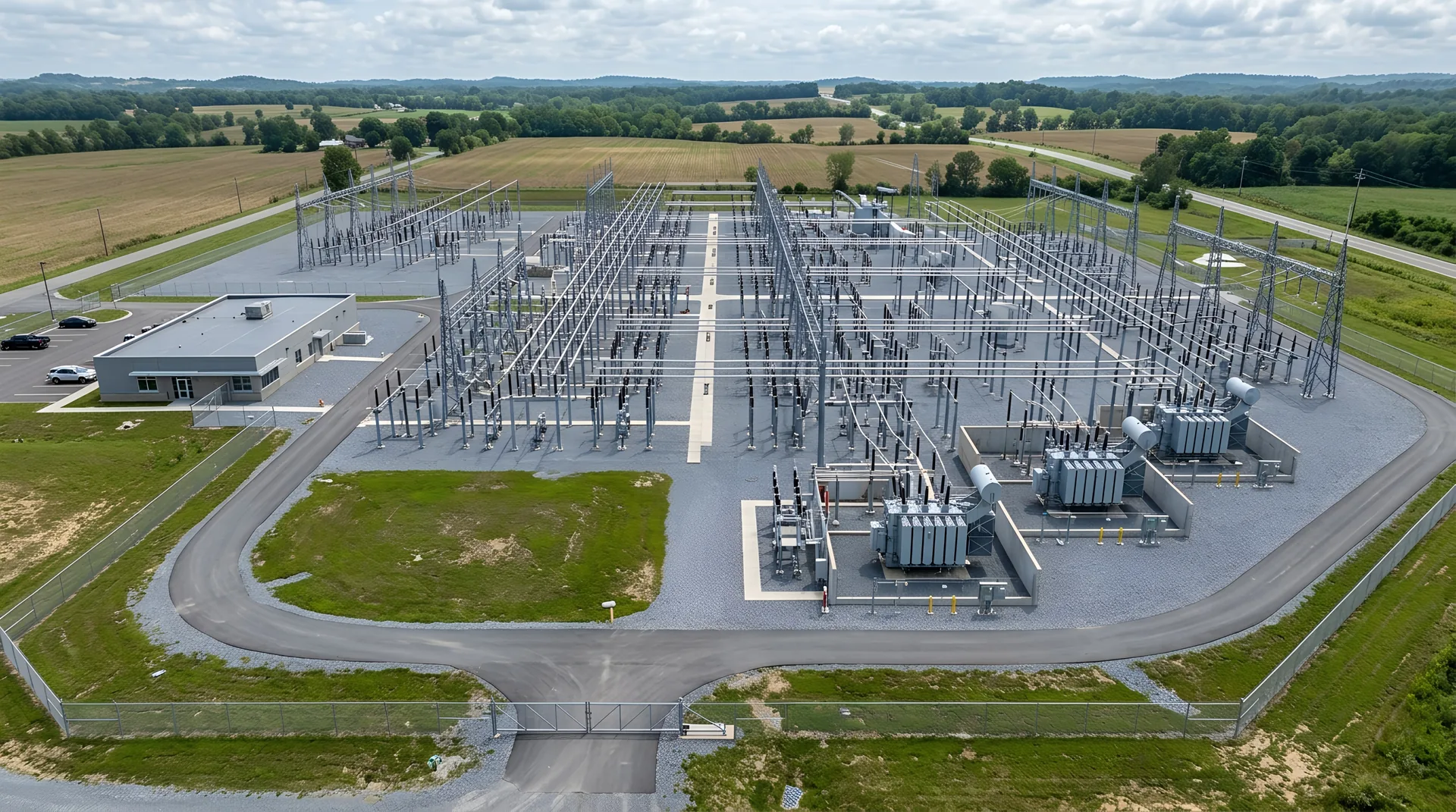
Utilities are the steadiest buyers of switchgear enclosures there are. Distribution substations get rebuilt and expanded on multi-year capital plans, aging outdoor gear is replaced on a schedule, and every new feeder, capacitor bank and interconnection needs a housing. The specifications are conservative, the approval process is formal, and the fabricator that learns them has a customer for decades. This guide covers what utilities specify and how the enclosure gets sourced.
Utility or OEM sourcing outdoor substation switchgear enclosures? Call 601.892.5017 or email collin.t@fabtekindustries.com — send a print and a quantity and we’ll quote it.
- Utility specs are built from IEEE C37.20, NEMA 250, ANSI C57.12.28 tamper requirements and the utility’s own standard drawings.
- Outdoor substation enclosures are nearly always NEMA 3R, ANSI 61 or 70 gray, with a salt-spray-tested finish.
- Security hardware — penta-head bolts, padlockable handles, recessed hinges — is specified by the utility and must be on the print.
- The enclosure is usually bought through the switchgear OEM; fabricators serve the utility by serving the OEM, and sometimes directly for replacements.
The standards utilities cite
A utility switchgear specification references the equipment standards — IEEE C37.20.2 or C37.20.3 for the switchgear, C37.20.7 if arc-resistant — plus NEMA 250 for the enclosure type, ANSI C57.12.28 for pad-mounted enclosure integrity where it applies, and the utility’s own construction standards for grounding, nameplates, color and hardware. Many also cite IEEE 1427 or the utility’s corrosion class for coastal service. The fabricator rarely sees the full spec; what it sees is the OEM’s print derived from it, so the OEM’s job is to push the utility requirements down into the drawing.
Outdoor construction requirements
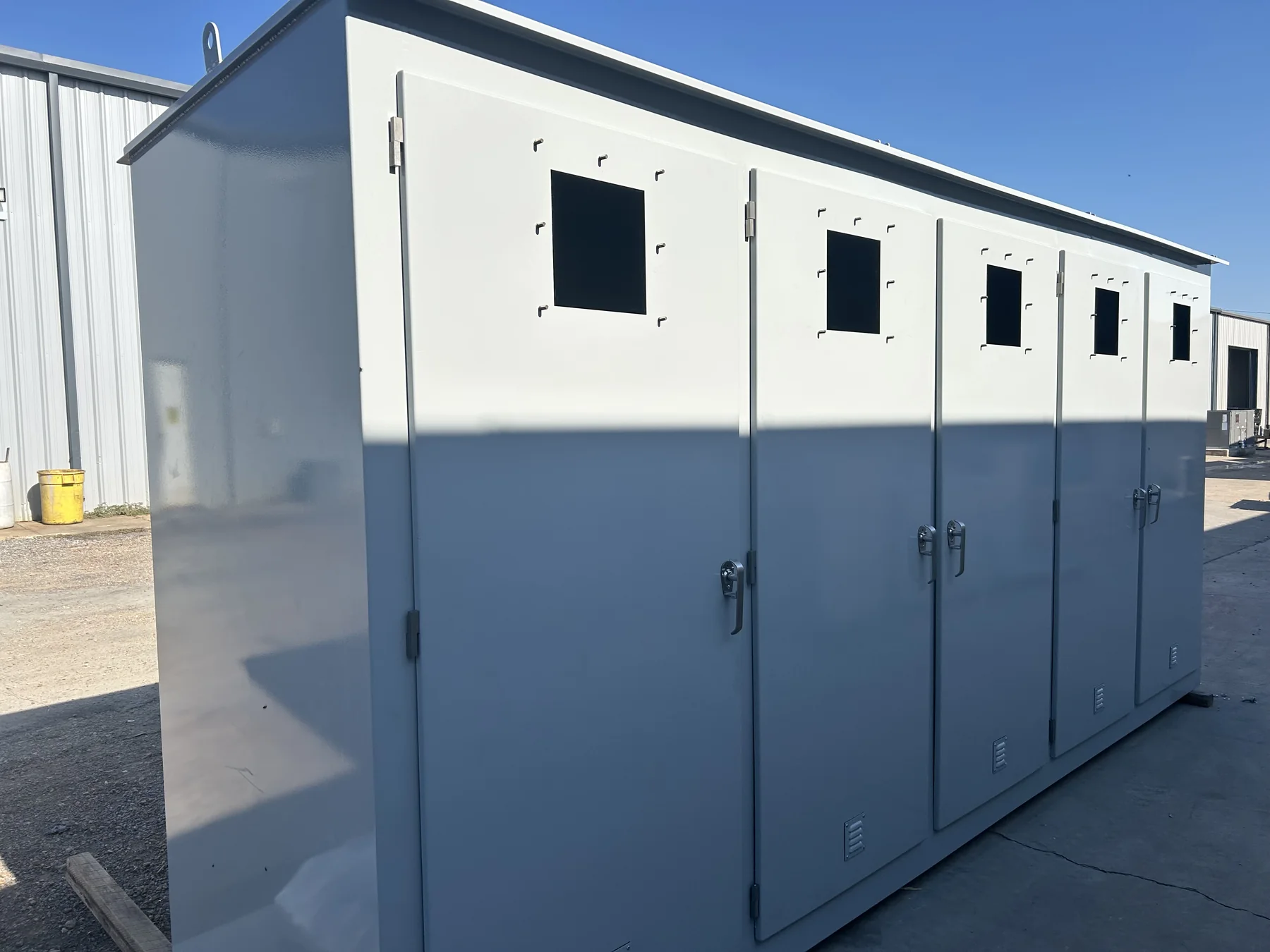
- NEMA 3R — drip shields over every door, sloped or crowned roofs, drainable sills and louvers, sealed seams; see NEMA 3R vs. 4 vs. 4X. Coastal utilities step up to 4X or stainless for control compartments.
- Gauge — typically 11-gauge skins and doors, 10- or 7-gauge frames and bases; utilities often specify minimum thickness directly. See the gauge spec sheet.
- Base and anchoring — channel or wide-flange base with anchor bolt pattern to the utility’s pad standard and lifting provisions for a single-piece set.
- Ventilation — screened, hooded louvers sized by the OEM for the heat load; filtered where dust is an issue.
- Cable entry — bottom entry over a cable vault or trench is standard; the base opening and bottom plates are on the utility’s drawing.
Finish and corrosion
ANSI 61 light gray and ANSI 70 sky gray are the defaults, applied as powder coat over blast or phosphate pretreatment, with a specified film thickness and a salt-spray requirement that commonly ranges from 1,000 to 2,000 hours depending on the utility and the site. FabTek’s in-house powder lines carry an IEEE 2000-hour salt-spray rating; what the test means is explained in the 2000-hour salt-spray post. Galvanized bases under a powder-coated enclosure are common where the base sits in a wet trench, and the two-finish combination needs to be called out so the fabricator stages the base through the galvanizer first; see choosing an enclosure finish.
Tamper resistance and security hardware
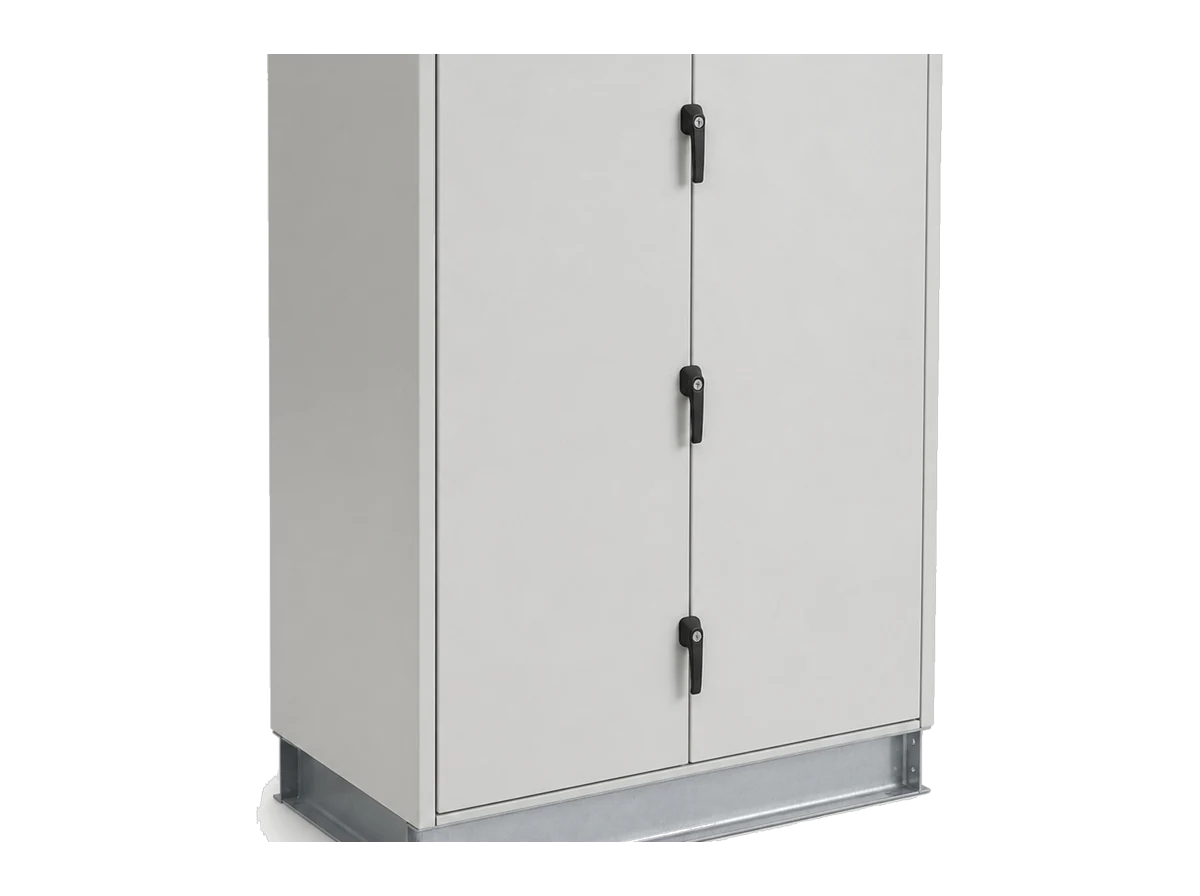
Public-facing substations and pad-mounted gear carry tamper requirements. Utilities specify penta-head or other captive security bolts on removable panels, padlockable handles with the utility’s lock dimension, hinges that cannot be removed from outside, and door construction that resists prying at the edges. ANSI C57.12.28 defines the pry, pull and wire-probe tests for pad-mounted enclosures and many utilities apply its hardware intent to switchgear housings as well; we cover it in ANSI C57.12.28 and cabinet fabrication. Hardware is a utility-standard item: put the part numbers on the print.
Grounding, nameplates and documentation
Utilities specify ground pads — typically two per enclosure, NEMA two-hole drilled, on opposite corners — and a ground bus where control compartments carry relaying. Nameplates and warning labels follow the utility’s standard, often with the utility’s own material numbers. The documentation package is formal: approval drawings before fabrication, a first-article or witness inspection on new designs, MTRs and certificates of conformance, finish test reports, and as-built drawings. Material certs and traceability covers what the paperwork looks like.
How the enclosure gets bought
In most programs the utility buys switchgear from an OEM and the OEM buys the enclosure from a contract fabricator, so the fabricator’s customer is the OEM and the utility’s requirements arrive as the OEM’s print. Two other paths exist. Utilities buy enclosures directly when they replace a weathered housing on gear that is still serviceable, or when they standardize a control or metering cabinet across many sites. And EPC contractors buy them for turnkey substation packages. In all three cases the fabricator needs the same things: the print, the utility standard it has to meet, and a release schedule. FabTek supplies all three channels; utilities and switchgear OEMs describe how.
A utility specification is written to be built the same way for thirty years. The fabricator that treats the standard as the design, not as a suggestion, becomes the one the OEM calls first.
FabTek Industries fabricates outdoor switchgear enclosures, control and relay cabinets and pad-mount cabinets to utility and OEM standards — NEMA 3R construction, security hardware installed, powder-coated in-house in ANSI 61 or 70 to an IEEE 2000-hour salt-spray rating — under an ISO 9001:2015 quality system with AWS-certified welding, from four production sites in Hazlehurst, Mississippi. See how we work with utilities, or send us a standard drawing.
Working on something like this? Send a print or a scope — pricing and lead time within one business day, from four Mississippi plants.
Frequently asked questions
What enclosure rating do utilities specify for outdoor substation switchgear?
NEMA 3R is the standard for outdoor switchgear and control enclosures. Coastal and industrial-atmosphere sites step up to NEMA 4X or stainless steel for control and relay compartments.
What color and finish do utilities require on switchgear enclosures?
ANSI 61 light gray or ANSI 70 sky gray powder coat over blast or phosphate pretreatment, with a specified film thickness and a salt-spray requirement that commonly ranges from 1,000 to 2,000 hours.
What tamper-resistance features do utilities require?
Penta-head or captive security bolts on removable panels, padlockable handles sized to the utility’s lock, hinges that cannot be removed from outside, and door edges that resist prying. ANSI C57.12.28 defines the tests for pad-mounted enclosures and its intent is often applied to switchgear housings.
Do utilities buy switchgear enclosures directly from fabricators?
Usually the switchgear OEM buys the enclosure and the utility buys the switchgear. Utilities buy enclosures directly for replacement housings on serviceable gear and for standardized control or metering cabinets; EPC contractors buy them for turnkey substation packages.