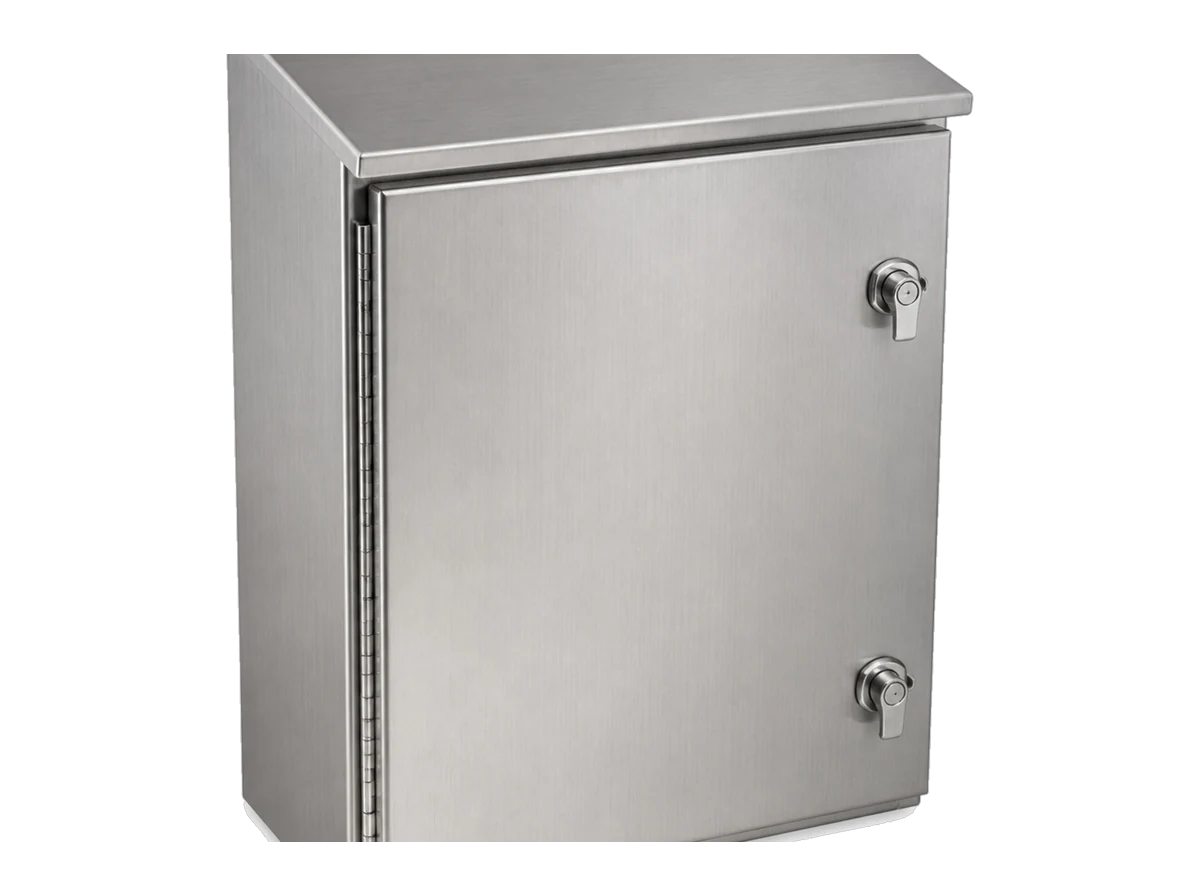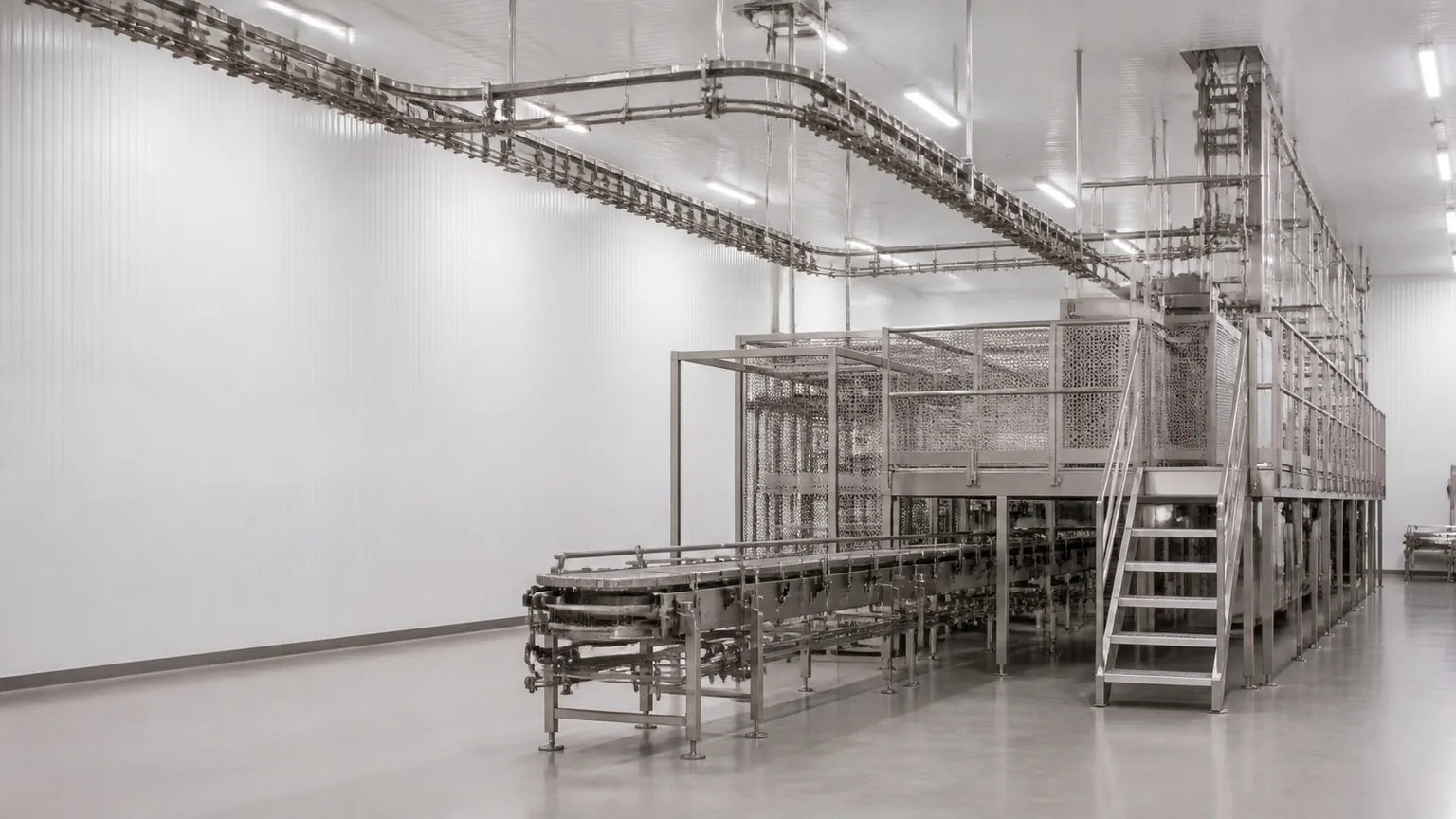
Industrial plants are the enclosure market that never gets written about and never goes away. A chemical plant, a paper mill, a mine or a refinery has hundreds of enclosures — switchgear, MCCs, control panels, junction boxes — in atmospheres that destroy ordinary steel, and replaces them on a maintenance cycle regardless of what any other sector is doing. This guide covers what those environments demand of the enclosure and how plant engineering and EPC contractors source them.
Plant engineer or EPC sourcing enclosures for a corrosive or dusty site? Call 601.892.5017 or email collin.t@fabtekindustries.com — send a print and a quantity and we’ll quote it.
- Industrial enclosure demand is driven by maintenance and replacement cycles as much as by new construction.
- Match the NEMA type and material to the atmosphere: 4X stainless for corrosive and washdown, 12 for dust and oil indoors, 3R for ordinary outdoor.
- Purge and pressurization provisions for classified areas are fabrication items the enclosure has to be built around.
- Plants buy enclosures through panel shops, through EPCs and directly for replacements; each channel needs the same print discipline.
The environments
| Chemical, petrochemical | Acid and chlorine vapors, hydrocarbon exposure, classified areas; 316 stainless or coated steel, NEMA 4X, purged enclosures in Class I Division 2 |
|---|---|
| Pulp and paper | Sulfur compounds, high humidity, washdown; 304/316 stainless, NEMA 4X, sealed with corrosion-resistant hardware |
| Mining, cement, aggregates | Abrasive dust, vibration, outdoor exposure; heavy-gauge NEMA 12 and 3R/4, filtered ventilation, reinforced mounting |
| Oil and gas, midstream | Outdoor, remote, classified areas, salt where coastal; NEMA 4/4X, purge provisions, sunshields, 316 or coated steel |
| Steel, foundry, glass | Radiant heat, scale and dust; NEMA 12 with filtered or closed-loop cooling provisions, heat shields |
| Food, beverage, pharma | Washdown, sanitizers; 304 stainless NEMA 4X with sloped tops (see the washdown enclosure guide) |
Industry-typical selections; the plant’s area classification and corrosion study govern.
Choosing the NEMA type and material
The ratings themselves are explained in NEMA 3R vs. 4 vs. 4X; the industrial-plant question is which one the atmosphere requires and whether the material has to be corrosion-resistant on its own. NEMA 12 is the indoor industrial default — dust-tight, drip-tight, oil-resistant gasketing, no knockouts — for MCC rooms and control rooms. NEMA 4 adds hose-down and is specified where equipment is washed or sits under wet process. NEMA 4X adds corrosion resistance, met either by stainless steel or by a coating system qualified by salt-fog test. The alloy choice is its own decision: 304 vs. 316 stainless covers when chlorides push the spec to 316. FabTek builds all of these on the NEMA 4 and 4X and switchgear enclosure lines.
Classified areas and purge provisions
In Class I Division 2 and Zone 2 areas, general-purpose enclosures are often made acceptable by pressurization under NFPA 496: a purge and pressurization system keeps a positive pressure of clean air or inert gas inside the enclosure so flammable atmosphere cannot enter. The enclosure has to be built for it — gasketed to hold pressure with limited leakage, with mounting provisions for the purge controller and vent, no unsealed penetrations, and a door interlock or alarm provision. The purge system and the area classification are the plant engineer’s and the panel shop’s responsibility; the gasketed, leak-limited enclosure with the right cutouts and mounting is the fabricator’s. Say on the print that the enclosure will be pressurized.
Heat, dust and ventilation
Industrial enclosures full of drives and transformers generate heat in rooms that are already hot. Where the atmosphere allows ventilation, filtered louvers and fan kits are fabricated into the enclosure; where it does not, the enclosure is sealed and cooled by a closed-loop air conditioner or heat exchanger mounted on a cutout to the manufacturer’s template. Dust is the enemy of both: the enclosure should have no unprotected openings, and filter access should not require opening the main door. These are decisions for the panel designer, but the cutouts, stiffeners and mounting plates for them are fabrication items that belong on the print.
How plants buy enclosures
- Through panel shops — the UL 508A panel builder buys the enclosure, populates it and delivers a listed panel. The fabricator serves the panel shop; see panel shops vs. enclosure fabricators.
- Through EPCs — for new units and expansions, the EPC buys switchgear, MCCs and E-Houses as packages; enclosures arrive inside those packages or as the E-House itself.
- Directly for replacement — plant maintenance replaces corroded housings on serviceable gear, often one-off, often stainless, often on an outage schedule that cannot slip.
In a plant, the enclosure is a maintenance item. The buyer who needs a stainless replacement housing before a turnaround does not care who else is building what; they care whether the fabricator can hit the outage date.
FabTek Industries fabricates switchgear and electrical enclosures, NEMA 4X stainless and aluminum enclosures and control cabinets for industrial plants, panel shops and EPC contractors — 304/316 stainless welded to AWS D1.6 and passivated, carbon steel powder-coated in-house to an IEEE 2000-hour salt-spray rating, purge and cooling provisions to print — under an ISO 9001:2015 quality system, from four production sites in Hazlehurst, Mississippi. See industrial processing, or send us a print.
Working on something like this? Send a print or a scope — pricing and lead time within one business day, from four Mississippi plants.
Frequently asked questions
What NEMA enclosure type is used in chemical plants?
NEMA 4X is the common outdoor and wet-area specification, usually in 316 stainless steel because of chloride and acid vapor exposure. Indoor dry areas use NEMA 12. Enclosures in Class I Division 2 areas are often general-purpose NEMA 4X enclosures made acceptable by purge and pressurization per NFPA 496.
What does a purged enclosure require from the fabricator?
Continuous gasketing and sealed seams to hold positive pressure with limited leakage, cutouts and mounting for the purge controller, vent and pressure indicator, sealed gland-plate cable entries with no open knockouts, and any door interlock provisions the panel designer specifies.
When is NEMA 12 the right choice for an industrial plant?
Indoors, where the hazard is dust, dirt and dripping non-corrosive liquids rather than water or corrosion — MCC rooms, control rooms and machine-side panels in mills, mines, cement plants and foundries.
How do industrial plants buy electrical enclosures?
Through UL 508A panel shops that populate them, through EPC contractors as part of switchgear, MCC and E-House packages, and directly from fabricators for replacement housings on serviceable equipment, often on outage schedules.