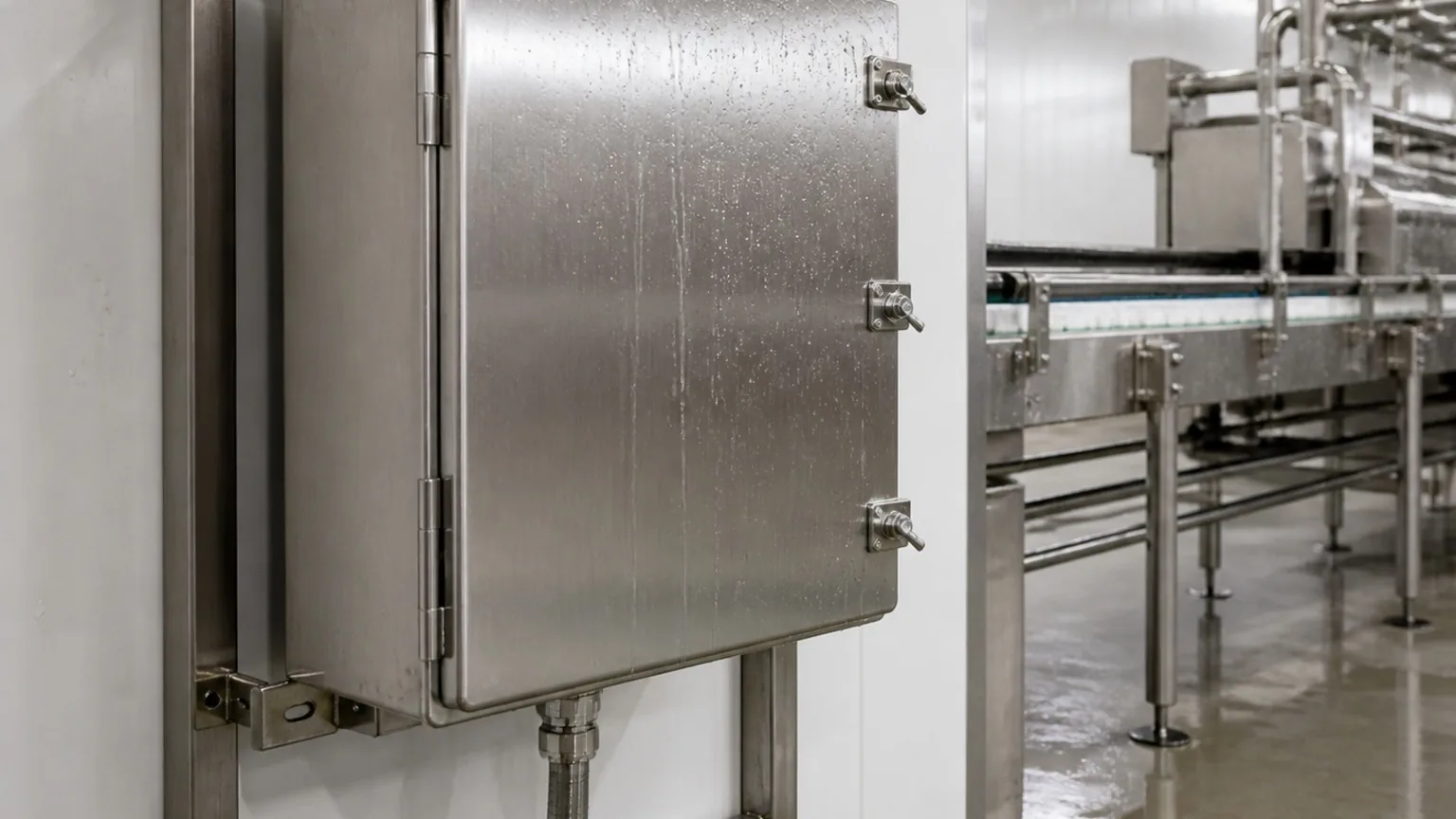
A food plant washes its equipment every night with hot, high-pressure water and sanitizer, and the electrical enclosures on the line get the same treatment. Ordinary enclosures leak, corrode and harbor bacteria in their seams; washdown enclosures are built so there is nowhere for water or product to stay. Poultry, meat, beverage and packaged-food plants buy these with every line upgrade, and FabTek’s in-plant work for processors has made them a core product. This guide covers what sanitation demands of the enclosure and how plants source them.
Food, beverage or poultry plant sourcing washdown enclosures? Call 601.892.5017 or email collin.t@fabtekindustries.com — send a print and a quantity and we’ll quote it.
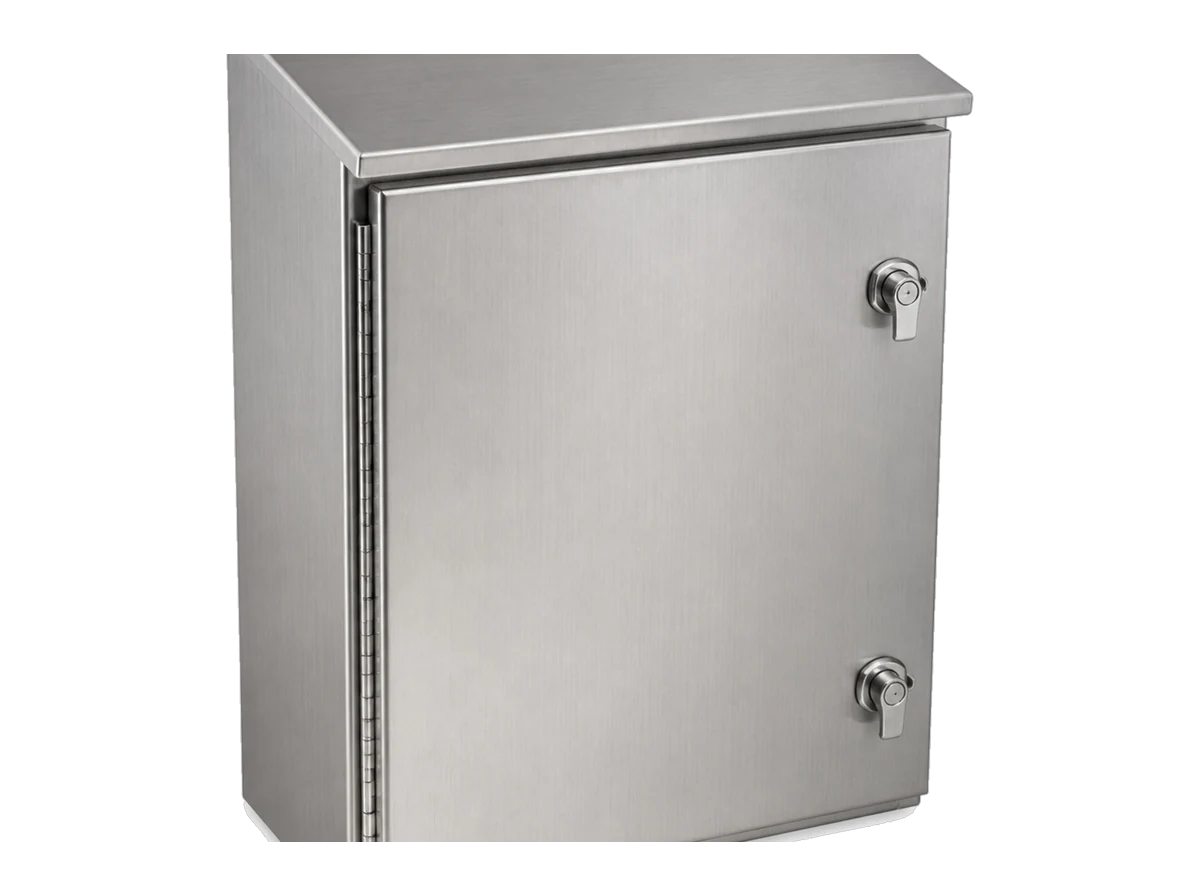
- Washdown enclosures are NEMA 4X stainless with a sanitary design: sloped tops, no ledges, no crevices, nothing that holds water or product.
- 316 stainless where chlorinated or peracetic sanitizers are used; 304 in milder areas.
- Continuous, ground-smooth welds and hygienic hardware are what make the enclosure cleanable, not just the rating.
- Plants buy them through integrators, equipment OEMs and their own maintenance groups, often in families per line.
What sanitation does to an enclosure
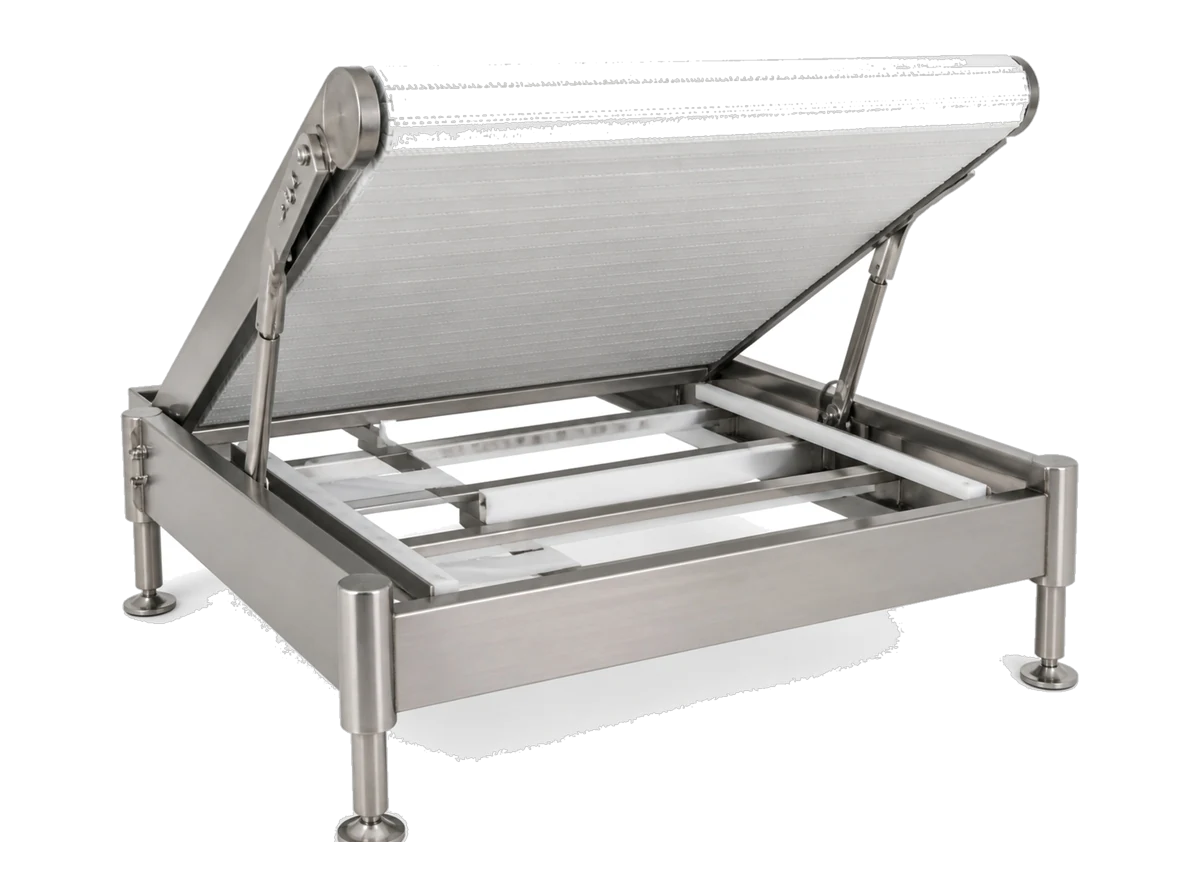
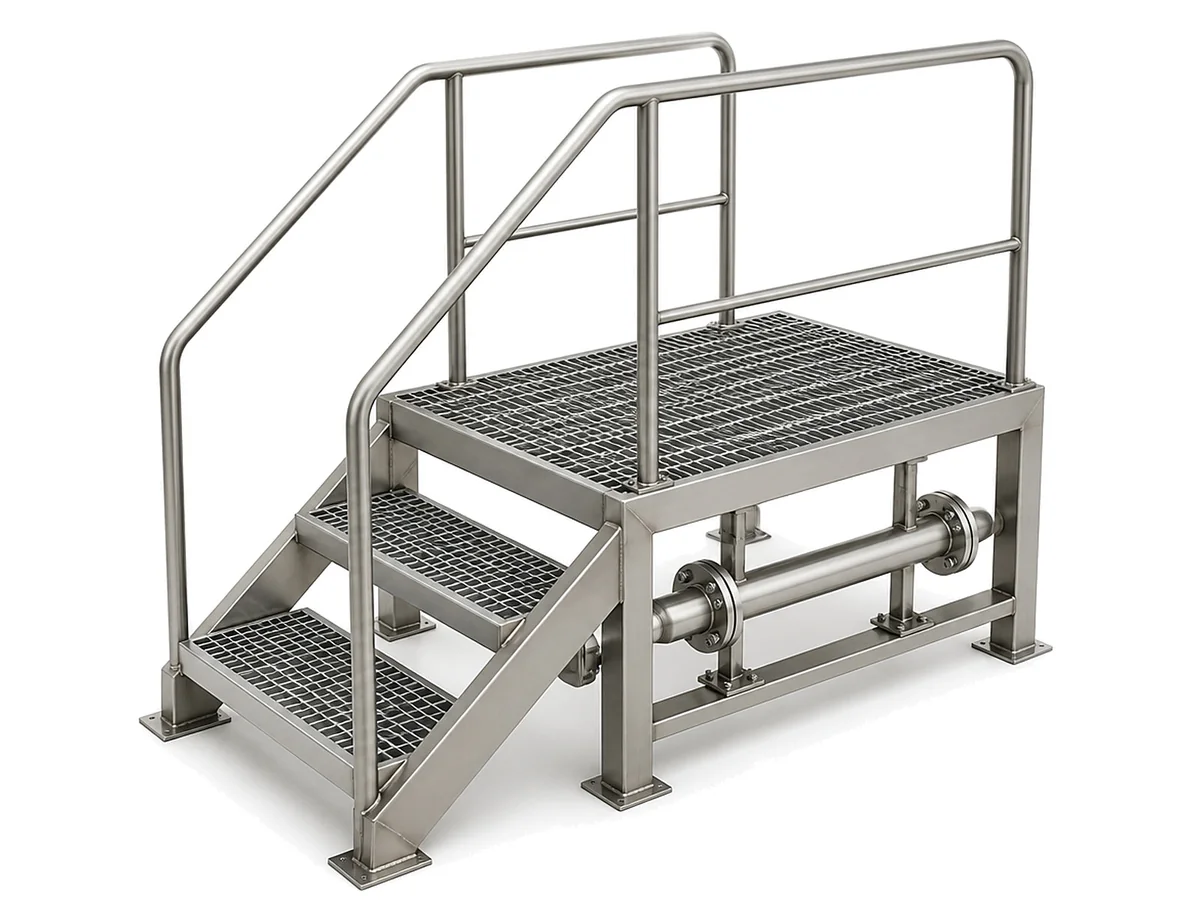
Daily washdown uses hot water at high pressure, foaming detergents, and sanitizers — chlorinated compounds, quaternary ammonium or peracetic acid — on every surface in the room. Water driven at a seam finds its way in; chlorides attack stainless at crevices; product residue in a ledge or a gap becomes a microbial harborage the sanitation auditor will find. The enclosure design therefore has three goals: keep water out (NEMA 4X), resist the chemistry (316 or 304 stainless), and give nothing a place to stay (sanitary design). FabTek builds these on the NEMA 4X line, alongside the sanitary conveyors and platforms it installs in the same plants.
Sanitary design features
- Sloped top — typically 30 degrees or more so water and product slide off; no flat top that holds a puddle or a tool.
- No ledges or lips — door returns and body flanges designed so there is no horizontal surface outside the gasket.
- Continuous welds, ground smooth — every exterior seam welded fully and polished; no lap seams, no stitch welds, no spot-welded corners where water wicks and bacteria grow.
- Rounded corners and radii — inside and out, so brushes and spray reach everything.
- Standoffs — wall-mount enclosures held off the wall on spacers so the back can be cleaned; free-standing units on tubular legs with sealed ends, or on a pedestal, not a box base.
- Drip lip and gasket — a door overhang above the gasket line so water runs off the door, not into the gasket; poured-in-place gasket with no corners.
- No external fasteners where avoidable — hinge and latch hardware with smooth profiles; penetrations sealed with sanitary fittings.
Alloy and finish
316/316L is the usual specification where chlorinated or peracetic sanitizers are used daily; 304/304L serves in packaging areas and drier rooms. The alloy decision is covered in 304 vs. 316. Finish is #4 brushed as a minimum with weld areas blended; some plants specify a finer polish or electropolish in direct-contact zones. Passivation after fabrication is essential. Hardware — hinges, latches, handles, fasteners — must match the enclosure alloy, and gaskets must be a food-grade material compatible with the sanitizer: silicone or EPDM are typical.
Hygienic hardware and penetrations
Conventional latches with exposed threads and recesses are harborage points; hygienic latches with smooth exteriors and sealed mechanisms, and continuous hinges with sealed knuckles, are specified in direct-contact zones. Cable entries use sanitary stainless or food-grade polymer glands rather than conduit hubs where possible, through a gland plate sealed with a gasket. Cooling units on washdown enclosures are themselves 4X-rated stainless units mounted on gasketed cutouts. The general hardware families are in latches, hinges and gasketing.
How plants buy them
Equipment OEMs ship washdown enclosures on their machines; system integrators build them into line control packages; and plant maintenance and engineering groups buy them directly when a line is upgraded or a corroded enclosure is replaced before an audit. The common thread is a family per plant or per line — the same enclosure in three sizes with the same hardware — which a fabricator can hold and build against releases. FabTek’s in-plant crews already install conveyors, platforms and stairs for poultry and food processors, so the enclosures arrive with the same people who know the plant. The enclosure-and-panel division is in panel shops vs. enclosure fabricators; the conveyor side in sanitary washdown conveyors.
In a food plant the enclosure is a piece of sanitary equipment that happens to hold a PLC. If the sanitation crew cannot clean it in two minutes, the design is wrong.
FabTek Industries fabricates washdown enclosures for food, beverage, poultry and meat plants — 304 and 316 stainless NEMA 4X with sloped sanitary tops, continuous ground welds, hygienic hardware, sealed penetrations and standoff mounting, passivated and polished — to plant, integrator and OEM prints, under an ISO 9001:2015 quality system with AWS D1.6 welding, from four production sites in Hazlehurst, Mississippi. See NEMA 4X enclosures, industrial processing, or send us a print.
Working on something like this? Send a print or a scope — pricing and lead time within one business day, from four Mississippi plants.
Frequently asked questions
What enclosure rating is required in a food plant washdown area?
NEMA 4X — hose-tight and corrosion-resistant — built in stainless steel with a sanitary design: sloped top, no ledges, continuous ground welds, rounded corners, standoff mounting and a drip lip over the gasket.
Should food plant enclosures be 304 or 316 stainless?
316/316L where chlorinated or peracetic sanitizers are used daily and in wet processing areas; 304/304L in packaging and drier rooms. Hardware must match the enclosure alloy.
Why do washdown enclosures have sloped tops?
So water, sanitizer and product residue run off instead of pooling. A flat top holds a puddle and invites tools and debris; a slope of about 30 degrees or more keeps the top clean and self-draining.
Who buys washdown enclosures for food plants?
Equipment OEMs that ship them on machines, system integrators building line control packages, and plant maintenance and engineering groups upgrading lines or replacing corroded enclosures before audits, usually as a family of sizes per plant or line.