Ask a structural steel fabricator to build a gasketed outdoor enclosure, or a sheet-metal shop to build a substation dead-end, and you will usually get a polite no. The two are different trades with different machines, software, codes and finishes, and most shops specialize in one. That is fine until a project needs both — which, in power and industrial work, is often. Here is how they differ and why it matters to buyers.
Evaluating fabricators for a program or project? Call 601.892.5017 or email collin.t@fabtekindustries.com — send the drawings or scope and we’ll respond fast.
- Sheet metal (gauge to about 1/4″) is cut on lasers, formed on press brakes and panel folders, welded to AWS D1.3 and powder coated — cabinets, enclosures, panels, housings.
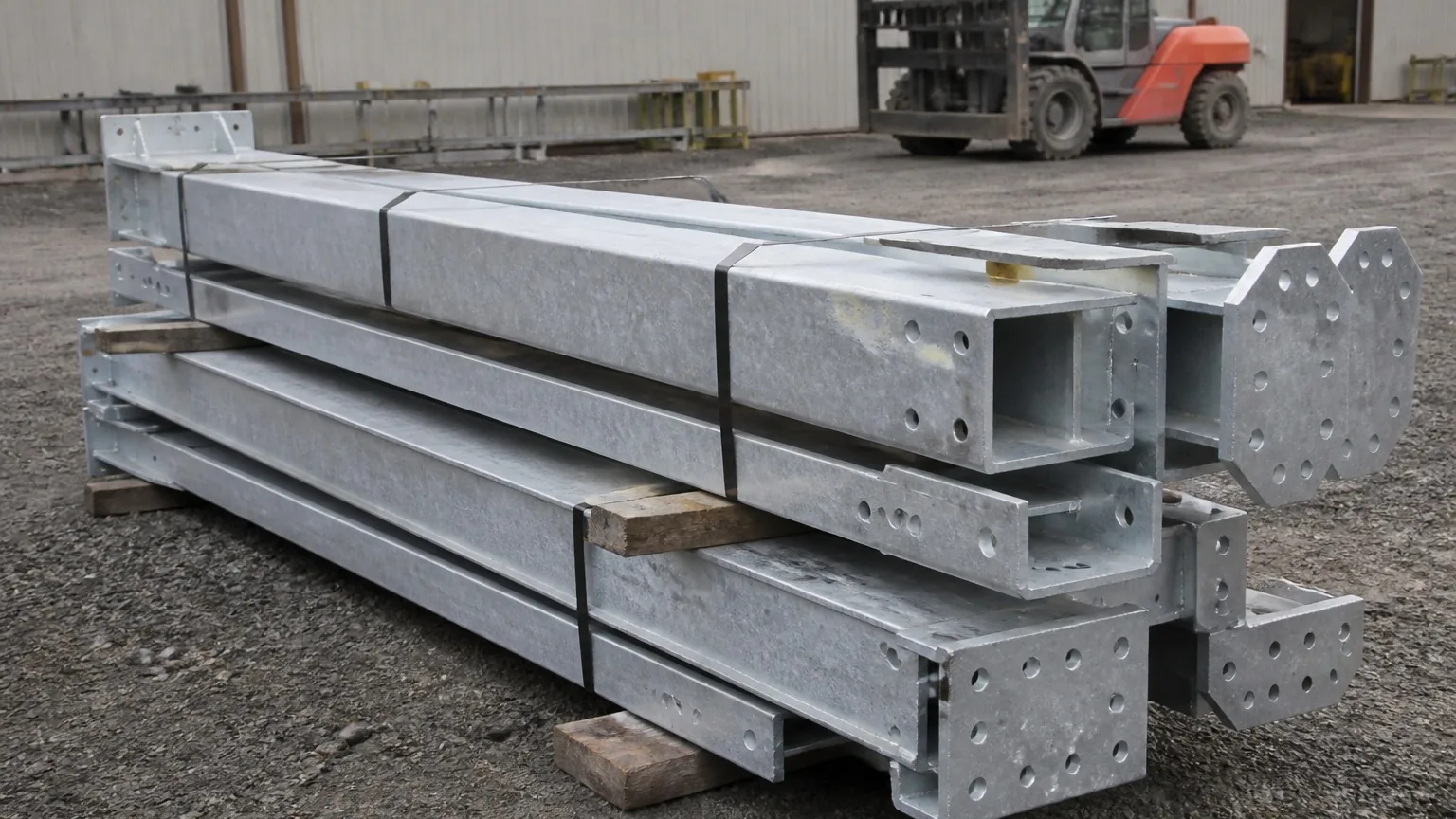
- Structural steel (shapes and plate) is processed on saws, drill lines and beam copers, detailed in Tekla or SDS/2, welded to AWS D1.1 and usually hot-dip galvanized — structures, frames, platforms, skids.
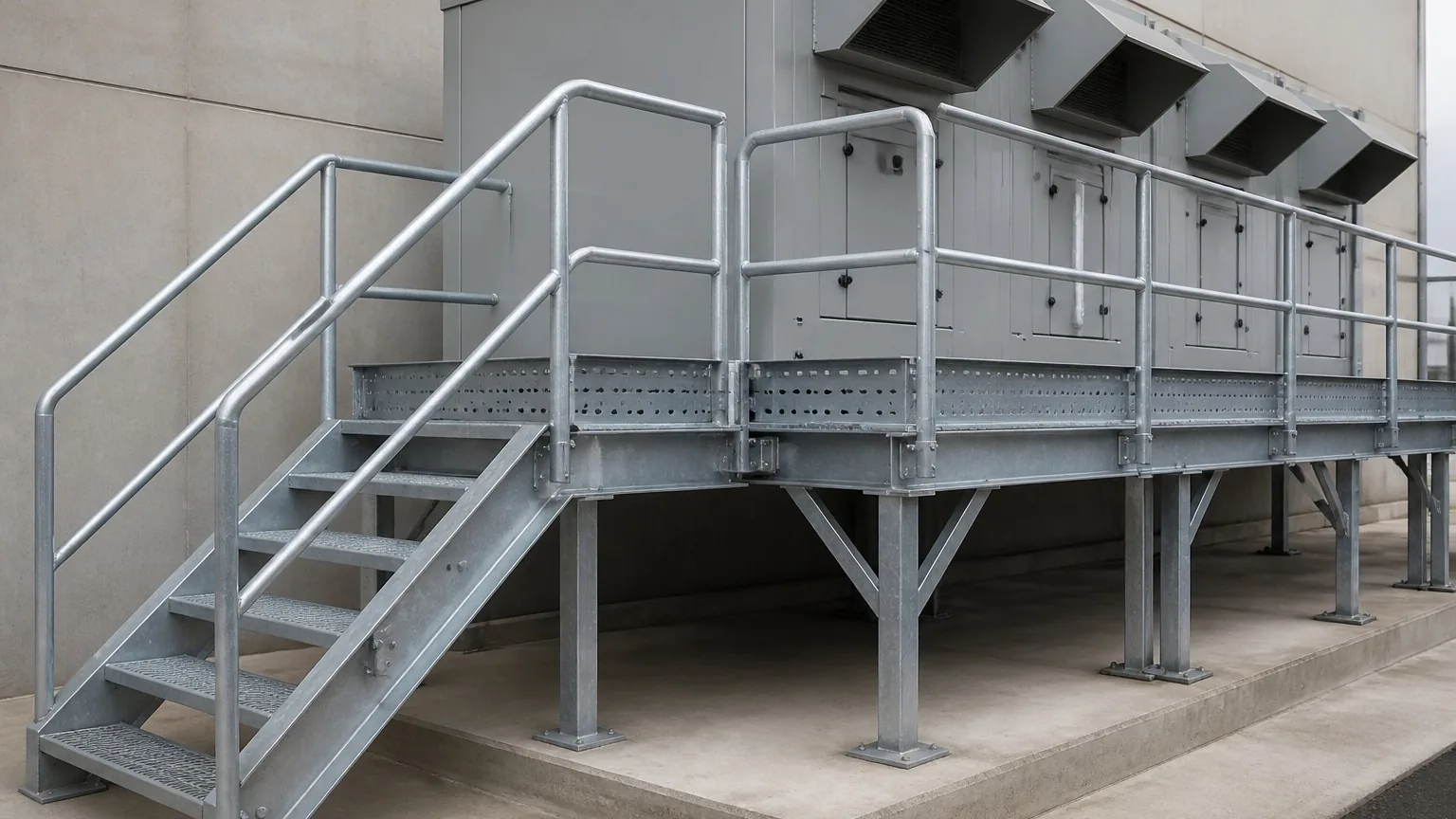
- Projects that combine them — enclosures on structural skids, BESS and generator packages, substations with control enclosures, platforms with cabinets — go better with one fabricator, one schedule and one quality system.
- Job Shop, Contract Manufacturer or Production Fabricator?
- Sheet Metal Shop vs. Structural Fabricator (you are here)
- What Drives the Price of a Fabricated Part
- What to Send With an RFQ
- How to Negotiate a Metal Fabrication Contract
- Counting Handoffs: In-House Finishing & Assembly
- Prototype to Production Without Re-Engineering
- Contract Metal Fabrication in Mississippi & the Gulf South
How the two trades differ
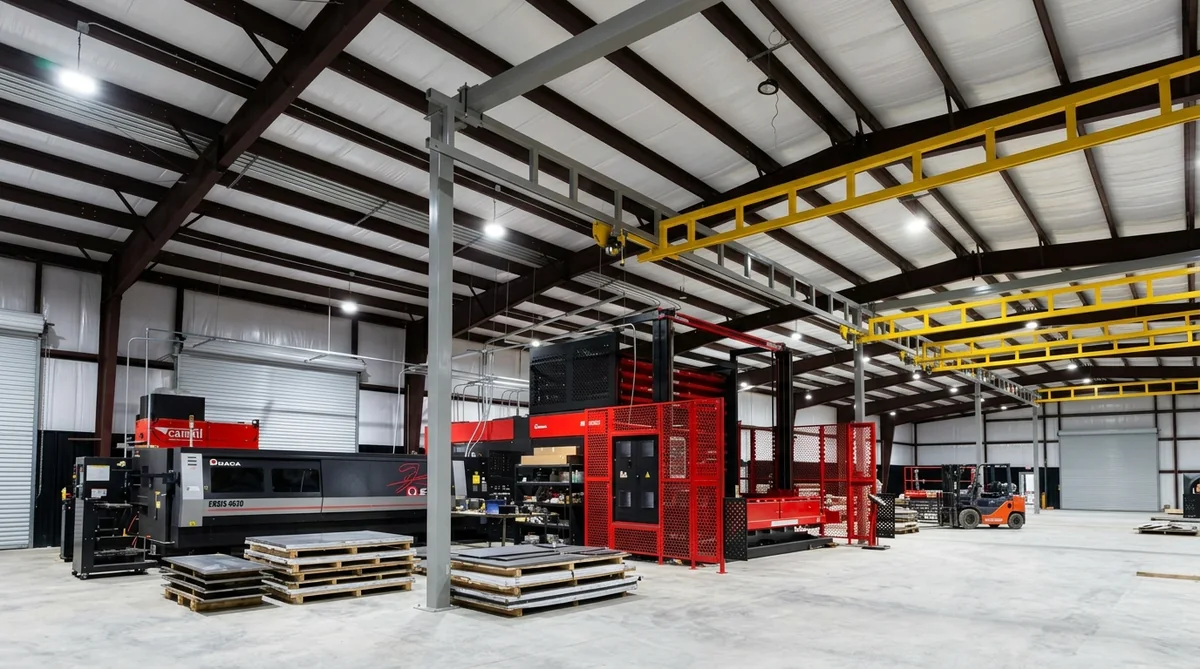
Sheet-metal fabrication starts with flat sheet — typically gauge material to about 1/4″ — and turns it into boxes, panels and housings. The core machines are fiber lasers, CNC press brakes and panel folders, hardware presses and stud welders; the software is 3D sheet-metal CAD (SolidWorks, Inventor) with flat patterns; the welding is mostly thin-material work under AWS D1.3 and D1.6; and the finish is almost always pre-treatment and powder coat. Tolerances are tight, appearance matters, and doors must seal.
Structural fabrication starts with stock-length shapes — wide-flange, channel, angle, tube — and heavy plate. The machines are band saws, CNC drill lines, robotic plasma copers, angle lines and plate plasma tables; the software is structural detailing (Tekla, SDS/2) feeding CNC files; the welding is heavier work under AWS D1.1; the finish is usually hot-dip galvanizing; and the deliverable is a bolt-together structure with match-marked members. The steps are covered in Structural Steel Processing.
Side-by-side comparison
| Sheet metal | Structural steel | |
|---|---|---|
| Material | Sheet, gauge to ~1/4″; galvanneal, stainless, aluminum | Shapes, tube and plate |
| Cutting | Fiber laser | Saw, drill line, robotic coper, plate plasma |
| Forming | Press brake, panel folder | Plate roll, heavy brake |
| Software | SolidWorks / Inventor, flat patterns | Tekla / SDS/2, DSTV/NC1 files |
| Welding code | AWS D1.3 (sheet), D1.6 (stainless) | AWS D1.1 |
| Finish | Pre-treatment + powder coat | Hot-dip galvanizing (or paint) |
| Typical products | Enclosures, cabinets, switchgear, bus duct housings | Substation and transmission structures, platforms, skids, racks |
Projects that need both
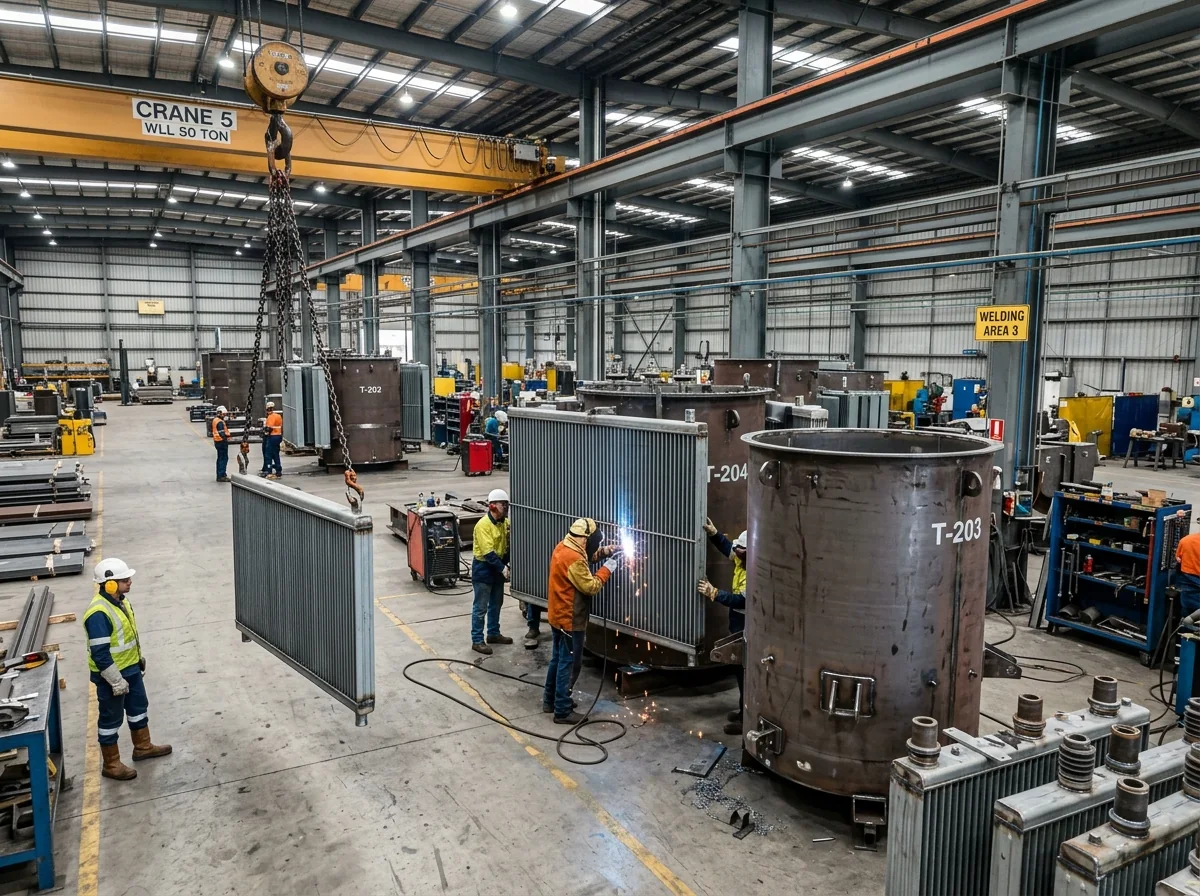
A large share of power and industrial work sits across the line. An outdoor switchgear or control enclosure sits on a structural base. A generator or BESS package is a sheet-metal enclosure on a heavy skid. A substation needs galvanized structures and equipment stands plus control and junction cabinets. An equipment platform or mezzanine carries cabinets, cable tray and stairs. A transformer tank is heavy plate with sheet-metal cabinets and covers. Even a data center electrical room combines busway housings and PDU cabinets with support steel and cable tray frames.
The cost of splitting the work
Split between two shops, those projects pick up a hidden layer of work: two drawings packages that must agree at the interface, two schedules that must converge, freight from one shop to the other or to site, a fit-up that happens for the first time in the field, and two quality systems to audit. Every one of those is a place where the base doesn’t match the enclosure’s bolt pattern or the skid arrives a week after the cabinet. A fabricator that does both builds and trial-fits the interface in the shop and ships one coordinated scope (more on handoffs in Part 6).
How FabTek handles it
FabTek runs both trades. The sheet-metal side has an Amada ENSIS fiber laser and two more laser cells, ten press brakes, a RAS MEGAbend panel folder, laser and stud welding, and an automated powder coat line. The structural side has two Voortman V807 robotic copers, a Peddinghaus drill line and angle line, plate plasma, a plate roll, and hot-dip galvanizing through long-standing partners. Engineering details both in SolidWorks, Inventor and Tekla-compatible workflows, and welding is certified to D1.1, D1.3 and D1.6. That is why FabTek builds enclosures and the steel they sit on, substation structures and the cabinets that go with them, and skids and platforms with their equipment housings.
Frequently asked questions
What is the difference between sheet metal and structural steel fabrication?
Sheet metal fabrication turns thin sheet into enclosures, cabinets and housings using lasers, press brakes and powder coat, welded to AWS D1.3. Structural fabrication turns shapes and plate into structures, frames and platforms using saws, drill lines and beam copers, welded to AWS D1.1 and usually galvanized.
Why do most fabricators specialize in sheet metal or structural steel?
The two need different machines, detailing software, welding procedures, finishing and inspection. Investing in both is expensive, so many shops choose one and do it well.
What projects need both sheet metal and structural fabrication?
Outdoor enclosures on structural bases, generator and BESS packages on skids, substations with structures and control cabinets, equipment platforms carrying cabinets and cable tray, and transformer tanks with sheet-metal cabinets all combine the two.
Is it better to use one fabricator for enclosures and support steel?
Usually, when the parts interface. One fabricator can detail both sides of the interface together, trial-fit in the shop, ship a coordinated scope on one schedule and hold one quality system, which avoids field fit-up problems and schedule gaps between vendors.