Many fabricated products are prototyped one way and produced another: a hand-built first unit at a local shop, then a production supplier who has to redraw, re-tool and re-prove everything. The second step costs weeks and often surfaces problems the prototype hid. The alternative is to build the prototype the way production will be built. Here is how that works.
Evaluating fabricators for a program or project? Call 601.892.5017 or email collin.t@fabtekindustries.com — send the drawings or scope and we’ll respond fast.
- Build the prototype on production equipment — the same laser, brakes, fixtures and finish line — so what you approve is what you will get at volume.
- Use the prototype to prove the design and the process: DFM review first, then first-article inspection against the drawing, then a small pilot run before full release.
- Keep programs, flat patterns, fixtures and revisions with the part, so production releases run without re-engineering and changes are controlled.
- Job Shop, Contract Manufacturer or Production Fabricator?
- Sheet Metal Shop vs. Structural Fabricator
- What Drives the Price of a Fabricated Part
- What to Send With an RFQ
- How to Negotiate a Metal Fabrication Contract
- Counting Handoffs: In-House Finishing & Assembly
- Prototype to Production Without Re-Engineering (you are here)
- Contract Metal Fabrication in Mississippi & the Gulf South
The prototype-to-production gap
A prototype built by hand proves that a design can be made. It doesn’t prove it can be made repeatably, at cost, on the machines that will build the production run. Hand layout hides bend deductions that don’t match the production tooling; a skilled welder hides a joint that is hard to reach in a fixture; an outside painter hides masking the drawing never specified. When production moves to a different shop, those surprises appear as re-engineering, new first articles and delay — at exactly the point the program is supposed to be ramping.
Prototype on production equipment
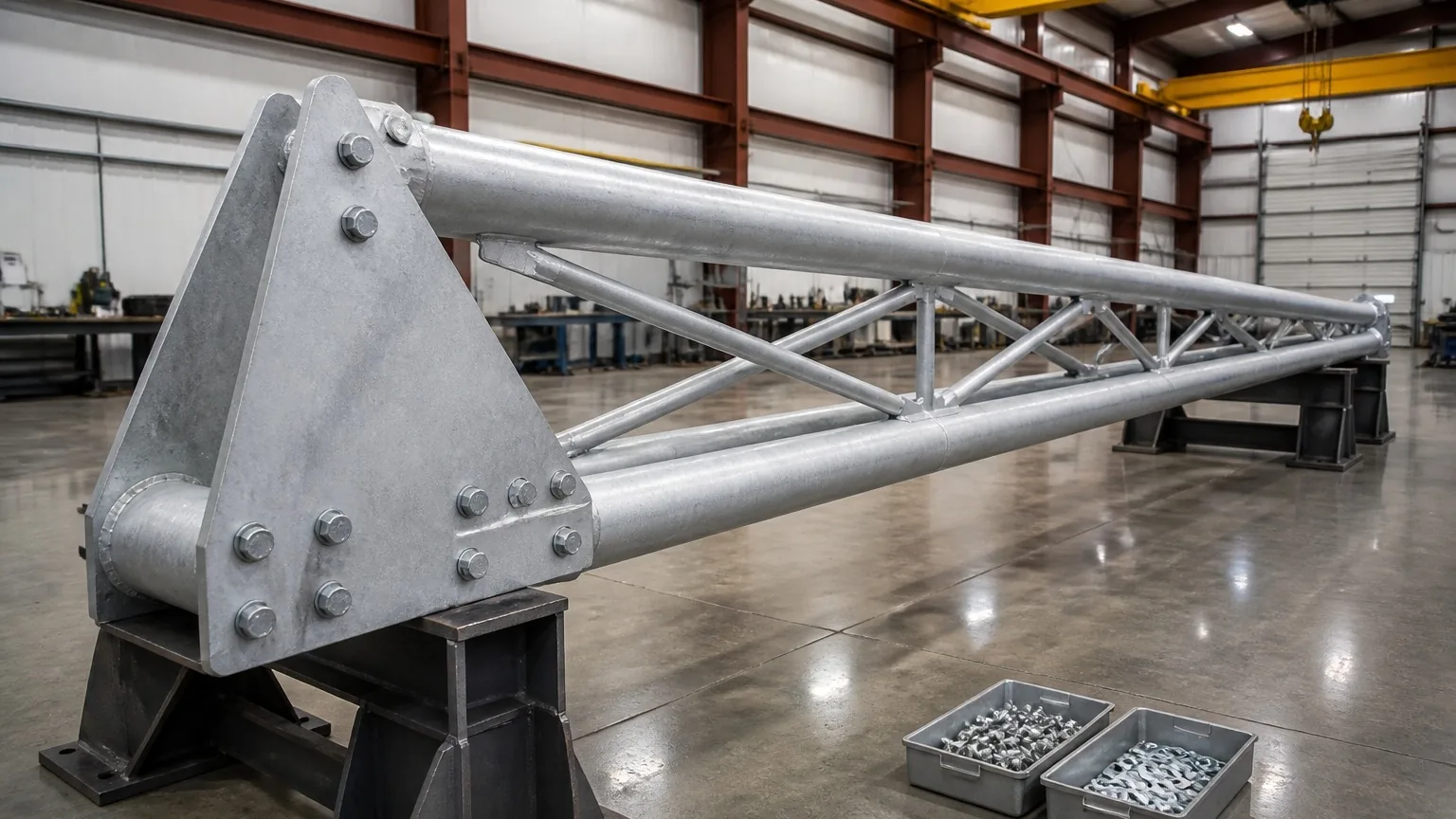
The cleanest way to close the gap is to build the prototype where the production parts will be built, on the same equipment. Parts are unfolded with the production bend tables, nested and cut on the production laser, formed with the production tooling, welded to the production procedure, and finished on the production line. What the customer approves is then, by construction, what production will deliver. The prototype also produces the programs, flat patterns and fixture concepts production will reuse.
The steps
| Stage | Purpose | Output |
|---|---|---|
| DFM review | Catch cost and manufacturability issues before cutting metal | Marked-up drawing, agreed changes |
| Prototype / first unit | Prove form, fit and function on production equipment | Physical part, programs, flat patterns |
| First-article inspection | Prove the part meets every drawing requirement | FAI report, approval |
| Pilot run | Prove the process at a small lot size | Cycle times, fixture tweaks, cost confirmation |
| Production release | Build to schedule | Releases against a blanket order |
First-article inspection
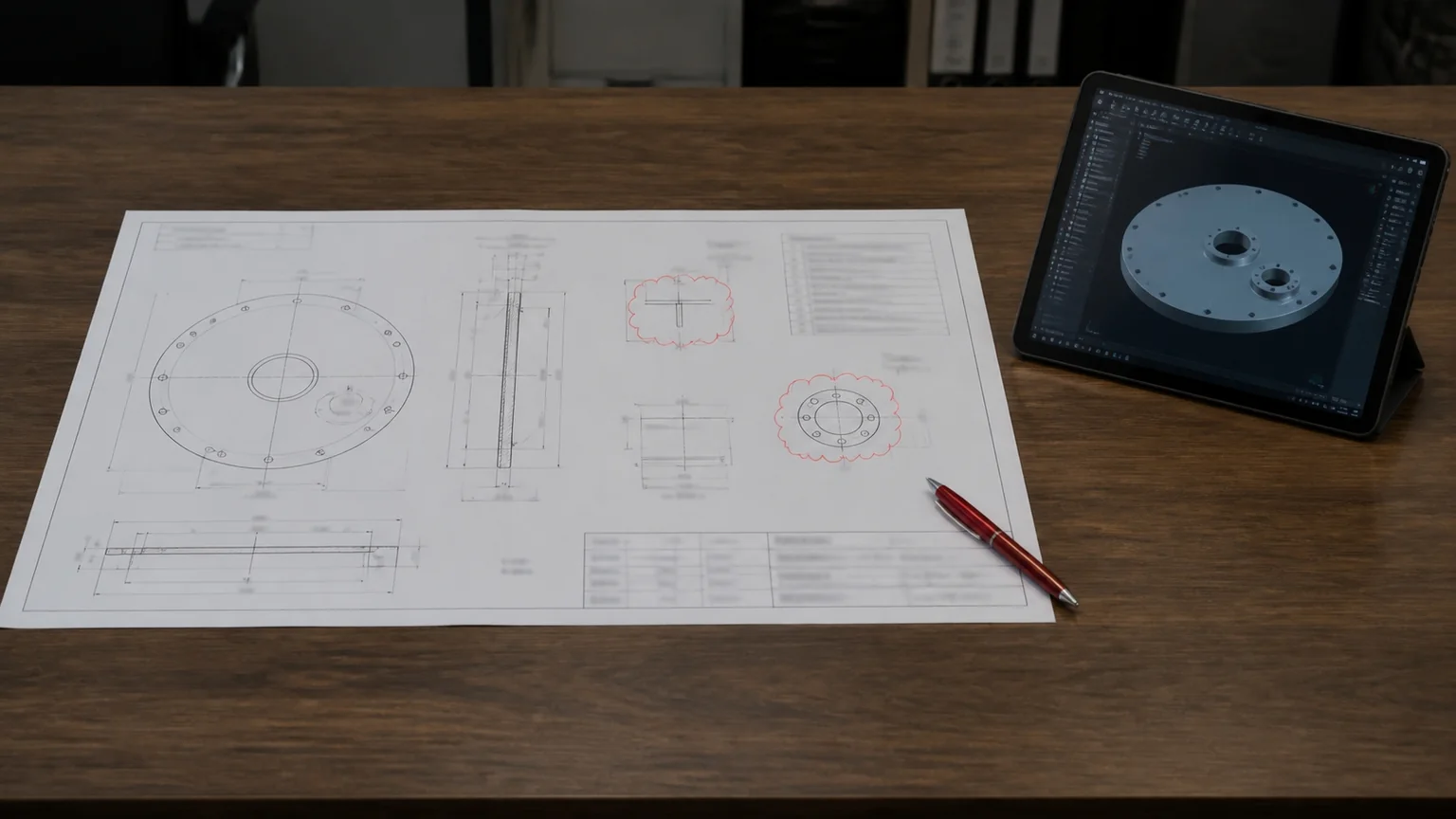
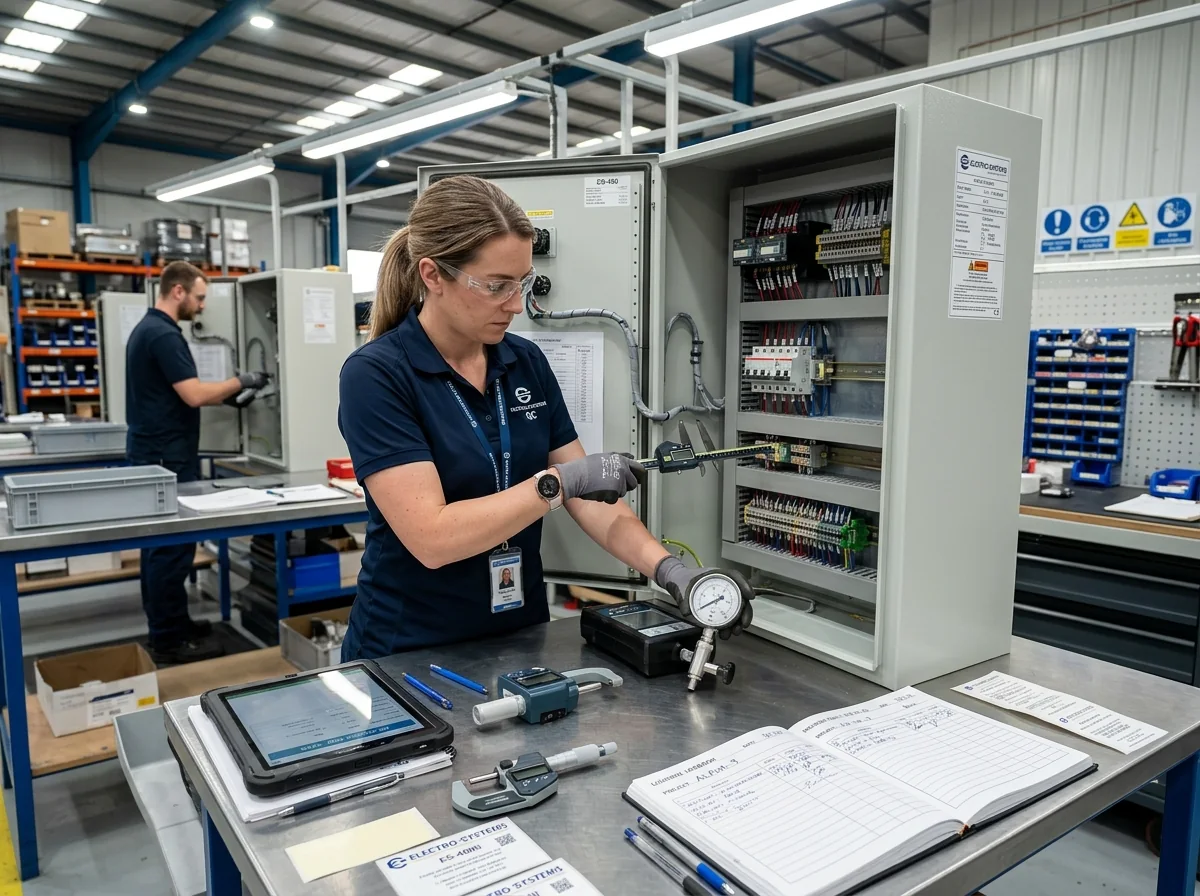
A first-article inspection (FAI) checks one part from the production process against every requirement on the drawing — dimensions, hole positions, weld sizes, finish thickness, hardware, labeling — and records the results. It is done on the first production part and again after any revision or process change. Customers in aerospace use formal standards such as AS9102; power and industrial buyers usually specify their own format. The point is the same: approval is based on measured evidence from the real process, not on a hand-built sample.
Retained programs and revision control
Once the part is approved, everything that made it — CNC programs, nests, flat patterns, bend sequences, weld fixtures, masking details, inspection plans — should be kept under the part number and revision. The next release then runs from proven data, and a revision changes only what it needs to. That continuity is one of the main differences between a contract fabricator and a job shop (see Part 1) and is the foundation of a well-run program (Running an OEM–Fabricator Program).
How FabTek handles it
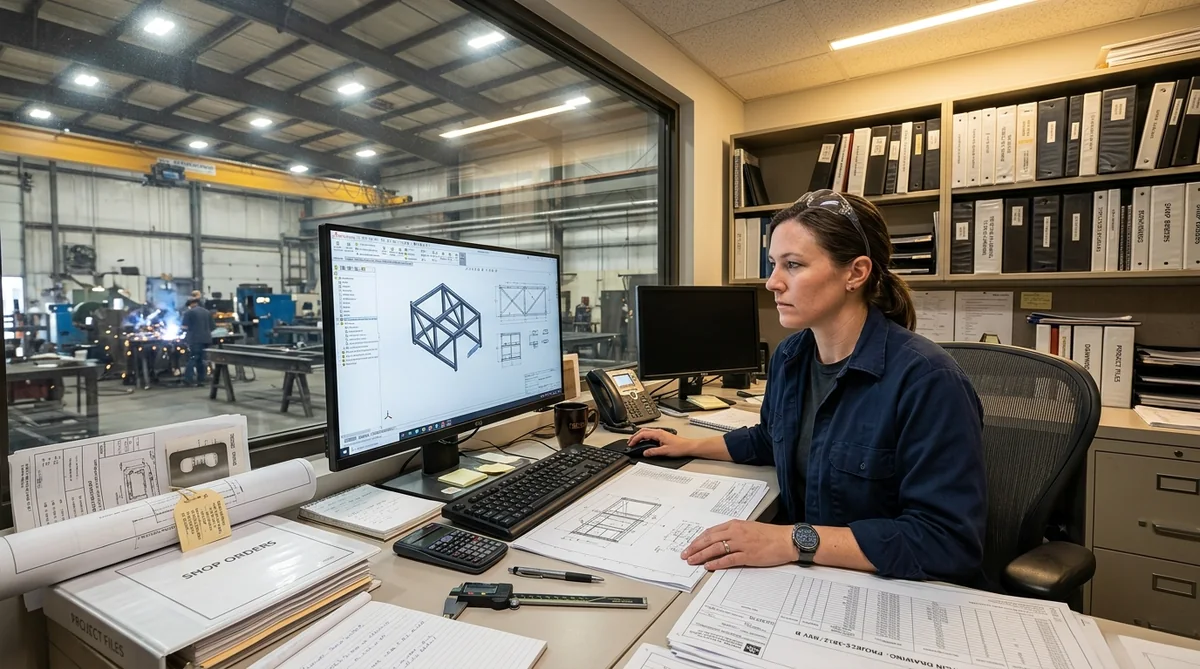
FabTek’s engineering team — more than ten engineers and draftsmen working alongside the shop — reviews new designs through DFM review, builds prototypes on production equipment, and retains programs and models by part number so repeat orders run without re-engineering. Where no model exists, engineering can reverse-engineer from a sample part. First units move through the same cutting, forming, welding, finishing and assembly route the production run will use, under ISO 9001:2015.
Frequently asked questions
How do you go from prototype to production in metal fabrication?
Review the design for manufacturability, build the prototype on the same equipment and processes production will use, verify it with a first-article inspection, run a small pilot lot to prove the process, then release production against a schedule with programs and revisions retained.
Why build a prototype on production equipment?
Because a hand-built prototype can hide problems that appear at volume, such as flat patterns that don't match production tooling, joints that are hard to weld in a fixture, or unspecified masking. Building on production equipment means the approved prototype is what production will deliver.
What is a first article inspection?
A documented inspection of one part made by the production process against every requirement on the drawing, including dimensions, holes, welds, finish and hardware. It is repeated after revisions or process changes.
What should a fabricator keep after a prototype is approved?
The CNC programs, nests, flat patterns, bend sequences, fixtures, masking details and inspection plans, stored under the part number and revision, so later releases run from proven data without re-engineering.