When a fabrication supplier keeps missing dates on repeat parts, the cause is usually not the welding. It is the route: the parts leave the building to be coated, come back, leave again for machining or assembly, and every trip adds a queue and a schedule the fabricator doesn’t control. Buyers who switch suppliers over late deliveries often ask exactly the right question: does the new shop do its own finishing? Here is how to evaluate it.
Evaluating fabricators for a program or project? Call 601.892.5017 or email collin.t@fabtekindustries.com — send the drawings or scope and we’ll respond fast.
- Every step a fabricator sends outside adds a queue at the vendor, two freight legs, handling and damage risk, and a second quality system — and puts part of your lead time on a schedule your fabricator doesn’t control.
- Finishing is the most common outside step, and the one that most often breaks schedules; outside machining and assembly are next.
- When evaluating a fabricator, map the route of your part step by step and count the handoffs. Fewer handoffs means shorter, more predictable lead time — especially on repeat, high-volume parts.
- Job Shop, Contract Manufacturer or Production Fabricator?
- Sheet Metal Shop vs. Structural Fabricator
- What Drives the Price of a Fabricated Part
- What to Send With an RFQ
- How to Negotiate a Metal Fabrication Contract
- Counting Handoffs: In-House Finishing & Assembly (you are here)
- Prototype to Production Without Re-Engineering
- Contract Metal Fabrication in Mississippi & the Gulf South
What a handoff costs
Each time a part leaves a fabricator for another vendor, it picks up the same set of costs. Queue: the part waits in the vendor’s schedule behind that vendor’s other customers. Freight: out and back, with loading, unloading and paperwork on both ends. Handling and damage: every load and unload is a chance to dent a panel or scratch a finish. Batching: parts are held until there are enough to justify a truck, which adds days. Quality: a second quality system with its own inspection, and a finger-pointing problem when a defect is found. And visibility: the fabricator can’t expedite what is sitting in someone else’s building. None of these is large alone; together they often exceed the time the part spends being worked on.
Where the handoffs usually are
| Step | Often outsourced because | Schedule risk |
|---|---|---|
| Powder coat / paint | Coating lines are capital- and space-intensive | High — the finisher batches by color and line |
| Blasting | Blast rooms need space and dust control | Medium — often paired with outside coating |
| Machining | CNC mills and lathes are a different trade | Medium — machine shops run their own queue |
| Structural processing | Beam lines are specialized | Medium to high on structural packages |
| Assembly / wiring | Separate labor skill and floor space | Medium — often another trip to the customer |
| Hot-dip galvanizing | Kettles are specialized plants | Managed — nearly every fabricator uses a galvanizer |
Galvanizing is the honest exception: almost no fabricator owns a kettle, so the question there is how well the fabricator schedules and manages its galvanizing partners, not whether it does it in house.
Map your part’s route
Ask the fabricator to walk you through the route of one of your parts, step by step: cut on what, formed on what, machined where, welded where, blasted and coated where, assembled where, packed and shipped from where. Mark each step that leaves the building. Then ask how long each outside step takes including freight and queue, and what happens when that vendor is late. Two quotes with the same price and the same stated lead time can have very different reliability once you see the routes side by side.
Why it matters most on volume work
On a one-off, one outside step adds a few days. On a high-volume, repeat part, the same step adds a few days to every release, forces the fabricator to batch parts to fill trucks, and puts every order at the mercy of the outside vendor’s capacity. When the finisher has a bad week, every one of your releases is late. A fabricator with its own finishing and assembly can flow parts continuously from fabrication to coating to assembly to the dock, and when it needs to expedite, it can re-sequence its own lines.
When switching suppliers makes sense
Missed dates on repeat parts are a reason to look at the route, not only at the fabricator. If the current supplier is sending coating or machining out and the misses trace to those steps, a dedicated contract fabricator with in-house finishing is often the fix. Plan the transfer: share drawings, revisions and quality history; run first articles; overlap the two suppliers for a release or two; and agree the release schedule and capacity up front (see Part 5). The single-source lead-time post covers the same logic for metal plus electrical work.
FabTek’s route
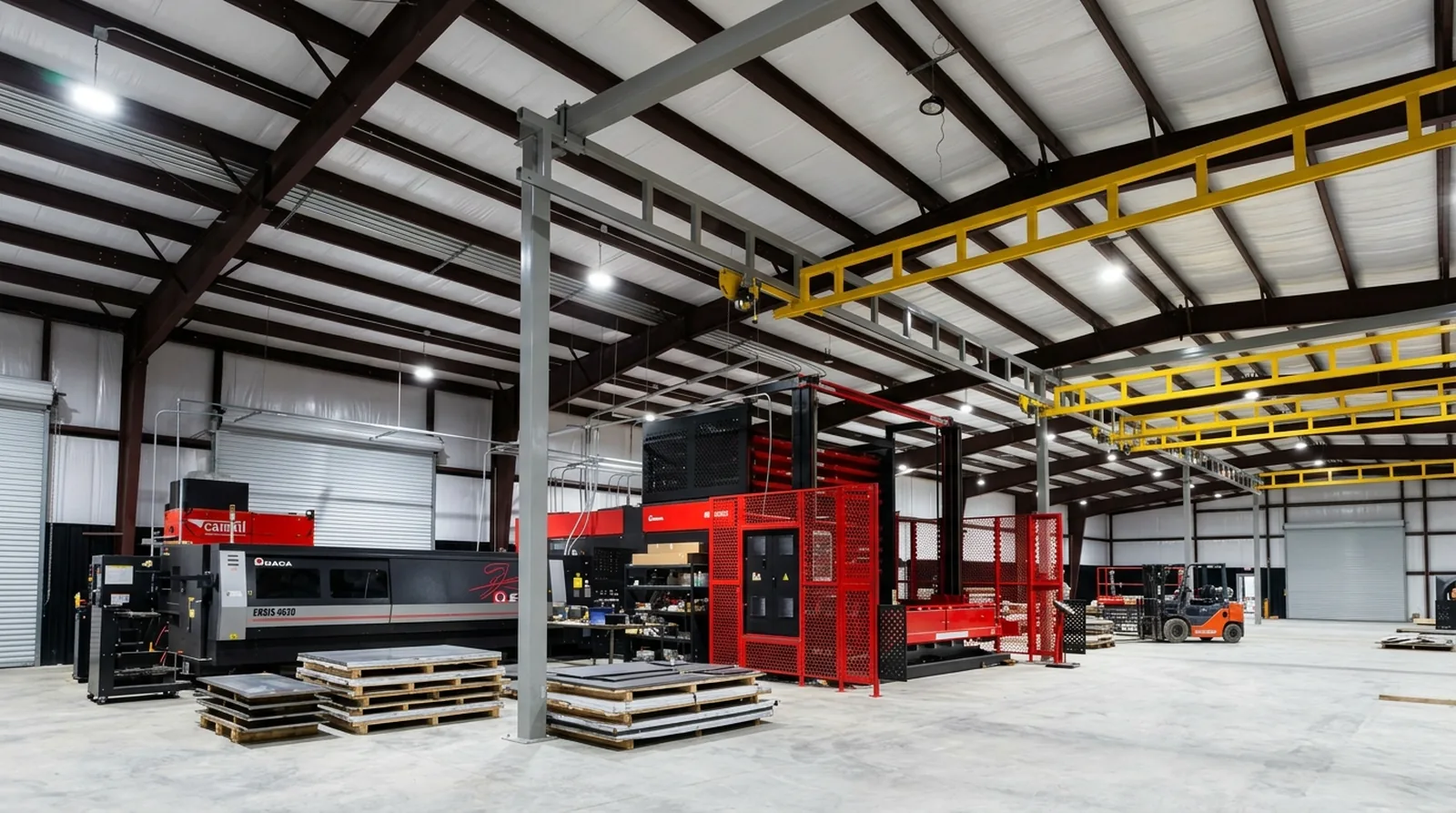
At FabTek a part is cut on the lasers, plasma, waterjet or beam line, formed on the brakes, panel folder or plate roll, machined on the CNC mills and lathes, welded in AWS-certified cells, blasted in the Titan blast room, powder coated on the automated or monorail line, and assembled — mechanical and electrical — before it ships, across FabTek’s own production sites in Hazlehurst. Hot-dip galvanizing is the one outside step, managed through long-standing partners. That route is why FabTek can reserve capacity for repeat programs and hold release dates.
Frequently asked questions
Why do outsourced finishing steps increase fabrication lead time?
Each outside step adds a queue at the vendor, freight out and back, handling and damage risk, batching to fill trucks, and a second quality system, and it puts part of the schedule under a vendor the fabricator does not control.
Should my fabricator do its own powder coating?
For repeat and high-volume painted parts, in-house powder coating usually shortens and stabilizes lead time and keeps finish quality under one quality system. Coating is the most common outsourced step and the one that most often breaks schedules.
How do I evaluate a fabricator's lead time reliability?
Ask them to map the route of one of your parts step by step, identify every step that leaves the building, and explain how long each outside step takes including freight and queue and what happens when that vendor is late.
Is it worth switching to a fabricator with in-house finishing?
If missed dates on repeat parts trace to outsourced coating, machining or assembly, a dedicated contract fabricator with those steps in house is often the fix. Plan the transfer with first articles, a short overlap and agreed release schedules.