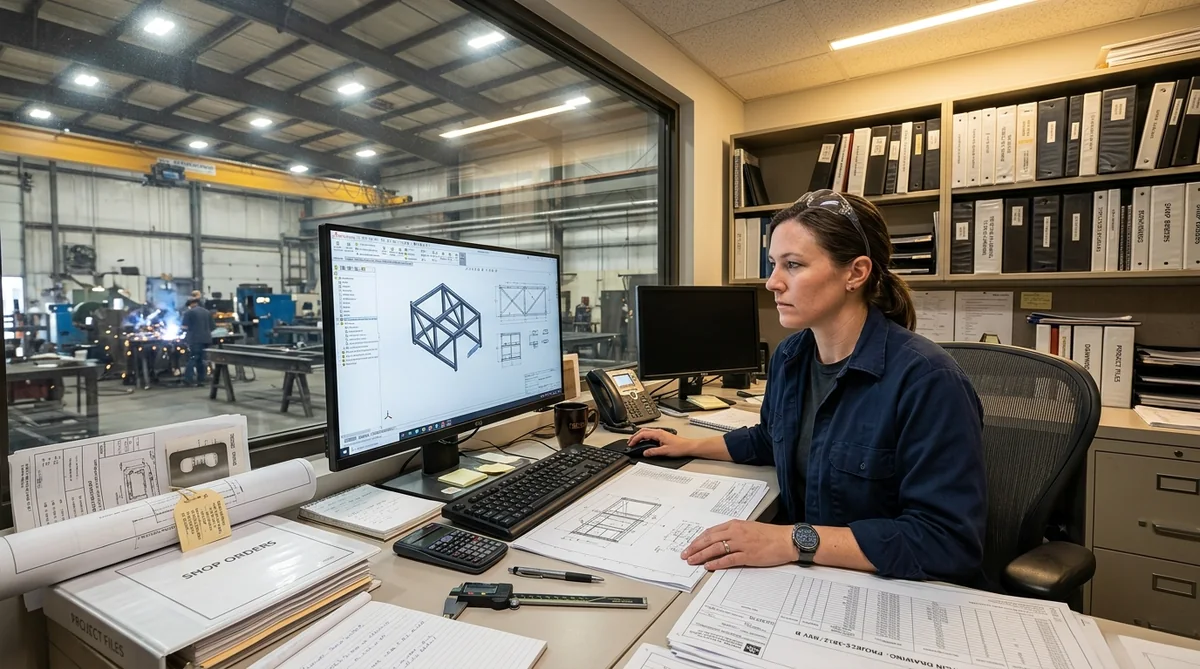
The fastest way to get an accurate fabrication quote — and parts that match what you meant — is to send the fabricator data it can use directly. A PDF alone has to be redrawn before anything can be nested or programmed; a model with no drawing leaves tolerances and finishes to guesswork. Here is what a fabrication-ready package contains.
Evaluating fabricators for a program or project? Call 601.892.5017 or email collin.t@fabtekindustries.com — send the drawings or scope and we’ll respond fast.
- Send a 3D model (STEP, or native SolidWorks or Inventor) plus a PDF drawing with the same revision. The model drives programming; the drawing carries tolerances, finish, welds and notes.
- DXF flat patterns are useful for flat parts and as a reference, but say whether they are compensated for bending; for structural steel, send IFC or Tekla/SDS/2 models or DSTV/NC1 files.
- Include the business details: quantity and annual usage, material and coating spec, finish system and color, revision, required documentation, packaging and delivery.
- Job Shop, Contract Manufacturer or Production Fabricator?
- Sheet Metal Shop vs. Structural Fabricator
- What Drives the Price of a Fabricated Part
- What to Send With an RFQ (you are here)
- How to Negotiate a Metal Fabrication Contract
- Counting Handoffs: In-House Finishing & Assembly
- Prototype to Production Without Re-Engineering
- Contract Metal Fabrication in Mississippi & the Gulf South
Which files and why
| File | What it gives the fabricator | Notes |
|---|---|---|
| STEP (.stp/.step) | Neutral 3D solid model; unfolds to flat patterns and feeds CAM | The most universally usable 3D format |
| Native CAD (SolidWorks, Inventor) | Full model with sheet-metal features and bend data | Best when the shop runs the same software |
| DXF / DWG | 2D geometry for flat parts and flat patterns | State whether bend compensation is applied |
| PDF drawing | Tolerances, welds, finish, notes, revision, title block | Required with any model |
| IFC / Tekla / SDS/2 | Structural model for detailing and erection drawings | For structures, platforms, skids |
| DSTV / NC1 | CNC data per structural member | Runs beam lines directly |
| IGES, Parasolid | Alternative neutral 3D formats | Acceptable when STEP isn’t available |
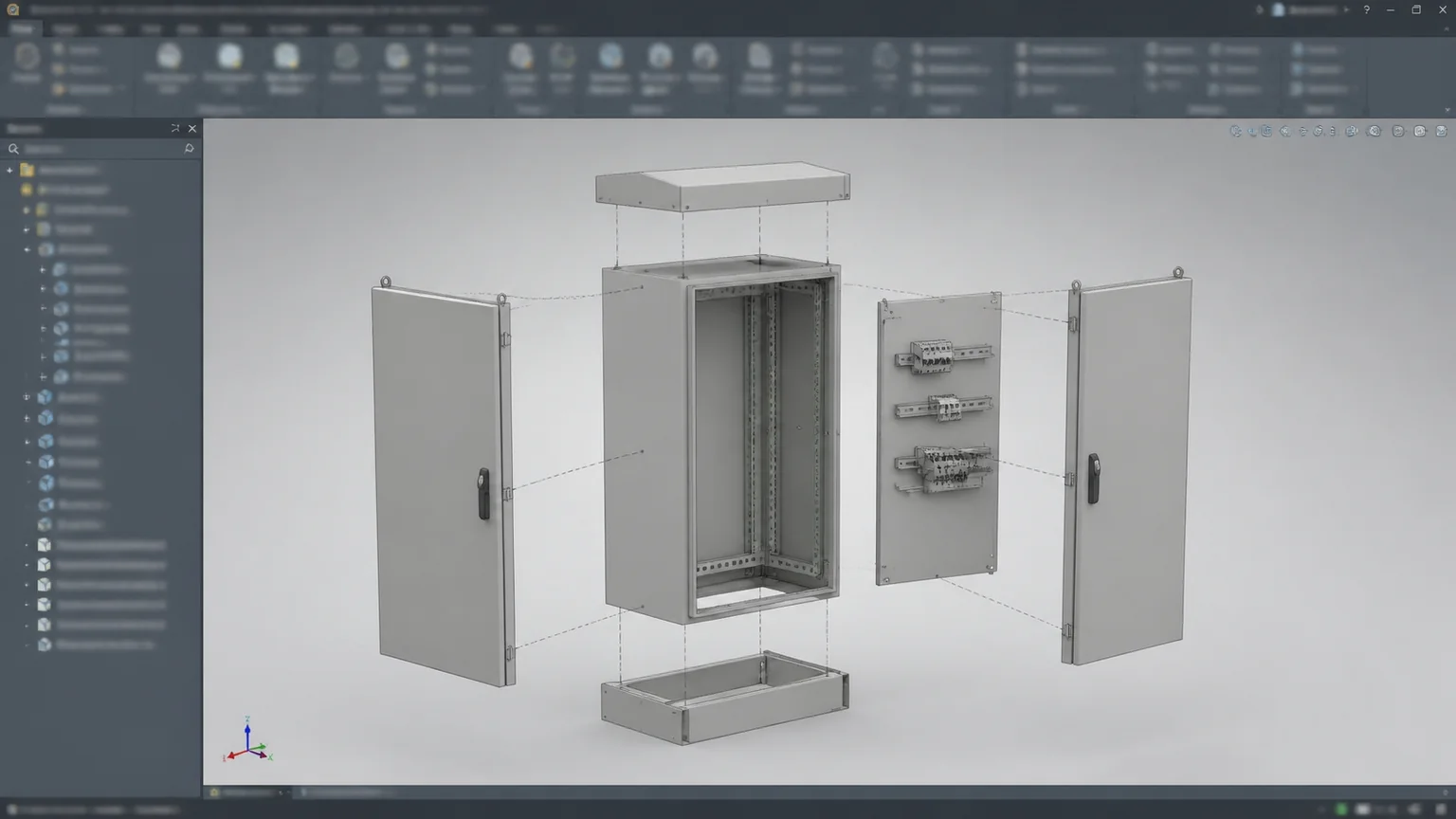
The 3D model is what saves time and errors: the fabricator can unfold it with its own bend tables (see K-Factor, Bend Allowance & Bend Deduction), nest the flat patterns and program the machines without re-drawing. Model the part in its formed state at the actual material thickness.
Why the drawing still matters
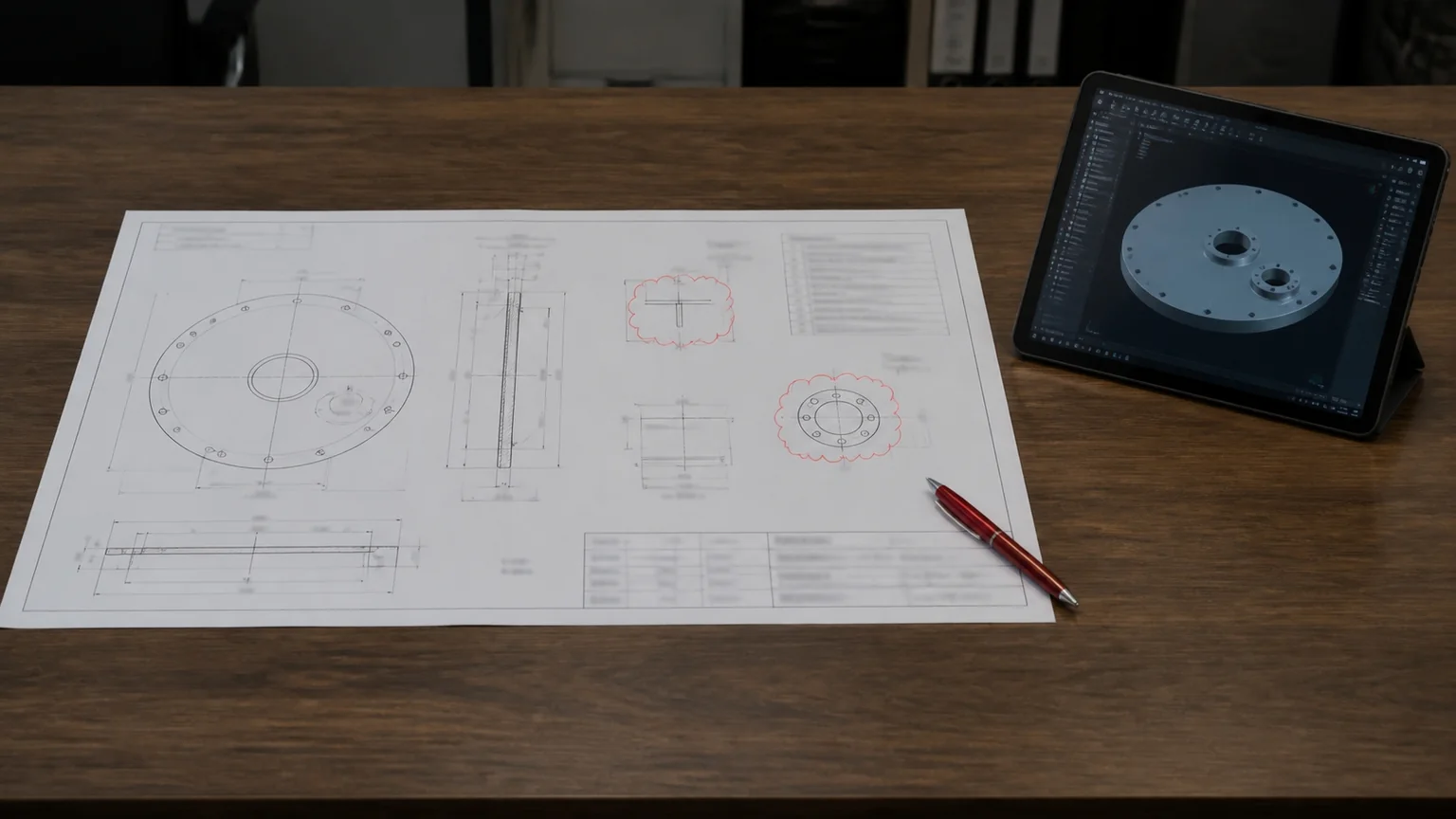
A model says what shape the part is. It usually does not say what matters about it: which dimensions are critical, what tolerance applies, which surfaces are masked, what the welds are, what finish and color, what hardware, and what revision is current. The PDF drawing carries that — tolerances, weld symbols, finish notes, hardware callouts, inspection requirements and the title block. Model and drawing should carry the same revision; a mismatch is the most common reason a quote has to be redone.
Structural steel packages
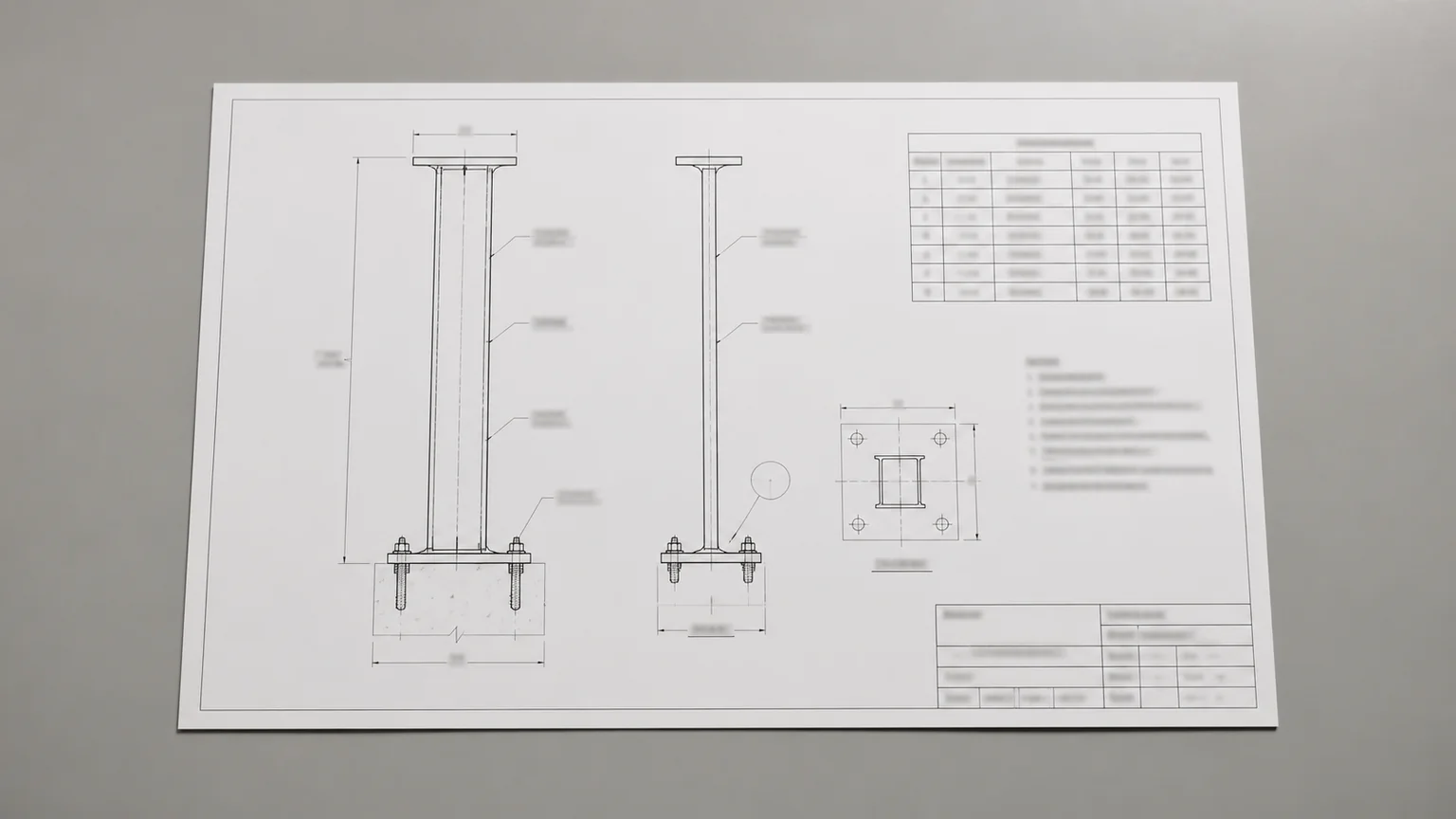
Structural work arrives in one of two ways. Design drawings from the engineer of record — plans, elevations, member sizes and connection details — which the fabricator details into shop and erection drawings; or a detailed model (IFC, Tekla or SDS/2) with shop drawings and DSTV/NC1 files that can run straight to the beam line. Say which, include the design specification (e.g., ASCE 113 for substations), the galvanizing and bolting specs, and the equipment drawings for any stands or supports (see The Structures Package).
The details that change the price
Quantity for this order and annual usage — the two together decide how the part is tooled and run. Material by specification, thickness and coating (“0.1046″ A1008 CS” rather than “12 ga steel”; see the gauge chart). Finish system, thickness and color. Documentation — material certs, first-article inspection, weld records, test reports. Packaging, delivery location and dates, and any release schedule. And any customer or industry specification the parts must meet.
Common RFQ gaps
A PDF only, scanned at an angle. A model and drawing on different revisions. “Steel” with no grade or thickness. “Paint” with no system or color. No quantity, or only a prototype quantity when the real need is a program. Tolerances copied from a machining title block. A weldment with no weld symbols. Each one either delays the quote while questions go back and forth, or produces a quote built on assumptions that change later.
RFQ checklist
- 3D model (STEP or native) in formed state, at actual material thickness
- PDF drawing, same revision, with tolerances, welds, finish and notes
- DXF flat patterns if available, noted as compensated or not
- Structural: IFC/Tekla/SDS/2 model or design drawings, DSTV/NC1 if detailed
- Material spec, thickness and coating; hardware BOM
- Finish system, film thickness and color; galvanizing spec
- Quantity per order, annual usage and release schedule
- Documentation and inspection requirements
- Packaging, delivery location and required dates
The companion piece on writing the specification side is Build-to-Print Fabrication: A Spec Package That Avoids Rework.
How FabTek handles it
FabTek accepts STEP, SolidWorks, Inventor, DXF and DWG for sheet-metal and machined work, and Tekla, SDS/2, IFC and DSTV/NC1 for structural steel, with PDF drawings for both. The engineering team reviews every package, asks the questions up front, and can detail design drawings into shop drawings or reverse-engineer from a sample part when no model exists. Send your package through the contact page.
Frequently asked questions
What file format should I send a metal fabricator?
Send a 3D model, preferably STEP or native SolidWorks or Inventor, plus a PDF drawing at the same revision. The model drives unfolding, nesting and programming; the drawing carries tolerances, welds, finish and notes. For structural steel, send IFC or Tekla/SDS/2 models or DSTV/NC1 files.
Is a DXF file enough for a fabrication quote?
For a flat part, often yes, with a note on material, thickness, quantity and finish. For formed parts, a DXF flat pattern is best sent with a 3D model and drawing, and you should say whether the flat pattern has been compensated for bending.
What is a DSTV or NC1 file?
DSTV, also called NC1, is the standard CNC file format for structural steel members exported from detailing software such as Tekla and SDS/2. Each file describes one member's profile, length, cuts, holes and marking so beam lines can run it directly.
What information should an RFQ for fabricated parts include?
Current model and drawing at the same revision, material specification and thickness, finish system and color, quantity per order and annual usage, documentation and inspection requirements, packaging, delivery location and dates, and any governing customer or industry specification.