A water utility with a hundred lift stations has a hundred control enclosures standing in the weather, each with starters or drives, a controller, a radio and an alarm light inside. They are replaced when they corrode, upgraded when the pumps are, and built new with every subdivision. The enclosure is the same product every time, which makes it one of the best candidates for a standardized program a municipal utility can run. This guide covers how to specify it and how to buy it in volume.
Utility or integrator standardizing a pump station control enclosure? Call 601.892.5017 or email collin.t@fabtekindustries.com — send a print and a quantity and we’ll quote it.
- A lift station enclosure is a free-standing outdoor NEMA 4X stainless cabinet with drives, controls and communications inside.
- VFD heat is the design driver: cooling method sets the enclosure size and the cutouts.
- Dual-door or compartmented layouts keep the operator interface separate from the power section.
- Utilities that standardize one drawing across their stations buy in batches and replace in days.
What is inside and what the enclosure must do
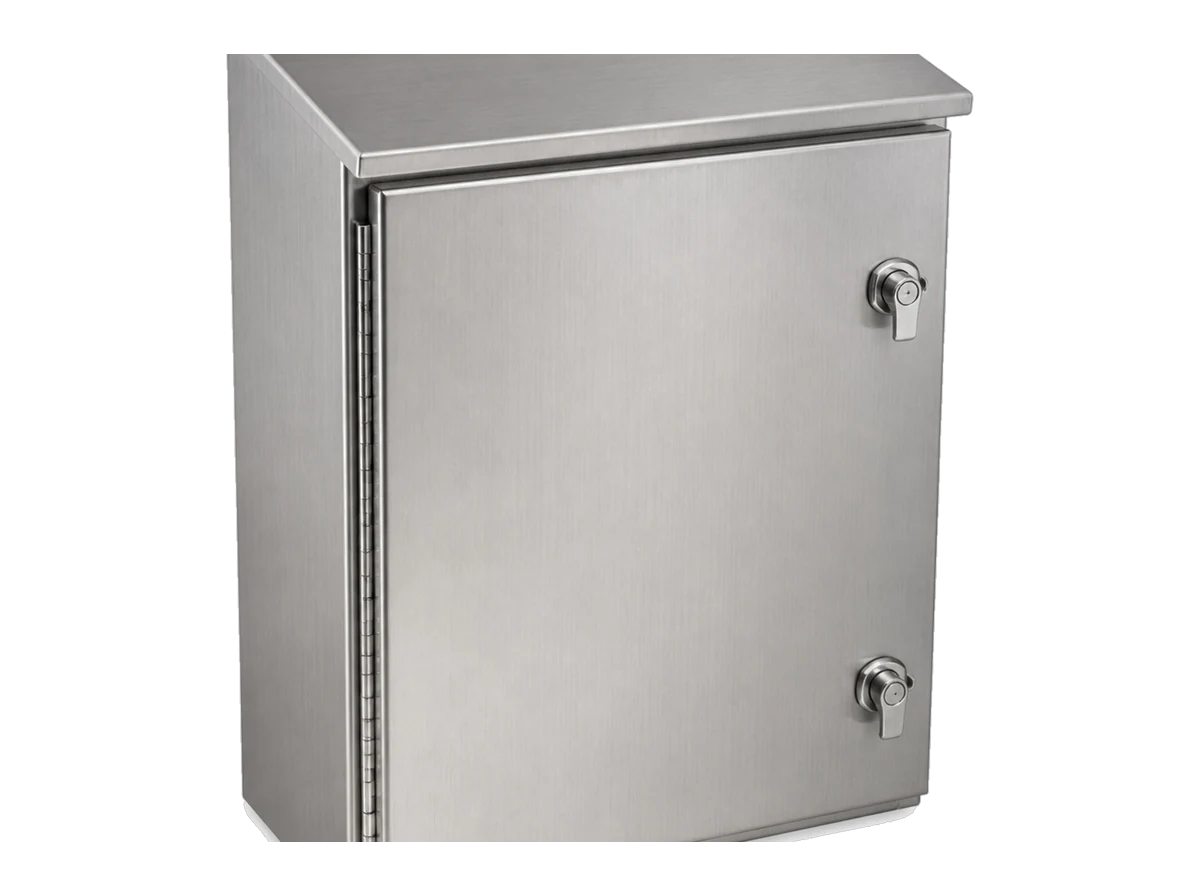
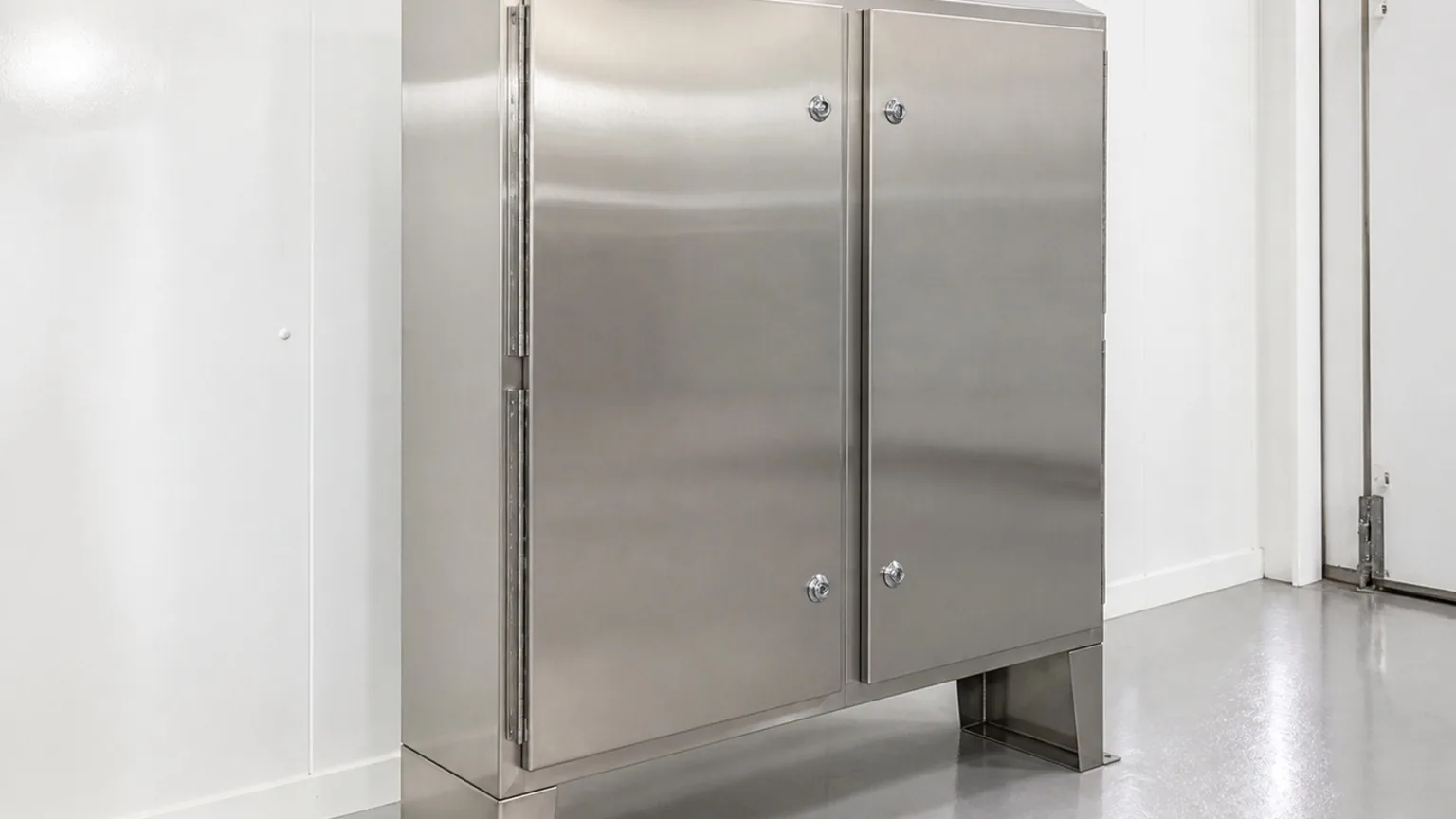
A typical station enclosure holds a service disconnect and utility metering (or a separate meter pedestal), pump starters or variable-frequency drives, a PLC or pump controller, a radio or cellular telemetry unit, float and level instrument terminals, a generator receptacle and transfer provision, and an alarm light and horn on top. It stands on a pad next to the wet well, in the sun, exposed to hydrogen sulfide from the well and to washdown. The enclosure is therefore NEMA 4X stainless — the reasons are in 4X stainless for water and wastewater — free-standing, with a layout that keeps the operator away from the power section. FabTek builds these on the NEMA 4X line.
VFD heat and cooling
Drives reject heat continuously and have a maximum ambient; a sealed stainless cabinet in the sun can exceed it. The integrator’s design picks the method — a cabinet air conditioner on a cutout, a heat exchanger, or filtered forced ventilation where the atmosphere allows — and sizes the enclosure for the drive’s clearances. The fabricator builds the cutout and reinforced mounting to the cooling unit’s template, the condensate drain, a sunshield standing off the roof and the sun-facing side, and a thermostat-controlled heater for winter condensation. Oversizing the cabinet slightly for air volume is cheaper than a second cooling unit. The fabricated side is in thermal provisions.
Layout: dual-door and compartments
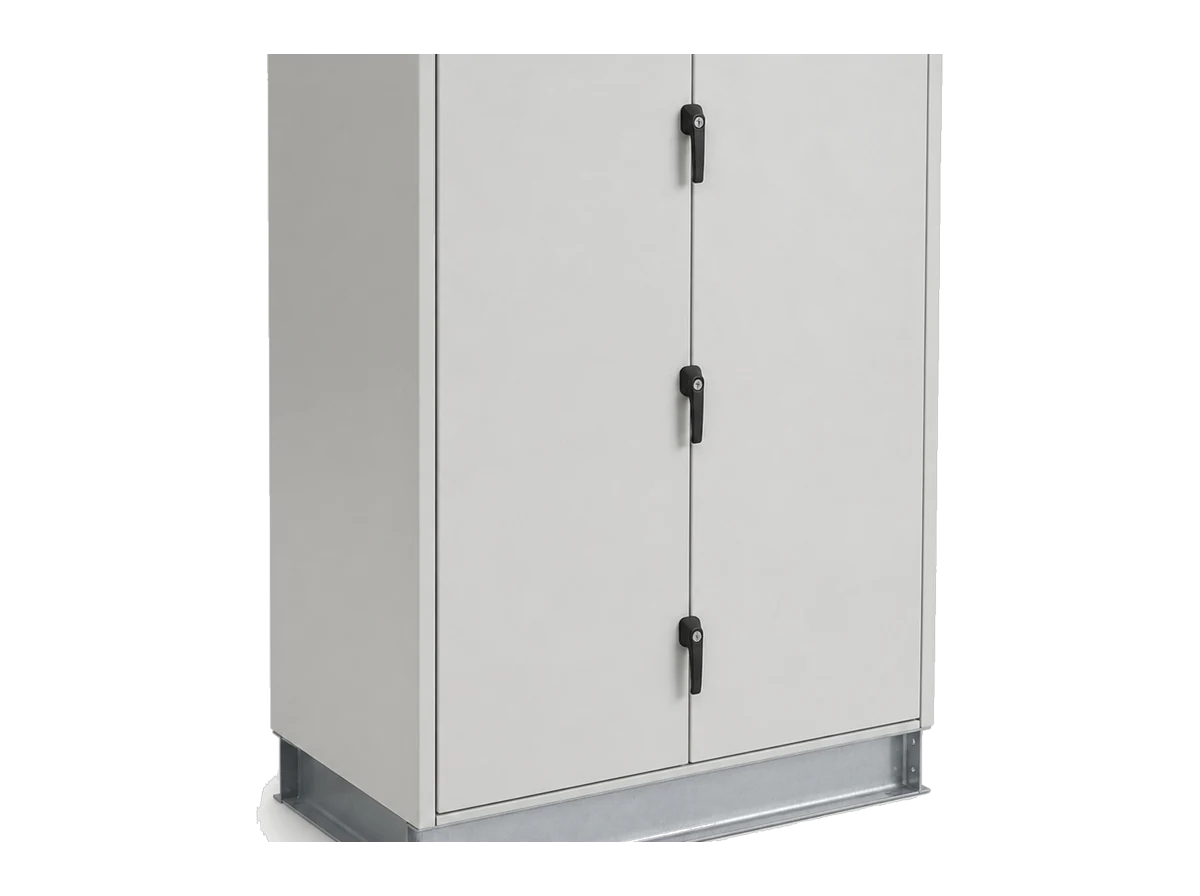
- Dual-door — an outer door with the HMI, selector switches and indicators on an inner swing panel or dead-front, so the operator never opens the power section to run the pumps.
- Compartmented — a separate utility metering and disconnect compartment, sealable by the utility, beside or below the control section.
- Generator connection — an exterior receptacle compartment with a manual transfer switch provision.
- Alarm — roof-mounted alarm light and horn with sealed penetrations and a bracket that survives wind.
- Entries — bottom gland plate for pump, float and level cables; separate sealed entries for antenna and utility service.
- Pad mounting — a stainless or galvanized base or legs with an anchor pattern to the utility’s pad standard, raised to keep the bottom out of standing water.
Standardizing across stations
The utilities that get the best enclosures at the best cost are the ones that have stopped designing them per station. A standard drawing — one or two sizes by pump horsepower, one layout, one hardware set — approved once by the utility’s engineering and operations, lets the fabricator build batches, hold stock and replace a corroded station enclosure in days rather than months. Integrators serving many utilities do the same for their own panel families. Upgrades to the standard go through a revision on both sides. The model is the same one described in RTU cabinets and metering cabinets, and the enclosure-and-panel division follows panel shops vs. enclosure fabricators.
How they are bought
New stations and capital upgrades: through the integrator or electrical contractor, to the engineer’s specification, with the enclosure usually inside the integrator’s panel scope. Replacements and standardization programs: directly by the utility on maintenance and capital budgets, often in batches of five to twenty. In both cases the fabricator needs the panel layout or standard drawing, the alloy and gauge, the cooling unit template, the compartment and door arrangement, the alarm and entry details, the base and anchor pattern, the hardware and lock, and the quantity.
The station enclosure that fails is replaced on an emergency budget by whoever can ship fastest. The utility with a standard drawing and a fabricator holding stock is the one that is not in that position.
FabTek Industries fabricates pump station and lift station control enclosures — free-standing NEMA 4X in 304 or 316 stainless, dual-door and compartmented layouts, cooling unit cutouts, sunshields, alarm mounts, sealed entries and pad bases — to utility and integrator standard drawings, in batches with stock, under an ISO 9001:2015 quality system, from four production sites in Hazlehurst, Mississippi. See NEMA 4X enclosures, control cabinets, or send us a standard drawing.
Working on something like this? Send a print or a scope — pricing and lead time within one business day, from four Mississippi plants.
Frequently asked questions
What enclosure is used for a lift station control panel?
A free-standing outdoor NEMA 4X stainless steel cabinet, usually 304 or 316, with a dual-door or compartmented layout separating the operator interface from the power section, cooling for the drives, a sunshield, sealed cable entries and a raised pad base.
How are VFDs kept cool in a sealed stainless enclosure?
With a cabinet air conditioner or heat exchanger mounted on a template cutout, sized by the integrator for the drive heat, plus a sunshield to reduce solar gain and a thermostat-controlled heater for winter condensation. The enclosure is sized for the drive’s clearances and air volume.
Why do utilities standardize lift station enclosures?
So one approved drawing can be built in batches, held in stock and used to replace a corroded or damaged station enclosure in days, instead of designing and procuring each station separately on an emergency schedule.
Who buys pump station enclosures?
Integrators and electrical contractors on new stations and capital upgrades, with the enclosure inside the panel scope, and utilities directly for replacements and standardization programs, typically in batches.