Genset packagers have engines and alternators on order and enclosures on the critical path. Every standby, prime and backup power set that goes outdoors ships in a housing that keeps weather out and air moving, and the packager’s own shop rarely has the laser, brake and paint capacity to build them at the rate engines arrive. Hospitals, water plants, telecom sites, industrial facilities, utilities and data centers all buy packaged gensets, so the enclosure demand is as broad as the market for backup power. This guide covers how packagers source enclosures from a contract fabricator.
Genset packager or OEM sourcing enclosures? Call 601.892.5017 or email collin.t@fabtekindustries.com — send a print and a quantity and we’ll quote it.
- Generator enclosures come in three types — weatherproof, walk-in and sound-attenuated — built on one base interface.
- The base-rail interface, airflow openings and exhaust supports are the critical fabrication details.
- Packagers keep acoustic design, airflow design and the generator package in-house; the fabricator builds the housing.
- An enclosure program runs on a frozen print per model and releases matched to engine deliveries.
The three enclosure types
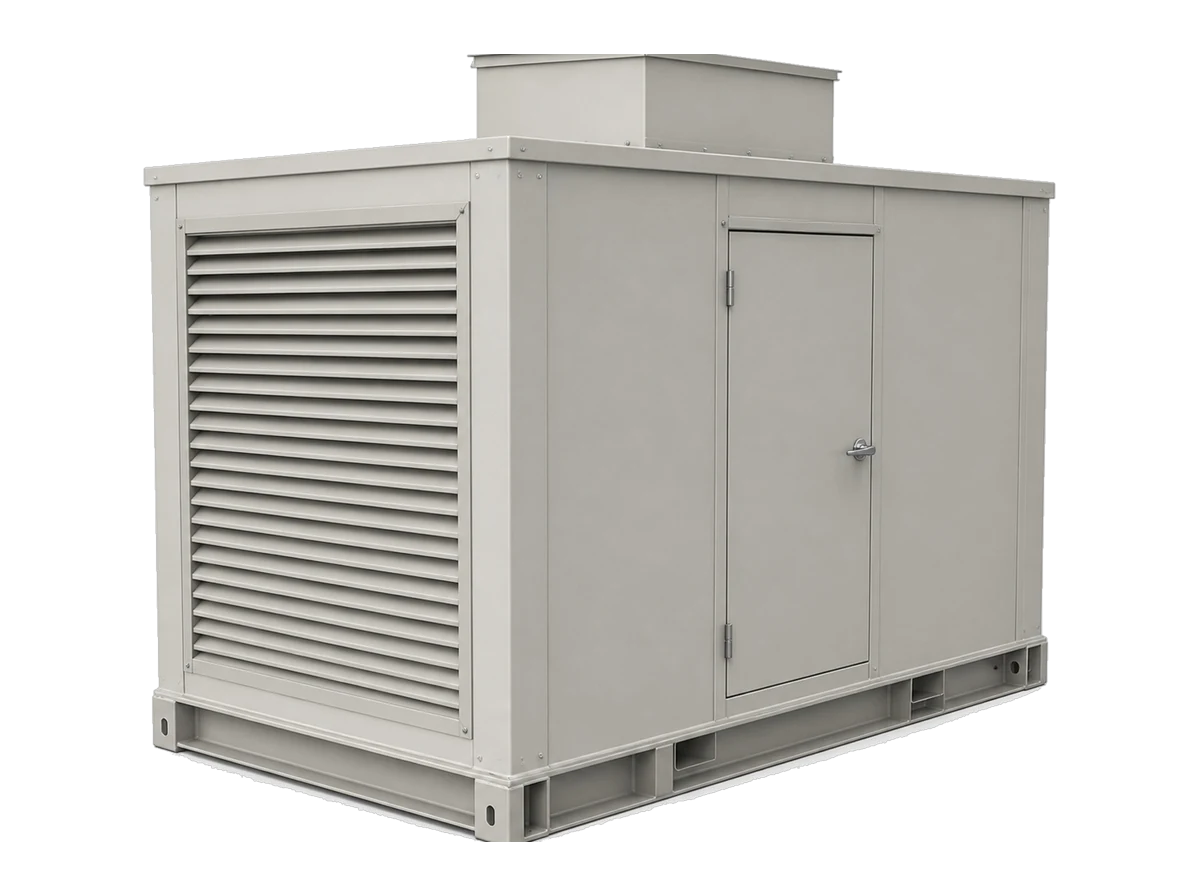
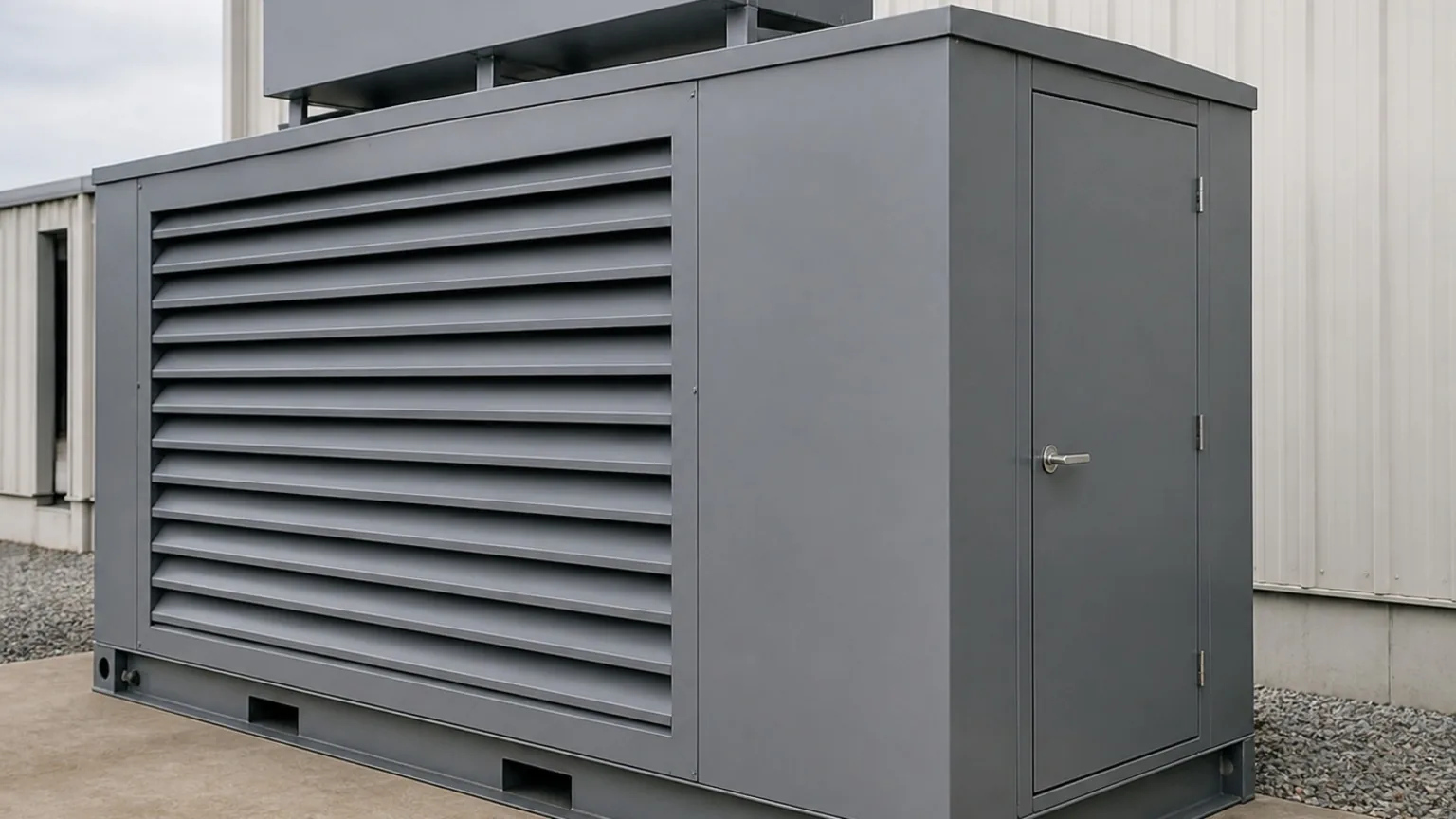
| Weatherproof | Skin-tight housing over the set with intake and discharge louvers or hoods, service doors on both sides, roof exhaust penetration; the volume product for standby sets |
|---|---|
| Walk-in | Larger enclosure with interior service clearance, personnel doors, lighting and receptacle provisions, interior partitions where specified; for prime and larger standby sets |
| Sound-attenuated | Weatherproof or walk-in construction with acoustic panel walls and baffled intake and discharge hoods built to the packager’s acoustic design; see sound-attenuated enclosures |
FabTek builds all three as described under generator enclosures, plus the accessory metalwork — battery racks, silencer supports, control-panel enclosures, rain hoods.
The base interface
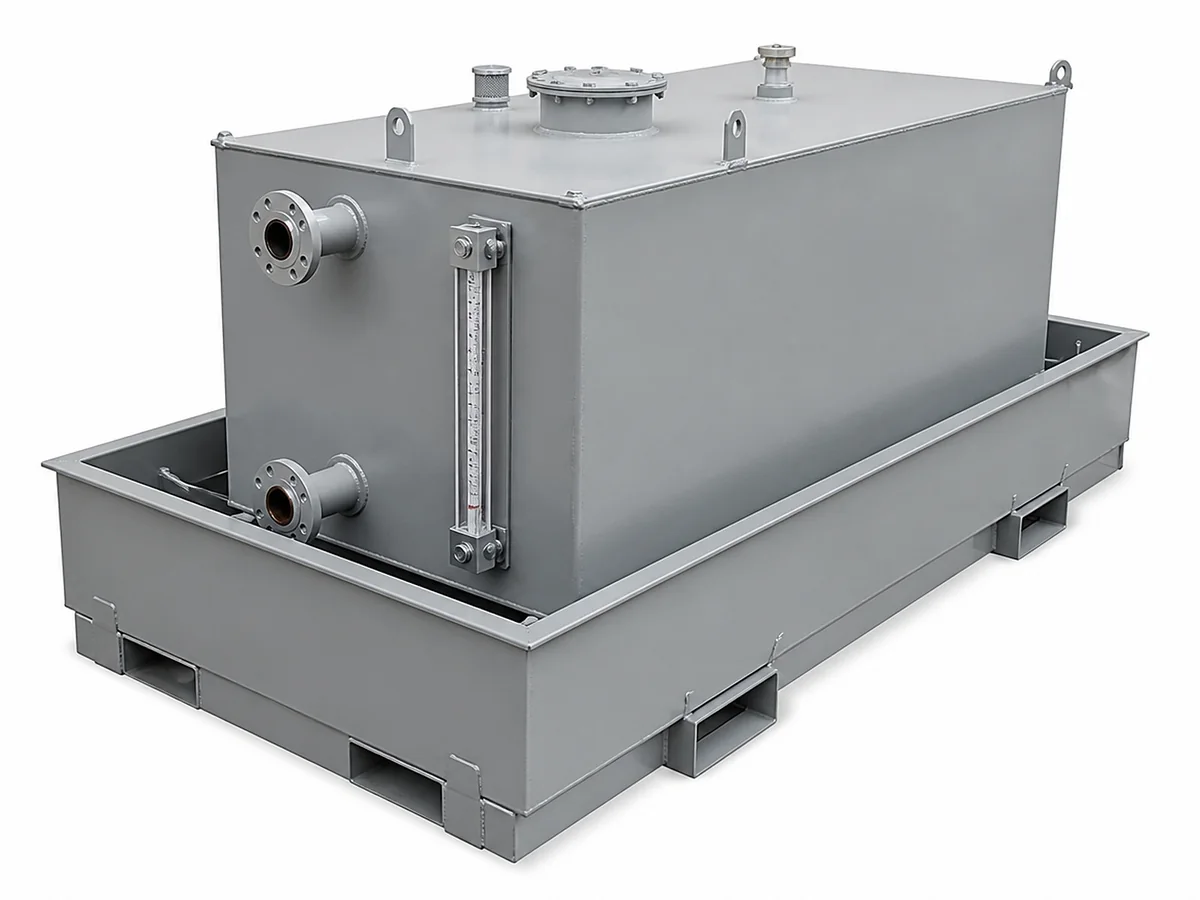
The enclosure bolts to the genset’s base rails or to a sub-base fuel tank, and that interface decides whether the housing fits. The print has to carry the base-rail or tank bolt pattern, the enclosure sill design that lands on it, the clearance to the engine, alternator and radiator, and the lifting arrangement — whether the enclosure lifts with the set or separately. Packagers that supply a base interface drawing per model, with the fuel tank variants, get enclosures that drop on; packagers that supply only the engine outline get a first article that needs rework. The fuel system steel line builds the sub-base and day tanks that the enclosure sits on.
Airflow, exhaust and access
- Intake — louvers or hoods at the alternator end sized to the packager’s airflow requirement, with screens and, where specified, motorized dampers.
- Discharge — radiator discharge hood or duct adapter at the radiator end, with the duct flange matched to the radiator.
- Exhaust — roof penetration with rain cap and thimble, and silencer supports in the roof structure for the silencer weight.
- Doors — service doors on both sides sized to the maintenance points, with hold-opens, three-point latches and lockable handles; removable panels for major service.
- Control panel — enclosure or window for the generator controller and a cutout for the emergency stop.
- Cable entry — load and control cable entry plates at the alternator end, sized to the conductor.
Materials and finish
Weatherproof enclosures are typically 12- and 14-gauge steel skins on formed or structural frames, with 11-gauge where the size or wind load warrants; aluminum is used where corrosion or weight on a roof or trailer matters. Finish is powder coat in the packager’s color — many packagers have a brand color — to a salt-spray requirement, applied in-house on FabTek’s lines to an IEEE 2000-hour rating. Hardware is stainless or zinc-plated per the exposure. The material and finish decisions are covered in aluminum vs. steel and choosing a finish.
What the packager keeps
The packager owns the generator package: engine, alternator, controls, fuel system, the airflow and acoustic design, the listing of the package and the warranty. The fabricator owns the housing: structure, skins, doors, louvers and hoods to the airflow design, acoustic panel construction to the acoustic design, exhaust penetrations and supports, finish and packaging. The hand-off is a print per model with the base interface, the louver free areas, the hood geometry and the hardware; the enclosure RFQ guide covers the general structure.
Running the program
A packager building several hundred sets a year across a few models runs the enclosure as a program: a frozen print per model and option, a first article fitted on a set, a forecast tied to engine deliveries, material and powder staged, and releases that land enclosures a week or two ahead of each set’s assembly date. Capacity is reserved so a surge from another customer does not delay engines that are already on the floor. The mechanics are in running an OEM–fabricator program; the data-center-fleet version, where dozens of identical enclosures ship to one campus, is in generator and BESS enclosures for data centers.
The engine arrived on time. The alternator arrived on time. The set shipped late because the enclosure was not there. The program exists so that sentence never gets written.
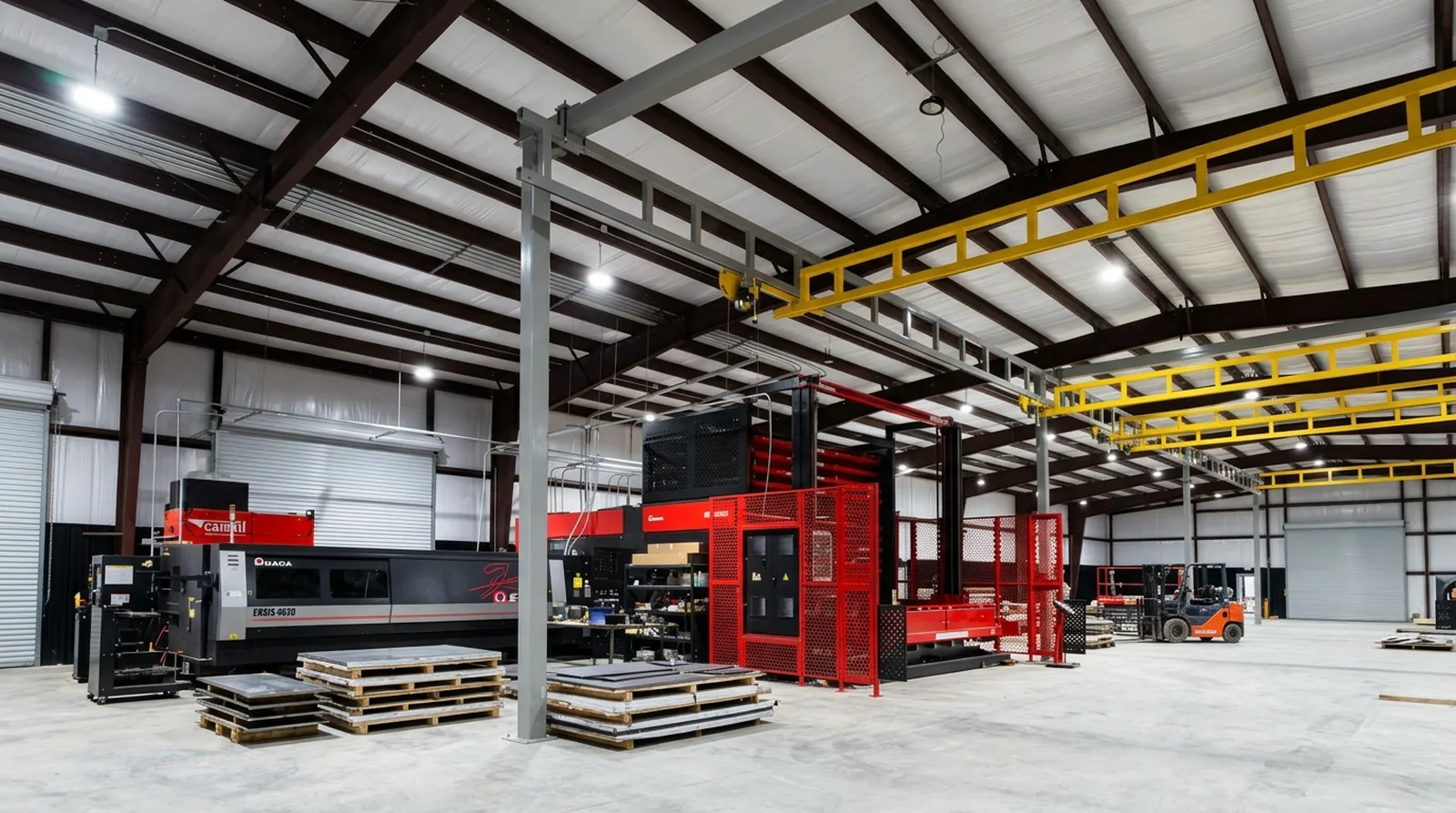
FabTek Industries fabricates generator enclosures — weatherproof, walk-in and sound-attenuated — and the accessory metalwork around them for genset packagers and OEMs, to the packager’s print and base interface, powder-coated in-house to an IEEE 2000-hour salt-spray rating, in programs matched to engine deliveries, under an ISO 9001:2015 quality system with AWS-certified welding, from four production sites in Hazlehurst, Mississippi. See how we work with electrical OEMs, or send us a base interface drawing.
Working on something like this? Send a print or a scope — pricing and lead time within one business day, from four Mississippi plants.
Frequently asked questions
What types of generator enclosures do packagers buy from fabricators?
Weatherproof skin-tight housings for standby sets, walk-in enclosures with interior service clearance for larger and prime-power sets, and sound-attenuated versions of either with acoustic panel construction, plus accessory metalwork such as battery racks, silencer supports and control enclosures.
What is the most important detail on a generator enclosure print?
The base interface: the base-rail or sub-base fuel tank bolt pattern, the sill design that lands on it, clearances to the engine, alternator, radiator and silencer, and whether the enclosure lifts with the set or separately.
Who designs the airflow and acoustics of a generator enclosure?
The packager or genset OEM. The fabricator builds the louvers, hoods, ducts and acoustic panel construction to that design and does not certify airflow or sound levels.
How do packagers keep enclosures from delaying genset shipments?
By running the enclosure as a program with a frozen print per model, a forecast tied to engine deliveries, staged material and powder, releases that land enclosures ahead of each set’s assembly date, and capacity reserved with the fabricator.