Poultry and meat processors across the Southeast are adding capacity and automating further-processing lines, and every one of those lines moves product on conveyors that get washed down with hot water and chemicals every night. A sanitary conveyor is not a standard conveyor in stainless. It is designed from the frame up to be cleaned, inspected and kept running in a wet, cold, corrosive environment. Here is what that means in practice.
Adding a line or replacing a worn one? Call 601.892.5017 or email sales@fabtekindustries.com — we fabricate in stainless and install during outages, weekends and shift breaks.
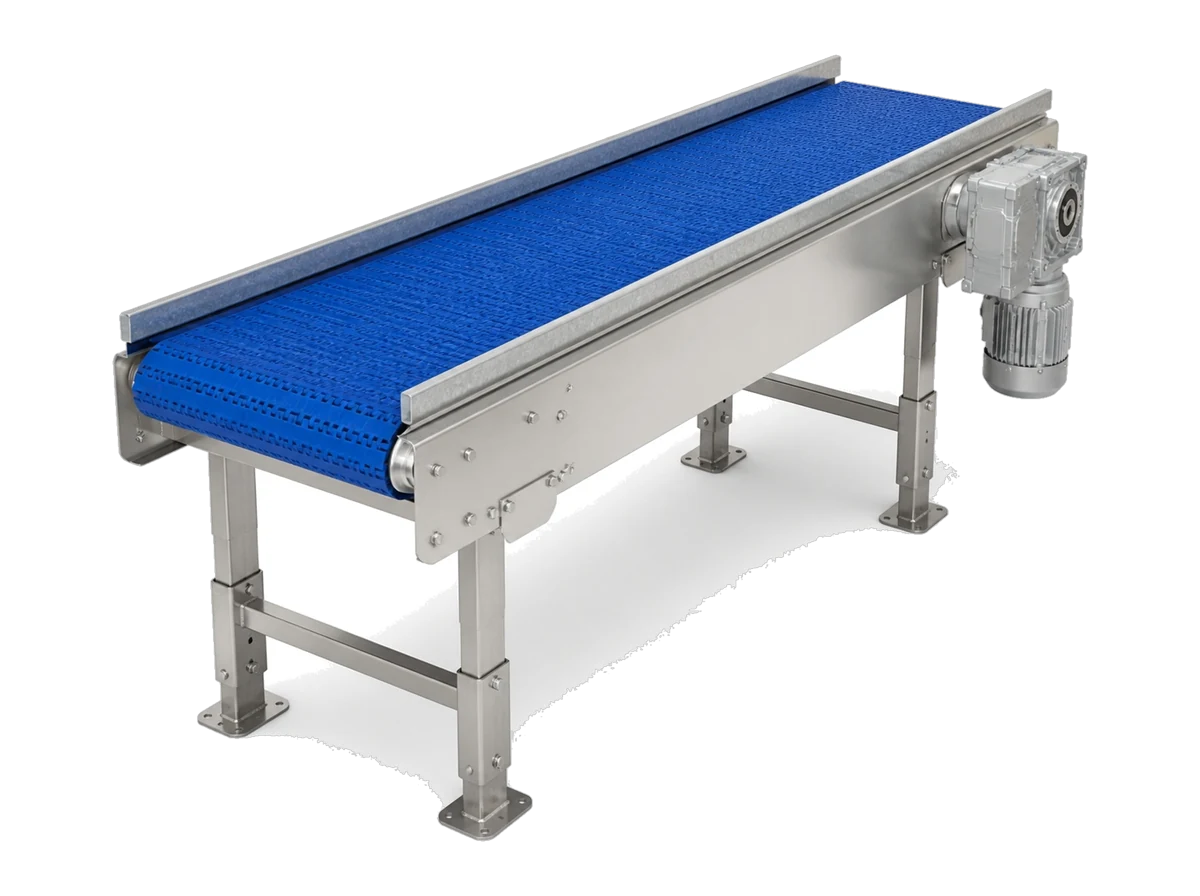
- Frames: 304 (or 316) stainless, continuous welds ground smooth, no hollow members, sloped drainable surfaces, stand-off construction for hose access.
- Belting: modular plastic for most poultry and meat areas, grid style chosen for drainage and support; PVC or polyurethane in packaging; gravity roller for totes and cases.
- Drives and electrical: washdown-rated motors and gearboxes, cleanable bearings, stainless control enclosures, tool-less guards where cleaning requires them.
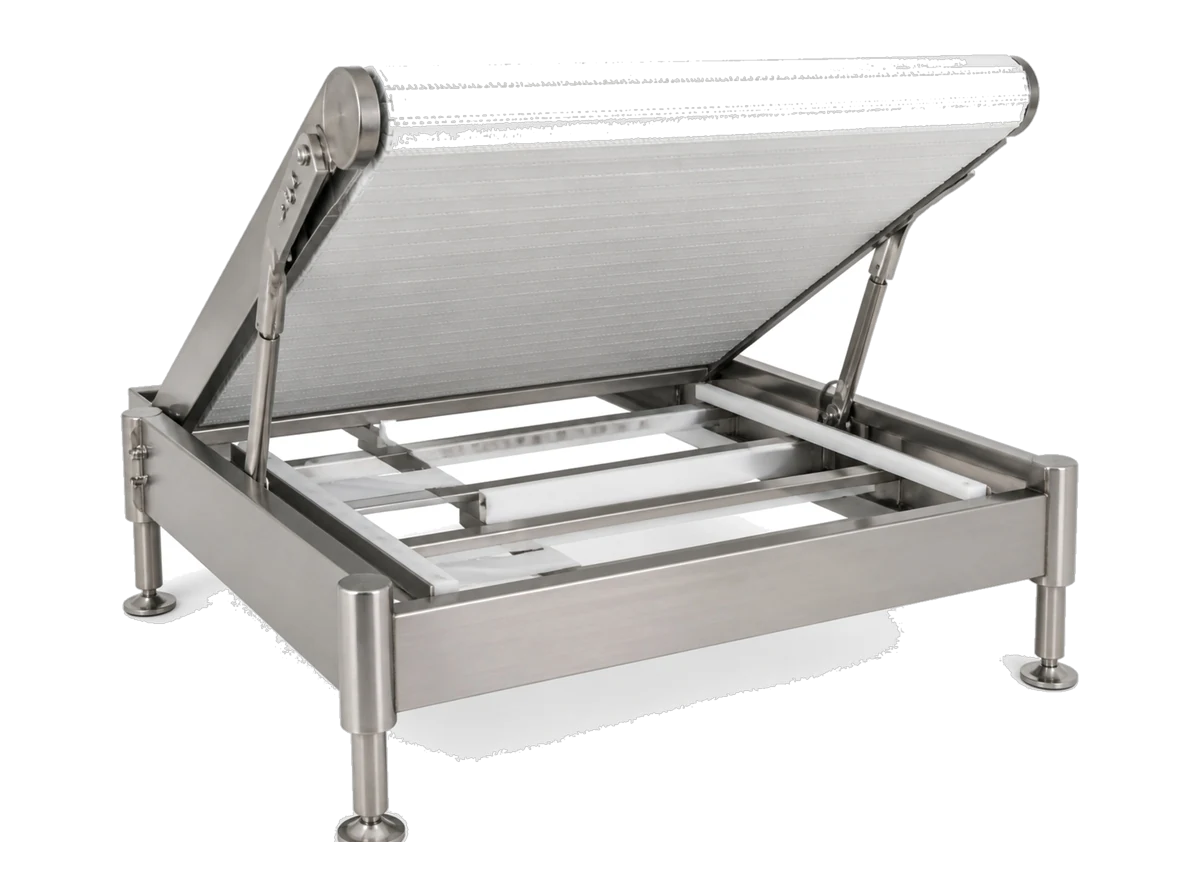
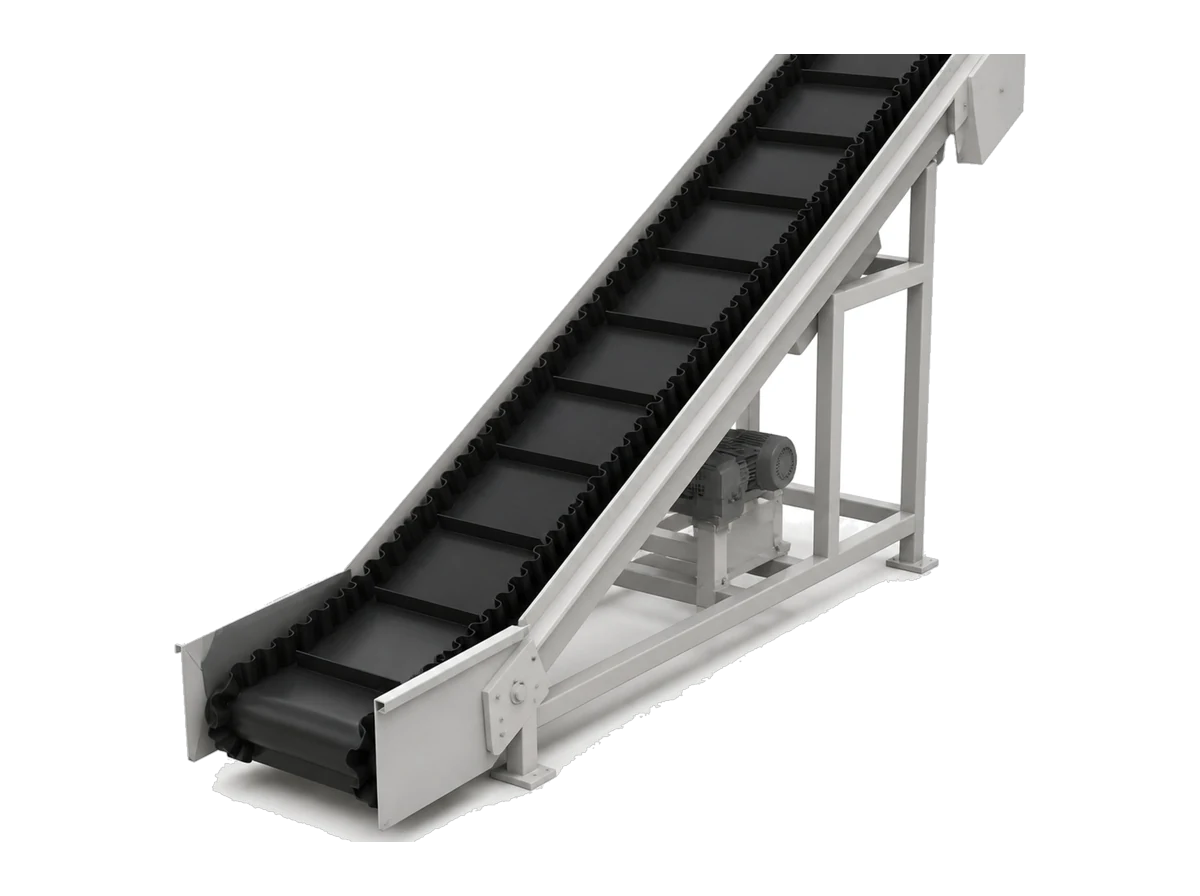
- Layout: transfers and inclines designed for the product, lift-up sections for floor access, platforms and stairs built to the same sanitary standard.
- Conveying Hard, Heavy Powders
- Bulk Conveying Over Distance & Height
- Material Handling for Federal & Defense Facilities
- Custom vs. Catalog Conveyors
- Reshoring: The Factory Comes to Life at Fit-Out
- Section 232 Tariffs & Built in the U.S.A. Conveyors
- Conveyor Installation: Drawing to First Run
- Retrofit, Rebuild or Replace
- Sanitary & Washdown Conveyors for Poultry, Meat & Food (you are here)
- How to Get a Conveyor Quote From FabTek
Frame and structure
Sanitary frames are stainless steel (304 is typical, 316 where chemical exposure is severe) with continuous welds ground smooth, no hollow tubes that can harbor water and bacteria, sloped surfaces that drain, and stand-off construction that keeps components away from each other and the floor so a hose can reach everything. Legs, feet and supports follow the same rules. Fasteners are minimized and, where used, are sealed or accessible. FabTek's sanitary conveyors are built this way as standard.
Belting and conveying surface
Modular plastic belting is the workhorse of poultry and meat because it can be lifted for cleaning, runs on sprockets without tracking problems, and comes in open-grid, flush-grid and flat-top styles for drainage or support. PVC and polyurethane belts suit packaging and dry areas. Gravity roller is used for totes and cases. Belt selection depends on product, temperature, incline, cleaning chemistry and whether the belt must be USDA/FDA compliant.
| Frames | 304 stainless typical; 316 for severe chemical exposure; continuous ground welds; no hollow members; drainable surfaces; stand-off legs and feet |
|---|---|
| Belting | Modular plastic (open-grid, flush-grid, flat-top), PVC or polyurethane, gravity roller; chosen by product, incline, temperature and cleaning chemistry |
| Drives | Washdown-rated motors and gearboxes; cleanable or sealed bearings; stainless control enclosures |
| Guarding | Tool-less removal where cleaning requires it; locked where safety requires it |
| Access | Lift-up and tip-up sections, belt lifters, inspection points, platforms and crossovers in matching stainless |
Industry-typical configurations; exact materials, belting and ratings are confirmed per project.
Drives, bearings and electrical
Washdown-rated motors and gearboxes, sealed or open-design bearings that can be cleaned and re-lubricated, and stainless enclosures for controls are standard. Guards are designed to be removed without tools where cleaning requires it and locked where safety requires it.
Layout for cleanability and throughput
Transfers, incline angles and side guides are designed for the product: whole birds, parts, deboned meat and formed or breaded product all behave differently. Lift-up and tip-up sections give access to floors and drains. Platforms, mezzanines and stairs around the line are built to the same sanitary standard so inspectors and cleaning crews are not working around carbon steel.
Installation in a running plant
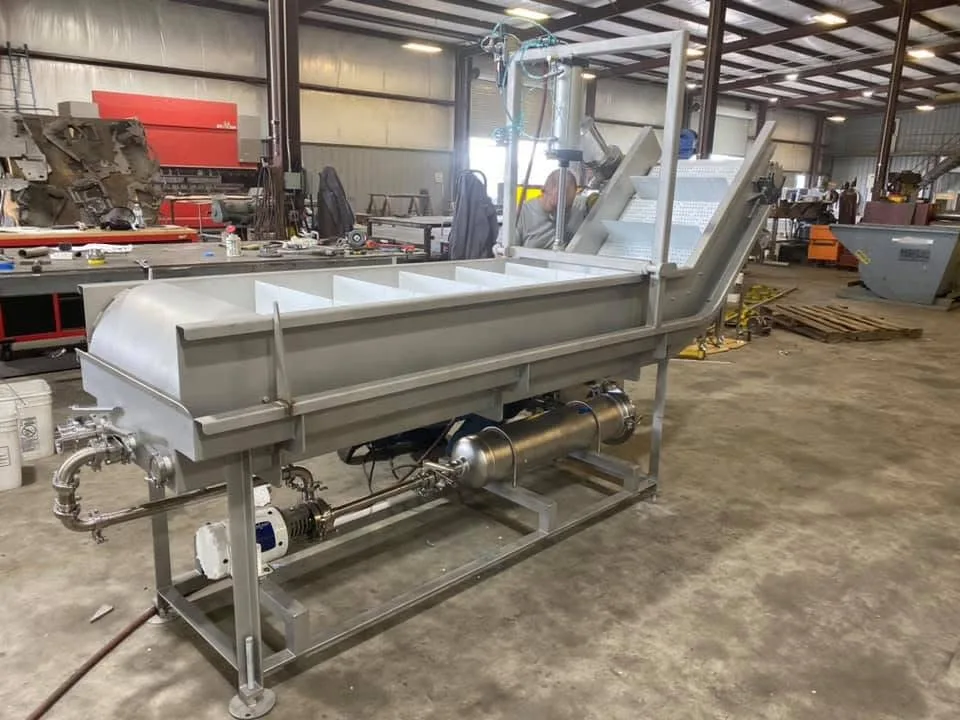
Most sanitary conveyor work happens in plants that cannot stop. FabTek fabricates sanitary conveyors and the stainless structure around them in Mississippi, pre-assembles where possible, and installs with our own crews during planned outages, weekends and shift breaks — the process in Part 7. We also repair, rebuild and replace sanitary conveyors from other manufacturers, and keep common wear parts on hand for the plants we serve.
Frequently asked questions
What makes a conveyor sanitary?
Stainless construction with smooth continuous welds, no hollow members, drainable surfaces, stand-off design for hose access, cleanable belting and washdown-rated drives and bearings, laid out so every surface can be reached and inspected.
What belt is best for poultry processing?
Modular plastic belting in most areas, chosen by grid style for drainage and product support; PVC or polyurethane in packaging. The right belt depends on product, incline, temperature and cleaning chemistry.
Can you install sanitary conveyors without shutting the plant down?
In most cases, yes. Work is pre-assembled and installed during planned outages, weekends and shift breaks.