Natural gas engines and turbines are the workhorses of onsite generation: prime power for sites the grid cannot serve, combined heat and power for campuses and plants, peaking and capacity for utilities and large loads. Each one ships in an enclosure, usually on a skid, and the gas service adds requirements a diesel standby enclosure does not have. Packagers and energy developers buy the metal from contract fabricators. This guide covers what makes a gas-service enclosure different and how it is sourced.
Packager or developer sourcing gas engine or turbine enclosures and skids? Call 601.892.5017 or email collin.t@fabtekindustries.com — send a print and a quantity and we’ll quote it.
- Gas-service enclosures add ventilation for gas dilution, gas detection and fire provisions to the standard generator enclosure.
- Prime and CHP units run continuously, so access, acoustics and heat-recovery supports are designed for a plant, not a standby set.
- The skid base carries the engine, alternator, auxiliaries and enclosure and is often the heaviest fabrication in the package.
- Packagers buy enclosure-and-skid packages per model; developers buy them inside the packager’s scope.
What gas service changes
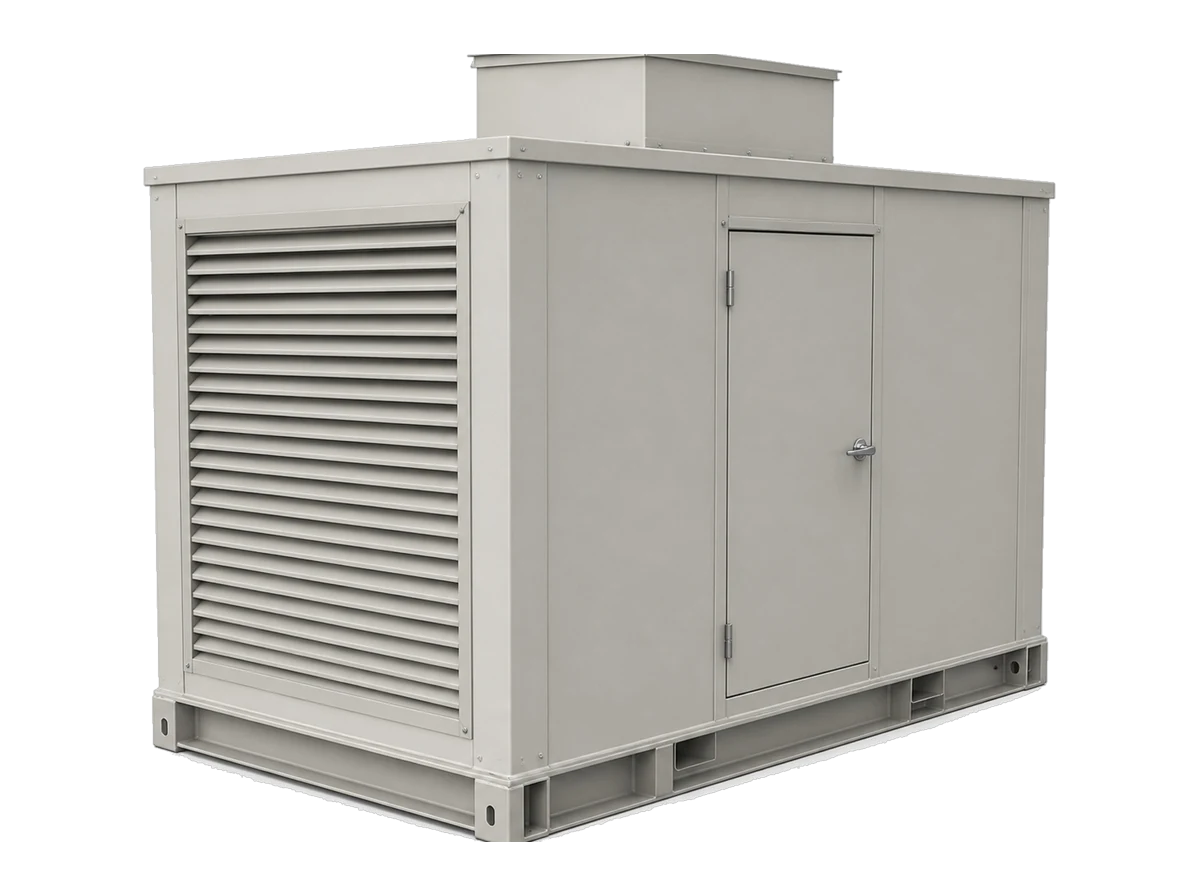
A natural gas engine enclosure has a fuel that is lighter than air and a gas train inside the housing. The design therefore ventilates the enclosure continuously to keep any leak below a fraction of the lower flammability limit, places gas detectors at the high points, interlocks the fuel valve to detection and ventilation, and in some designs treats the enclosure interior as a classified space with appropriately rated electrical components. For the fabricator that means ventilation openings and fan mounts sized to the dilution airflow, detector mounting at the roof, sealed penetrations for the gas train, and a roof design without pockets where gas can collect. Those requirements come from the packager’s design under the applicable codes — NFPA 37 and NFPA 850 among them — and the fabricator builds them. FabTek builds these on the generator enclosure line.
Prime power and CHP: built for continuous duty
- Access — a technician is inside daily: walk-in construction, full-height doors, lighting, receptacles, and removable roof or wall sections for major overhauls.
- Heat recovery — CHP units carry exhaust heat exchangers, jacket-water piping and sometimes an absorption chiller interface; the enclosure carries supports and penetrations for all of it.
- Exhaust — silencer and catalyst supports in the roof structure, with expansion and thermal insulation clearances.
- Acoustics — continuous operation near occupied buildings means sound-attenuated construction as standard; see sound-attenuated enclosures.
- Fire — detection and suppression provisions, and fire-rated construction where the installation requires it.
Microturbines and small gas turbines
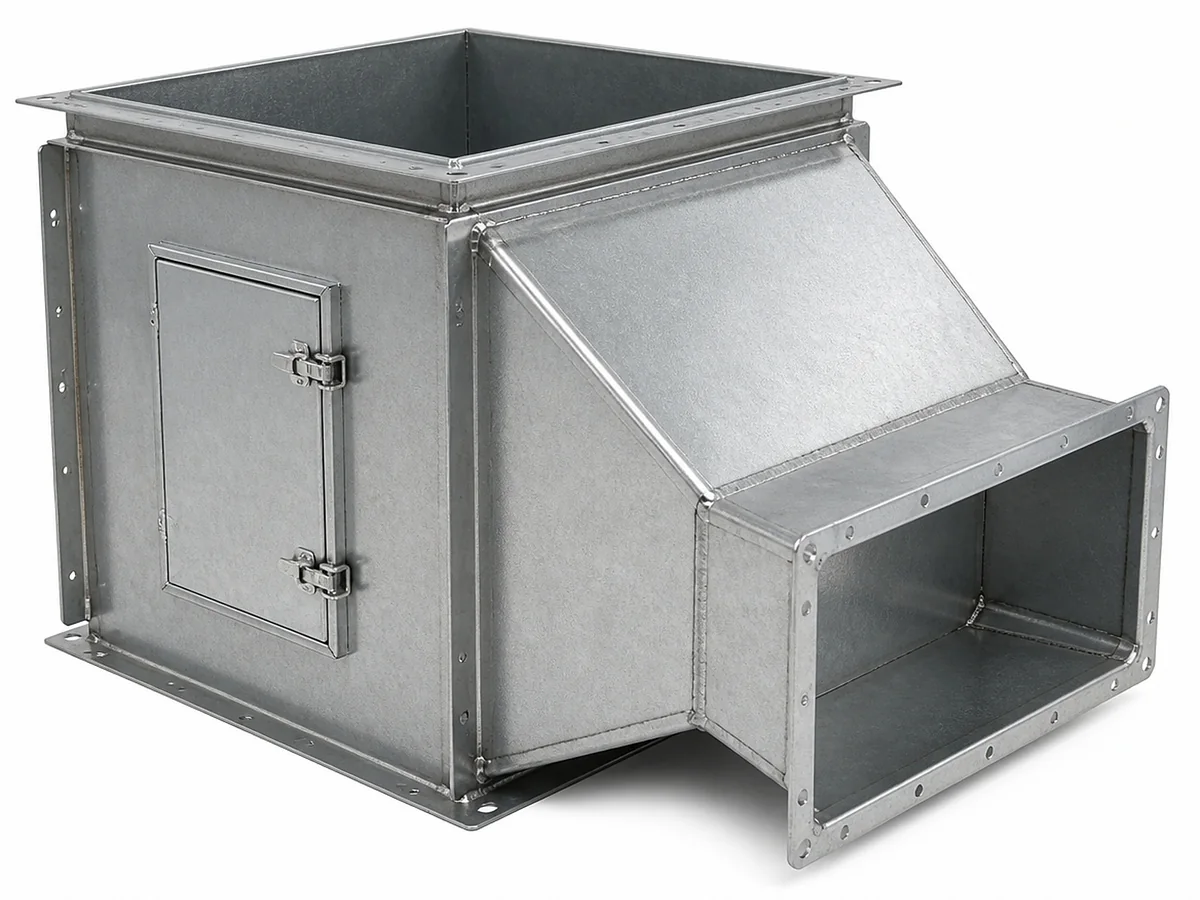
Turbine packages have a different shape — tall, with large combustion-air intakes and hot exhaust — and the enclosure follows: filtered intake plenums with large free area, exhaust ducting and heat-recovery steam generator supports, acoustic treatment for the high-frequency turbine noise, and often a separate electrical and controls compartment barriered from the engine bay. The turbine OEM’s package drawings define it; the fabricator builds the housing, plenums, ducts and skid. The duct and plenum work overlaps with FabTek’s ductwork and plenum fabrication.
The skid base
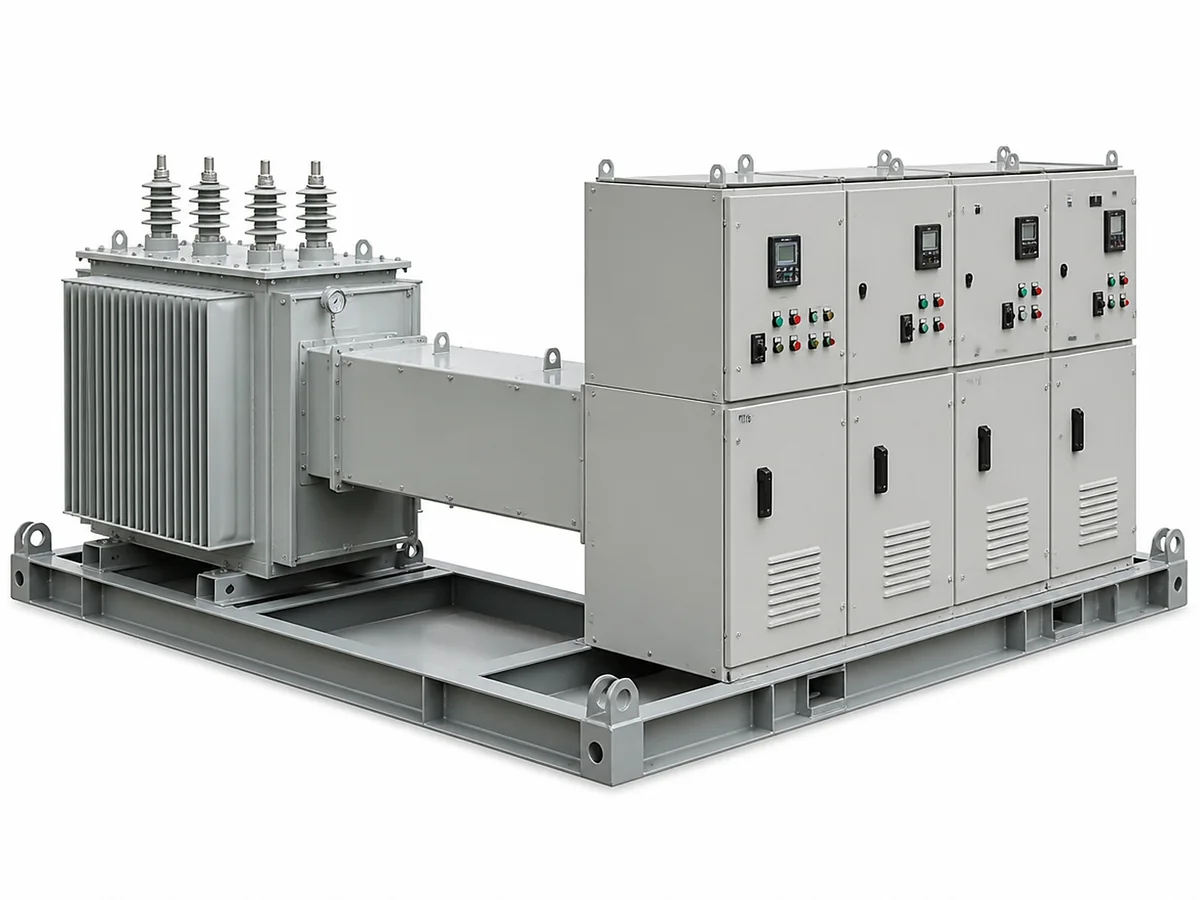
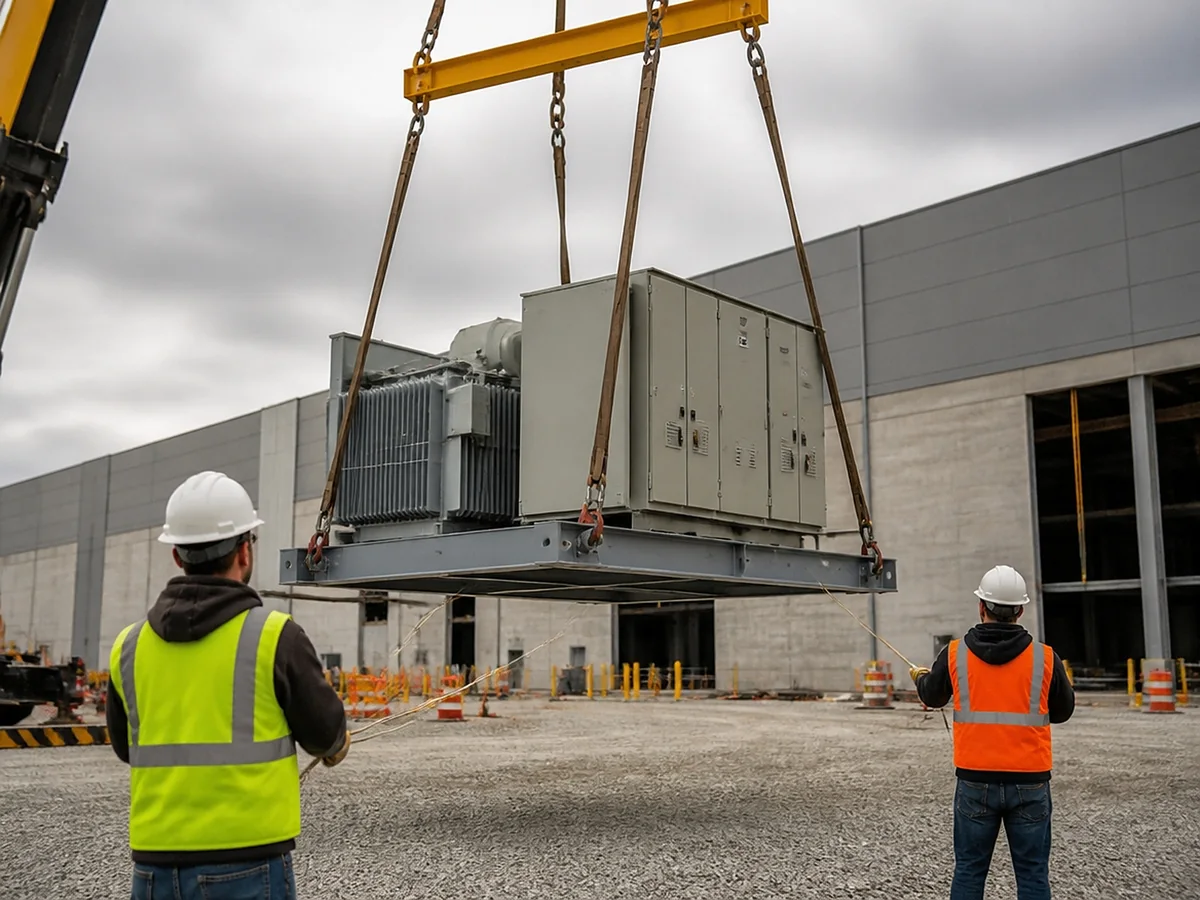
The skid carries the engine, alternator, radiator or cooling module, auxiliaries, gas train and the enclosure, and is lifted and set as one piece. It is a welded structural base — wide-flange or channel with cross-members, vibration isolator mounts to the engine’s pattern, drip pans and drains, forklift pockets or lifting lugs, and anchor bolt holes — designed by the packager’s engineer and built to that drawing. On larger units the skid is the heaviest and most exacting fabrication in the package because the engine mounts have to be flat and co-planar. FabTek builds these as power skids and equipment skids.
How the metal is bought
Packagers buy enclosure-and-skid packages per model from a fabricator that holds the model drawings, with releases matched to engine deliveries exactly as described in the generator enclosure sourcing guide. Energy developers and utilities building onsite generation buy the enclosure inside the packager’s scope, and occasionally buy walk-in housings or E-Rooms for the switchgear and controls directly, covered in paralleling switchgear enclosures. Either way the fabricator needs the package general arrangement, the skid and base interface, the ventilation and detection design, the acoustic design, the penetration schedule and the finish.
A standby enclosure protects an engine that runs an hour a month. A prime-power enclosure is a building someone works in every day, with a gas line inside it. The print has to know the difference.
FabTek Industries fabricates enclosures, intake plenums, exhaust supports and skid bases for natural gas engine, microturbine and small gas turbine packages — to the packager’s print, with gas-service ventilation and detection provisions, sound-attenuated construction and heat-recovery supports — under an ISO 9001:2015 quality system with AWS-certified welding, from four production sites in Hazlehurst, Mississippi. See generator enclosures, power skids, or send us a package drawing.
Working on something like this? Send a print or a scope — pricing and lead time within one business day, from four Mississippi plants.
Frequently asked questions
How is a natural gas engine enclosure different from a diesel one?
It is ventilated continuously to dilute any gas leak, carries gas detectors at the high points with a roof designed to avoid pockets, seals the gas train penetrations and provides for fuel-valve interlocks — requirements from the packager’s design under codes such as NFPA 37 that the fabricator builds into the housing.
What does a CHP enclosure need that a standby enclosure does not?
Walk-in access for daily maintenance, supports and penetrations for exhaust heat exchangers and jacket-water piping, silencer and catalyst supports, sound-attenuated construction for continuous operation, and fire detection and suppression provisions.
Who builds the skid base for an engine package?
The contract fabricator, to the packager’s engineer’s drawing: a welded structural base with vibration isolator mounts to the engine pattern, drip pans, lifting provisions and anchor holes, with the engine mounts held flat and co-planar.
How do packagers source gas engine and turbine enclosures?
As enclosure-and-skid packages per model from a fabricator that holds the model drawings, with releases matched to engine deliveries. Developers and utilities usually buy the enclosure inside the packager’s scope.