Catalog conveyors are a good product. For a straight run of cartons in a clean warehouse, a standard belt or roller conveyor from a national brand, sold through a distributor, is the right answer and usually the cheapest. The trouble starts when the job is not standard: the material is abrasive, hot, wet or valuable; the route climbs, turns or threads through existing equipment; the structure has to carry platforms and stairs; or the plant cannot stop for the weeks a dealer-arranged install takes. That is when a custom conveyor manufacturer earns the call.
Not sure which job you have? Call 601.892.5017 or email sales@fabtekindustries.com — we will tell you if a catalog unit is the better buy.
- Catalog conveyors are engineered for the middle of the market: unit loads, moderate speeds, indoor, standard sizes, third-party install.
- Five signs you need custom: the material, the route, the structure, the environment, the schedule.
- A fabricator-built conveyor includes engineering, frames and structure from the same shop, finish, installation by own crews and service afterward.
- Custom is not always more expensive — the catalog price excludes structure, modifications, freight and installation, which is where budgets break.
- Conveying Hard, Heavy Powders
- Bulk Conveying Over Distance & Height
- Material Handling for Federal & Defense Facilities
- Custom vs. Catalog Conveyors (you are here)
- Reshoring: The Factory Comes to Life at Fit-Out
- Section 232 Tariffs & Built in the U.S.A. Conveyors
- Conveyor Installation: Drawing to First Run
- Retrofit, Rebuild or Replace
- Sanitary & Washdown Conveyors for Poultry, Meat & Food
- How to Get a Conveyor Quote From FabTek
What a catalog conveyor is built for
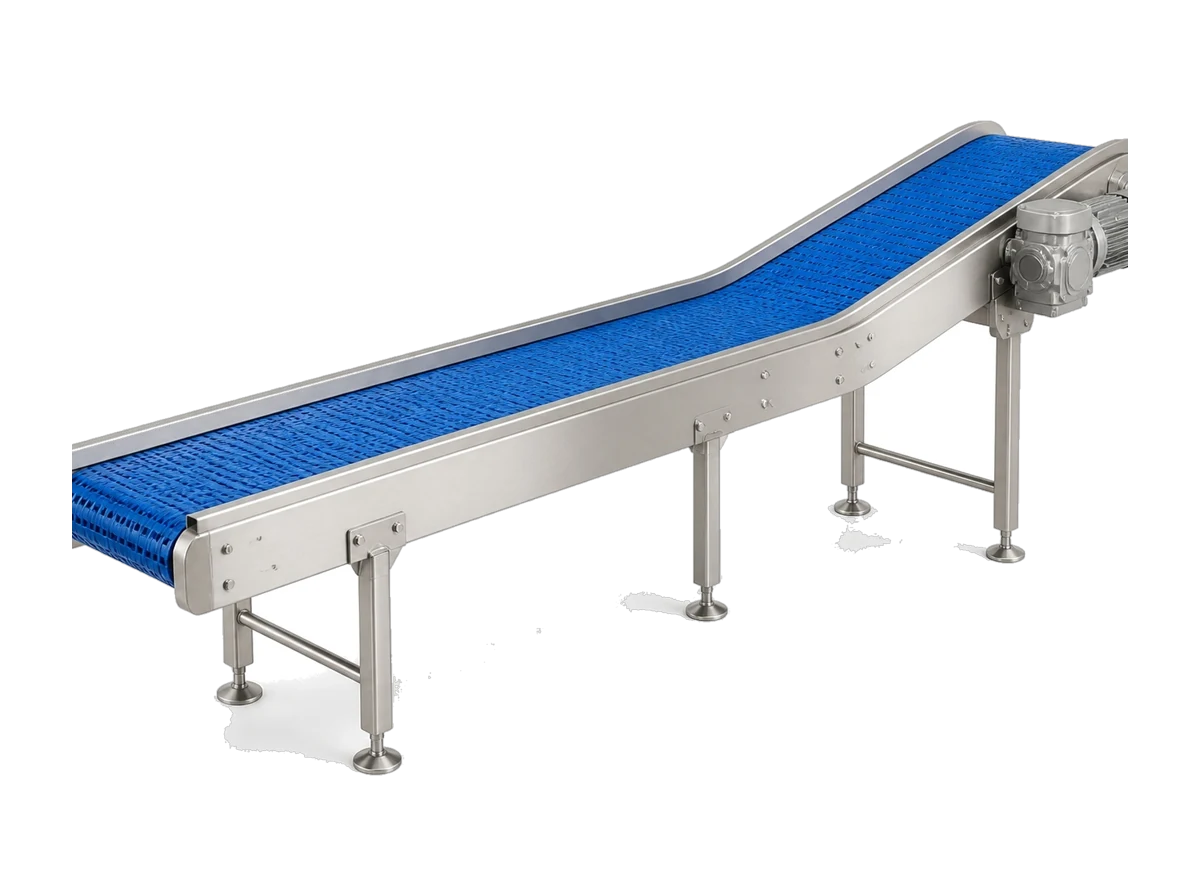
Standard conveyors are engineered for the middle of the market: unit loads, moderate speeds, indoor environments, standard widths and lengths. They are built in volume, sold through distributors and integrators, and installed by third-party millwrights. The manufacturer rarely sees the plant. That model works well when the application matches the catalog, and we will say so when it does.
Five signs you need custom
- The material. Dense powders, abrasive solids, sharp or hot parts, raw poultry and meat, wood residuals — anything that wears, corrodes or contaminates. See Part 1.
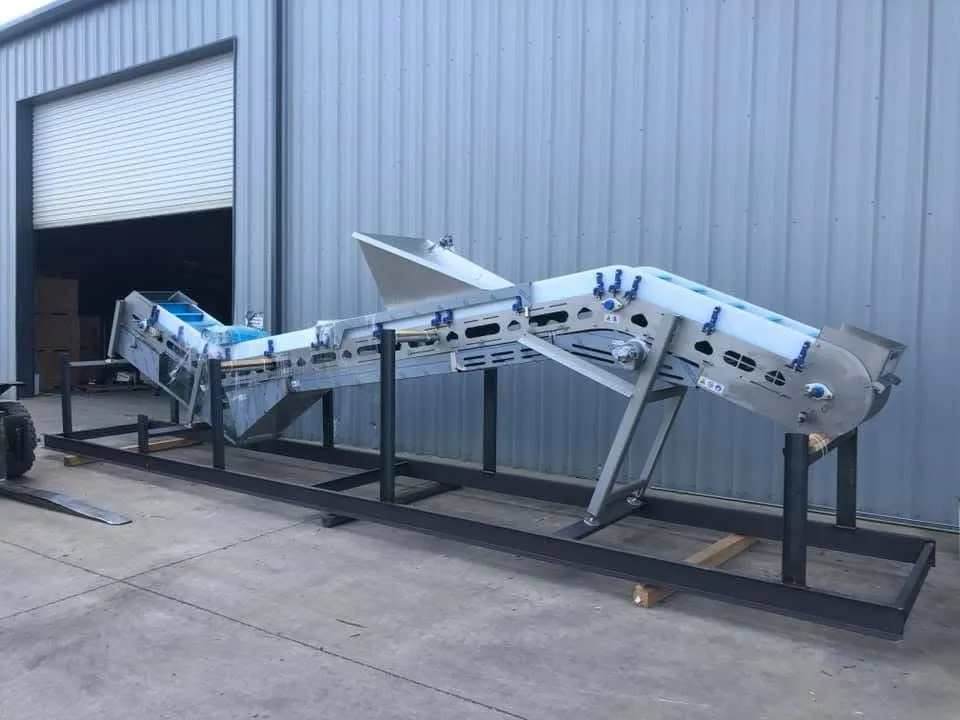
- The route. Long runs, steep inclines, vertical lifts, tight transfers and anything that has to fit around what is already there.
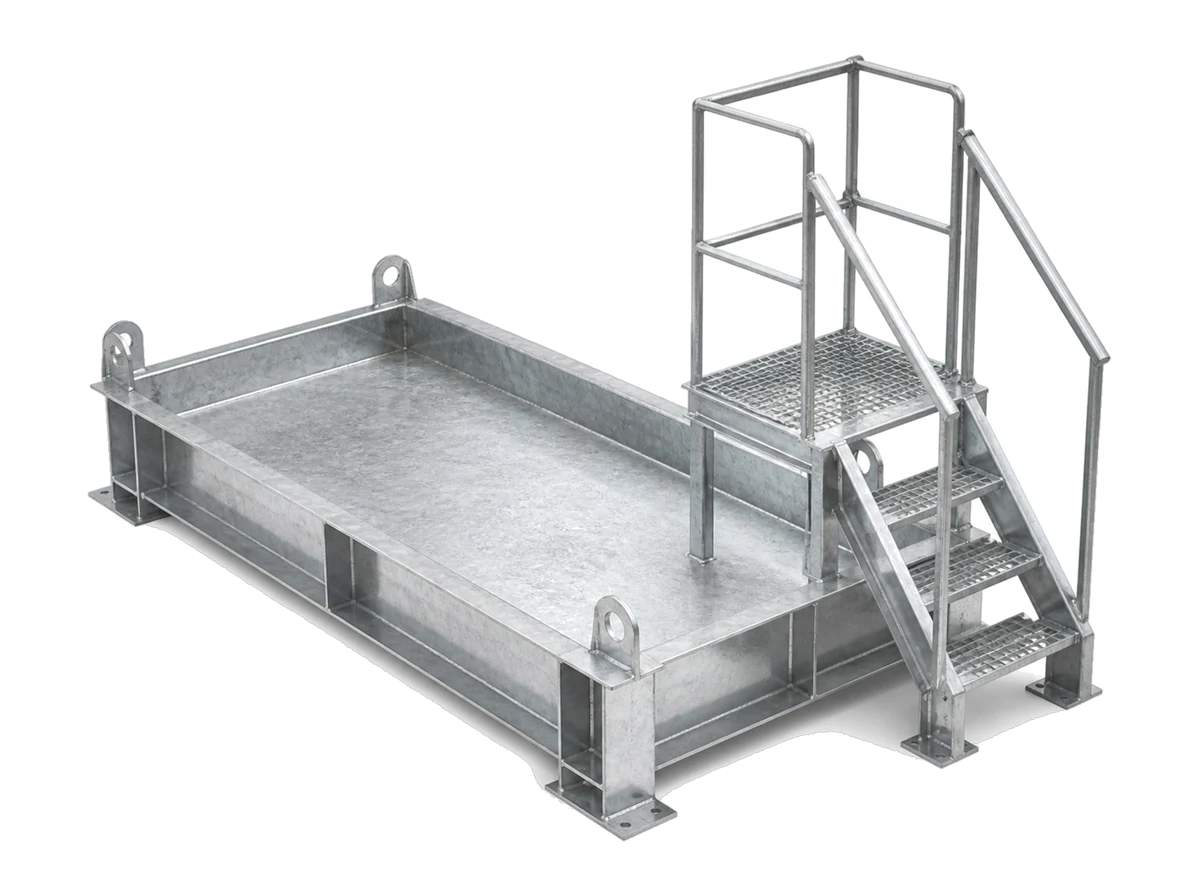
- The structure. Conveyors that need their own towers, platforms, catwalks, guards and stairs, which a catalog maker treats as someone else's problem.
- The environment. Washdown, outdoor, dusty or hazardous areas with specific finish, seal and motor requirements. See sanitary conveyors.
- The schedule. When the plant needs one company accountable for design, build, install and startup on a fixed date.
What a fabricator-built conveyor includes
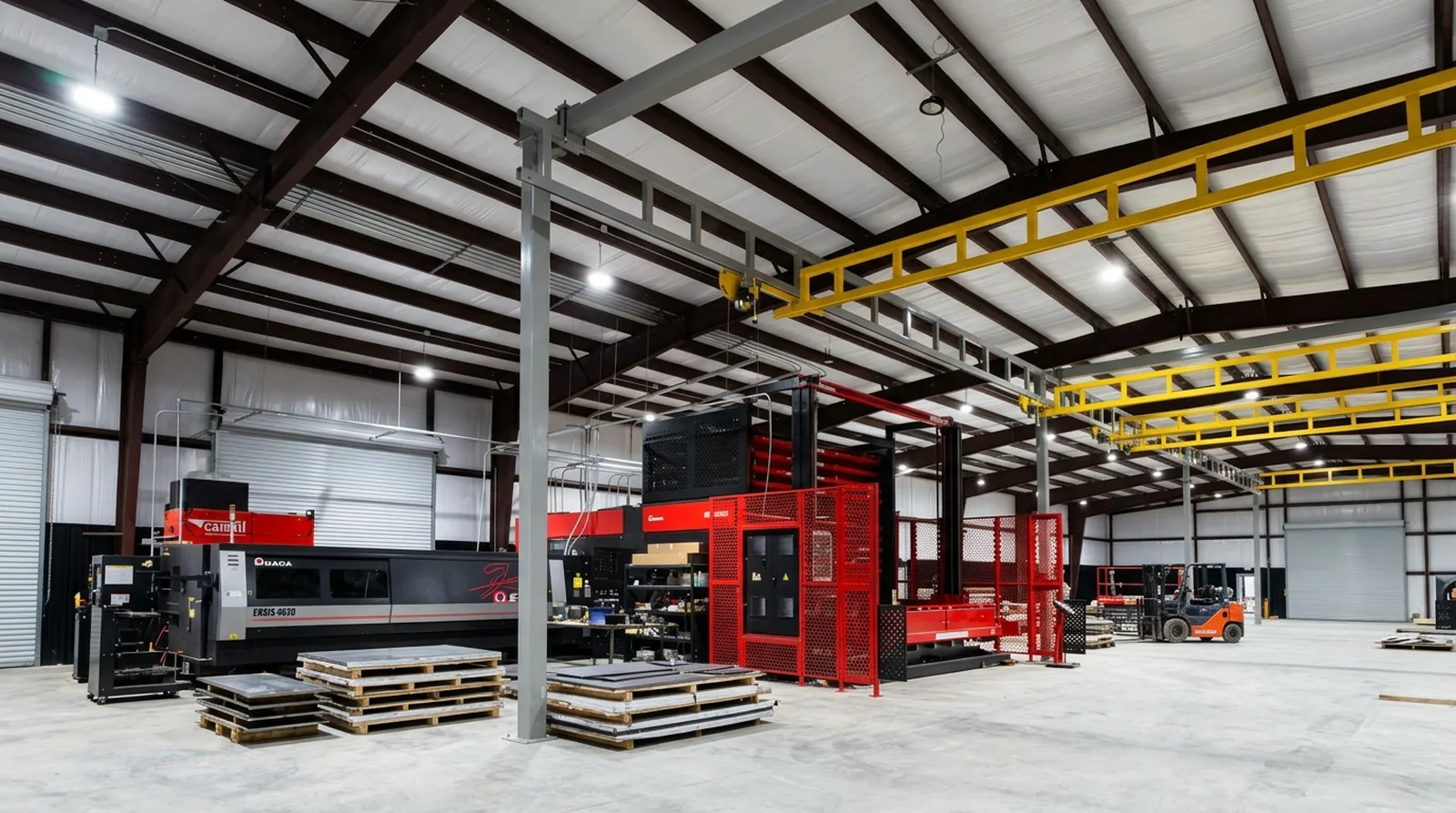
At FabTek, a custom conveyor starts with your material and your drawings (or ours) and ends with a commissioned system. Our engineers size the conveyor and design the supports and platforms together. Our shops cut, form, weld and finish the frames, troughs, structures and guards in the same facilities that build transformer tanks and heavy structural steel, so a conveyor frame is built to the same standard as a 40-foot structural member. Finish is powder coat or whatever the spec calls for. Our own crews install, align and commission, and they come back for maintenance, rebuilds and replacement parts — Part 7 walks through the installation.
The conveyor sections, drive and standard supports, shipped from stock or a short production run. Structure, site modifications, adapters, freight, installation and controls are separate quotes from separate companies.
Engineering, the conveyor, its wear and finish package, supports, platforms and guards, freight, installation by our own crews, commissioning and spares — one scope, one number, one accountable company.
Where the money goes
A custom conveyor is not always more expensive. A catalog quote covers the conveyor; the structure, modifications, adapters, freight, installation and controls are quoted separately by other companies, and the gaps between those quotes are where budgets break. A fabricator's quote covers the whole scope in one number. On straightforward jobs the catalog wins; on anything heavy, long, dirty or structural, the complete custom package is usually both cheaper and faster by the time the system runs. Explore the conveyor family or custom fabrication.
Frequently asked questions
Is a custom conveyor more expensive than a catalog conveyor?
Not necessarily. The catalog price covers only the conveyor; structure, installation, modifications and freight are extra. On heavy-duty, long-run or structural jobs a custom package often costs less in total and avoids change orders.
What industries use custom conveyors?
Poultry and meat, food and beverage, feed, timber and wood products, minerals and metals processing, distribution, and general manufacturing — anywhere the material, route or environment is outside catalog limits.
Do you build to our drawings or design from scratch?
Both. Most customers bring drawings or a layout, and our engineering team details the conveyor and structure from there; we can also design from a material description and a site visit.