Moving a bulk solid across one room is easy. Moving it the length of a building and up several stories, through a working plant, without spilling, dusting, degrading or stalling it, is a design problem. Most long routes end up as a combination of conveyor types, each chosen for the leg it handles best. Here is how the five common options compare, and when to use each.
Have a route to lay out? Call 601.892.5017 or email sales@fabtekindustries.com with the material, rate, horizontal distance and lift — that is enough to start.
- Screw conveyors meter and enclose material well on short-to-medium runs; hanger bearings are the limit on long ones.
- Drag and en-masse chain conveyors own long horizontal legs — 100–300 ft in one machine, at low speed, with low degradation.
- Bucket elevators are the default for vertical lift beyond what an incline can do; continuous-discharge for dense or abrasive powders.
- Belt wins on tonnage with free-flowing material; pneumatic wins on routing flexibility but wears fast with abrasives.
- A real route is usually feeder + horizontal leg + lift + distribution, with engineered transfers and one structure holding it all.
- Conveying Hard, Heavy Powders
- Bulk Conveying Over Distance & Height (you are here)
- Material Handling for Federal & Defense Facilities
- Custom vs. Catalog Conveyors
- Reshoring: The Factory Comes to Life at Fit-Out
- Section 232 Tariffs & Built in the U.S.A. Conveyors
- Conveyor Installation: Drawing to First Run
- Retrofit, Rebuild or Replace
- Sanitary & Washdown Conveyors for Poultry, Meat & Food
- How to Get a Conveyor Quote From FabTek
Screw conveyors: controlled transfer, short to medium runs
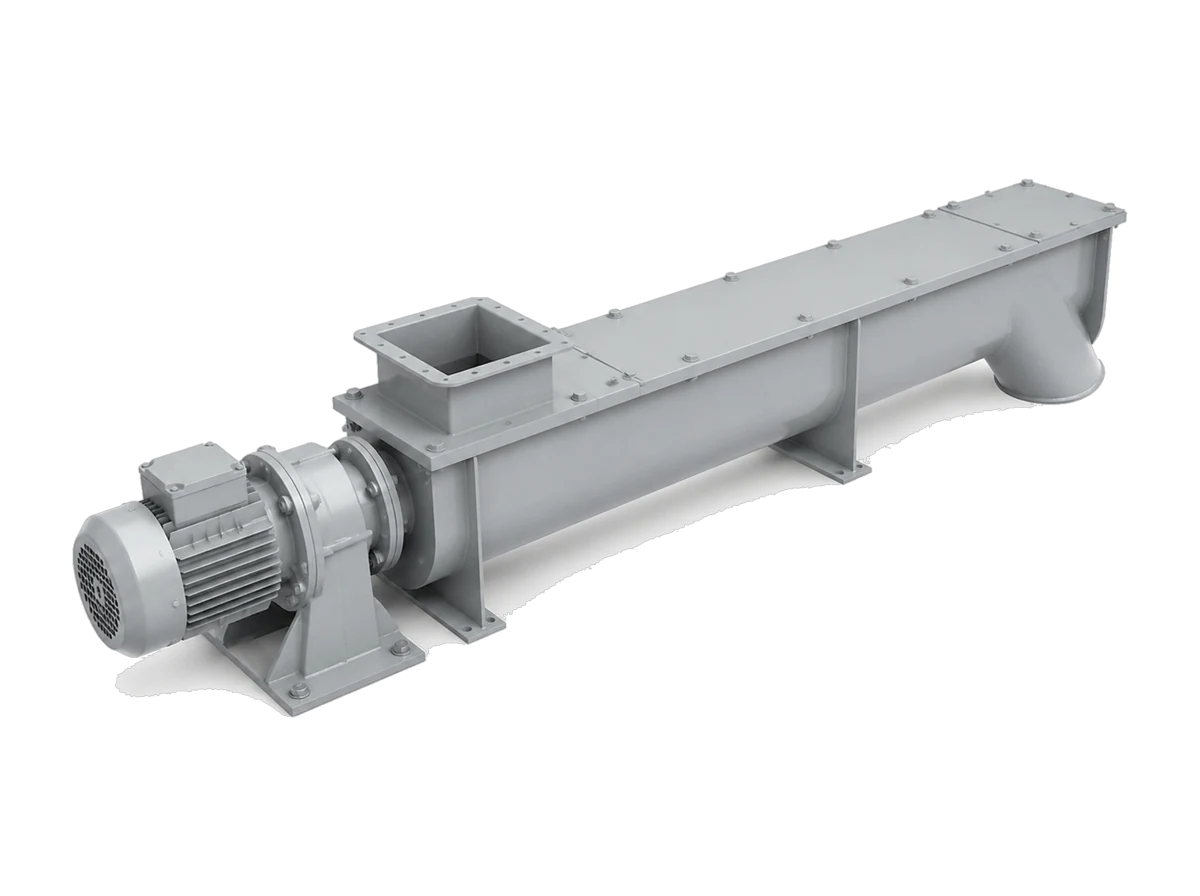
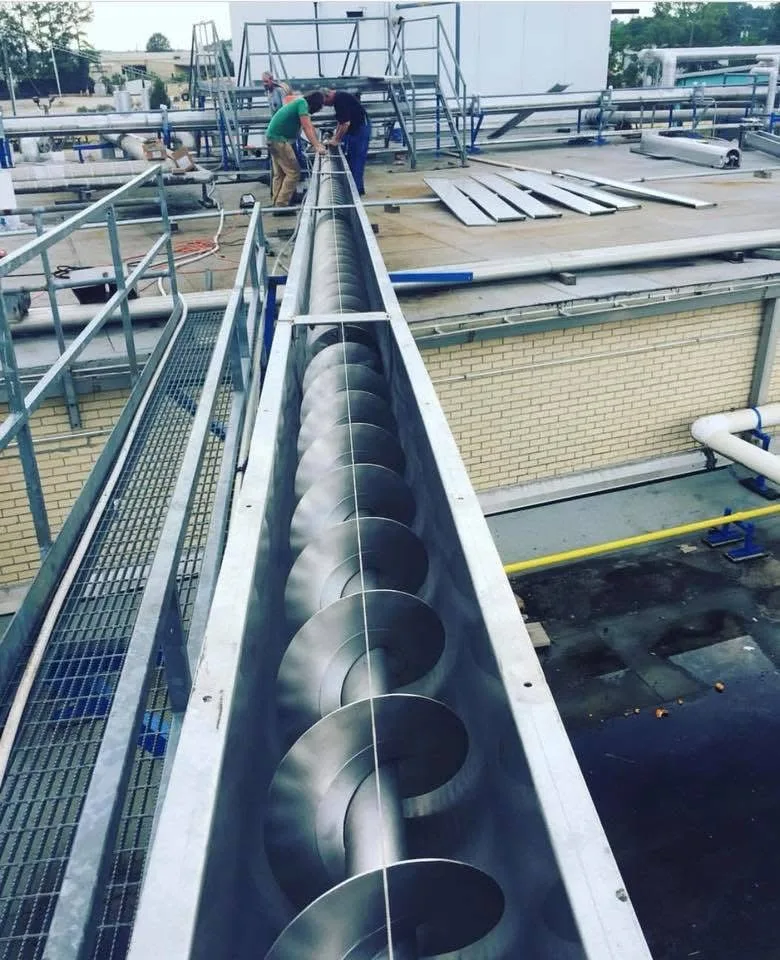
A screw conveyor moves material with a rotating helical flight inside a trough or tube. It is enclosed, meters material accurately, handles inclines up to roughly 20–45 degrees depending on design, and is easy to build in custom lengths and diameters. Its weakness on long runs is the hanger bearing: every 10–12 feet of screw typically needs an intermediate support, and in abrasive or sticky service those bearings become the maintenance point. Vertical screw conveyors exist and work well for lifts up to roughly 30 feet with free-flowing material, but they need a flooded inlet and run at higher speed.
Drag and en-masse chain conveyors: long horizontal runs at low speed
A drag conveyor pulls material along an enclosed trough with flights on a chain. It runs slowly, so degradation and wear are low, it handles long horizontal distances (100–300 feet is routine) in a single machine, and it can incline moderately or follow an L or Z path with the right design. For dense, abrasive or friable materials over long horizontal distances, a drag conveyor is often the better choice than a screw, at the cost of a larger housing and a chain to maintain.
Belt conveyors: highest capacity, free-flowing materials
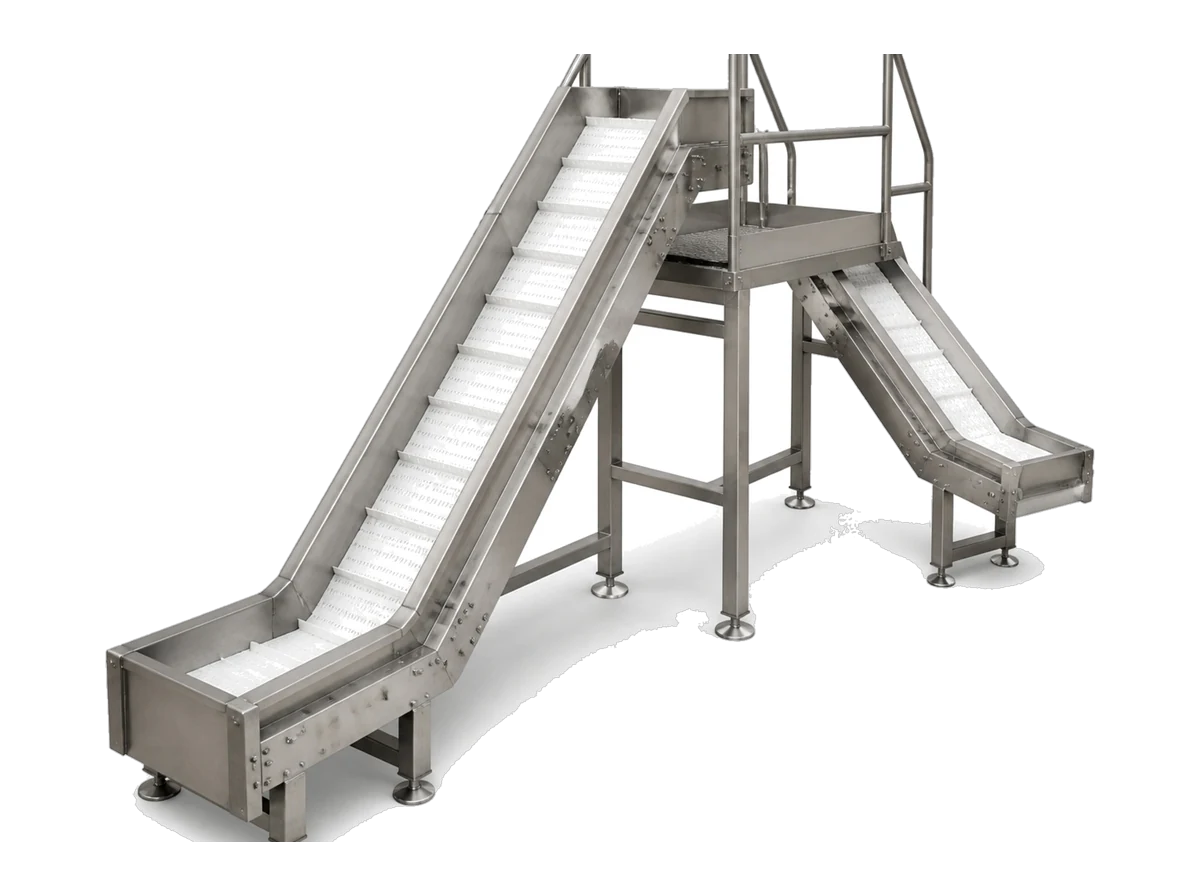
Enclosed troughed belt conveyors move the most material per dollar over long distances and are the standard for ores, aggregates, grain and wood residuals. They incline only to about 15–20 degrees (more with cleated or sidewall belts) and are harder to keep dust-tight than screw or drag conveyors, so they suit high-tonnage, coarser materials more than fine valuable powders.
Bucket elevators: the default for vertical lift
For lifts beyond what an inclined conveyor can handle economically, a bucket elevator is the standard. Centrifugal-discharge elevators run fast and suit free-flowing granular materials; continuous-discharge elevators run slower and suit fragile, dense or abrasive powders. Lifts of 30–150 feet are common, and the casing, buckets and boot can all be specified in abrasion-resistant materials. Elevators need solid structural support, access platforms and often a dedicated tower, which is where a fabricator that builds structure as well as conveyors saves coordination.
Pneumatic conveying: flexible routing, high wear with abrasives
Pneumatic systems move material in an air stream through pipe, which routes anywhere a pipe can go, including vertically, with no moving parts along the route. They are excellent for fine, non-abrasive powders and for sanitary or contained applications. With hard, heavy materials, however, velocity-driven wear at elbows and the energy needed to lift heavy particles usually make mechanical conveying the lower-cost choice over the life of the system. Part 1 covers the wear package that makes mechanical conveying last.
Putting a route together
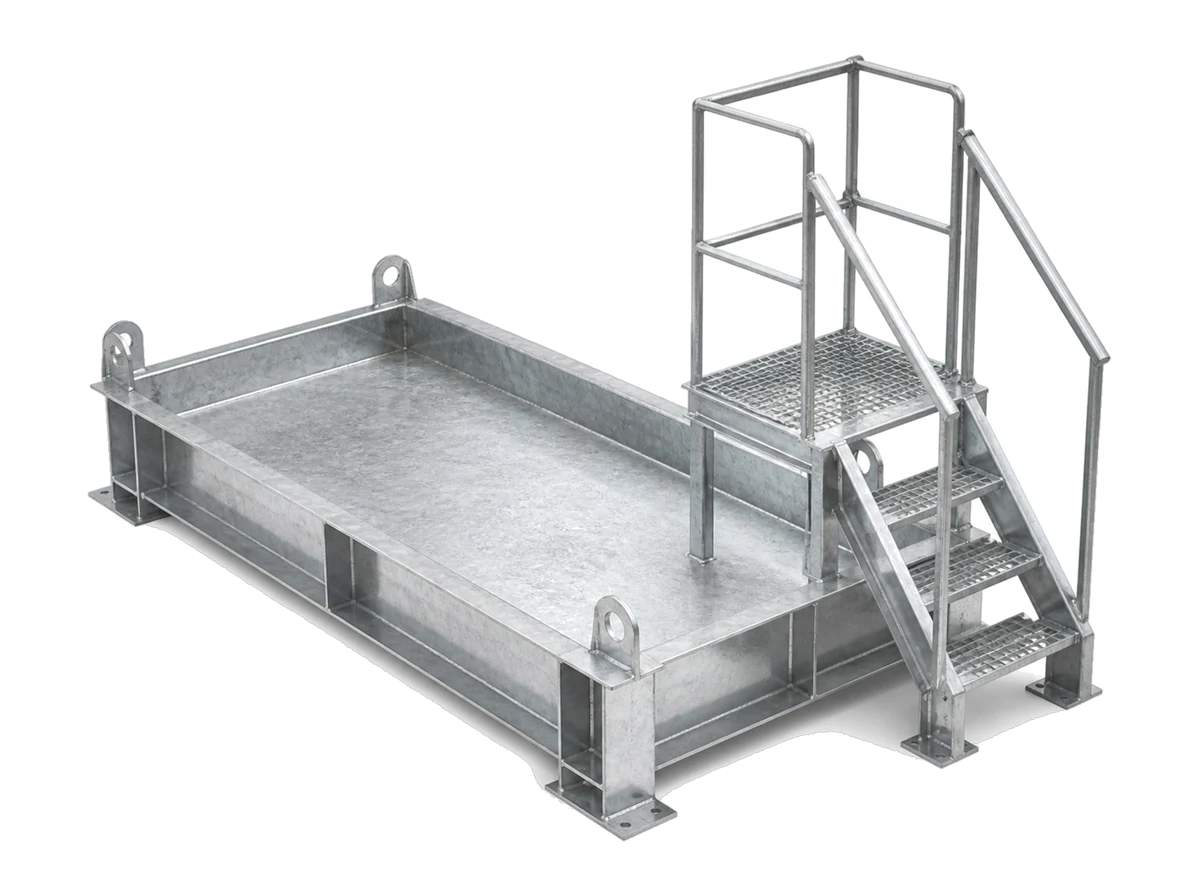
A typical route for a heavy powder might be: a screw feeder for metered discharge from storage, a drag conveyor for the horizontal leg, a continuous-discharge bucket elevator for the lift, and a short screw or chute for the final distribution. Each transfer point gets a designed chute, dust pickup and access. The support steel, platforms, guards and stairs are engineered as one structure. That is the package FabTek designs, fabricates, installs and maintains — see process conveying and bulk handling systems.
Frequently asked questions
Can a screw conveyor run 100 feet?
Technically yes, with intermediate hanger bearings, but for runs much beyond 40–50 feet in abrasive or sticky service a drag conveyor usually gives lower maintenance and better reliability.
What is the best way to convey powder vertically?
For most dense or abrasive powders, a continuous-discharge bucket elevator. Vertical screw conveyors work for shorter lifts of free-flowing material, and pneumatic conveying works for fine non-abrasive powders.
Mechanical or pneumatic conveying for abrasive material?
Mechanical. Pneumatic systems move abrasive particles at velocity and wear quickly at elbows and bends; enclosed screw, drag and bucket systems with abrasion-resistant parts last longer.