Some powders are simply harder than the equipment that moves them. Mineral concentrates, spent refractory, ceramic and glass fines, slag, silica, alumina and metal-bearing residues share traits that general-purpose bulk handling was never designed for: heavy bulk density, hard angular particles that work like grinding media, and a habit of packing, bridging or dusting. Put them on a catalog conveyor and the result is worn flighting within months, bearing failures, leaking seals and lost product, which matters most when the product is worth recovering.
Moving a hard, heavy or abrasive material? Call 601.892.5017 or email sales@fabtekindustries.com — we can start from a description, and we sign NDAs before drawings change hands.
- Start with a material data sheet — bulk density, particle size and shape, hardness, moisture, temperature, flowability and hazards — before any equipment is chosen.
- For heavy abrasives, enclosed mechanical conveying (screw, drag chain, bucket elevator) usually outlasts pneumatic, which wears elbows at velocity.
- The wear package — AR plate or hardfaced flighting, replaceable liners, heavy-wall troughs, purged seals, outboard bearings — is the difference between months and years.
- Design for containment and cleanout when the powder is valuable or hazardous; every leak is a loss.
- Distance and lift need structure: towers, platforms, guards and supports engineered with the conveyor, not bolted on later.
- Conveying Hard, Heavy Powders (you are here)
- Bulk Conveying Over Distance & Height
- Material Handling for Federal & Defense Facilities
- Custom vs. Catalog Conveyors
- Reshoring: The Factory Comes to Life at Fit-Out
- Section 232 Tariffs & Built in the U.S.A. Conveyors
- Conveyor Installation: Drawing to First Run
- Retrofit, Rebuild or Replace
- Sanitary & Washdown Conveyors for Poultry, Meat & Food
- How to Get a Conveyor Quote From FabTek
Start with the material, not the conveyor
Every good bulk handling design begins with a material data sheet. Before any equipment is selected, document bulk density (loose and packed, often 100–250 lb/ft³ for the materials above), particle size distribution and shape, moisture content, temperature at each transfer point, abrasiveness (Mohs hardness or a wear index if you have one), flowability and angle of repose, and whether the material is hygroscopic, corrosive, combustible or hazardous when airborne. If any of that is confidential, say so — a short NDA before drawings change hands is normal in metals recovery and catalyst work, and the conversation can start on the phone with a description of the material and the route. How quoting works at FabTek covers that process.
Choose the conveying principle for the duty
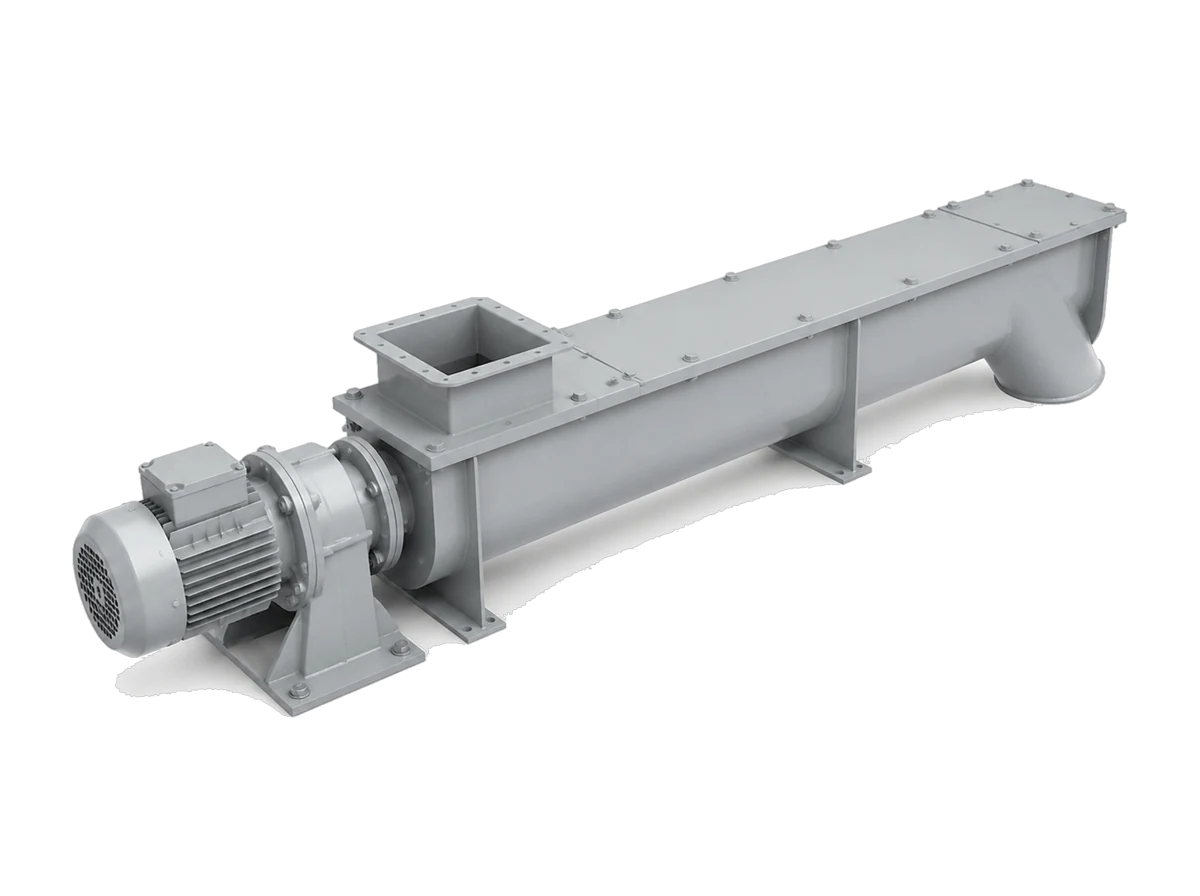
For heavy abrasive powders, mechanical conveying usually outlasts pneumatic conveying, because pneumatic systems move abrasive material at velocity and wear elbows and pipe quickly. The main mechanical options are screw conveyors for controlled, enclosed horizontal and inclined transfer; drag or en-masse chain conveyors for long horizontal runs at low speed with low degradation; bucket elevators for vertical lift; and enclosed belt conveyors where capacity is high and the material is free-flowing. Most long routes combine two or three of these with carefully designed transfer points, which is where most wear and dusting actually happens. Part 2 of this series compares the options leg by leg.
Specify the wear package
The difference between a six-month conveyor and a ten-year conveyor is the wear package. For abrasive duty, typical specifications include:
- Abrasion-resistant steel (AR400/AR500) or hardfaced flighting and troughs, with flighting thickness selected for the duty rather than taken from a catalog.
- Replaceable liners — AR plate, ceramic tile or UHMW depending on the material — in troughs, housings and chutes.
- Heavy-wall troughs and tubular housings, hardened or ceramic-lined transfer chutes.
- Shaft seals rated for fine powder, with air purge where needed, and outboard bearings kept out of the product stream.
- Chain, sprockets and buckets in hardened or abrasion-resistant materials on drag conveyors and elevators.
This is where custom fabrication earns its keep. A fabricator can cut AR plate, form heavy-gauge troughs and weld hardfaced flighting in the same shop that builds the support steel, so the whole system is built to the same standard.
Design for containment and recovery
When the powder is valuable or hazardous, every leak is a loss. Specify fully enclosed, dust-tight construction with gasketed covers, inspection ports, drop-bottom troughs for cleanout, and dust-collection pickup points at loading and discharge. Where product changeover or periodic recovery of residue matters, design for complete cleanout: shaftless screws, flush-bottom gates and sloped hoppers all reduce holdup. For combustible dusts, the design has to address the applicable NFPA requirements for the material, including grounding, venting and motor selection.
Plan for distance, lift and the structure that carries both
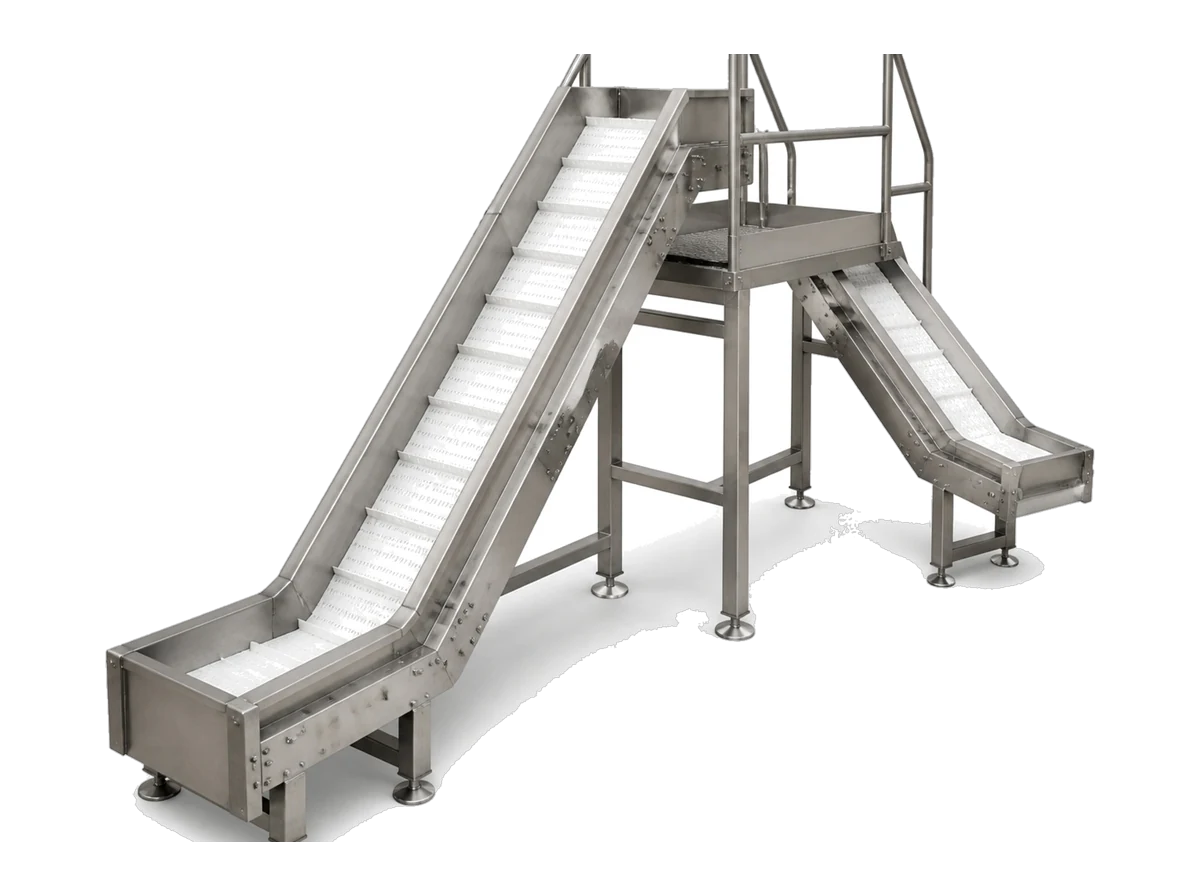
Distance and height raise the stakes on structure. Screw conveyors beyond roughly 20–30 feet need intermediate hanger bearings, which are a wear point in abrasive service, so designers often switch to drag conveyors or split the run. Vertical lifts of 30–100 feet are usually bucket elevators with abrasion-resistant buckets and casing. Every conveyor needs support steel, access platforms, guards and maintenance clearances, and on a fabricator-built system those are designed together rather than bolted on later. FabTek builds platforms, towers and crossovers in the same facilities as the conveyors they carry.
What a complete system includes
A complete bulk handling system from FabTek includes the material review, conveyor and elevator design, structural supports and platforms, fabrication in our Mississippi facilities, powder coat or the specified finish, installation by our own crews, commissioning, and spare wear parts. Because we fabricate the structure and the conveyor in the same shop, the system arrives as one coordinated package — Built in the U.S.A. See process conveying and bulk handling systems and screw conveyors, or send us a material description to start.
Frequently asked questions
What is the best conveyor for abrasive powder?
For hard, heavy or abrasive powders, enclosed mechanical conveyors (screw, drag chain and bucket elevators) with abrasion-resistant liners and hardfaced wear parts generally outlast pneumatic systems. The right choice depends on bulk density, particle hardness, run length and whether the route is horizontal or vertical.
How long should a screw conveyor last in abrasive service?
With AR-grade or hardfaced flighting, replaceable liners and correctly selected speed, a screw conveyor in abrasive duty can run for years between rebuilds. The same conveyor in standard carbon steel at high RPM can wear through flighting in months.
Can you design a bulk handling system without seeing our drawings?
Yes. We routinely start with a phone or video conversation about the material, rates and route, then sign an NDA before drawings and process details are exchanged.