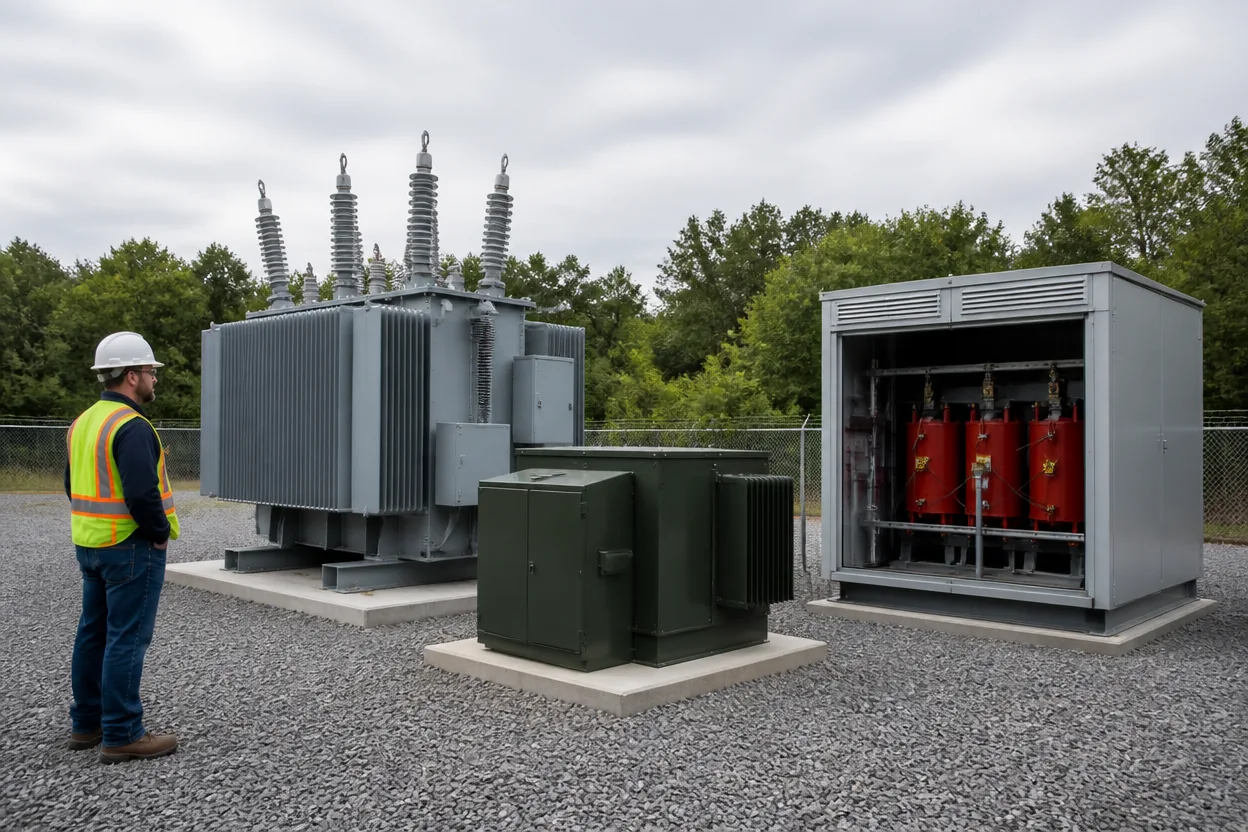
Every grid conversation eventually lands on “the transformer shortage” — as if transformers were one product. They aren't, and the shortage isn't uniform either. Here's a working guide to the major types and what each demands from the manufacturing chain behind it.
- GSUs are the tightest segment: demand up 274% since 2019, lead times averaging ~144 weeks, specialty units quoted at four years.
- Substation power transformer demand is up 116% since 2019 on grid modernization and large-load interconnections.
- An estimated 40 million U.S. distribution transformers are already beyond expected service life — replacement demand on top of growth.
- Every type marries electrical craft with metal fabrication: the winding sets performance, the tank or cabinet decides whether it survives twenty years outdoors.
Sourcing for an active project? Call 601.892.5017 or email collin.t@fabtekindustries.com — send a drawing or a scope and we’ll respond fast.
Generator step-up (GSU) transformers
The heavy hitters. GSUs sit at power plants and step generation voltage up for bulk transmission. They're large, heavily customized, and the tightest segment of the market: demand has grown 274% since 2019, lead times average roughly 144 weeks, and specialty units are quoted out as far as four years. (For the deeper mechanics of any transformer, start with How a Transformer Works.)
Substation power transformers
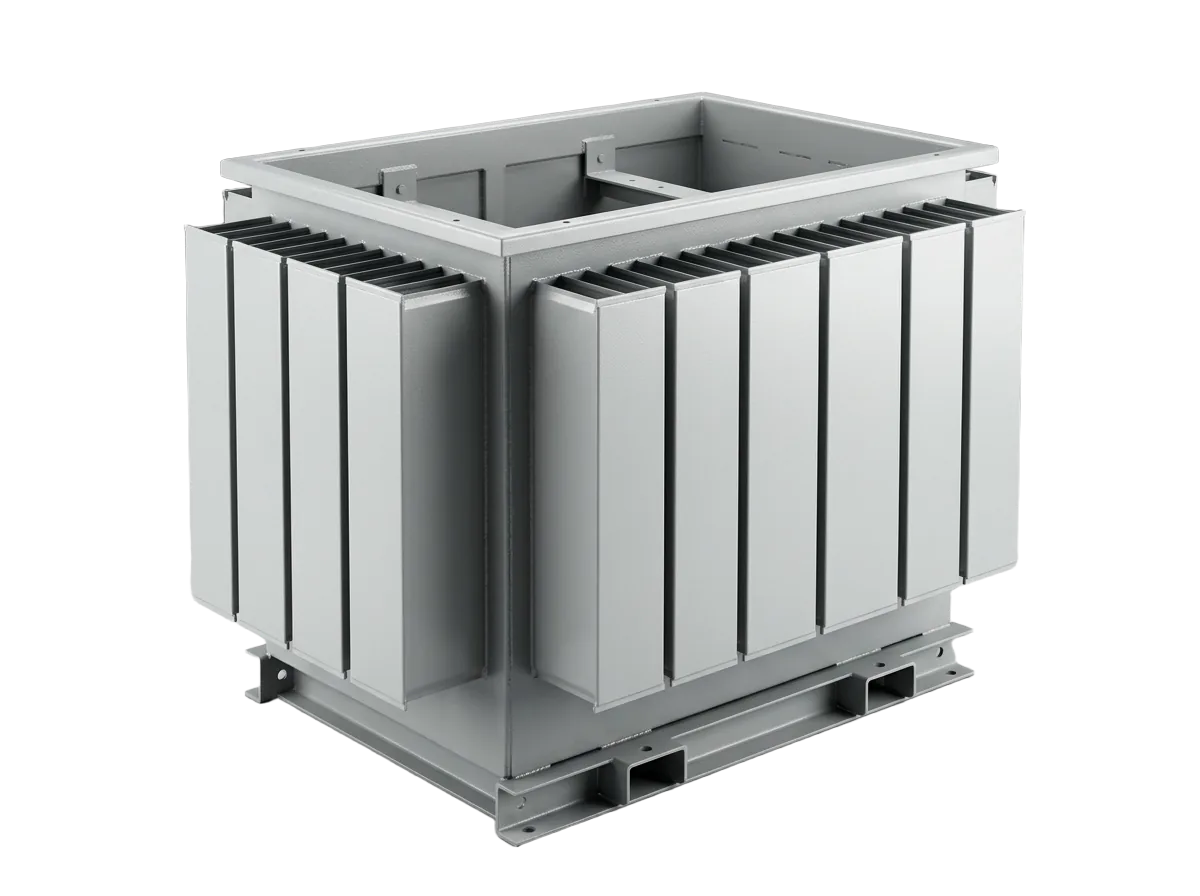
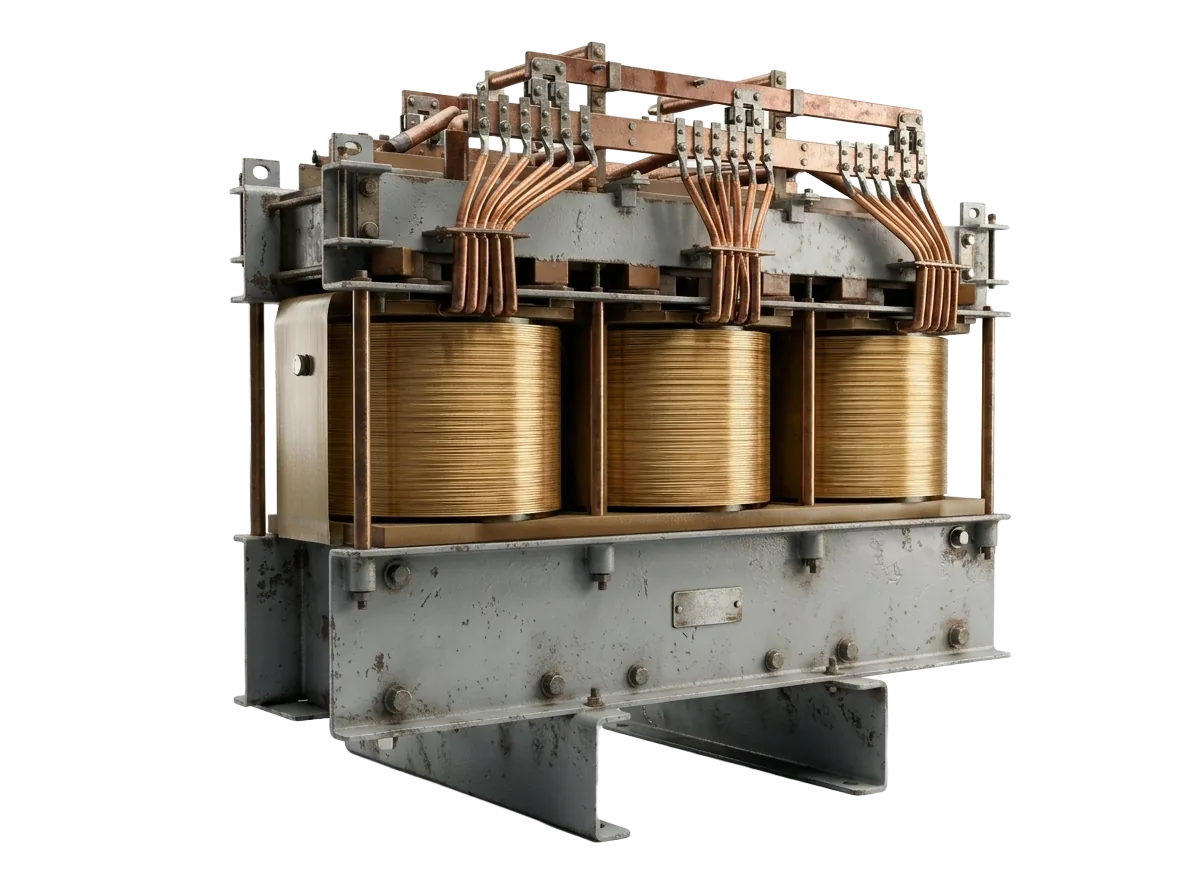
These step transmission voltage down at substations for regional distribution. Demand is up 116% since 2019, driven by grid modernization and large-load interconnections. Like GSUs, they're built around a grain-oriented electrical steel core with hand-wound copper coils, housed in a welded steel tank engineered for oil containment, cooling, and decades outdoors.
Distribution transformers
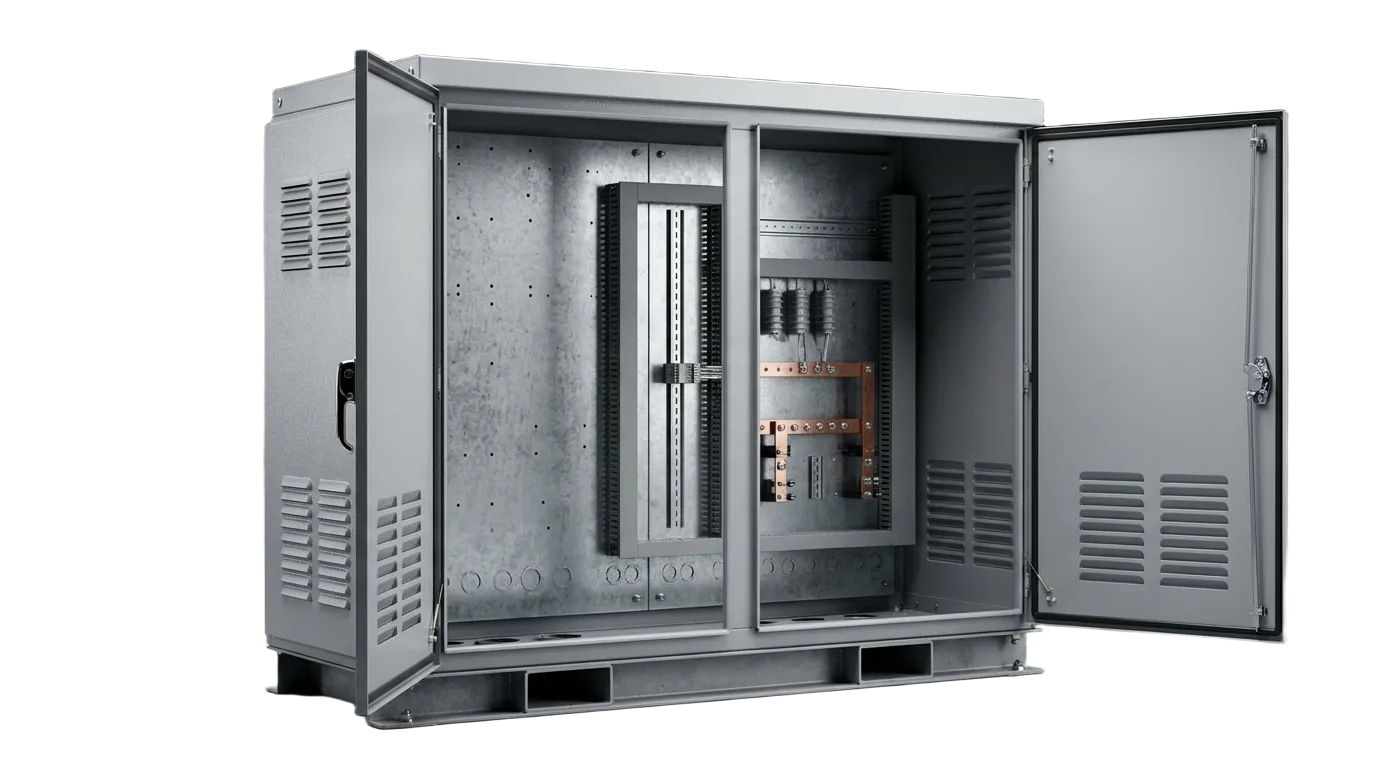
The workhorses on poles and pads that make the final step down to service voltage. The install base is enormous and old — an estimated 40 million U.S. units are already beyond expected service life, creating steady replacement demand on top of new growth. Pad-mounted units carry their own fabrication scope: NEMA-rated, tamper-resistant, weatherproof cabinets (our NEMA enclosure guide covers the ratings).
The winding determines the electrical performance. The metal determines whether that performance survives twenty years of weather, transport, and thermal cycling.
Dry-type transformers and voltage regulators
Dry-type units are air-cooled, common indoors and in datacenter electrical rooms where oil-filled equipment is undesirable — shifting the metal scope from welded tanks to ventilated enclosures and precision core-and-coil supports. Single-phase step voltage regulators, technically specialized regulating transformers, hold distribution voltage within band as loads swing — increasingly important as datacenter and industrial loads reshape feeder profiles.
What every type shares
Each is a marriage of electrical craft and metal fabrication, usually purchased from separate vendors — which plants a coordination seam exactly where schedules slip. FabTek builds both under one roof: coil winding and circuit sub-assembly, welded tanks, NEMA-rated cabinets, plus single-phase step voltage regulators as a custom line — a single source for OEMs sourcing any layer of the build. Sourcing one of these layers now? Start here.
Frequently asked questions
What is a GSU transformer?
A generator step-up transformer sits at a power plant and raises generation voltage for bulk transmission. GSUs are large, customized units — currently the tightest transformer segment, with lead times around 144 weeks.
Why is there so much distribution transformer demand?
Beyond load growth, an estimated 40 million U.S. distribution transformers are already past their expected service life, creating a steady replacement burden on top of new construction.
What is the difference between dry-type and liquid-filled transformers?
Liquid-filled units use oil for cooling and insulation inside a welded steel tank; dry-type units are air-cooled in ventilated enclosures, common indoors and in datacenter electrical rooms.
What parts of a transformer does FabTek build?
Coil winding, coil assembly, and circuit sub-assembly, plus the metal build — welded tanks, NEMA-rated cabinets and enclosures — and single-phase step voltage regulators as custom work.