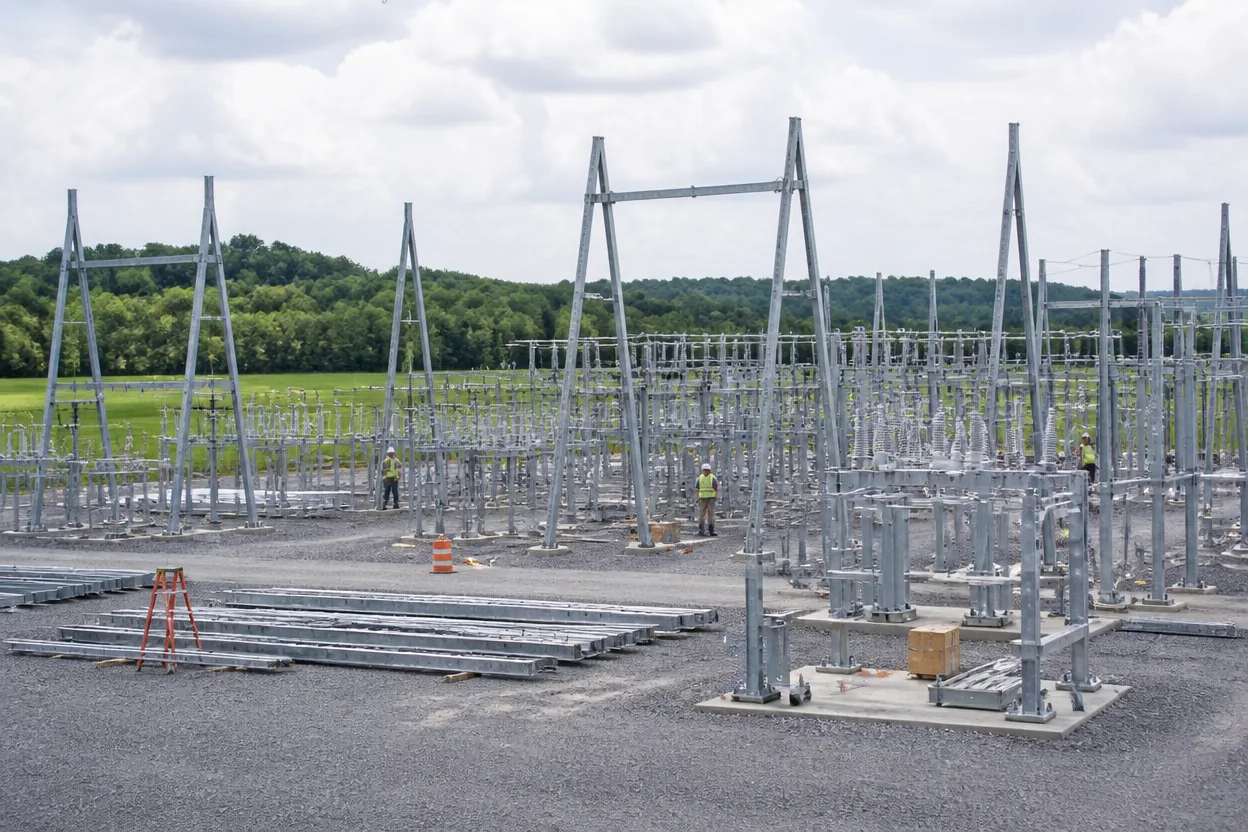
A substation looks like electrical equipment sitting in a gravel yard. Look again: nearly everything in that yard is standing on, hanging from, or bolted to fabricated steel — and the country is about to need a great deal more of it.
- Transmission operators estimate 4,200–5,100 new or upgraded substations will be needed in the continental U.S. by 2035.
- EEI projects investor-owned utility capex of $238.8 billion in 2026 and roughly $1.4 trillion through 2030.
- One station mixes a handful of 80-foot dead-ends with hundreds of small stands — heavy capacity plus high-mix discipline.
- Structures are early critical path: foundations and steel go in before any equipment can.
Sourcing for an active project? Call 601.892.5017 or email collin.t@fabtekindustries.com — send a drawing or a scope and we’ll respond fast.
Dead-end structures, A-frames, and takeoffs
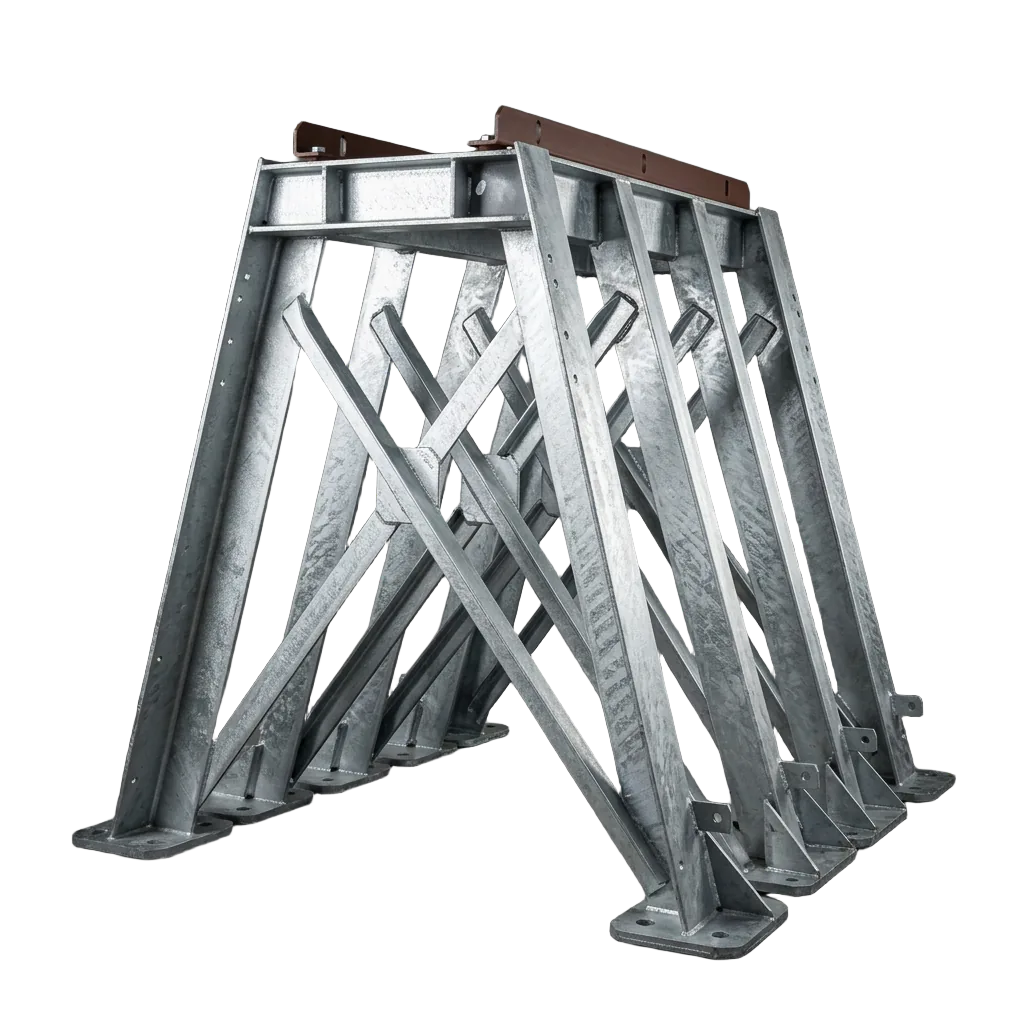
Dead-ends are the heavy H-frame or A-frame towers where transmission lines terminate into the station, carrying the full mechanical tension of the conductors — typically the largest structural members on site, galvanized and engineered for wind, ice, and seismic loads. A-frames and takeoff structures then route incoming lines down into the station bus, with electrical clearances driving every dimension. (New to the yard itself? How a Substation Works covers the electrical side.)
Bus supports and equipment stands
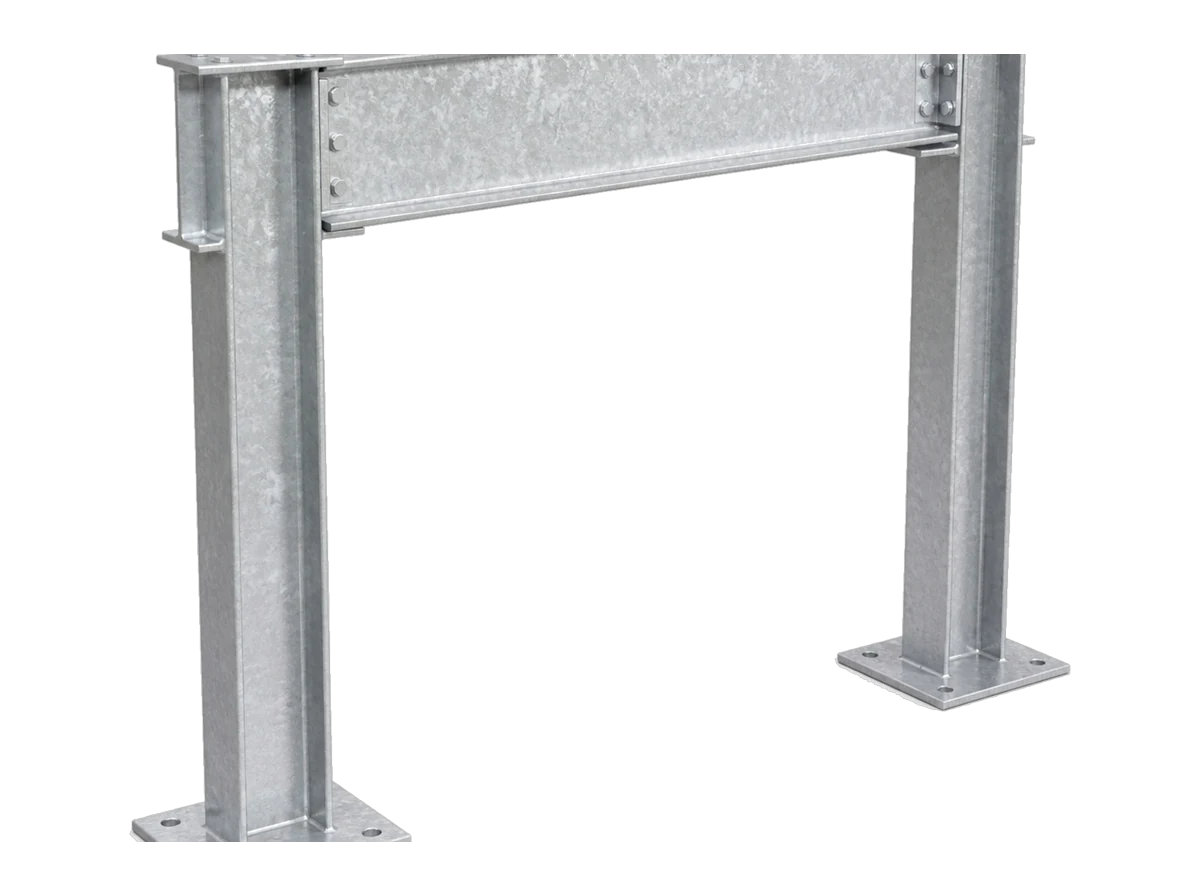
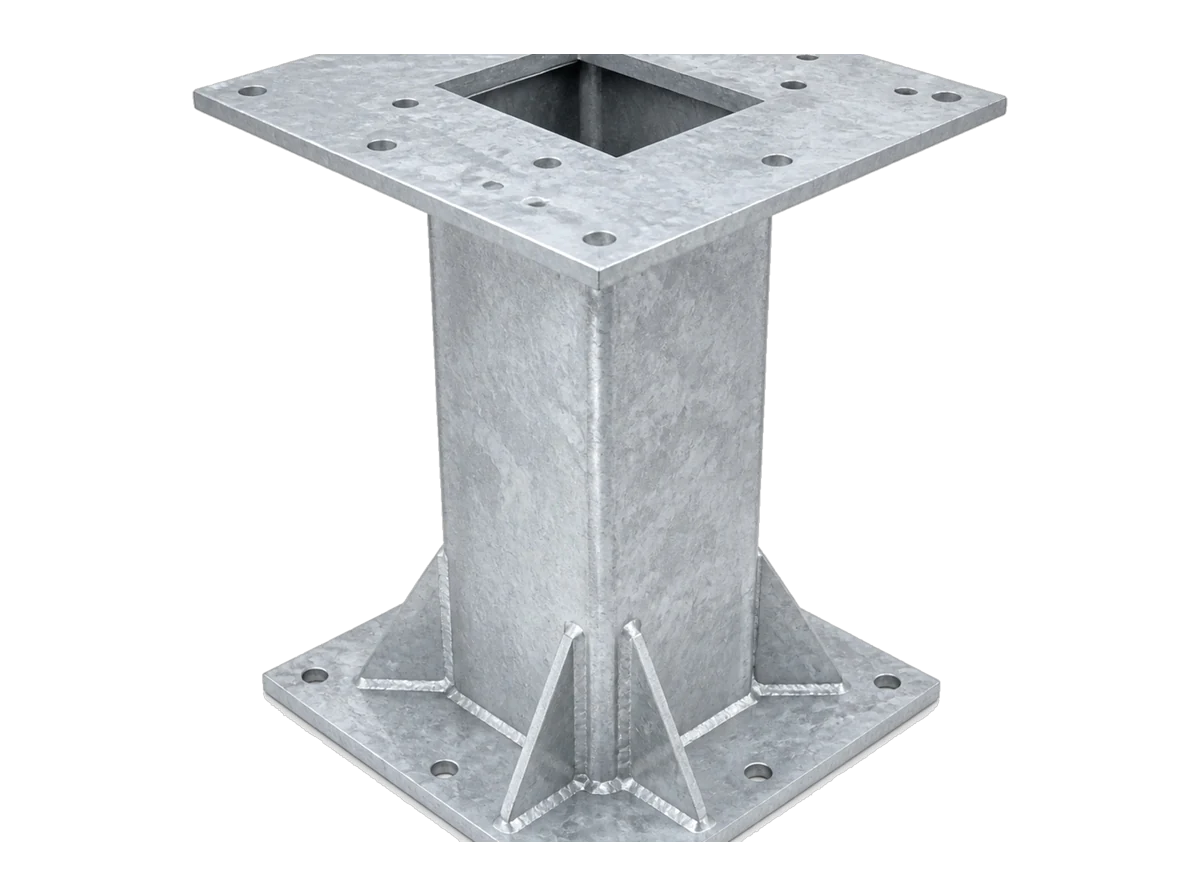
Bus support structures form the lattice of stands and beams carrying rigid bus — the conductors distributing power across the yard. Repetitive, tolerance-sensitive, needed in quantity. Then the equipment stands: every breaker, disconnect switch, CT, PT, surge arrester, and insulator sits on a purpose-built galvanized stand. Individually small; collectively, hundreds of pieces per station — each one capable of holding up energization if it arrives late or drilled wrong.
Masts, switch stands, and enclosures
Lightning masts and shield wire supports protect the yard from direct strikes. Switch stands carry gang-operated switches, mechanisms, and personnel platforms. And the control enclosures housing protection and communications gear increasingly arrive as wired assemblies, not empty boxes — a scope that spans enclosure fabrication and electrical assembly.
A late transformer delays a project politely, with years of warning. A late equipment stand delays it by ambush.
Why this scope is harder than it looks — and getting bigger
Two structural challenges. The mix: one station needs a handful of 80-foot dead-ends and hundreds of small stands, so a supplier needs heavy structural capacity and high-mix production discipline in the same shop. The schedule: structures are early critical path — foundations and steel go in before any equipment can — so a late stand delays gear that took two years to procure. Now scale it: transmission operators estimate 4,200–5,100 new or upgraded substations by 2035, inside a utility capital program EEI projects at $238.8 billion for 2026 and roughly $1.4 trillion through 2030. (Buying this scope? Our substation steel buyer's guide covers qualification.)
FabTek fabricates substation support structures at utility scale — dead-ends, A-frames, heavy galvanized beams, bus supports, and equipment stands — with robotic structural processing and AWS-certified welding across every core process in-house, from four Mississippi production sites. If your program's steel package needs a domestic source with room to scale, talk to us.
Frequently asked questions
What steel structures are in a substation?
Dead-end and A-frame termination structures, takeoff structures, rigid bus supports, equipment stands for breakers and switches, lightning masts and shielding, switch stands and platforms, and control enclosures.
How many new substations does the U.S. need?
Transmission operators estimate 4,200–5,100 new or upgraded substations will be required in the continental U.S. by 2035 to absorb new generation and load.
Why is substation steel schedule-critical?
Foundations and structures are installed before any electrical equipment can be set, so a late structure delays equipment that may have taken years to procure.
What substation steel does FabTek fabricate?
Dead-end and A-frame structures, heavy galvanized beams, bus supports, and equipment stands — processed robotically and welded under AWS certification at utility scale.