Reindustrialization is usually discussed in terms of the headline plants — the chip fab, the battery factory, the transformer plant, the data center campus. Each of those is built from fabricated metal, powered through fabricated metal, and stocked with equipment that sits on fabricated metal. Part 7 closes this series with the argument the first six built toward: metal fabrication is not one industry among many in the American manufacturing revival. It is the layer everything else is bolted to.
Looking for a U.S. fabricator? Call 601.892.5017 or email collin.t@fabtekindustries.com — send a drawing or a scope and we’ll respond fast.
- Fabrication is the layer between raw steel and finished infrastructure: no plant, substation, transmission line or data center gets built without it.
- Unlike many manufacturing sectors, most fabrication cannot be economically offshored — it is heavy, bulky, project-specific and time-critical.
- The industry’s tens of thousands of small and mid-sized shops anchor skilled jobs in the regions that lost manufacturing employment.
- The grid build-out that everything else depends on is a fabrication problem as much as an electrical one; the shops have to scale for the rest to happen.
- What Is Metal Fabrication?
- The Machines of Metal Fabrication
- The Materials of Metal Fabrication
- A Brief History of Metal Fabrication in America
- From Manual to Automated: How the Fabrication Floor Changed
- What Is Being Asked of U.S. Metal Fabricators Right Now
- Why Metal Fabrication Is Critical to U.S. Reindustrialization (you are here)
The thesis
Every reindustrialization story has the same shape. A company announces a plant; a utility announces the substation and lines to power it; contractors pour concrete and erect steel; equipment arrives and is set on skids and platforms; switchgear arrives in enclosures; power flows through bus duct; the plant runs, and it buys fabricated components for as long as it does. At every step, the thing being installed was cut, formed, welded and finished in a fabrication shop — usually a domestic one, usually within a few hundred miles. Fabrication is the common denominator of the whole project. That is not a marketing claim; it is a description of the bill of materials.
The layer between steel and everything
A steel mill makes plate, sheet and shapes. A utility needs a substation. A data center needs an electrical room. A factory needs a machine frame and a mezzanine. The mill cannot supply any of those, and the end user cannot use mill product. The fabricator is the only step between them — the layer that converts commodity metal into purpose-built infrastructure. As Part 1 laid out, that conversion is six process families and a quality system, and as Part 3 laid out, it draws on a domestic material supply chain that policy is trying to strengthen. Strengthening the mills without strengthening the fabricators is producing steel with nowhere to go.
Work that can't be offshored
Part of what makes fabrication load-bearing is that it never fully left. Consumer electronics, textiles and much component manufacturing went overseas because the products were small, standardized and worth shipping. Most fabricated infrastructure is the opposite: a walk-in switchgear house, a dead-end structure, a transformer tank or a mezzanine is heavy, bulky, built to one project’s drawings, and needed on a specific date that a container ship cannot guarantee. The economics of importing it were always marginal and have become worse with tariffs and freight volatility — a calculus we worked through in Domestic Fabrication: What Reshoring Means for Power Equipment. The result is that fabrication is one of the few manufacturing sectors where domestic capacity is not a policy aspiration but a physical necessity. If America builds, American shops fabricate; the only question is whether there are enough of them, with enough people and equipment, to keep up.
Jobs where they were lost
The offshoring decades described in Part 4 hollowed out manufacturing employment most severely in exactly the places fabrication shops still operate: small cities and rural counties in the South, the Midwest and the industrial Northeast. Fabrication jobs are the kind reindustrialization is supposed to restore — skilled trades and technical roles that pay well without a four-year degree, in places where land and cost of living allow a shop to grow. When a fabricator adds a shift or a building, the effect is local and immediate: FabTek’s growth from 40 to more than 100 employees, and a North Campus expansion expected to add roughly 100 more jobs, is happening in Copiah County, Mississippi, not in a metro that was already thriving. Multiply that across tens of thousands of shops responding to the same demand and you have the jobs component of reindustrialization in its most concrete form. We described the regional momentum in Mississippi Manufacturing Momentum.
The grid runs through the shop
The single most important precondition for reindustrialization is electricity. Every announced plant and every data center campus needs a grid connection that does not yet exist, and the grid’s capacity to add them is limited by transformers, substations and transmission that take years to build. That is a fabrication problem as much as an electrical one. Transformer OEMs are outsourcing tanks and cabinets to fabricators to free their floors for core and coil. Utilities are signing multi-year steel agreements so substations are not waiting on structures. EPCs are buying turnkey substation packages with field erection. Data center developers are ordering enclosures, bus duct and steel against transformer dates two years out. In each case the fabricator’s capacity is on the critical path of the country’s ability to power what it is building. We made the mechanics of that argument in How the Transformer Supply Chain Works and Where Data Center Builds Get Stuck.
You cannot reshore a factory to a site with no substation, and you cannot build a substation without a fabricator. Reindustrialization runs through the shop floor whether anyone says so or not.
What has to be true
For fabrication to carry the weight being placed on it, several things have to happen — some inside the shops, some outside.
- People. The trades pipeline has to be rebuilt: vocational programs, apprenticeships, community-college partnerships, and wages and conditions that make fabrication a career a twenty-year-old chooses. Automation raises output per person, but the industry still needs the people.
- Capital. Shops need to invest in the fiber lasers, beam lines, robotic cells and finish lines that Part 5 described, and they can only do that against committed demand — which is why long-term agreements from utilities, OEMs and developers are not just a procurement convenience but an industrial-policy tool.
- Material. A stable, domestic supply of plate, sheet and shapes at predictable cost; tariff policy that protects mills without starving the fabricators who are their customers.
- Regional capacity. Fabrication near the demand — the Southeast, the Gulf, the Midwest — so freight is short and crews can reach the site. The shops that Part 6 described expanding regionally are building exactly this.
- Integration. Fabricators that can build, finish, wire and install, so the constrained trades on a project site do less and the shop does more.
FabTek's part
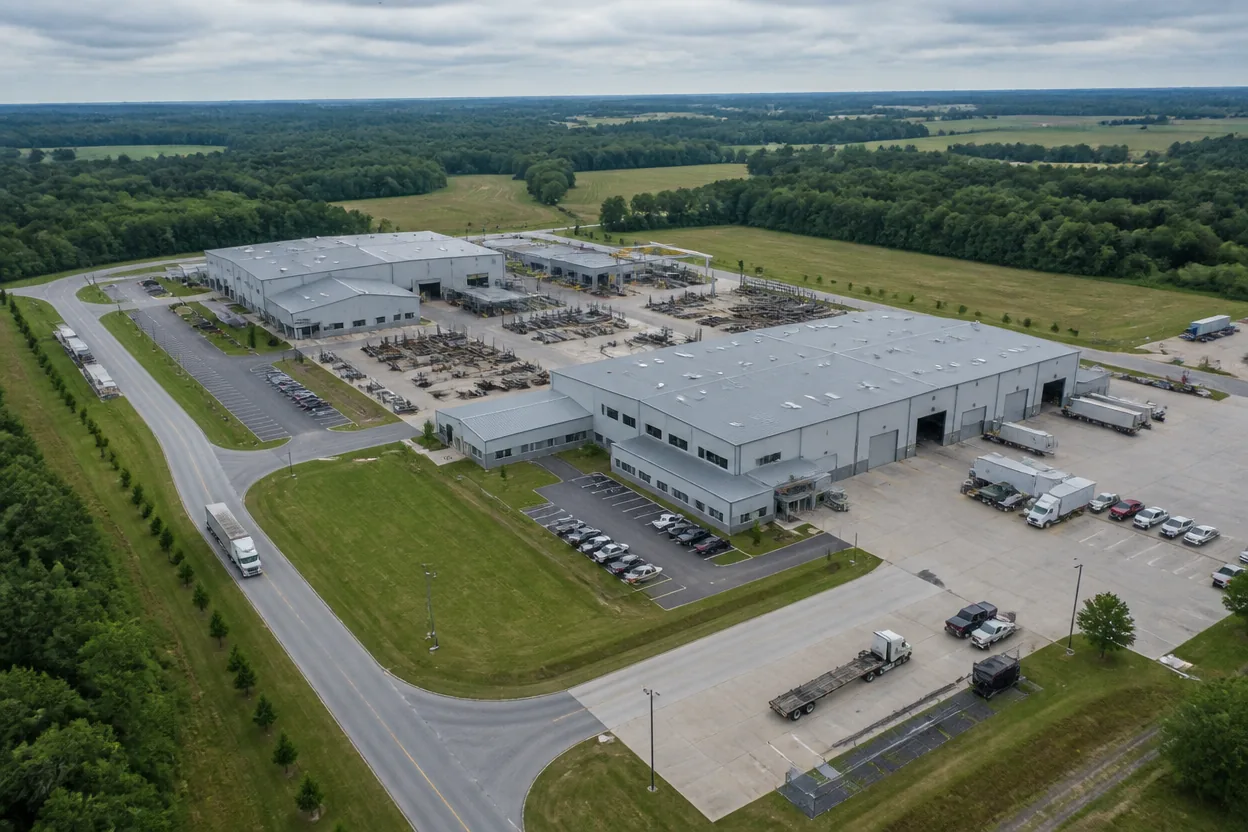
FabTek Industries is one shop’s answer to all of the above. Founded in 1999 as a regional metal fabricator in Hazlehurst, Mississippi, the company committed itself to the power grid and has grown to four production sites and 250,000 square feet, with a plan to reach 500,000 by 2030 — investing in capacity ahead of demand rather than behind it. It runs the modern floor: Amada fiber laser and CNC brakes, Voortman robotic structural processing, OMAX waterjet, Haas machining, an in-house blast room and powder coat line, AWS-certified welding cells, an electrical assembly floor and field crews, under an ISO 9001:2015 system. It builds the specific things the grid and the data center boom need — substation steel, transformer tanks and cabinets, switchgear enclosures, bus duct, coils and windings, wired assemblies — for transformer OEMs, utilities, EPCs and data center developers across the Southeast and the eastern grid. And it is hiring, training and adding roughly 100 jobs in a rural Mississippi county. Built in the U.S.A. is not a slogan for a fabricator; it is the only way the work can be done.
That closes Metal Fabrication in America. If your project is part of the rebuild — a substation, a plant, a campus, a product line — send us the drawings. We would like to fabricate it.
Frequently asked questions
Why is metal fabrication important to U.S. manufacturing?
Fabrication is the layer that converts mill steel into usable infrastructure — the structures, enclosures, tanks, bus duct, frames and platforms every plant, substation and data center is built from. Without fabrication capacity, steel has nowhere to go and new facilities cannot be built or powered.
Can metal fabrication be offshored?
Most infrastructure fabrication cannot be economically offshored: switchgear houses, substation structures, tanks and mezzanines are heavy, bulky, project-specific and needed on fixed dates that ocean freight cannot guarantee. Tariffs and freight volatility have made importing fabricated product less viable still.
How does metal fabrication support reindustrialization jobs?
Fabrication shops are concentrated in the small cities and rural counties that lost manufacturing employment, and they create skilled trades and technical jobs that pay well without a four-year degree. When shops add shifts and buildings in response to demand, the jobs are local and immediate.
What does the grid build-out have to do with metal fabrication?
Transformers, substations and transmission lines are built from fabricated metal — tanks, cabinets, structures, enclosures — and OEMs and utilities are relying on contract fabricators to free their own capacity. Fabricator capacity is therefore on the critical path of connecting new plants and data centers to power.