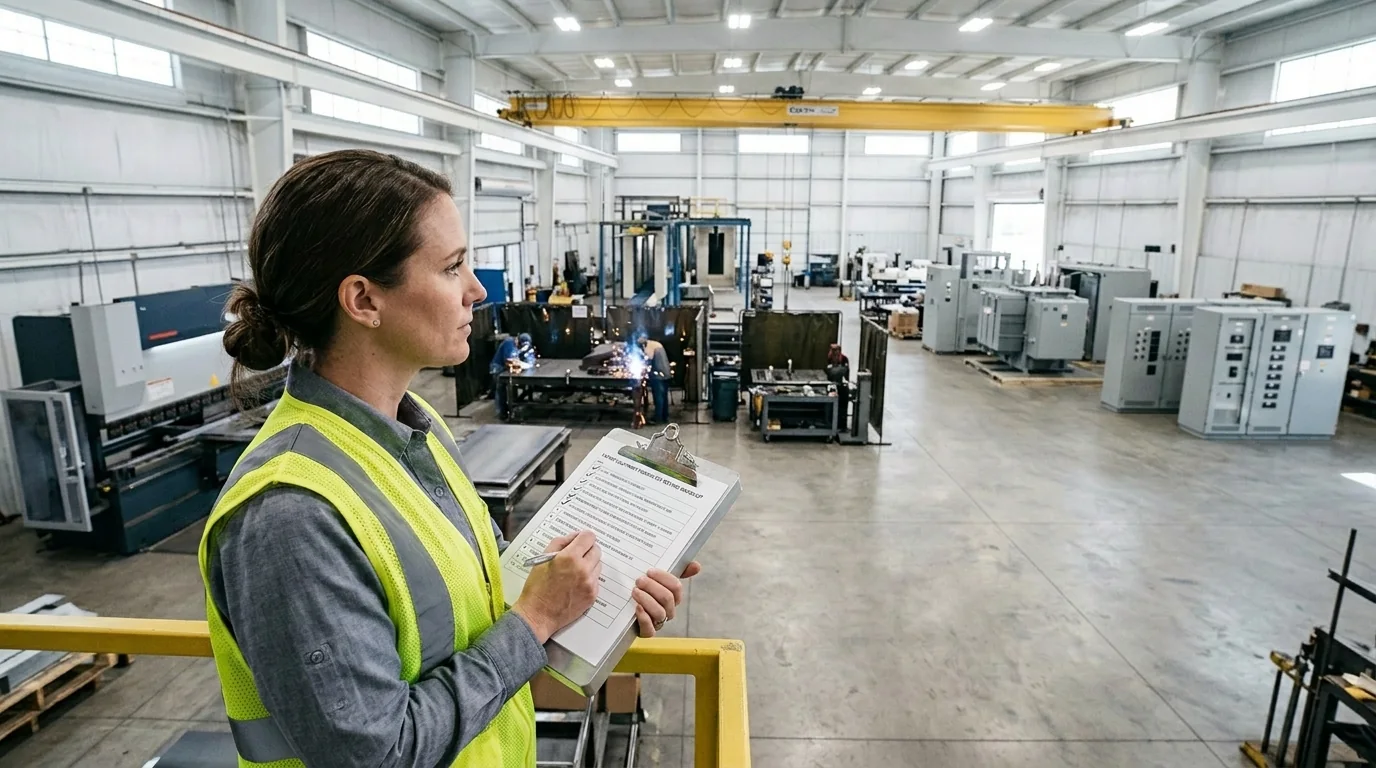
When a schedule moves or a unit fails, you need a fabricator that can absorb the surge without cutting corners. Here's how to vet real surge capacity — and tell it apart from a hopeful promise.
- Real surge capacity means dual shifts, backup machines, and overflow facilities — not optimism.
- Ask how they've handled a sudden volume spike before; references beat claims.
- Rush work shouldn't mean skipped inspection — confirm quality holds under pressure.
- Continuity planning is what keeps a rush from becoming a miss.
What surge capacity actually is
Surge capacity is the ability to absorb a spike — a moved schedule, a failed unit, an emergency order — without blowing your date or your quality. It shows up as rush-order support backed by real headroom: dual shifts, backup machines, and overflow space in production, not just a willingness to say yes.
How to verify it
Claims are easy; capacity is physical. Confirm the shop runs more than one shift or can spin one up, keeps backup equipment for the bottleneck processes, and has overflow facilities. A shop that runs its core processes in-house can re-sequence work to absorb a surge; one juggling outsourced steps usually can't.
Anyone can promise fast. Ask what they did the last time a customer's schedule blew up.
Speed without skipping QC
The risk in rush work is a quietly shortened inspection. Confirm the quality system applies the same way under pressure — same inspections, same records. A shop that holds its QMS during a surge is one you can trust with the surge.
Continuity behind the surge
Surge capacity and business continuity are the same muscle: cross-trained people, backup machines, approved alternate suppliers. For datacenter and EPC work where dates move, that muscle is what protects your commitments.
Vetting surge capacity
- Multiple shifts, or the ability to add one quickly.
- Backup machines for bottleneck processes.
- Overflow facilities and in-house breadth to re-sequence work.
- Quality system that holds under pressure.
- A documented continuity plan and real references.
FabTek keeps backup equipment and dual-shift capacity precisely for rush and emergency work. Tell us the timeline.
Frequently asked questions
What is surge capacity in fabrication?
The ability to absorb a sudden spike in volume — a moved schedule, a failed unit, an emergency order — without missing the date or compromising quality.
How do I know if a shop can really handle rush orders?
Look for physical headroom: multiple shifts, backup machines, overflow facilities, in-house breadth, and references from past surges.
Does rush fabrication compromise quality?
It shouldn't. Confirm the quality system applies the same inspections and records under pressure as it does normally.
What is fabrication business continuity?
Cross-trained personnel, backup equipment, and approved alternate suppliers that keep production moving through disruption.