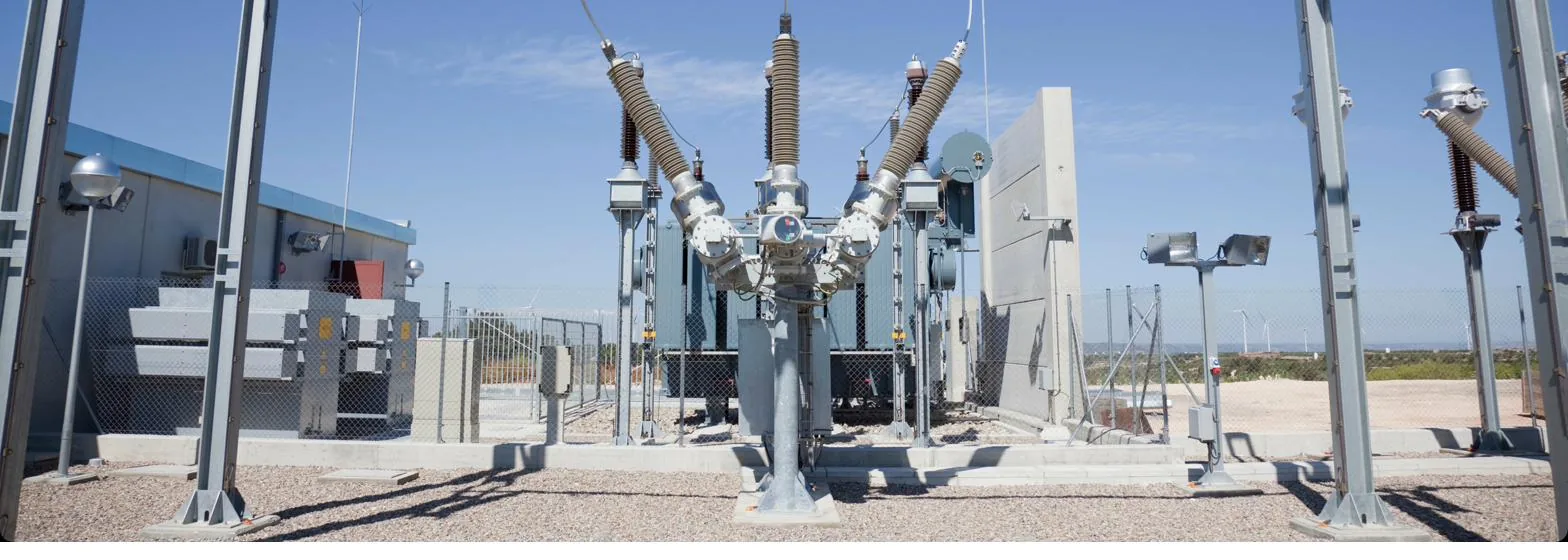
A substation steel package is easy to under-spec and expensive to get wrong. This checklist covers what to confirm before the PO goes out — from the drawing set and galvanizing to certifications, lead time, and how it ships.
- Lock the drawing set and revision before pricing — ambiguity here turns into rework later.
- Specify hot-dip galvanizing (ASTM A123) and confirm it's coordinated in-house, not subcontracted out.
- Require AWS-certified welding and ISO 9001 documentation you can audit.
- Confirm the fabricator can ship the complete package as one coordinated lot.
Start with the drawing set
Most disputes on a substation structure package trace back to the drawings. Before anyone quotes, confirm the revision, the controlling tolerances, bolt patterns, and which standard governs. A fabricator working from an ambiguous set will either pad the price for risk or build to an assumption you didn't intend. For utilities and EPC contractors, a clean, frozen drawing set is the single biggest lever on a predictable outcome.
Nail down the finish
Substation steel lives outdoors for decades, so confirm the corrosion system explicitly. Most specs call for hot-dip galvanizing to ASTM A123. The hidden risk isn't the galvanizing — it's the handoff: when fabrication and galvanizing sit at two vendors, parts queue, ship twice, and the schedule absorbs the gap.
Most substation schedules don't slip on the welding — they slip in the handoffs between drawings, fabrication, and galvanizing.
Verify certifications and documentation
Ask for the records, not just the claim. Confirm AWS-certified welding with auditable inspection records and an ISO 9001:2015 quality system with full material traceability. On assets with a multi-decade life, the documentation trail is part of what you're buying.
Pressure-test the lead time
A quoted lead time means little without knowing where the time goes. Ask how the shop runs cutting, forming, welding, and finish coordination — a single source under one roof collapses the queues between steps.
Plan the ship and the yard
Confirm the fabricator can deliver the complete package — dead-ends, A-frames, bus supports, and equipment stands — as one coordinated lot, sequenced for how it lands at the yard.
The pre-award checklist
Before the PO goes out, confirm:
- Drawing set and revision are frozen, with tolerances and bolt patterns called out.
- Hot-dip galvanizing (ASTM A123) is coordinated in-house as part of the build.
- Welding is AWS-certified with auditable inspection records.
- An ISO 9001:2015 system with full traceability is in place.
- The fabricator can ship the complete package as one coordinated lot.
FabTek fabricates substation steel domestically in Hazlehurst, Mississippi — built to print, galvanizing coordinated, and shipped complete. If you have a drawing set or a scope, send it over.
Frequently asked questions
What should be in a substation structure RFQ?
A frozen drawing set with revision, controlling tolerances, bolt patterns, the governing standard, the finish specification (typically hot-dip galvanizing to ASTM A123), required certifications, and delivery sequencing.
Does substation steel need to be galvanized?
Most utility specifications require hot-dip galvanizing to ASTM A123 for decades of outdoor corrosion protection. Confirm it's coordinated as part of fabrication rather than subcontracted separately.
How do I evaluate a fabricator's lead time?
Ask where the time goes, not just the number. A single source that runs cutting, forming, welding, and finish coordination in-house removes the handoffs that cause most delays.
Should one supplier handle the whole package?
Yes. A single source that ships dead-ends, A-frames, bus supports, and equipment stands as one coordinated lot removes vendor handoffs and simplifies staging at the yard.