Choosing a fabricator for power and utility work is a multi-year bet on schedule and quality. This 10-point guide covers what to verify before you commit — from certifications and capacity to how they handle a bad week.
- Verify certifications (ISO 9001, AWS) with auditable records, not just claims.
- Confirm in-house breadth — the fewer outsourced steps, the fewer handoffs to slip.
- Probe real capacity and surge capability, not just the quote.
- Ask how they've handled disruption; continuity is what protects your dates.
1–3: Capabilities and in-house breadth
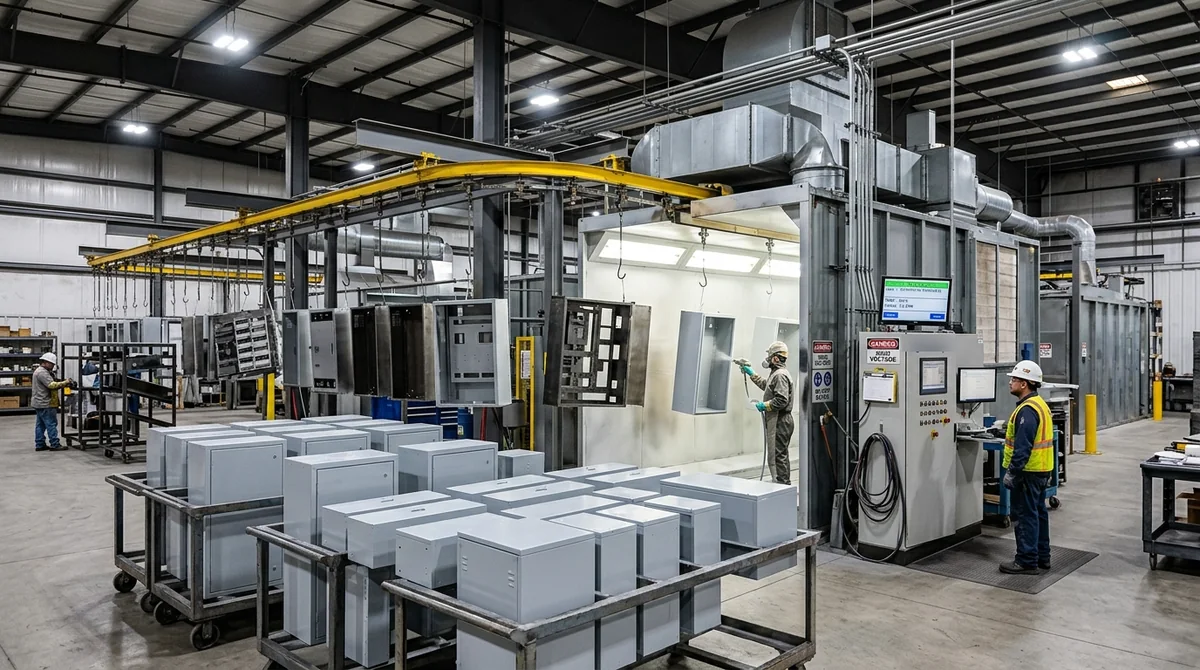
Start with what they actually do under their own roof. The fewer steps a fabricator outsources, the fewer handoffs there are to slip. Confirm the core processes — cutting, forming, welding, machining, finishing — and whether they run their own production at the volume you need. A single source for metal and electrical is rarer and removes a whole class of coordination risk.
4–5: Certifications and documentation
Ask for the records, not the logos. Confirm an ISO 9001:2015 quality system and AWS-certified welding with auditable inspection records. Documentation you can audit is what stands behind the assets for their multi-decade life.
Anyone can quote a good week. Ask how a shop runs during a bad one — that's what protects your schedule.
6–7: Capacity and surge
Probe real capacity — shifts, backup machines, overflow facilities — and how they absorb a surge when your schedule moves. A quote tells you a price; capacity tells you whether they can hold the date when demand spikes.
8: Traceability and records
Confirm material traceability end to end and the records you'll receive with each lot. On power and utility assets, traceability isn't bureaucracy — it's how conformance is proven and how problems are isolated if they ever arise.
9–10: Continuity and references
Ask how they handle disruption — equipment down, a supply gap, a staffing crunch — and for references from buyers like you. The answer to "tell me about a bad week" is more revealing than any capability sheet. Customers like transformer OEMs and utilities can speak to whether dates held under pressure.
The 10-point checklist
- Core processes run in-house, not outsourced.
- Production volume matches your need.
- Single source for metal and electrical, where relevant.
- ISO 9001:2015 quality system in place.
- AWS-certified welding with auditable records.
- Real capacity: shifts, backup machines, overflow.
- Demonstrated surge capability for moving schedules.
- End-to-end material traceability and lot records.
- A credible business-continuity answer.
- References from comparable power & utility buyers.
FabTek checks these boxes domestically in Hazlehurst, Mississippi — single-source metal and electrical, ISO 9001:2015, AWS-certified welding, built to scale ahead of demand. Put us through the checklist.
Frequently asked questions
What should I look for in a power and utility fabricator?
In-house breadth (few outsourced steps), ISO 9001:2015 and AWS certifications with auditable records, real capacity and surge capability, end-to-end traceability, and a credible business-continuity plan.
Why does single-source fabrication matter?
A single source for the metal and electrical build removes vendor handoffs — the coordination points where schedules most often slip.
What certifications should a metal fabricator have?
At minimum, an ISO 9001:2015 quality management system and AWS-certified welding, both backed by inspection and traceability records you can audit.
How do I evaluate a fabricator's capacity?
Look past the quote to shifts, backup equipment, overflow facilities, and a track record of holding dates when demand surges.